Reviewed · ATHENS MYTHOLOGY TOURS
The History of Athens: Greek Mythology Private Tour
Athens has a god for every corner. This private half-day walk connects Greek mythology to the city you can actually see now, with stories tied to places like Monastiraki and the Academy of Athens. It’s part orientation, part myth class, and part local shopping tour.
I especially love how the tour gives you two useful lenses at once: the myths behind the names and a local feel for how neighborhoods work. Seeing Varvakios Central Municipal Market alongside legend-heavy stops makes the whole thing feel practical, not just academic.
One consideration: your experience can swing with the guide and conditions. On very sunny days, you’ll want to speak up to pause in shade, and if you’re doing it on a Sunday, some places may be closed.
In This Review
- Key points before you go
- Mythology that follows the sidewalks, not just the ruins
- Meeting point to Plaka: how the 3-hour walk really plays
- Stop 1: Monastiraki’s eclectic lanes and the shopping side of Athens
- Stop 2: The Academy of Athens and what an institution says about a country
- Stop 3: Varvakios Central Municipal Market for everyday food culture
- Optional route moments: Anafiotika and Zeus legends
- What private guiding changes (and what to watch for)
- Price and value: what $199.62 buys you
- Sun, shoes, and timing tips that save your mood
- Who should book this Athens mythology walk
- Should you book this Athens Gods tour?
- FAQ
- How long is the History of Athens: Greek Mythology Private Tour?
- Where does the tour start and end?
- Is this tour private or group-based?
- What’s included in the price?
- Are entrance tickets included?
- Are food and drinks included?
- What language is the tour offered in?
- What fitness level do I need?
Key points before you go
- Myths tied to real streets: You’ll connect specific gods and stories to the actual neighborhoods where life happens.
- Local market energy: Stops include hands-on Athens food-shopping culture, not just monuments.
- Private guide, tight pace: It’s you and your guide, so you can steer the route a bit—but you’ll walk.
- Landmark + everyday Athens: The tour blends an institutional landmark (Academy of Athens) with lively markets.
- Price includes CO2 offset: The tour lists CO2 neutral carbon offset as part of the experience.
The old gods retold, a few more walks
- Athens: Mythology of Delphi, Museum and Arachova Guided Tour
★ 4.7 · 5,102 reviews - Athens & Acropolis Highlights: Greek Mythology Small-Group Tour
★ 5.0 · 2,370 reviews - Athens: Acropolis and Mythology Highlights Small Group Tour
★ 4.8 · 2,275 reviews - Philosophy and Democracy tour of Athens
★ 5.0 · 285 reviews
Mythology that follows the sidewalks, not just the ruins
If you think Athens mythology is only for museum labels and Acropolis viewpoints, this tour changes the rhythm. The stories get anchored to street-level details, so the city becomes the map. You don’t just hear names like Zeus and other Greek gods—you get a sense of why those stories stick to places.
What makes this approach work is the mix of “big” and “everyday.” The route includes a major academic landmark and also market streets where locals shop for seafood, produce, spices, and daily goods. That blend helps you connect myth to human scale, which is where it suddenly starts to make more sense.
You’ll also leave with a cleaner mental layout of central Athens. Even if you’re not a mythology superfan, the route is designed to help you get your bearings fast, because the stops are in neighborhoods you’ll likely walk again later.
Meeting point to Plaka: how the 3-hour walk really plays
The tour starts at Panepistimiou 37 (Athina 105 64), then finishes in Plaka. Expect about 3 hours of walking and short stop-and-talk segments, with a moderate fitness level needed. It’s not a marathon, but it is a real walk-through.
Because it’s private (just you and your local guide), the pace can shift based on weather, interests, and how much time the guide spends on each story. That’s a plus for tailoring, but it also means you should feel comfortable redirecting the conversation if you need a break from heat or traffic noise.
One small detail that matters: the tour is listed as near public transportation and offered in English, with a mobile ticket. That combination usually makes it easier to fit into your day, especially if you’re also doing other sights on your own before or after.
Stop 1: Monastiraki’s eclectic lanes and the shopping side of Athens
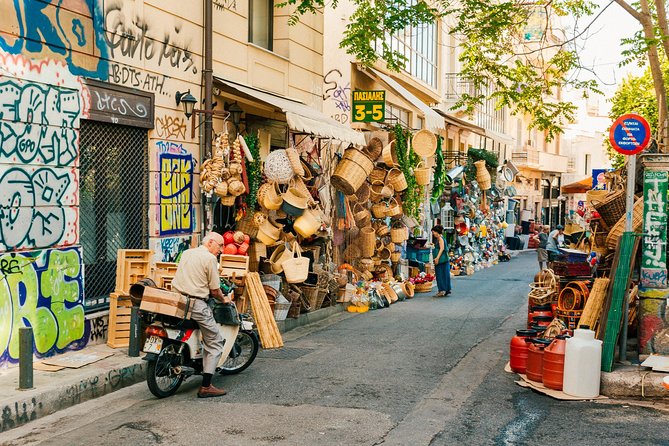
Monastiraki is the kind of place where your brain keeps switching channels: souvenirs, practical gear, food stalls, and that classic mix of bargain hunting and browsing. It’s also a strong starting point because it wakes you up to how Athens feels day-to-day.
This stop is short, around 20 minutes, and admission is free. During that time, your guide’s job is less about “shopping tips” and more about turning the street scene into story fuel. You’ll hear why certain areas have their reputation, and how the city’s layers show up in what people buy and carry.
A practical way to use this stop: if you arrive early or are a little jet-lagged, Monastiraki is an easy place to begin because it’s visually obvious. You can reset your attention fast and start thinking in “neighborhood stories” instead of “tourist checklist.”
Just your group, at your own pace


Stop 2: The Academy of Athens and what an institution says about a country
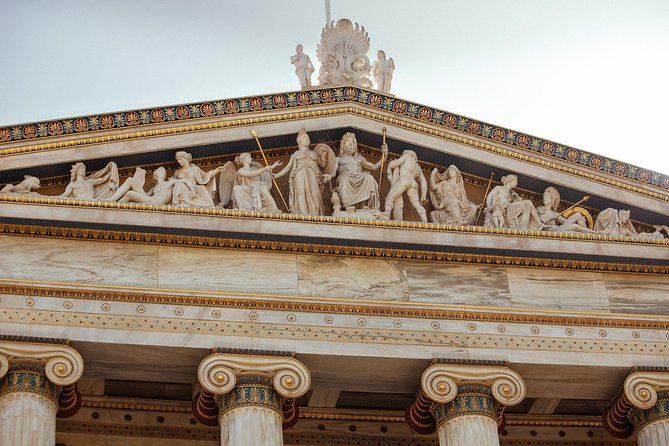
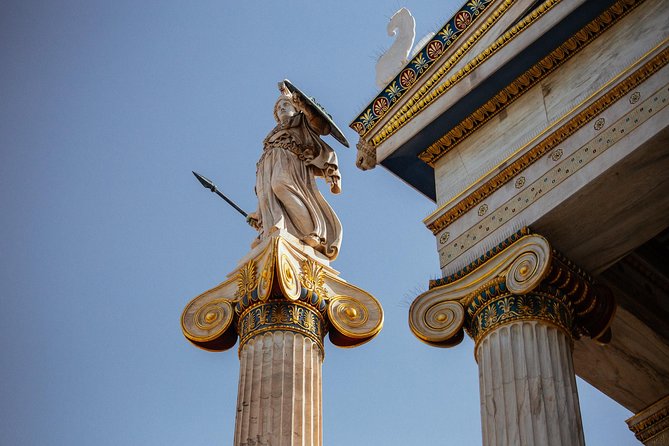
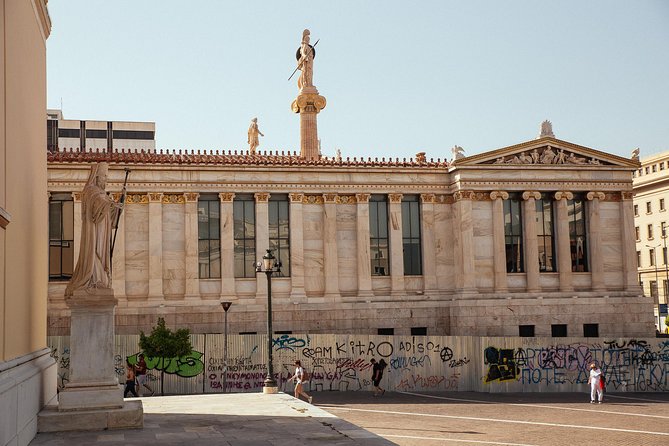
Then you shift from market clutter to a landmark tied to Greece’s official intellectual life: the Academy of Athens. The main building is described as one of Athens’ major landmarks, and it was established in 1926 under the supervision of the Ministry of Education.
This is the stop that gives the tour more weight than a casual stroll. Mythology can get vague if it’s only about legends; here, you’ll see how modern Greece organizes knowledge and culture. A good guide will connect that to the bigger question: how countries keep myths alive, not only through art and religion, but through education and institutions.
Again, it’s about 20 minutes and admission is free for the stop. The value is in the guide’s framing—how they connect the setting to the relevant god or story you’re learning about. If you love when history and myth meet real buildings, this is often where the tour starts to feel “worth it” fast.
Stop 3: Varvakios Central Municipal Market for everyday food culture
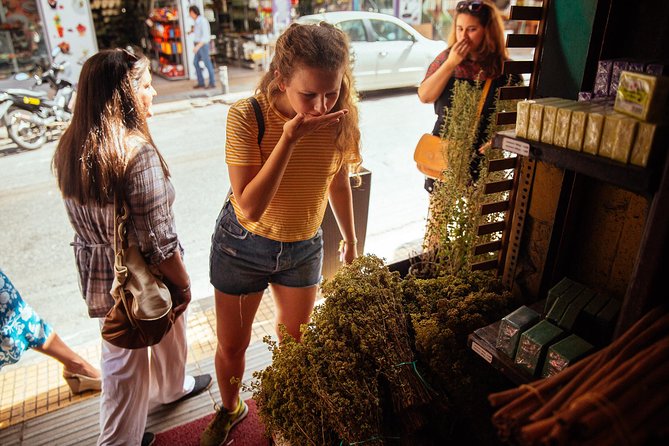
If you want a more sensory side of Athens, Varvakios Central Municipal Market is it. The market is described as a bustling center for locally sourced seafood, meats, fruits, and vegetables, with street eats.
This stop is also about 20 minutes and free to visit. Even in a short time, it can do a lot for your understanding of the city. Mythology is the theme, but your guide can use the market to show how daily life works—how people shop, what’s fresh, and why these places matter socially.
Here’s how I’d use this moment well: look for what stands out to you—seafood displays, spice smells, busy counters—and ask a simple question like what locals buy most often. When your guide talks in terms of everyday habits, the myth stories often land better because you’re learning how the people behind the legends actually live.
Optional route moments: Anafiotika and Zeus legends
The tour info notes that your route may include a skyline moment at Anafiotika, with legends of Zeus. Since the exact stops can vary based on your host’s chosen route, you should treat this as a “possible highlight,” not a guaranteed one.
This matters because Athens viewpoints aren’t just about photos. A skyline view can anchor a story in the geography of the city—why a legend belongs there, and how the landscape shaped imagination. If your guide offers a viewpoint break, take it. Even if you’ve got other plans, this is one of those “small time, big payoff” moments.
What private guiding changes (and what to watch for)
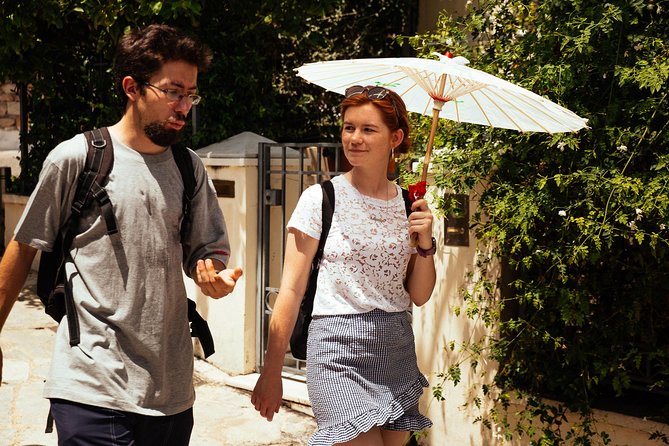
The biggest advantage here is control. Withlocals lists it as a private tour, meaning only you and your local guide join. That setup is ideal if you want your stories customized—more mythology detail, more neighborhood context, more shopping sights, or fewer tangents.
You also get better odds of a conversation instead of a lecture. In the guide feedback, people highlighted energy and local knowledge, with named guides including Makram, Markella, and Ioannis. The common thread is clear: guides who connect stories to what you’re seeing in the moment tend to make the tour feel alive.
Now the flip side: mythology quality can depend heavily on the specific guide. One experience in the feedback felt awkward and not mythology-forward, and another praised the content while noting the guide sometimes didn’t notice how long people were standing in direct sun. So here’s your best move: at the start, tell your guide exactly what you want, and ask them to pace stories with breaks.
A simple script you can use:
- I love Greek gods. Can you keep the mythology tied to each stop?
- If we’re in sun, can we plan short shade breaks?
That kind of request usually gets you the best version of the tour.
Price and value: what $199.62 buys you
At $199.62 per person, this is not a budget stroll. The value comes from the private format and the kind of stops included: Monastiraki and Varvakios for local street life, plus the Academy of Athens for a landmark connection.
Two things you should weigh:
- You’re paying for a guide who connects themes. If you want mythology tied to real streets, that narrative work is what you’re buying.
- Some admissions are free, but not everything is included. The tour lists entrance to attractions as not included. The specific listed stops (Monastiraki, Academy of Athens, Varvakios) show free admission, but if the route adds other sites, you could face extra costs.
The “CO2 neutral” carbon offset is included, which is nice in principle. It shouldn’t be the only reason to book, but it is part of what you’re paying for.
Also consider who this fits best. If you’re traveling solo or as a couple and you care about a story-driven route, private often feels like good sense. If you’re traveling with a big group, look for how group discounts are applied, because that can improve the per-person math.
Sun, shoes, and timing tips that save your mood
This is a walking tour with moderate fitness needs. That means comfortable shoes matter more than almost anything else. Also, the itinerary includes time outdoors in neighborhoods with open streets, so heat can hit fast.
From guide feedback, one key lesson repeats: if you’re roasting, speak up. Interrupting politely to ask for shade isn’t rude—it keeps the tour enjoyable. In my experience, guides do better when they know the temperature is affecting your attention.
Timing-wise, plan around how long you’ll want to absorb stories at each stop. The tour segments are about 20 minutes at each named stop, but narrative pauses can stretch that feeling. If you’re the type who likes deep details, you might love it. If you’re easily overwhelmed, ask your guide to keep stories shorter and more targeted to the gods tied to each stop.
One extra date-related note: a feedback comment mentioned that on a Sunday, several places some people hoped to see were closed (state houses, library, and markets). Since routes and stops can vary, you should expect some closures on certain days and build flexibility into your expectations.
Who should book this Athens mythology walk
Book it if you fit one of these:
- You want myths tied to geography, not just facts.
- You like neighborhood exploring, especially with a market stop that feels local.
- You’re okay with walking and short segments outdoors.
- You prefer a private conversation, so you can ask for mythology emphasis.
Skip it (or adjust your expectations) if:
- You’re only interested in big-ticket monuments.
- You hate sun and don’t plan to ask for shade breaks.
- You’re looking for a strict, never-vary route with exact museum-style coverage.
This tour can be a great companion to other Athens plans. Think of it as your “myth map” for central Athens—so later, when you wander on your own, the stories feel less random.
Should you book this Athens Gods tour?
I’d book it if you want a guided way to understand why Athens mythology feels woven into everyday streets. The private format, the market stop, and the blend of landmark + neighborhood storytelling make it a strong fit for travelers who like context.
Before you go, do two things to protect your experience: confirm what you want your guide to focus on (mythology detail vs. neighborhood history), and be ready to request shade and pacing if the day is hot. If you do that, you’re much more likely to get the version of the tour people praise for energy, clear storytelling, and real local feel—rather than the “hit-or-miss” outcomes tied to guide fit and conditions.
FAQ
How long is the History of Athens: Greek Mythology Private Tour?
It’s listed at about 3 hours.
Where does the tour start and end?
It starts at Panepistimiou 37, Athina 105 64, Greece, and ends in Plaka, Athens.
Is this tour private or group-based?
It’s private—only you and your local guide.
What’s included in the price?
A private guide is included, and the tour is CO2 neutral with carbon emissions offset. The price also notes a mobile ticket and English language availability.
Are entrance tickets included?
Entrance to attractions is not included, although the listed stops (Monastiraki, the Academy of Athens, and Varvakios Central Municipal Market) are shown as free admission.
Are food and drinks included?
No. Food and drinks are not included unless specified.
What language is the tour offered in?
The tour is offered in English.
What fitness level do I need?
You should have a moderate physical fitness level since it’s a walking tour.
More Tour Reviews in Athens
- Athens: Acropolis & up to 5 Archaeological Sites Combo Pass★ 4.2 · 13,904 reviews
- Athens: Acropolis, Parthenon & Acropolis Museum Guided Tour★ 4.8 · 9,316 reviews
- The Acropolis, Parthenon & Acropolis Museum Guided Tour★ 4.7 · 8,493 reviews
- Athens: Cape Sounion & Poseidon Temple Sunset Half-Day Trip★ 4.8 · 8,241 reviews
- Acropolis: Premium Acropolis and Parthenon Guided Tour★ 4.8 · 5,208 reviews
- Athens: Mythology of Delphi, Museum and Arachova Guided Tour★ 4.7 · 5,102 reviews
Just Your Group: More Private Days
- Best of Athens Half Day Private Tour★ 5.0 · 3,714 reviews
- Athens Full Day Private Tour★ 5.0 · 2,903 reviews
- Athens Greece Full Day private tour★ 5.0 · 785 reviews
- 4 Hours – Athens & Acropolis Highlights Private Tour★ 5.0 · 681 reviews
- Athens Full Day Private Tour★ 5.0 · 667 reviews
- Enjoy Cape Sounio Private Majestic Sunset With Seaside Dinner★ 5.0 · 613 reviews
Myth and Legend, Retold
- Athens: Mythology of Delphi, Museum and Arachova Guided Tour★ 4.7 · 5,102 reviews
- Athens & Acropolis Highlights: Greek Mythology Small-Group Tour★ 5.0 · 2,370 reviews
- Athens: Acropolis and Mythology Highlights Small Group Tour★ 4.8 · 2,275 reviews
- Philosophy and Democracy tour of Athens★ 5.0 · 285 reviews
- Athens: Mythology Tour for Families★ 4.8 · 173 reviews
- Athens: Guided Mythological Walking Tour★ 4.9 · 125 reviews
Fresh Off the Boat: New Athens Reviews




Athens Mythology Tours, compared.
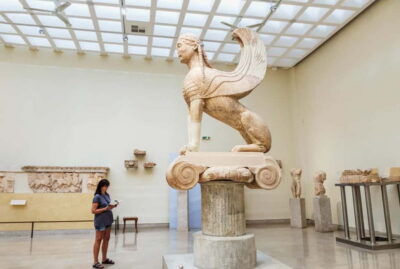 ★ 4.7Mythology of Delphi, Museum and Arachova Guided TourFrom $305,102 reviews
 ★ 5.0Athens & Acropolis Highlights: Greek Mythology Small-Group TourFrom $542,370 reviews
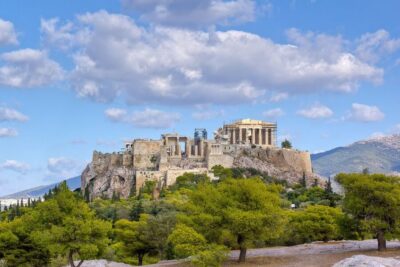 ★ 4.8Acropolis and Mythology Highlights Small Group TourFrom $532,275 reviews
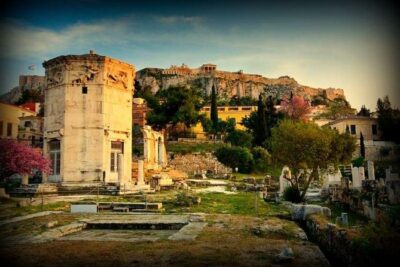 ★ 5.0Philosophy and Democracy tour of AthensFrom $50285 reviews
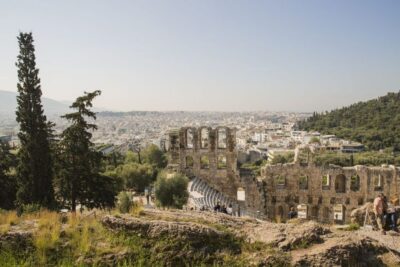 ★ 4.8Mythology Tour for FamiliesFrom $79173 reviews
 ★ 4.9Guided Mythological Walking TourFrom $47125 reviews
Philosophy and Democracy Walking TourFrom $4991 reviews
★ 4.9Guided Mythological Walking TourFrom $47125 reviews
Philosophy and Democracy Walking TourFrom $4991 reviews
 ★ 5.0Greek Mythology Treasure Hunt for Kids – Athens Private TourFrom $17477 reviews
Browse the lists this tour appears in