
Reviewed · ATHENS MYTHOLOGY TOURS
Philosophy and Democracy tour of Athens
Democracy has a walkable backbone in Athens. This 3.5-hour tour ties together Kerameikos, the Agora, and the Pnyx views with clear discussion of philosophy and democracy, and the small group keeps things interactive. One thing to plan for: you’ll do a fair amount of walking, and several major stops list entrance fees as not included.
My favorite part is the way the guide brings the ideas down to earth. With Panos leading, you get more than site facts: you compare ancient Athens to modern democracy, hear how philosophers argued in real places, and get practical tips on what to eat, drink, and explore next.
In This Review
- Key highlights to look forward to
- Philosophy and Democracy: what makes this Athens walk different
- Kerameikos to the Acropolis zone: the route in plain language
- Kerameikos Archaeological Site: ceramics, a cemetery, and Pericles’ democracy speech
- The Athens flea market stop: a breather that still fits the theme
- Hadrian’s Library and the Roman Agora: when the empire edited Athens
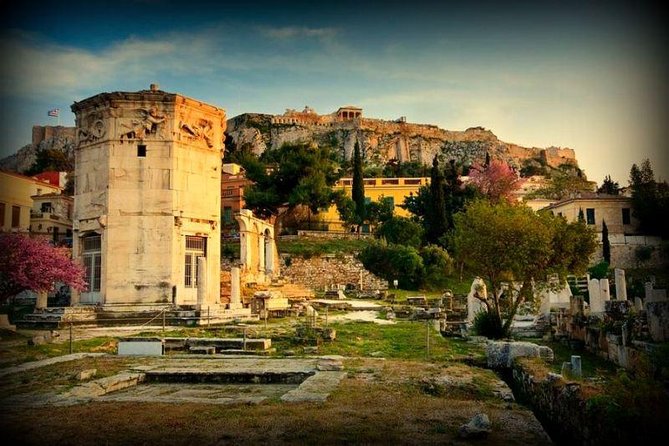
- Tower of the Winds: Athens’ Big Ben meets early meteorology
- Plaka stroll: scenic streets that make the walking feel worth it
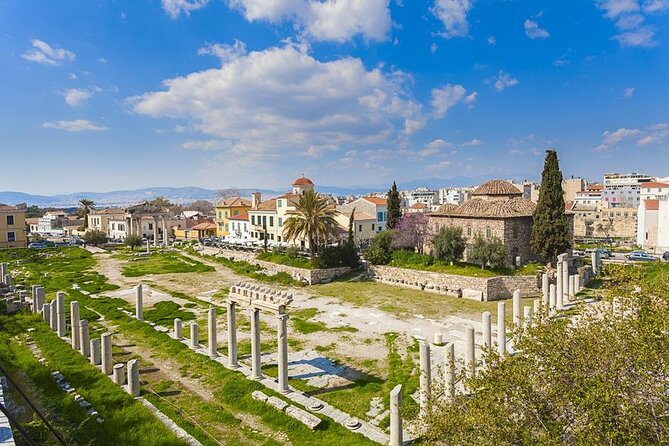
- Ancient Agora: where philosophers and politicians actually collided
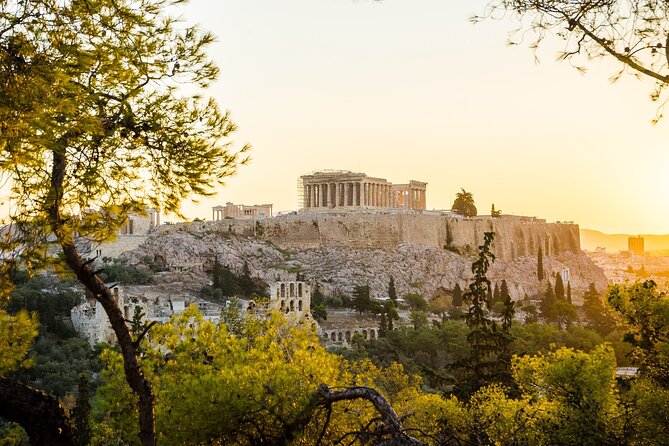
- Prison of Socrates and the Pnyx: the cradle of democracy, in one arc
- Getting to grips with the guide: Panos’ style and how to make it work for you
- What $50.81 buys you (and what might cost extra)
- Pacing, comfort, and small-group logistics that actually matter
- Who should book this tour?
- Should you book Philosophy and Democracy in Athens?
- FAQ
- How long is the Philosophy and Democracy tour in Athens?
- What does the tour cost?
- Is the tour offered in English?
- How big is the group?
- Are entrance fees included?
- Where do you meet and where does the tour end?
- What happens if weather is poor?
Key highlights to look forward to
- Panos makes democracy and philosophy feel practical, not like school notes
- Kerameikos connects democracy to real people through Pericles and Athens’ cemetery ground
- The Tower of the Winds is Athens’ early weather-and-time gadget, explained on site
- Ancient Agora brings together the talkers like Socrates, Plato, Solon, Pericles, and Aristophanes
- Pnyx is the cradle-of-democracy stop with big views, and it stays free
- Small group size (max 15) means you can ask questions and keep up
The old gods retold, a few more walks
- Athens: Mythology of Delphi, Museum and Arachova Guided Tour
★ 4.7 · 5,102 reviews - Athens & Acropolis Highlights: Greek Mythology Small-Group Tour
★ 5.0 · 2,370 reviews - Athens: Acropolis and Mythology Highlights Small Group Tour
★ 4.8 · 2,275 reviews - Philosophy and Democracy tour of Athens
★ 5.0 · 285 reviews
Philosophy and Democracy: what makes this Athens walk different
Athens is famous for monuments, but it’s also famous for how people argued. This tour leans hard into that human side: you walk between key places where ideas formed, then connect those ideas to modern politics and daily life.
The setting helps. You’re not staring at a map and trying to imagine history. You’re standing where debates happened, where leaders spoke, and where a city turned disagreement into decision-making.
What you get that feels special is the focus. Many Athens tours cover “what” happened. Here you also get the “why,” especially around democracy and philosophy, with comparisons to today’s world.
Kerameikos to the Acropolis zone: the route in plain language
The walk is laid out so you move through Athens in a way that builds understanding. You start at Kerameikos, then drift through Roman-era layers, wind your way toward the Agora, and end up on the Pnyx/Acropolis side of the city.
That flow matters because Athens is layered. Greeks, then Romans, then centuries of reuse and rebuilding. When you follow the order the tour uses, you stop thinking of ruins as disconnected piles and start seeing how one era built on another.
Expect a pace that feels designed for learning, not sprinting. It’s short stops, guided context, and enough time to ask questions along the way. One practical note: the tour requires good weather, so plan for sun and heat, and have a water bottle ready.
Kerameikos Archaeological Site: ceramics, a cemetery, and Pericles’ democracy speech
Kerameikos is the kind of Athens stop I love for first-time visitors because it feels important and still somehow less crowded. Kerameikos literally connects to ceramics, because this area had many ceramic workshops. It also served as the cemetery of Athens for centuries.
What makes the stop hit harder than a typical “this was a burial site” explanation is the political tie-in. You’ll hear about Pericles and his famous Epitaph speech for the first casualties of the Peloponnesian War—praising the virtues of democracy and the way Athenians lived.
Even though this stop is only about 15 minutes, it sets the tone for the whole tour. You start with the idea that democracy wasn’t abstract. It was tied to life, sacrifice, and civic identity.
Plan for the fact that Kerameikos entrance is not included in the tour price, so budget a bit extra if you want to step inside.


The Athens flea market stop: a breather that still fits the theme
After the serious tone of Kerameikos, you get an easy pace walk through a flea market area. The time is short, around 15 minutes, but it’s a smart rhythm reset.
This is where Athens stops being only “ancient,” and turns into a living city where commerce and everyday life happen beside history. It’s also a useful way to pick up small items and get a feel for local shopping without losing the tour’s structure.
The flea market portion is free within the tour plan, so it’s low-cost and high-value for atmosphere.
Hadrian’s Library and the Roman Agora: when the empire edited Athens
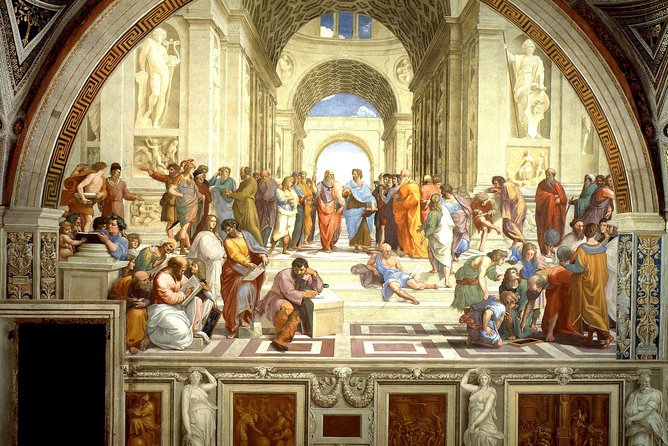
Next up are the Roman layers you can easily miss if you only chase the headline sites.
Hadrian’s Library, created by Roman Emperor Hadrian in AD 132, sits on the north side of the Acropolis of Athens. It’s a reminder that Athens remained a cultural magnet even after political control shifted.
Then comes the Roman Agora, located north of the Acropolis and to the east of the Ancient Agora. This stop helps you see the city as a map of different powers, each adding their own public spaces.
Both of these are shorter stops (about 15 minutes each), and both list entrance tickets as not included. I’d still do them on foot with a guide, because the explanations tie into the larger story: how Athens kept its identity while absorbing new rulers and styles.
Tower of the Winds: Athens’ Big Ben meets early meteorology

If you like weird-but-cool ancient engineering, don’t skip the Tower of the Winds stop.
This octagonal building was made by astronomer Andronicus of Kyrristos in the 1st century BC. It wasn’t only decoration. It functioned as a wind indicator and also as a clock, serving as something like Athens’ version of Big Ben—paired with a practical daily role.
One of the most memorable details: the clock was solar, but in cloudy days there was also a hydraulic mechanism that produced a sound every hour. The explanation you get on site helps you understand how people tracked time and weather before modern instruments. It’s even considered the first meteorological station.
Time is brief (around 5 minutes), and entrance is listed as not included, so think of this as a targeted stop where the guide’s story is the main attraction.
Plaka stroll: scenic streets that make the walking feel worth it
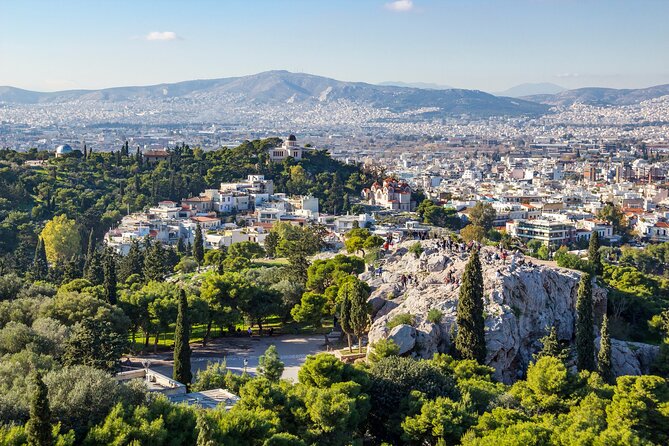
At some point in the route, you’ll pass through Plaka, known for its scenic small houses and narrow streets.
This isn’t just “pretty scenery.” It’s a chance to slow down, get photos without rushing, and reset your eyes for the bigger archaeological pieces coming next.
Since Plaka is woven into the tour’s walking logic, you get a smoother transition from monumental ruins back to street-level Athens.
Ancient Agora: where philosophers and politicians actually collided
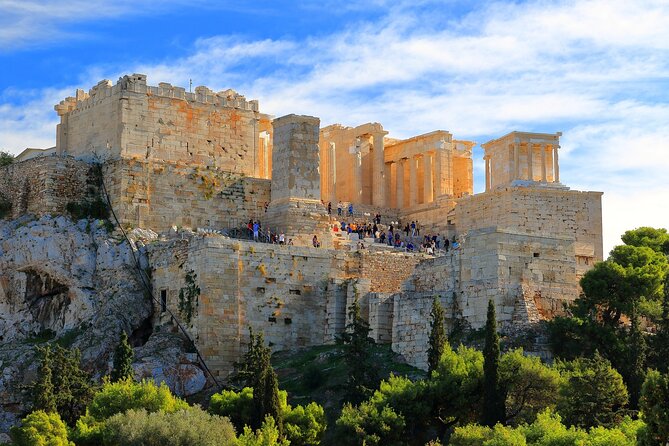
The heart of the tour is the Ancient Agora of Athens, about 20 minutes on site. This is where the city’s public life lived—walking, debating, advising, and arguing about anything that mattered.
You’ll hear how major philosophers and political leaders moved through the same space where ordinary citizens also showed up. Names you can expect to hear include Socrates and Plato, plus civic figures like Solon, Themistocles, and Pericles. The tour also references thinkers connected to drama and comedy traditions, like Sophocles (spelled Sofoklis here) and Aristophanes.
The value of this stop isn’t just recognizing names. It’s learning how debate worked as a civic skill. You start to see why democracy and philosophy grew together here: both require citizens who can question, persuade, and listen.
Entrance is listed as not included, so factor that into your total budget.
Prison of Socrates and the Pnyx: the cradle of democracy, in one arc
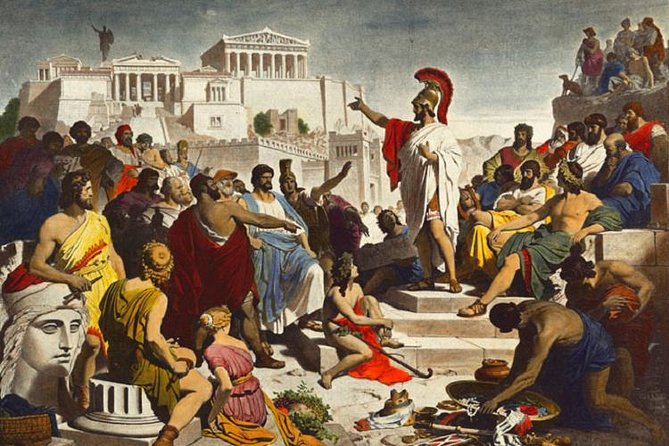
From the Agora you move to a spot paying tribute to the Prison of Socrates. This portion is free and short (about 10 minutes), but it’s a powerful emotional beat in the tour.
Even if you already know the story in broad terms, the guide’s framing tends to make it more immediate: philosophy wasn’t just ideas on paper. It had consequences inside real civic systems.
Then you reach Pnyx, about 30 minutes. Pnyx is often described as the cradle of democracy because it was the first place where people took decisions for their future. You’ll also get great views over Athens and the Acropolis area, so you’re not only learning—you’re also looking at the city from the logic of power and speech.
Pnyx is free within the tour plan. It’s one of the best places to connect the theme to the physical geography of Athens.
Getting to grips with the guide: Panos’ style and how to make it work for you
A huge part of why people rate this tour so highly is the guide’s delivery. Panos’ approach is practical and conversational, with humor mixed in so the material stays human.
This matters because the topic can go abstract fast. Ancient democracy can sound like a vague textbook concept, and philosophy can sound like distant elite debate. Panos’ method keeps it tied to places you can point at, with examples that make you think rather than just memorize.
You’ll also find that questions are part of the experience. The pacing leaves room for back-and-forth, which is exactly what you want if you’re the type who wonders how ancient systems worked.
One helpful practical detail from real tour moments: Panos speaks loudly and clearly, so you shouldn’t need earphones to follow.
What $50.81 buys you (and what might cost extra)
Price is $50.81 per person for about 3 hours 30 minutes. That’s a strong value for a guided walking tour that hits multiple important stops with a theme you can’t get from a standard audio guide.
Here’s the honest balance: several sites on the route list admission tickets as not included. In this plan, that includes Kerameikos, Hadrian’s Library, the Roman Agora, the Tower of the Winds, and the Ancient Agora. By contrast, the flea market, Prison of Socrates, and Pnyx are marked free.
So the tour price mostly covers your guide, the structure, and the walking route between sites. If you want a smooth day with no surprises, check which entrances you personally plan to use and budget for them up front.
Also, the tour is offered in English and uses a mobile ticket, which keeps things simple.
Pacing, comfort, and small-group logistics that actually matter
This is a small-group experience with a maximum of 15 travelers. That’s not a marketing line—it’s how you get real attention. With fewer people, it’s easier to ask questions, hear explanations, and stay oriented through the route.
The tour is about 3.5 hours and requires good weather. It’s also walk-based, so wear comfortable shoes. One review note that sticks with me: bring water for the walk, especially if you hit Athens in warm weather.
The meeting point is at Statue of Theseus, Athens. The tour ends at Theorias 21, Athina. It’s also near public transportation, which helps if you want to connect it to another activity afterward.
If you’re traveling with kids, the theme isn’t only for adults. The philosophy-and-democracy angle works well for motivated teens too, as long as they don’t mind lots of thinking on their feet.
Who should book this tour?
Book it if you:
- want Athens that connects ideas to real places, not only monuments
- like discussions about politics, ethics, and how societies make decisions
- want a guided route that stitches together multiple eras of the city
Consider skipping if you:
- want a purely archaeological tour with minimal focus on ideas and debate
- dislike walking between multiple sites in a single morning/afternoon window
- prefer a day plan where entrance fees are fully bundled (because several stops are not included)
Should you book Philosophy and Democracy in Athens?
Yes—if you want the Athens that helps you understand why the ancient world still gets quoted in modern debates. The route is well paced, the small group size keeps it interactive, and Panos’ explanations make democracy and philosophy feel less like history trivia and more like something you can use to think.
I’d especially book this early in your Athens trip. It gives you a framework you’ll notice as you visit other sites later—because you start seeing Athens as a city built around speech, persuasion, and civic participation.
FAQ
How long is the Philosophy and Democracy tour in Athens?
The tour lasts about 3 hours 30 minutes.
What does the tour cost?
The price is $50.81 per person.
Is the tour offered in English?
Yes, the tour is offered in English.
How big is the group?
The tour has a maximum of 15 travelers.
Are entrance fees included?
Not all entrances are included. Kerameikos, Hadrian’s Library, the Roman Agora, the Tower of the Winds, and the Ancient Agora list admission as not included. The flea market, Prison of Socrates, and Pnyx are free.
Where do you meet and where does the tour end?
You meet at Statue of Theseus, Athens 105 55, Greece. The tour ends at Theorias 21, Athina 105 58, Greece.
What happens if weather is poor?
The experience requires good weather. If it’s canceled due to poor weather, you’ll be offered a different date or a full refund.
If you want, tell me your travel dates and whether you plan to visit the Acropolis that same day, and I’ll suggest a simple order for the rest of your Athens hours.
More Tours in Athens
- Athens: Acropolis, Parthenon & Acropolis Museum Guided Tour★ 4.8 · 9,316 reviews
- The Acropolis, Parthenon & Acropolis Museum Guided Tour★ 4.7 · 8,493 reviews
- Acropolis: Premium Acropolis and Parthenon Guided Tour★ 4.8 · 5,208 reviews
- Athens: Mythology of Delphi, Museum and Arachova Guided Tour★ 4.7 · 5,102 reviews
- Acropolis and Parthenon Guided Walking Tour★ 5.0 · 4,755 reviews
- Greek Food Walking Tour in Athens★ 5.0 · 4,740 reviews
More Tour Reviews in Athens
- Athens: Acropolis & up to 5 Archaeological Sites Combo Pass★ 4.2 · 13,904 reviews
- Athens: Acropolis, Parthenon & Acropolis Museum Guided Tour★ 4.8 · 9,316 reviews
- The Acropolis, Parthenon & Acropolis Museum Guided Tour★ 4.7 · 8,493 reviews
- Athens: Cape Sounion & Poseidon Temple Sunset Half-Day Trip★ 4.8 · 8,241 reviews
- Acropolis: Premium Acropolis and Parthenon Guided Tour★ 4.8 · 5,208 reviews
- Athens: Mythology of Delphi, Museum and Arachova Guided Tour★ 4.7 · 5,102 reviews
Myth and Legend, Retold
- Athens: Mythology of Delphi, Museum and Arachova Guided Tour★ 4.7 · 5,102 reviews
- Athens & Acropolis Highlights: Greek Mythology Small-Group Tour★ 5.0 · 2,370 reviews
- Athens: Acropolis and Mythology Highlights Small Group Tour★ 4.8 · 2,275 reviews
- Athens: Mythology Tour for Families★ 4.8 · 173 reviews
- The History of Athens: Greek Mythology Private Tour★ 5.0 · 138 reviews
- Athens: Guided Mythological Walking Tour★ 4.9 · 125 reviews
Fresh Off the Boat: New Athens Reviews





Athens Mythology Tours, compared.
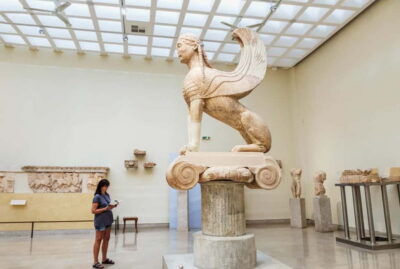 ★ 4.7Mythology of Delphi, Museum and Arachova Guided TourFrom $305,102 reviews
 ★ 5.0Athens & Acropolis Highlights: Greek Mythology Small-Group TourFrom $542,370 reviews
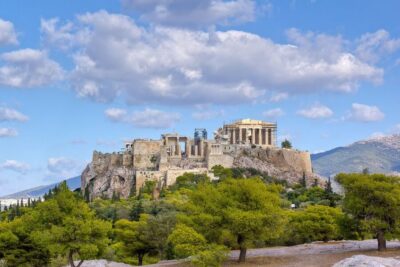 ★ 4.8Acropolis and Mythology Highlights Small Group TourFrom $532,275 reviews
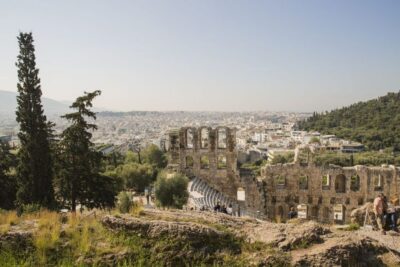 ★ 4.8Mythology Tour for FamiliesFrom $79173 reviews
 ★ 5.0The History of Athens: Greek Mythology Private TourFrom $199138 reviews
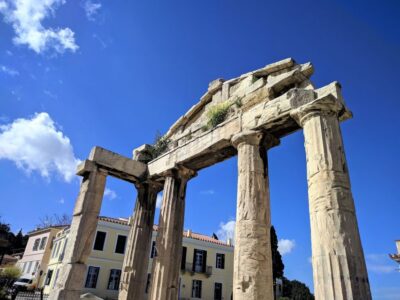 ★ 4.9Guided Mythological Walking TourFrom $47125 reviews
Philosophy and Democracy Walking TourFrom $4991 reviews
★ 4.9Guided Mythological Walking TourFrom $47125 reviews
Philosophy and Democracy Walking TourFrom $4991 reviews
 ★ 5.0Greek Mythology Treasure Hunt for Kids – Athens Private TourFrom $17477 reviews
Browse the lists this tour appears in