

Reviewed · WALKING TOURS
Athens Social and Political Walk
Greek politics feels real fast. This walk is interesting because it links big government buildings to the stories behind today’s headlines, using a political scientist guide named Isaac. I especially like the small-group format that keeps it conversational, and I love how Isaac connects Greek history (independence, the junta, democratic reforms) to current social and political tensions. One consideration: this is a walking tour with a moderate fitness level, and it depends on good weather.
You’ll spend about 2 hours 30 minutes moving through Athens’s official and symbolic “centers of gravity.” By the end, you’re not just looking at landmarks—you’re understanding why people in Greece care about them.
In This Review
- Key takeaways before you go
- Why this Athens walk is more than sightseeing
- Starting point near Vasilissis Sofias: where the story begins
- The Prime Minister’s seat: how power is staged in stone
- The President’s residence: symbolism, stability, and friction
- Parliament and the old Parliament: where arguments become law
- November 17 at Athens Polytechnic: why this date echoes
- The route’s through-line: independence to junta to modern politics
- Small-group focus: why your questions actually matter
- Price and value: is $47.92 worth it?
- Weather, walking pace, and what to wear
- Who this tour suits best (and who should skip it)
- Should you book this Athens Social and Political Walk?
- FAQ
- FAQ
- How long is the Athens Social and Political Walk?
- What is the price per person?
- How many people are on the tour?
- What language is the tour offered in?
- Where does the tour start and end?
- Is this tour accessible for everyone?
- What happens if the weather is bad?
Key takeaways before you go

- A political scientist guide (Isaac) makes the present make sense by tying history to current issues.
- Small group capped at 15 means you get focused attention and real chances to ask questions.
- Power buildings, not just monuments: you’ll see where decisions are made and where political legitimacy was argued.
- November 17 comes alive at Athens Polytechnic—a key moment in modern Greek history.
- Balanced, comparison-friendly explanations help you follow Greek politics even if you don’t know the background.
Athens at walking pace, more routes
- Acropolis and Parthenon Guided Walking Tour
★ 5.0 · 4,755 reviews - Greek Food Walking Tour in Athens
★ 5.0 · 4,740 reviews - Athens: Guided Greek Food Walking Tour with Tastings
★ 4.9 · 2,859 reviews - Acropolis monuments & Parthenon Walking Tour with Optional Acropolis Museum
★ 5.0 · 2,678 reviews
Why this Athens walk is more than sightseeing

If your Athens plan is mostly columns, temples, and marble views, this tour gives you a different kind of map. You’ll walk the city’s political “stage”: the places where authority is housed, where laws are debated, and where major civic rupture left a lasting mark.
What makes it work is the guide’s approach. Isaac is described as a specialist who can handle the big picture without turning it into a textbook. He also makes room for context—how Greece moved through independence-era struggles, the era of the junta, and then toward democratic reforms. That history matters because Greek politics today is often about how the country got here, not just what’s happening right now.
Two things stand out from people’s experience: the walk is well planned, and the explanations are nuanced. You’re not being pushed toward one “team.” Instead, you get tools to understand why different sides see things differently.
Starting point near Vasilissis Sofias: where the story begins
You begin on Leof. Vasilissis Sofias 2-4 (Athina 106 74). This is a practical start: you’re positioned in a part of central Athens where getting there is usually straightforward via public transportation.
The tour ends at the main entrance of the National Technical University of Athens, also known as Athens Polytechnic, located on Patision Avenue (Athina 106 82). That end point is important because it isn’t just another building stop—it’s tied directly to a major uprising in modern Greek history.
Timing-wise, you should plan for roughly 2 hours 30 minutes. That length is a sweet spot: long enough to connect the dots across eras, short enough to still keep your day flexible after.
The Prime Minister’s seat: how power is staged in stone
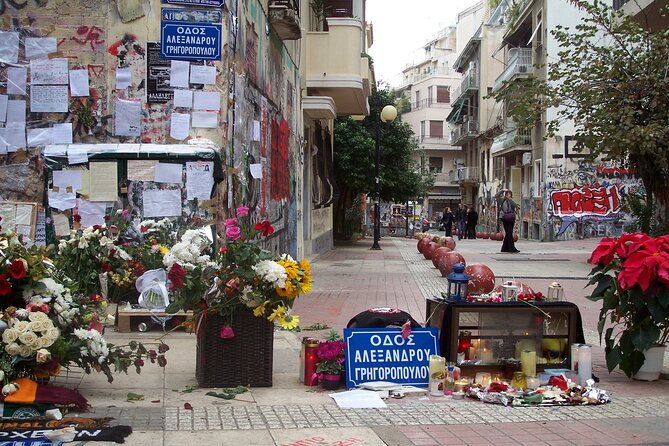
One of the first stops is the official seat of the Prime Minister of Greece. On a surface level, it’s a government site. But on this walk, it’s used as a starting question: what does executive power look like in everyday life, and how does that shape political culture?
Isaac’s explanations help you see why the architecture and location of institutions are not random. Government buildings are physical statements. They signal who holds decision-making authority and how the state wants to be perceived.
Practical benefit for you: after a couple of stops, you’ll start “reading” the city differently. Instead of only asking what a building is, you’ll ask what it represents.
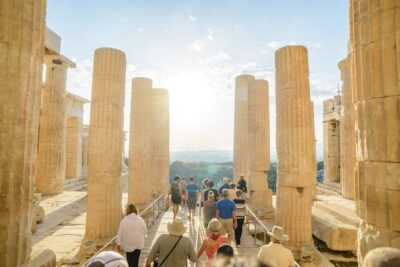


The President’s residence: symbolism, stability, and friction
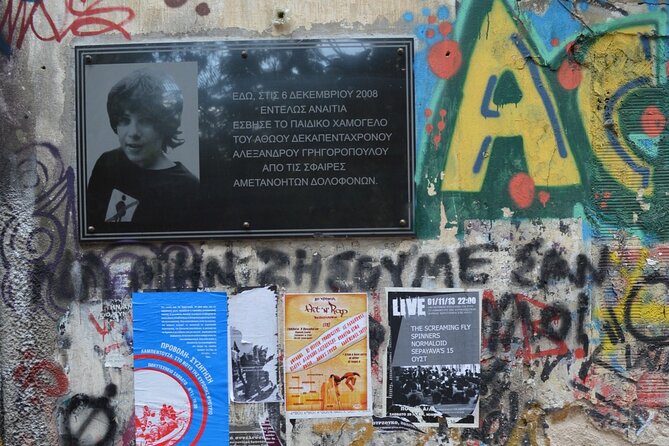
Next comes the official residence of the President of the Hellenic Republic. This stop usually changes the pace of your thinking: the presidency often brings up ideas like national continuity, constitutional roles, and the difference between ceremonial authority and political influence.
On this walk, you’re not treated like a blank slate. Isaac is able to connect institutional roles to the broader evolution of Greek democracy. That helps if you’ve ever felt confused by how political systems work in different countries—this gives you a framework you can actually use.
You’ll also have space to ask questions. If something feels unclear—like how different branches relate, or why public trust can swing—this is the part where those questions make sense.
Parliament and the old Parliament: where arguments become law
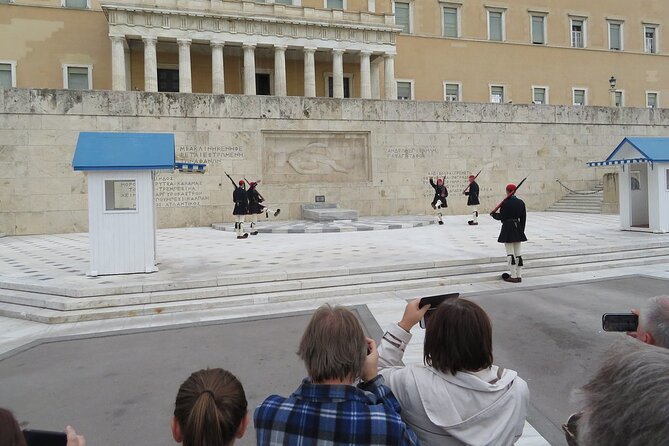
Then you reach both the Parliament of Greece and the Old Parliament House. This is where the tour really becomes “political systems in motion,” not just history.
Here’s what you should expect: the guide uses these stops to connect civic participation, governance, and the lived reality of political change. When you stand near parliamentary spaces, it becomes easier to grasp why people fight over legitimacy, representation, and the rules of the game.
The Old Parliament House adds a layer of depth. It gives you a sense that political life in Athens hasn’t been static. Institutions evolve, roles change, and the public’s relationship with government can shift dramatically over time.
One small drawback to be aware of: these are official areas, so you may need to follow the group’s movement and respect the rules around government buildings. Think of it as a learning walk that prioritizes focus over lingering photo stops.
November 17 at Athens Polytechnic: why this date echoes

The last major stop is the National Technical University of Athens—Athens Polytechnic. This is tied to the most important event in the NTUA’s history: the Athens Polytechnic uprising on November 17, 1973.
In a lot of tours, the date of an uprising becomes a quick fact. On this one, it’s treated like a turning point that shaped how modern Greeks understood authority, protest, and civic identity.
If you care about how societies handle dissent and how democracies recover from rupture, this part will land. The event isn’t treated as distant tragedy; it’s used to explain why political culture in Greece can feel intense and deeply personal.
It’s also a great way to end because your walk finishes at the very place that carries the history. You can look at the surroundings and feel the weight of what happened there.
The route’s through-line: independence to junta to modern politics

Across the walk, the guide weaves a clear through-line. People describe the experience as a fast-track into how Greek politics got to where it is now—especially if you’ve read some history but want it connected to the present.
Isaac’s storytelling approach also includes comparisons to other countries’ political systems. That matters because Greek politics can feel complicated if you don’t have context for institutions, party dynamics, or historical trauma. With comparisons, concepts become less abstract.
From what people highlight, Isaac also brings in themes beyond pure political science: economy and culture show up as part of the explanation, not as distractions. There are even anecdotes connected to recent news, used to add flavor and relevance without turning the tour into a daily news recap.
Small-group focus: why your questions actually matter

This tour caps at a maximum of 15 travelers. In practice, that means the guide can keep a steady flow without losing people in the group.
You should expect a conversation-friendly pace. People emphasize the ability to ask questions about history and current events, and you can see why that works best in a small group.
If you like learning by asking why something happened, or how a current debate links back to earlier events, this is a good fit. If you want a silent, museum-style experience, you might find the discussion-heavy format a bit more social than you expected.
Price and value: is $47.92 worth it?
At about $47.92 per person for roughly 2 hours 30 minutes, the value depends on one thing: do you want a guide to interpret what you’re seeing?
This isn’t just a route around landmarks. You’re paying for a specialist who can connect multiple eras—independence, junta, democratic reforms—and then bring it forward to today’s political and social climate. People rate the experience extremely high, and the comments are consistent about depth, planning, and balance.
If your goal is to understand the political atmosphere that sits underneath what you’ll hear and see in Athens (from protests to policy debates to cultural attitudes), this price is reasonable. If your goal is mostly photos and casual facts, you may feel there are cheaper ways to cover the same area.
Weather, walking pace, and what to wear
This experience requires good weather. So if Athens is rainy or stormy on your dates, plan for a reschedule or refund option.
You also need moderate physical fitness. The tour is on foot, with multiple stops, and the route includes government areas and the final walk to Athens Polytechnic. Wear comfortable shoes that can handle city sidewalks and short stretches of uphill or uneven ground.
Because you’ll be outside for a couple hours, dress in layers. Greek weather can change fast, and it’s easier to adjust than to wait.
Who this tour suits best (and who should skip it)
This walk is ideal if you:
- want a political lens on Athens, not only ancient sights
- like structured explanations that connect past events to today’s issues
- enjoy asking questions and comparing politics across countries
It may be less ideal if you:
- prefer very relaxed sightseeing with minimal discussion
- struggle with moderate walking for 2+ hours
- want a purely visual tour that avoids context-heavy stops
If you’re in Athens for a few days and want one activity that makes everything else click—this can be the “glue” tour that ties history to current life.
Should you book this Athens Social and Political Walk?
I’d book it if you want Athens to feel like a living political story. The best part is the guided synthesis: you leave with a clearer sense of how Greece’s political institutions and social tensions came to be, and you can connect what you see in the city to what’s behind the headlines.
I’d hesitate only if you dislike walking, you’re set on a strictly sightseeing itinerary, or you’re visiting during iffy weather. Otherwise, this is a strong value for a niche theme with excellent structure, small-group attention, and a guide who keeps explanations balanced.
FAQ
FAQ
How long is the Athens Social and Political Walk?
It runs for approximately 2 hours 30 minutes.
What is the price per person?
The price is $47.92 per person.
How many people are on the tour?
The maximum group size is 15 travelers.
What language is the tour offered in?
The tour is offered in English.
Where does the tour start and end?
It starts at Leof. Vasilissis Sofias 2-4, Athina 106 74, Greece. It ends at the main entrance of the National Technical University of Athens on Patision Avenue (Athina 106 82).
Is this tour accessible for everyone?
It’s listed as requiring moderate physical fitness. It also notes that service animals are allowed.
What happens if the weather is bad?
The experience requires good weather. If it’s canceled due to poor weather, you’ll be offered a different date or a full refund.
Athens on Foot: More Walks
- Acropolis and Parthenon Guided Walking Tour★ 5.0 · 4,755 reviews
- Greek Food Walking Tour in Athens★ 5.0 · 4,740 reviews
- Athens: Guided Greek Food Walking Tour with Tastings★ 4.9 · 2,859 reviews
- Acropolis monuments & Parthenon Walking Tour with Optional Acropolis Museum★ 5.0 · 2,678 reviews
- Athens Acropolis and Parthenon Walking Tour★ 4.5 · 1,355 reviews
- Acropolis, Parthenon & Athens Old City Heritage Walking Tour★ 4.5 · 876 reviews
More Tour Reviews in Athens
- Athens: Acropolis & up to 5 Archaeological Sites Combo Pass★ 4.2 · 13,904 reviews
- Athens: Acropolis, Parthenon & Acropolis Museum Guided Tour★ 4.8 · 9,316 reviews
- The Acropolis, Parthenon & Acropolis Museum Guided Tour★ 4.7 · 8,493 reviews
- Athens: Cape Sounion & Poseidon Temple Sunset Half-Day Trip★ 4.8 · 8,241 reviews
- Acropolis: Premium Acropolis and Parthenon Guided Tour★ 4.8 · 5,208 reviews
- Athens: Mythology of Delphi, Museum and Arachova Guided Tour★ 4.7 · 5,102 reviews
Fresh Off the Boat: New Athens Reviews





Walking Tours, compared.
 ★ 5.0Acropolis and Parthenon Guided Walking TourFrom $414,755 reviews
 ★ 5.0Greek Food Walking Tour in AthensFrom $874,740 reviews
 ★ 4.9Guided Greek Food Walking Tour with TastingsFrom $812,859 reviews
 ★ 5.0Acropolis monuments & Parthenon Walking Tour with Optional Acropolis MuseumFrom $422,678 reviews
 ★ 4.5Athens Acropolis and Parthenon Walking TourFrom $411,355 reviews
 ★ 4.5Acropolis, Parthenon & Athens Old City Heritage Walking TourFrom $34876 reviews
 ★ 5.0Athens Authentic Greek Food Walking Tour (Small Group)From $83809 reviews
 ★ 4.9Ultimate Food Walking Tour with 15 TastingsFrom $93567 reviews
Browse the lists this tour appears in