
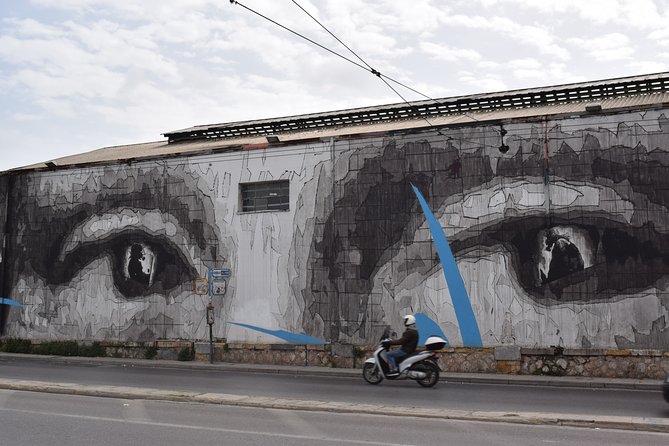
Reviewed · ATHENS STREET ART TOURS
Athens street art tour
Street art turns Athens into a living gallery. I love that this is a small-group walk (max 8) with a guide who helps you read what you’re seeing, and I especially like the way guides such as Agatha connect murals to artists and local meaning. One thing to keep in mind: this is a walking tour, and street art changes over time, so a specific mural may not always be exactly where you expect it.
You’ll start at the Stanley Hotel area and finish around Psyrri, sampling four Athens neighborhoods on foot. It’s a simple plan—short stops, lots of street-level detail, and time to look up like a proper tourist with better eyes. Just plan for moderate walking and comfortable shoes, and bring patience if the weather doesn’t cooperate.
In This Review
- Key things to know before you go
- Why this Athens street art walk is good value at $55
- Start at the Stanley Hotel and get your bearings fast
- Stop 1: Metaxourgio’s murals and the Owl of Athens
- Stop 2: Kerameikos—where pottery workshops meet today’s murals
- Stop 3: Gazi—nightlife district, serious mural talent
- Stop 4: Psirri’s graffiti and tradition-modern mix
- The guide factor: how stories change what you see
- Small-group comfort and hygiene support
- What to bring for comfortable walking
- The route makes sense: four neighborhoods, one learning curve
- Should you book this Athens street art tour?
- FAQ
- How long is the Athens street art tour?
- How many people are in the group?
- What language is the tour offered in?
- Where do you meet, and where does the tour end?
- Is admission included for the stops?
- What’s included in the price?
- Is pick-up or drop-off included?
- What’s the cancellation policy?
Key things to know before you go
- Small-group pacing (up to 8): you get time for questions, not just a quick pass-by.
- English-guided context: you’ll learn what the artists are doing and why it matters locally.
- Four neighborhoods in 2.5 hours: Metaxourgio, Kerameikos, Gazi, and Psirri are a great sampler.
- Street art is always changing: some pieces may shift or disappear, so enjoy what’s there that day.
- Free stop sites, guided tour value: the art is the main event, not ticketed attractions.
Spray and stencil across the walls
- Athens: Guided Urban Street-Art Tour
★ 4.9 · 361 reviews - Athens: Guided Street Art Walking Tour
★ 4.9 · 182 reviews - Awesome Street Art Tour in Athens with a Local Expert Small-Group
★ 5.0 · 150 reviews - Athens Urban Street Art Tour
★ 5.0 · 98 reviews
Why this Athens street art walk is good value at $55
At $55.18 per person for about 2 hours 30 minutes, this tour isn’t priced like a museum day. You’re paying mainly for three things: a local expert guide, a small group experience, and a tight route through neighborhoods you might not link together on your own.
The stops themselves are admission-free, so the cost isn’t swallowed by entry fees. Instead, your money goes toward interpretation—learning the stories behind pieces, noticing techniques, and understanding the artists behind the walls. That’s the real value in a street art tour: without some context, you can still enjoy the art, but you’ll miss the layers.
Also, the group size matters. When you’re with up to 8 people, you don’t spend the whole time stuck behind strangers trying to take photos over shoulders. You can slow down, step aside, and actually look.
Finally, this one tends to book ahead (on average around 19 days), which usually means demand is steady. If your dates are firm, don’t wait for last-minute vibes.
Start at the Stanley Hotel and get your bearings fast

Your meeting point is at the Stanley Hotel, on Odisseos 1 (Athens). The tour ends in Psyrri, so you’ll walk an arc across the city rather than doing a one-point loop.
That routing detail is practical. It means the tour doubles as an orientation walk: you get a feel for how neighborhoods change block by block, and you’re left in an area with plenty to do afterward. Psyrri is a classic place to keep the evening going, especially if you’re into food, bars, or just wandering.
You’ll also be near public transportation—useful if you’re arriving from the airport, a hotel outside the center, or another activity. A mobile ticket is part of the deal, which keeps you from hunting for printouts in your bag.
Stop 1: Metaxourgio’s murals and the Owl of Athens
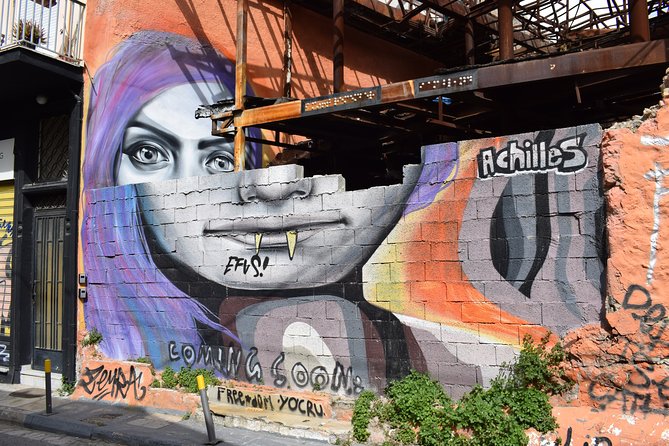
Metaxourgio is your opening act, with about 30 minutes there. This district is known for social initiatives and lots of activity, and you’ll feel that energy right away. The street art here is a major reason people come looking, and the tour spotlights several murals, including the famous Owl of Athens.
What makes Metaxourgio a smart first stop is contrast. You start in an area that’s creative and active, not staged for visitors. That’s helpful because street art can take a minute to “click.” Once it clicks, the rest of the route gets much easier to enjoy.
Possible drawback: because street art is continually changing, the mural you’ve heard about might be partly obscured, repainted, or temporarily altered. Don’t treat that like a failure—treat it like a reminder that the city’s art scene is alive. Focus on the surrounding work too. Even if one piece changes, the walls still teach you how local artists think.
Worth comparing before you book this Athens tour:
Stop 2: Kerameikos—where pottery workshops meet today’s murals
Next up is Kerameikos, about 45 minutes. This is one of those neighborhoods where the past is still doing work—even if you’re not stepping inside any ticketed site.
In ancient Athens, it was an area tied to ceramics and potters’ workshops. Today, Kerameikos has an alternative feel, and the street art collection keeps growing. It’s a good place to slow down and look for connections between materials, crafts, and the way murals are built to last—or not.
Here’s what I’d pay attention to while you’re there: how murals interact with their surroundings. In older areas of a city, art tends to “borrow” texture—cracked walls, old stone edges, and the shapes of doors and alleys. The result looks more integrated than art slapped on top of a blank wall.
A small practical note: 45 minutes sounds long until you’re actually looking up and around. When the group is small, you can move at a comfortable pace. If you like street art details, Kerameikos is a solid place to spend extra attention.
Stop 3: Gazi—nightlife district, serious mural talent
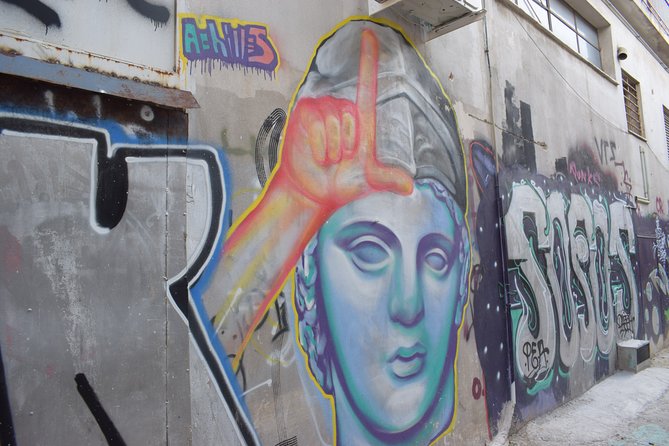
Then you head to Gazi for another 45 minutes. Gazi is known for bars, restaurants, and nightlife. That matters because street art here doesn’t feel like a quiet gallery—it feels like part of the neighborhood’s pulse.
This is also where the tour leans into famous Greek street artists creating murals. The walls can feel more ambitious here, and you’ll likely notice a stronger mix of styles. If you’re trying to understand street art as a whole culture (not just pretty pictures), Gazi is where you start seeing the scene as an ecosystem of artists, audiences, and public space.
One thing to consider: with nightlife areas, sound and foot traffic can be higher. That’s not a dealbreaker, but it can make it harder to hear your guide at every moment. When you want the story behind a piece, stop and face the wall while your guide explains—it’s the fastest way to catch every detail.
Stop 4: Psirri’s graffiti and tradition-modern mix
Your final stop is Psirri for about 30 minutes. This is a local favorite district that blends tradition with a modern attitude, and it’s known for graffiti that feels both personal and current.
Psirri is a good “finish strong” neighborhood because it’s active but still easy to roam around after the tour. You get to end your guided walk in a place where you can keep exploring without needing to take a transport step immediately.
What makes Psirri especially fun after three other districts is the accumulation effect. By now, you’ve learned a bit about reading murals as statements—about identity, politics, community, and art-making in public. So even if a piece feels abstract at first, you’re more likely to notice the clues your guide pointed out earlier.
Another consideration: because street art changes, Psirri might show you a different face than what you saw in photos online before coming. Instead of trying to match images, treat it like a live conversation between artists and the street.
The guide factor: how stories change what you see
The most consistently praised part of this kind of tour is the guide. In the feedback, names like Agatha, Agnes, and Kalliope come up with the same theme: friendly, engaging people who explain the meaning behind pieces and connect them to the wider Athens story.
That matters because street art isn’t just decoration. It’s often commentary, sometimes protest, sometimes humor, often just the artist’s way of staking a claim in public space. When your guide explains the story behind a mural, you stop seeing it as random and start seeing it as language.
You’ll also pick up process. Even when art is interpretive, you’ll learn how artists build impact—composition choices, placement, symbolism, and how a wall becomes a stage. One review highlights that the guide helped people notice murals they might not have found on their own. That’s exactly the value: you’re walking with someone who knows where to look and what to ask.
Small-group comfort and hygiene support
This tour is up to 8 people, which keeps the experience personal. You’re not managing a big crowd, and it’s easier to keep track of directions and meeting points.
It also includes hygiene products such as hand sanitizers and face masks. That’s a small thing, but it’s thoughtful—especially for a walking tour where you’ll touch railings, doorways, and photo-worthy surfaces. You can focus on the art instead of scrambling for basic supplies.
Service animals are allowed, and the tour is offered in English. It’s near public transportation, so you’re not trapped in a long maze of “how do I get there” logistics.
What to bring for comfortable walking
The tour is designed for people with moderate physical fitness. That’s typical for a neighborhood walk, but it’s still worth planning like it’s real walking: comfortable shoes and a light layer can save you.
Bring:
- a fully charged phone (you’ll likely photograph a lot)
- water for the 2.5-hour stretch
- a small bag that’s easy to keep with you while you pause for viewing
Also, street art changes. So don’t set yourself up for frustration if a particular mural isn’t there that day. Enjoy the pieces you do see. If you’re the type who reads details, you’ll get a lot out of the shorter 30- and 45-minute blocks.
The route makes sense: four neighborhoods, one learning curve
The route is cleverly structured. You start in Metaxourgio with a creative wow factor (including the Owl of Athens), then move to Kerameikos, where the craft past and alternative street art meet. After that, Gazi brings you into a more nightlife-and-artist-focused mood, and finally Psirri lands you in a neighborhood that’s both local and easy to continue exploring.
That sequencing helps you learn the art faster. You’re not just collecting photos—you’re building your eye. By the time you’re in Psirri, you’re more likely to interpret what you’re seeing instead of just admiring it.
Should you book this Athens street art tour?
Book it if you want Athens beyond the postcard stuff and you like the idea of learning while you walk. This tour is a strong choice for couples, solo travelers, and small friend groups who want a guided route with real local context and a manageable pace.
Skip it (or swap your plan) if you hate walking, or if you only want perfectly predictable “must-see” sights. Street art is a moving target, and the tour’s best value comes from engaging with whatever is on the walls that day.
If you’re planning other Athens highlights, this tour fits neatly as a morning or daytime anchor. Then you can use Psirri as a launch point for food, drinks, or just more street-level wandering.
FAQ
How long is the Athens street art tour?
It’s about 2 hours 30 minutes.
How many people are in the group?
The tour has a maximum of 8 travelers, so it stays small-group.
What language is the tour offered in?
It’s offered in English.
Where do you meet, and where does the tour end?
The start is at the Stanley Hotel (Odisseos 1, Athina 104 37). The tour ends in Psyrri, Athens.
Is admission included for the stops?
Yes. The tour’s stops are listed with free admission.
What’s included in the price?
It includes a local expert guide, small groups, all fees and taxes, and hygiene products like hand sanitizers and face masks.
Is pick-up or drop-off included?
No. Pick-up/drop-off is not included.
What’s the cancellation policy?
You can cancel for a full refund up to 24 hours in advance. If it’s canceled due to poor weather, you’ll be offered a different date or a full refund. The tour also requires a minimum number of travelers.
More Tours in Athens
- Athens: Acropolis, Parthenon & Acropolis Museum Guided Tour★ 4.8 · 9,316 reviews
- The Acropolis, Parthenon & Acropolis Museum Guided Tour★ 4.7 · 8,493 reviews
- Acropolis: Premium Acropolis and Parthenon Guided Tour★ 4.8 · 5,208 reviews
- Athens: Mythology of Delphi, Museum and Arachova Guided Tour★ 4.7 · 5,102 reviews
- Acropolis and Parthenon Guided Walking Tour★ 5.0 · 4,755 reviews
- Greek Food Walking Tour in Athens★ 5.0 · 4,740 reviews
More Tour Reviews in Athens
- Athens: Acropolis & up to 5 Archaeological Sites Combo Pass★ 4.2 · 13,904 reviews
- Athens: Acropolis, Parthenon & Acropolis Museum Guided Tour★ 4.8 · 9,316 reviews
- The Acropolis, Parthenon & Acropolis Museum Guided Tour★ 4.7 · 8,493 reviews
- Athens: Cape Sounion & Poseidon Temple Sunset Half-Day Trip★ 4.8 · 8,241 reviews
- Acropolis: Premium Acropolis and Parthenon Guided Tour★ 4.8 · 5,208 reviews
- Athens: Mythology of Delphi, Museum and Arachova Guided Tour★ 4.7 · 5,102 reviews
Athens on the Walls
- Athens: Guided Urban Street-Art Tour★ 4.9 · 361 reviews
- Athens Street Art Walk★ 5.0 · 309 reviews
- Athens: Guided Street Art Walking Tour★ 4.9 · 182 reviews
- Awesome Street Art Tour in Athens with a Local Expert Small-Group★ 5.0 · 150 reviews
- Athens Urban Street Art Tour★ 5.0 · 98 reviews
- Private Tour: Athens Street Art Walking Tour★ 5.0 · 23 reviews
Fresh Off the Boat: New Athens Reviews





Athens Street Art Tours, compared.
 ★ 4.9Guided Urban Street-Art TourFrom $47361 reviews
 ★ 5.0Athens Street Art WalkFrom $64309 reviews
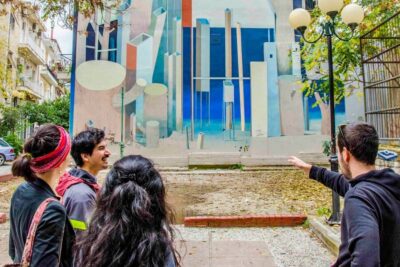 ★ 4.9Guided Street Art Walking TourFrom $57182 reviews
 ★ 5.0Awesome Street Art Tour in Athens with a Local Expert Small-GroupFrom $59150 reviews
 ★ 5.0Athens Urban Street Art TourFrom $4898 reviews
 ★ 4.7Street Art Walking TourFrom $5723 reviews
 ★ 5.0Private Tour: Athens Street Art Walking TourFrom $18823 reviews
 ★ 5.0Athens Street Art Bike TourFrom $6020 reviews
Browse the lists this tour appears in