
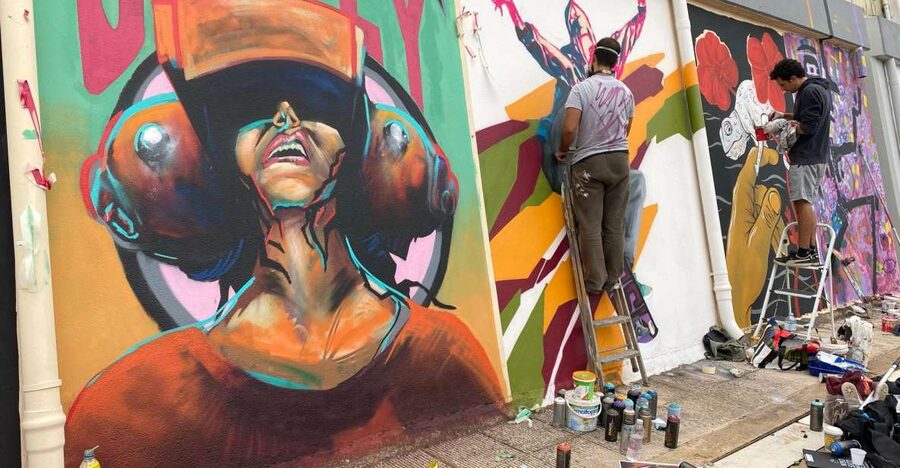
Reviewed · ATHENS WALKING TOURS
Athens: Street Art Walking Tour
Murals turn Athens into a living gallery. This 2.5-hour street art walking tour takes you through parts of the city where the walls do the talking, with stories about how graffiti and murals grew over the last decades. I like that it’s designed for people who want more than a quick photo stop. Two big wins for me are the focus on meaning behind the art and the chance to see the neighborhoods where the scene actually happens.
You’ll also get the kind of guide energy that makes the city feel personal. In the same walk, you’ll go from “What am I looking at?” to understanding why certain pieces matter, and why Athens has earned a spot on the street-art map. One possible drawback: it runs rain or shine, and it’s still walking time, not a sit-down museum hour.
In This Review
- Key Things You’ll Enjoy on This Athens Street Art Walk
- Athens Street Art, Without the Usual Script
- Starting at the Stanley Hotel: Where You Get Your Bearings
- Metaxourgeio: The First Hour of Murals and Street-Art Stories
- Kerameikos: Learning to Read Symbols, Not Just Images
- Gazi: A Short Stop That Still Adds Context
- Psyrí: Where the Tour Lets You Soak Up the Scene
- Ending at Monastiraki Square: What to Do After the Last Photo
- Price and Value: What 57 Dollars Buys You
- Who This Athens Street Art Tour Is For
- A Few Practical Things to Know Before You Go
- Should You Book This Athens Street Art Walking Tour?
- FAQ
- Where does the Athens street art tour start?
- How long is the tour?
- What neighborhoods do you visit?
- How big is the group?
- What language is the guide?
- Does the tour run in bad weather?
- What should I bring with me?
- Is pickup or drop-off included?
- How much does the tour cost?
Key Things You’ll Enjoy on This Athens Street Art Walk

- Small group size (up to 8) keeps it conversational, not like a herd
- Meaning-focused tour explains types of graffiti and what they’re trying to say
- Photo-friendly stops at well-known and Instagram-famous murals
- Neighborhood hopping through Metaxourgeio, Kerameikos, Gazi, and Psyrí
- Local expert guide who can add context beyond the walls, including extra media on a phone
On foot through Plaka and beyond
- Acropolis and Parthenon Guided Walking Tour
★ 5.0 · 4,755 reviews - Greek Food Walking Tour in Athens
★ 5.0 · 4,740 reviews - Athens: Guided Greek Food Walking Tour with Tastings
★ 4.9 · 2,859 reviews - Acropolis monuments & Parthenon Walking Tour with Optional Acropolis Museum
★ 5.0 · 2,678 reviews
Athens Street Art, Without the Usual Script
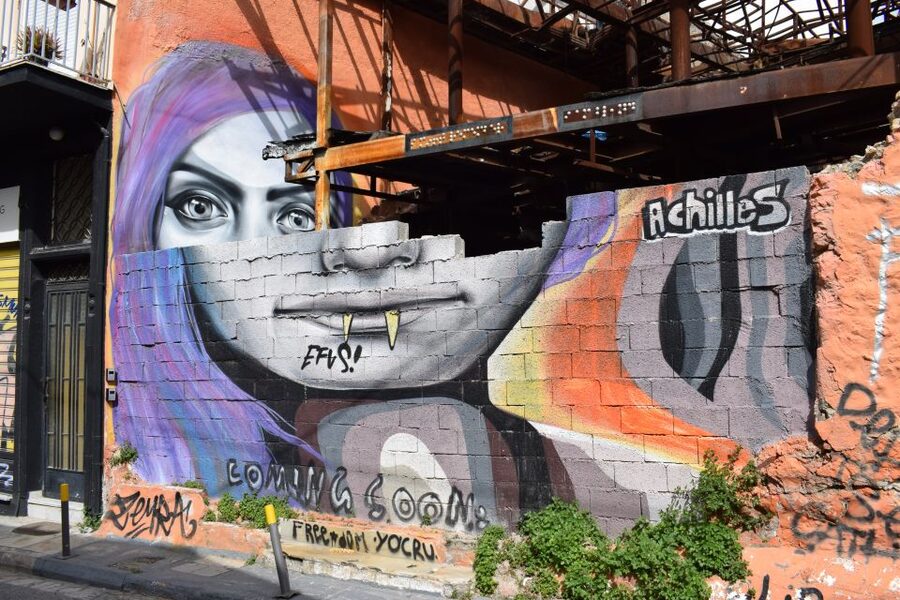
Athens isn’t only temples and marble. It also has a wall culture, and this tour is built around that idea. Instead of treating street art like random decoration, the walk frames it as a living form of communication.
What I appreciate is that the tour doesn’t just point at pretty walls. It aims to help you read them. You learn how different graffiti styles work, why artists choose certain themes, and how the scene developed in the years before today. That context matters because it changes your eyes. The same mural can feel like art, protest, identity, or humor depending on what you know.
And because it’s a walking tour, you’re not stuck staring at one wall. You’re moving through districts that feel different from block to block, which makes the whole city feel like an open-air exhibit.
Starting at the Stanley Hotel: Where You Get Your Bearings
The meet-up spot is in front of the Stanley Hotel main entrance. That matters because it gives you a clean starting point and a clear end point later on, so you’re not playing map games in a new neighborhood.
Before you even start walking, I’d set your expectations: this is not a bus tour. It’s a route. You’ll want comfortable shoes and a plan to take photos, because the tour has multiple photo stops with time to look closely.
If you’re someone who likes to understand a place fast, this is a good format. You get the basics of what Athens street art is about, and then you see it in motion across several areas.
Metaxourgeio: The First Hour of Murals and Street-Art Stories
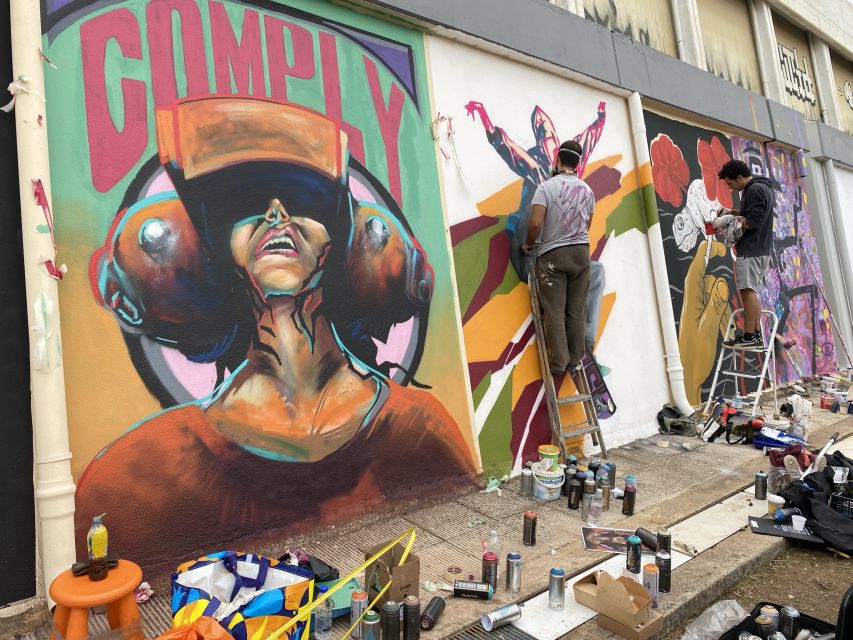
Metaxourgeio is your first long stop, and it gets about an hour on the clock. That extra time is a clue: this is where you’re meant to slow down and start learning how to look.
In this stretch, you get a mix of photo stop time, guided viewing, sightseeing, and walking. Translation: you’re not just standing in one place. The tour’s pacing helps you compare pieces, spot different styles, and notice how themes travel across walls.
This is also a strong section for first-time street-art people. The tour format is built to explain what you’re seeing without turning it into a lecture. You’ll hear stories about the street art scene and how it developed across recent decades, which helps the art feel connected to real time, not just aesthetic.
Practical note: if you’re planning on taking lots of photos, this is where you’ll do it. Start with establishing shots, then come back for closer details. You’ll have time to get both.
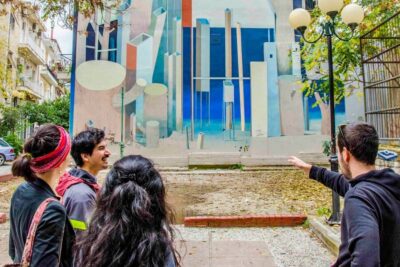
Spray and stencil across the walls



Kerameikos: Learning to Read Symbols, Not Just Images
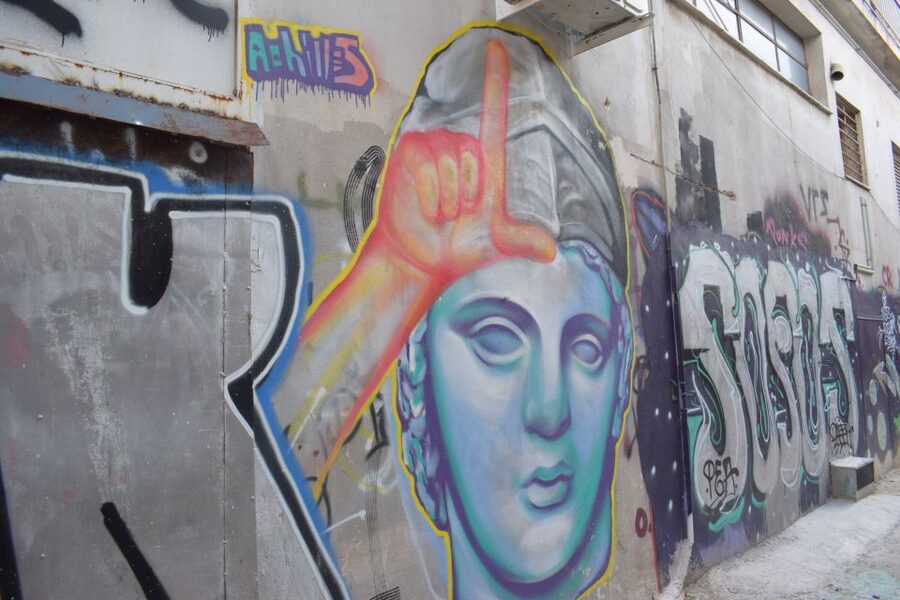
After Metaxourgeio, the route moves toward Kerameikos, where you spend about 30 minutes. That’s enough time to see a few major pieces and understand how the messages might shift with the neighborhood.
The Kerameikos segment again includes a photo stop, guided tour time, and sightseeing, with a shorter walking window. That shorter pacing is useful. It gives you a chance to focus on meaning rather than rushing between locations.
Here’s what you should watch for as you walk: street art often uses symbols, style, and references that you might not catch on a first pass. The guide’s job is to help you connect the dots—why a certain style might appear, what kinds of themes show up, and how artists communicate without using formal labels.
Even if you’re not a street-art expert, you’ll likely leave this stop with one of those moments where everything clicks. That’s the value of a tour that teaches you how to read the walls, not just where the walls are.
Gazi: A Short Stop That Still Adds Context
Gazi is a quick hit on the schedule, around 10 minutes. You’re not getting a long linger here, but the structure still includes a photo stop, guided viewing, and sightseeing.
Why include a short stop at all? Because good street-art routes usually work like this: you want variety without exhausting the group. Gazi helps you change scenery and energy, and it keeps the tour from feeling like the same kind of wall in the same kind of area.
During this segment, keep your eyes open for contrast. The art may feel different in tone, theme, or style. A shorter stop is often where you learn the most about variety, because you’re not letting one area blur into another.
If you’re the type who wants the best photos, treat this stop like a checklist: one wider shot to capture the street context, then close-ups to catch details.
Psyrí: Where the Tour Lets You Soak Up the Scene
Next comes Psyrí, another roughly 30-minute chunk with photo stops, guided tour time, and sightseeing. This part is designed to keep building on what you learned earlier.
By now, you’re past the “what is street art” stage and into “how does it work here.” The guide can connect pieces to the broader street art scene and explain why Athens has become known as a street art capital in recent years.
This is also where you benefit most from listening closely. In the provided feedback about the tour, the guide named Agatha is singled out for being pleasant to talk to and open for conversation. That matters because street art can be personal. If you feel comfortable asking questions, you’ll get more out of the walk than a passive viewing style.
One more thing that shows up in the tour experience: the guide may supplement the walk with additional material on her phone—showing more about artists, their styles, and even their personalities, plus extra context on how pieces gained recognition. That kind of extra context is often what turns a good mural into a memorable story.
Ending at Monastiraki Square: What to Do After the Last Photo
The tour finishes at Monastiraki Square. That’s a smart landing spot because it’s easy to connect to the rest of your Athens day. You’re not dropped into the middle of nowhere with no next step.
What I’d suggest after the walk: take a minute to compare what you just learned with what you see around Monastiraki. Street art doesn’t exist in isolation. Once you know what to look for, you start noticing it everywhere.
Also, if you’re the type who likes revisiting places, keep in mind a key idea from the tour feedback: street art changes with time and current events. So the stuff you see today might not look the same later. That’s not a drawback. It’s part of the charm and the reason this type of experience can be worth returning to.
Price and Value: What 57 Dollars Buys You
The price is $57 per person, and the main value isn’t a “cheap cost” trick. It’s the format.
For that money, you’re paying for:
- a small group (up to 8), which helps you actually ask questions
- an accompanied local expert who can explain what you’re seeing
- focused route time across several districts, with photo stops and guided context
In other words, you’re not just paying for walking. You’re paying for interpretation. That’s what makes a street-art tour worth it, because murals can look cool without being meaningful, and you’d never know what you’re missing.
If you’re already good at spotting street-art style and symbolism on your own, you might skip this. But if you want the city to make sense faster, or you want photos that feel more intentional than random snapshots, this price can feel fair.
One more note: the tour has a strong rating, 4.7 from 23 reviews, which usually points to consistency in guide delivery and overall experience design.
Who This Athens Street Art Tour Is For
This works best if you:
- like city walks with a clear theme
- want more than generic highlights
- enjoy photography but also care about meaning
- are curious about how modern street art connects to social and cultural change
It’s also a good choice if you’re traveling solo or as a couple and prefer small-group conversations. The guide’s open, talk-friendly style—again, specifically highlighted with Agatha—turns the tour from passive to interactive.
And it’s a nice option for people who don’t want the tour to feel like a museum lecture. The art is modern, sometimes political, sometimes playful. The tour’s job is to keep it understandable and human.
A Few Practical Things to Know Before You Go
- Wear comfortable shoes. You’re walking between stops with time at each location.
- Bring a hat and sunscreen. Athens sun is real, even when the day seems mild.
- The tour runs rain or shine, so dress for weather and plan to keep moving.
- The walking pace is described as average, which is good for most visitors, but still not a sit-everywhere stroll.
If you’re sensitive to walking time, consider your day plan. Don’t stack a long museum day right before or after. Give yourself room to enjoy the rest of Athens without rushing.
Should You Book This Athens Street Art Walking Tour?
If your Athens plan includes photos and a desire to understand what you’re seeing, I’d say yes. This tour is built to make street art legible: it explains styles and meanings, uses a small group for interaction, and hits multiple districts in a tight 2.5-hour window.
Book it if you want:
- context for the murals, not just locations
- a route through neighborhoods like Metaxourgeio, Kerameikos, Gazi, and Psyrí
- a guide who can bring extra artist context, including media on a phone
I’d think twice if you strongly prefer indoor sightseeing only, or if you hate walking when weather is unpredictable. The tour is short, but it still expects you to move.
FAQ
Where does the Athens street art tour start?
It meets in front of the Stanley Hotel main entrance.
How long is the tour?
The duration is 2.5 hours.
What neighborhoods do you visit?
You visit Metaxourgeio, Kerameikos, Gazi (Athens), and Psyrí, then finish at Monastiraki Square.
How big is the group?
The tour is small group size, limited to up to 8 participants.
What language is the guide?
The tour is guided in English.
Does the tour run in bad weather?
Yes, it runs rain or shine.
What should I bring with me?
Bring comfortable shoes, a hat, and sunscreen.
Is pickup or drop-off included?
No, pickup and drop-off are not included.
How much does the tour cost?
The price is $57 per person.
More Tour Reviews in Athens
- Athens: Acropolis & up to 5 Archaeological Sites Combo Pass★ 4.2 · 13,904 reviews
- Athens: Acropolis, Parthenon & Acropolis Museum Guided Tour★ 4.8 · 9,316 reviews
- The Acropolis, Parthenon & Acropolis Museum Guided Tour★ 4.7 · 8,493 reviews
- Athens: Cape Sounion & Poseidon Temple Sunset Half-Day Trip★ 4.8 · 8,241 reviews
- Acropolis: Premium Acropolis and Parthenon Guided Tour★ 4.8 · 5,208 reviews
- Athens: Mythology of Delphi, Museum and Arachova Guided Tour★ 4.7 · 5,102 reviews
Athens on the Walls
- Athens: Guided Urban Street-Art Tour★ 4.9 · 361 reviews
- Athens Street Art Walk★ 5.0 · 309 reviews
- Athens: Guided Street Art Walking Tour★ 4.9 · 182 reviews
- Awesome Street Art Tour in Athens with a Local Expert Small-Group★ 5.0 · 150 reviews
- Athens Urban Street Art Tour★ 5.0 · 98 reviews
- Athens street art tour★ 5.0 · 27 reviews
Athens on Foot, Continued
- Acropolis and Parthenon Guided Walking Tour★ 5.0 · 4,755 reviews
- Greek Food Walking Tour in Athens★ 5.0 · 4,740 reviews
- Athens: Guided Greek Food Walking Tour with Tastings★ 4.9 · 2,859 reviews
- Acropolis monuments & Parthenon Walking Tour with Optional Acropolis Museum★ 5.0 · 2,678 reviews
- Athens Acropolis and Parthenon Walking Tour★ 4.5 · 1,355 reviews
- Acropolis, Parthenon & Athens Old City Heritage Walking Tour★ 4.5 · 876 reviews
Fresh Off the Boat: New Athens Reviews





Athens Walking Tours, compared.
 ★ 5.0Acropolis and Parthenon Guided Walking TourFrom $414,755 reviews
 ★ 5.0Greek Food Walking Tour in AthensFrom $874,740 reviews
 ★ 4.9Guided Greek Food Walking Tour with TastingsFrom $812,859 reviews
 ★ 5.0Acropolis monuments & Parthenon Walking Tour with Optional Acropolis MuseumFrom $422,678 reviews
 ★ 4.5Athens Acropolis and Parthenon Walking TourFrom $411,355 reviews
 ★ 4.5Acropolis, Parthenon & Athens Old City Heritage Walking TourFrom $34876 reviews
 ★ 5.0Athens Authentic Greek Food Walking Tour (Small Group)From $83809 reviews
 ★ 4.9Ultimate Food Walking Tour with 15 TastingsFrom $93567 reviews
Browse the lists this tour appears in