
Reviewed · WORKSHOPS
Athens: Traditional Greek Pastry Workshop
Orange pie, made by you in Athens. This Athens pastry workshop turns a classic into a hands-on afternoon, from mixing ingredients to baking a syrup-soaked treat. You’ll work on Portokalopita step by step, then taste it with Greek coffee in a cozy local pastry shop.
I especially like the small-group feel, limited to 6 participants, so you’re not watching from the sidelines. I also like that Chef Maria teaches the recipe from A to Z, not just a quick demo, so you leave with a method you can repeat at home. A possible drawback: transfers aren’t included, so you’ll want to plan your trip to Psyri square.
If you’re short on time, 2.5 hours can feel like a tight window, since the real fun is in the hands-on mixing and baking. And since it’s a working kitchen, come ready for mess—this is not a suit-and-tie activity.
In This Review
- Key highlights you’ll care about
- Psyri square meeting point: the setting, the food, and the timing
- Chef Maria and the team: how the class actually runs
- From local sweets to your own dessert: what you’ll do step by step
- The final bake: tasting, Greek coffee, and taking your tray home
- Price and value: is $106 per person a fair deal?
- Who should book this workshop (and who might skip it)
- What to bring and what to know before you go
- Should you book Athens Traditional Greek Pastry Workshop?
- FAQ
- How long is the Athens Traditional Greek Pastry Workshop?
- Where do I meet for the workshop?
- What is the price per person?
- Is the workshop taught in English?
- How large is the group?
- What is included in the workshop price?
- What should I bring?
- What is the cancellation and payment policy?
Key highlights you’ll care about
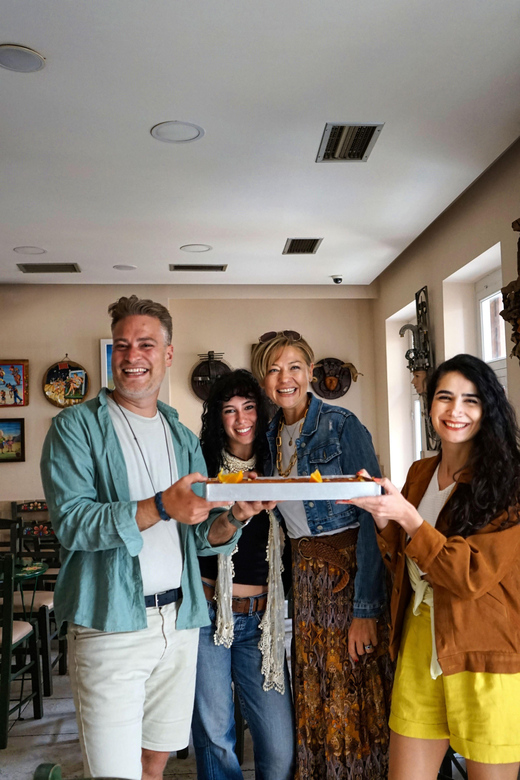
- Chef-led, step-by-step Portokalopita instruction, from mixing to baking
- Small group (max 6) for real questions and hands-on time
- Siropiasto orange pie focus with aromatic ingredients and syrup that soaks in
- Greek coffee tasting plus a take-away tray at the end
- English instruction in a traditional neighborhood setting near Psyri square
Worth comparing before you book this Athens tour:
- Athens: Classic Cooking Class with Market Visit and Wine
★ 5.0 · 1,101 reviews - Athens: Food Market Visit and Cooking Class with Wine
★ 4.9 · 1,087 reviews - Greek Cooking Class in Athens Including Rooftop Dinner with Acropolis View
★ 5.0 · 826 reviews - Greek Small-Group Athens Cooking Class & Dinner
★ 5.0 · 574 reviews
Psyri square meeting point: the setting, the food, and the timing
You meet at Psyri square, one of those central Athens areas where it’s easy to feel the day-to-day rhythm. The workshop is 2.5 hours, so you get enough time to learn the process without losing the rest of your evening to the kitchen.
This isn’t a “taste-and-leave” session. The goal is clear: you’ll prepare a traditional Greek dessert—Portokalopita, also described as a siropiasto orange pie—and leave with your own baked result.
And since you’re in a working pastry shop, the vibe is practical. You’ll be standing, mixing, and handling dough or batter, so you’re best off wearing comfortable clothes that can get dirty.
Chef Maria and the team: how the class actually runs
Chef Maria leads the workshop, walking you through the whole recipe. The instruction is English, and the class keeps it friendly and patient, which matters when you’re learning a pastry method that takes a bit of technique.
You’ll also likely interact with other team members during the process. In past groups, Oral has helped as a host/assistant, with a relaxed approach and space for questions. Another guide name that comes up for some groups is Sarisoy, also providing a welcoming hand during the session.
Because the group is capped at 6 participants, it’s not just a lecture. You can ask about texture, timing, or what to look for as ingredients come together. That small-group structure is a big part of why this kind of workshop can be more valuable than a larger, faster tour.
From local sweets to your own dessert: what you’ll do step by step
The workshop starts with an exploration of local sweets, which helps you understand what you’re about to make. This short intro is practical: it gives you context for why Greek pastry can taste so fragrant, and why citrus-forward desserts like orange pie show up so often.
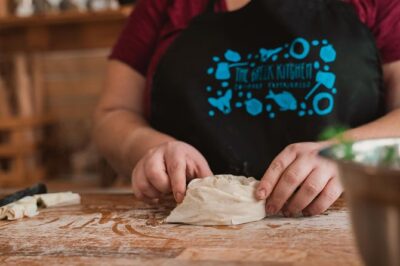
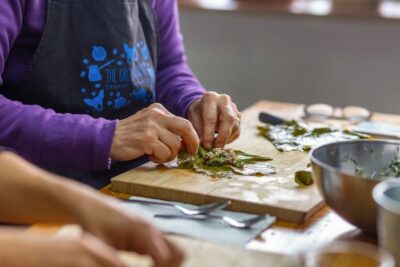
Then you move into the main event: Portokalopita from A to Z. The recipe is built around layers and texture—think phyllo dough working with aromatic fillings and a syrup component. You’ll mix and bake fresh ingredients under supervision, so you’re not guessing your way through the tricky parts.
Here’s what the hands-on experience tends to include:
- Mixing the filling (the orange element plus other ingredients) with guided steps
- Working the dough (the phyllo component is key to the final structure)
- Baking until the pastry is set and the dessert develops that classic Greek flavor profile
- Adding the syrup-soak logic that makes this style of pie distinctly siropiasto
One useful thing to know in advance: phyllo dough is delicate, so you’ll get the best results by focusing on gentle handling and following the chef’s cues about softness and absorption. If you’ve never worked with phyllo before, that’s fine. The value here is learning what success looks like in real time.
You’ll create your own dessert, and the workshop also mentions creating a delicious pita as part of the process. In practice, that means you’re building and shaping the final pie form rather than just preparing a component.



The final bake: tasting, Greek coffee, and taking your tray home
After your dessert bakes, you taste what you made with a cup of Greek coffee. That tasting moment is more than a formality. It’s when you connect the steps to the result: the orange aroma, the way syrup changes texture, and how the pastry holds up after baking.
Then you take the dessert home on a take-away tray. That’s one of the best parts of a cooking class like this, because it turns your “souvenir” into actual food you can share. It’s also helpful if you’re heading out after the workshop and don’t want to scramble for a meal plan.
A small practical detail that matters: since you’re receiving a take-away tray, you’ll want to be ready to transport it carefully. It’s not hard, just plan on treating it like a fragile food item on the way back.
Price and value: is $106 per person a fair deal?
$106 per person sounds like a “foodie splurge” until you break down what’s included. This workshop includes:
- a set of ingredients for the recipe
- professional chef supervision
- the cooking workshop experience itself
- Greek coffee
- a take-away tray
The ingredients and supervision are doing most of the heavy lifting for value. Pastry classes take time, and phyllo-based desserts are not quick to teach. The small group size (max 6) also matters—your learning time is less diluted.
Also, you’re getting something most tours don’t provide: a repeatable recipe. When you learn Portokalopita techniques you can reproduce, this becomes an activity you carry home mentally, not just a photo on your camera roll.
One note on value vs. convenience: transfers aren’t included. If you’re staying far from Psyri, factor in the cost and time to get to the meeting point. If you’re already central, the math usually works out much better.
Who should book this workshop (and who might skip it)
This is a good fit if you want food to be the main attraction—less “sightseeing with snacks,” more “make it, taste it, repeat it.” It’s also a strong choice if you’re traveling with family or mixed ages, because the hands-on approach gives everyone a role. One past booking included a nine-year-old and parent sharing the workshop in a positive, encouraging atmosphere.
You’ll also appreciate it if you want a calm, friendly break from larger tours. With English instruction and a small group, it tends to feel structured but not stiff.
Consider skipping if you:
- hate getting messy (even with aprons or kitchen setups, it’s a working workshop)
- need a very low-effort activity and prefer only tasting
- are traveling with a strict schedule and can’t spare 2.5 hours
If you have mobility concerns, there’s at least some signal that the team can accommodate. That doesn’t guarantee every need will be met, but it’s worth knowing there’s willingness to help.
What to bring and what to know before you go
You’ll get the most out of the workshop with a simple prep list:
- Comfortable clothes
- Clothes that can get dirty
Beyond that, come with a small mindset shift. Baking and pastry are full of micro-steps and textures. If you think of it like a guided craft project rather than a performance, you’ll enjoy it more.
Also plan on the practical “getting there” part. The meeting point is Psyri square, and transfer isn’t included, so use your normal Athens navigation method (walk, taxi, or transit) and give yourself extra minutes.
Finally, since it’s a kitchen experience, bring your camera if you like, but remember that the focus is on learning. Past sessions have included time where participants could take photos and ask questions, so it’s not a no-camera environment—just don’t block others while working.
Should you book Athens Traditional Greek Pastry Workshop?
I think you should book this if you want a genuine cooking experience focused on Portokalopita—and you want to leave with both the food and the recipe logic. The small group size, the step-by-step A to Z teaching, and the fact that you bake and taste your own dessert are the core strengths.
Skip it if you’re mainly after architecture, museums, or long guided walks. This is not that kind of day. It’s a pastry day, centered on one classic orange pie style, taught in a working shop setting.
If you’re deciding between two “food experiences” in Athens, this one has a clear advantage: you’re not just eating Greek sweets, you’re learning how they’re made—so you can bring a slice of Athens back to your own kitchen.
FAQ
How long is the Athens Traditional Greek Pastry Workshop?
The workshop lasts 2.5 hours.
Where do I meet for the workshop?
The meeting point is Psyri square.
What is the price per person?
The price is $106 per person.
Is the workshop taught in English?
Yes, the instructor is English.
How large is the group?
It’s a small group, limited to 6 participants.
What is included in the workshop price?
Included are the ingredients set, supervision by a professional pastry chef, the cooking workshop, Greek coffee, and a take-away tray.
What should I bring?
Wear comfortable clothes and clothes that can get dirty.
What is the cancellation and payment policy?
You get free cancellation up to 24 hours in advance for a full refund, and you can reserve now & pay later to keep your plans flexible.
If you want, tell me your dates and where you’re staying in Athens, and I’ll suggest the simplest way to reach Psyri square with minimal hassle.
Make a Little Greece to Take Home
- Athens: Classic Cooking Class with Market Visit and Wine★ 5.0 · 1,101 reviews
- Athens: Food Market Visit and Cooking Class with Wine★ 4.9 · 1,087 reviews
- Greek Cooking Class in Athens Including Rooftop Dinner with Acropolis View★ 5.0 · 826 reviews
- Greek Small-Group Athens Cooking Class & Dinner★ 5.0 · 574 reviews
- Athens: Greek Cooking Class & Dinner on a Rooftop★ 5.0 · 383 reviews
- Athens: Greek Cuisine Cooking Class and 3-Course Dinner★ 4.8 · 270 reviews
More Tour Reviews in Athens
- Athens: Acropolis & up to 5 Archaeological Sites Combo Pass★ 4.2 · 13,904 reviews
- Athens: Acropolis, Parthenon & Acropolis Museum Guided Tour★ 4.8 · 9,316 reviews
- The Acropolis, Parthenon & Acropolis Museum Guided Tour★ 4.7 · 8,493 reviews
- Athens: Cape Sounion & Poseidon Temple Sunset Half-Day Trip★ 4.8 · 8,241 reviews
- Acropolis: Premium Acropolis and Parthenon Guided Tour★ 4.8 · 5,208 reviews
- Athens: Mythology of Delphi, Museum and Arachova Guided Tour★ 4.7 · 5,102 reviews
Fresh Off the Boat: New Athens Reviews





Workshops, compared.
 ★ 5.0Classic Cooking Class with Market Visit and WineFrom $831,101 reviews
 ★ 4.9Food Market Visit and Cooking Class with WineFrom $811,087 reviews
 ★ 5.0Greek Cooking Class in Athens Including Rooftop Dinner with Acropolis ViewFrom $120826 reviews
 ★ 5.0Greek Small-Group Athens Cooking Class & DinnerFrom $118574 reviews
 ★ 5.0Greek Cooking Class & Dinner on a RooftopFrom $108383 reviews
 ★ 4.8Greek Cuisine Cooking Class and 3-Course DinnerFrom $115270 reviews
 ★ 5.0Traditional Greek cooking class and lunch or dinner with an Acropolis viewFrom $114250 reviews
 ★ 5.0Athens Airport Private Transfer by Mercedes-Benz E Class Wagon to City CenterFrom $131232 reviews
Browse the lists this tour appears in