
Reviewed · ACROPOLIS & PARTHENON TOURS
Athens: Views of Acropolis Agora Parthenon Guided Tour
Acropolis views without the ticket lines can be magic. This Athens Acropolis and Agora guided tour mixes mythology talk with constant sightlines of the Acropolis, plus stops that show you how the city layers Greek life over thousands of years. I love the way the guide connects stories to what you’re seeing, and I love the Ancient Agora perspective points that make photos feel effortless. One big consideration: this tour does not include admission to archaeological sites, so you won’t go inside the Acropolis or the Parthenon.
You’ll start at Syntagma Square, right by the changing of the guards moment, then step into calmer streets at the National Garden before the route shifts back into history mode. Expect mostly walking on city sidewalks, with comfortable-shoes rules for a reason. If you’re hoping for a true Acropolis entry experience, make sure you plan a separate site visit.
In This Review
- Key things to know before you go
- What This Tour Includes (And What It Definitely Doesn’t)
- Syntagma Square to National Garden: Starting Easy, Seeing Athens Fast
- Panathenaic Stadium and the Temple of Olympian Zeus Area: Big Scale, Real Contrast
- Plaka’s Narrow Streets: Where Your Acropolis Photos Actually Make Sense
- Roman Agora and the Agora of Athens: Reading the Ancient City Like a Map
- Finishing Near Thissio: Your Easy Transition to the Rest of the Day
- Guide Quality: What Makes the Tour Feel Great (Or Misleading)
- Price and Value: Is $41 Worth It for Your Athens Day?
- What to Bring and How to Prepare for the Walk
- Should You Book This Acropolis Views Tour?
- FAQ
- Does the tour include entry to the Acropolis or other archaeological sites?
- How long is the Athens Acropolis Agora Parthenon guided tour?
- Where do I meet the guide?
- What should I bring?
- Is food or drinks included?
- What languages is the live guide available in?
Key things to know before you go
- You’re buying viewpoints, not site entry: no archaeological site access and no inside time on the Acropolis.
- Mythology + city orientation: the guide’s stories help you place monuments quickly, not just name-drop them.
- Panoramic photo angles: you’ll get multiple moments designed for skyline and Acropolis-hill pictures.
- A smart “high-to-low” route: major landmarks (stadium, Zeus) plus neighborhood streets (Plaka) in one 2-hour loop.
- Ancient Agora context: you’re shown what the Agora meant and how it connects to the monuments you recognize.
- Guide experience matters: the best guides make the pacing easy; mismatched expectations can create disappointment.
More ways up the sacred rock, set side by side
- Athens: Acropolis & up to 5 Archaeological Sites Combo Pass
★ 4.2 · 13,904 reviews - Athens: Acropolis, Parthenon & Acropolis Museum Guided Tour
★ 4.8 · 9,316 reviews - The Acropolis, Parthenon & Acropolis Museum Guided Tour
★ 4.7 · 8,493 reviews - Acropolis: Premium Acropolis and Parthenon Guided Tour
★ 4.8 · 5,208 reviews
What This Tour Includes (And What It Definitely Doesn’t)

This is a 2-hour guided sightseeing walk focused on seeing Athens from the outside—great for first-time orientation and for building a mental map before you commit to paid archaeological-site entries elsewhere. The price is $41 per person, and you’re really paying for a guided narrative plus curated stops, not for museum admissions.
Here’s the part you need to read carefully: access to any archaeological sites is not included. That means no inside Acropolis visit, and you shouldn’t expect Parthenon entry either. The tour is built around views of Acropolis monuments, plus photo-friendly urban angles where the monuments frame the streets.
If you’re the type who wants your day to move fast, this kind of tour is a win. You’ll cover key areas—Syntagma, National Garden area, stadium area, Zeus/Arch of Hadrian vicinity, Plaka, Roman Agora area, Agora of Athens/Hephaestus Temple zone—then finish near Thissio station.
Where this tour can feel frustrating is if you book it believing it’s an archaeological-site ticket. In that case, you may end up paying for guidance while still needing to buy separate admission for anything you want to enter. So, be honest with your own travel style: views and stories are the product here, not hands-on ruins time.
Syntagma Square to National Garden: Starting Easy, Seeing Athens Fast

The meeting point is just outside Syntagma Square, in front of the fountain holding a Scandic Tours sign. This is a smart place to start: Syntagma is one of the city’s main anchors, and it’s where you can watch the changing of the guards while you wait for the group to assemble.
Once you begin walking, the route shifts toward a quieter reset with the National Garden. Even if you only spend a short time there, this stop changes the feel of the morning or afternoon. Athens can be intense—heat, crowds, and visual overload. A garden pause helps you steady your pace and keep your energy for the more architectural stops ahead.
Practical tip: plan to wear comfortable shoes, because the rhythm is walking-first. Also bring what the tour requests: hat, sunscreen, and water. This matters more than it sounds, especially if you’re taking lots of photos and staying out longer than you think.
Panathenaic Stadium and the Temple of Olympian Zeus Area: Big Scale, Real Contrast
After the calmer garden moment, the tour goes to the Panathenaic Stadium. It’s notable because it’s described as the only stadium in the world built entirely of marble. Even from outside and around the surrounding areas, it’s a powerful contrast to the rest of your Athens day: you’re going from city park calm to a monument to athletic tradition.
Next comes the Temple of Olympian Zeus, presented as a colossal ruin once tied to the largest temple in Greece. You’ll also see it right beside the Arch of Hadrian. This pairing is useful because it teaches you how different eras talk to each other in Athens. One structure reflects grand ambition and scale; the other helps you read layers of rule, celebration, and architectural symbolism.
What I like about this part for your planning is that you don’t need ticket access to understand what you’re looking at. Even if you can’t go inside, the guide’s job is to help you connect the shapes and locations to the stories behind them. It’s a good section for asking questions, because ruins and arches can feel confusing if you’re just spotting them in passing.
Down where the old city met and traded

Plaka’s Narrow Streets: Where Your Acropolis Photos Actually Make Sense
From the landmark zone, the route heads into Plaka, described as charming with narrow streets, neoclassical architecture, and a lively atmosphere. This is the part where Athens starts to feel like Athens, not like a checklist.
Plaka works especially well for travelers who want more than big monuments. You get a neighborhood feel—street-level perspectives, small visual rhythm, and corners that make you want to slow down. It’s also a strong place for photos, because the city layout helps you frame the Acropolis hill in the background instead of feeling like you’re just taking one standard “view from the front” picture.
This is also where a good guide earns their fee. When the guide is friendly and responsive, the walk becomes more than transportation between stops. You get help reading what you’re passing—why a street seems to bend, what the architecture signals, and how the Acropolis sits above it all.
If you get a chance, use Plaka time to do one small reset: stop for water, check your map, and decide what you want to photograph most (Acropolis hill, street scenes, or the Agora connections). You’ll do better when you have a simple photo plan.
Roman Agora and the Agora of Athens: Reading the Ancient City Like a Map
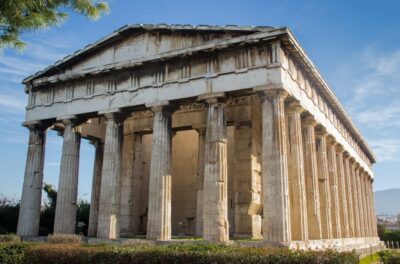
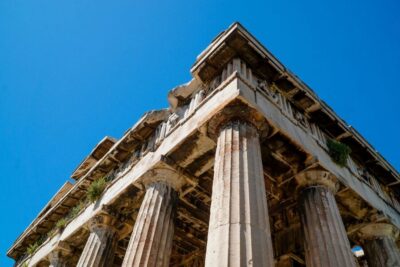
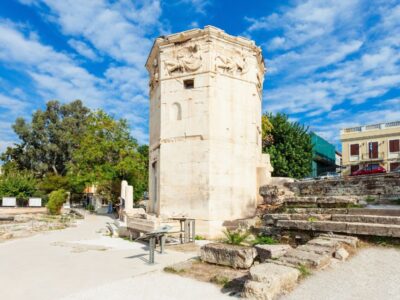
Next you’ll pass by the Roman Agora, with context about its historical significance. After that, the tour explicitly includes the Agora of Athens, including the Temple of Hephaestus.
This is one of the best sections of the route because it connects two things you’ve likely heard about: the Agora as a marketplace and civic space, and the surrounding temples that give those spaces identity. The tour describes the Temple of Hephaestus area as tied to a bustling marketplace in ancient times, and you’ll also notice nearby restaurants now—an easy way to see continuity in how people gather and trade.
Even without archaeological-site entry, you still get value here. Why? Because the Agora is a logic puzzle of locations. When you understand where civic life happened, the rest of Athens clicks faster. Instead of feeling like you’re looking at disconnected monuments, you start to see a functioning city plan.
Photo tip: the tour includes photos under the Acropolis as a goal of the walk. That matters because it changes the angle. The Acropolis isn’t just a distant icon; it’s a presence overhead and behind street corners. Taking a photo from within the city fabric makes the scale feel real.
Finishing Near Thissio: Your Easy Transition to the Rest of the Day
The tour ends near Thissio station, described as a serene and historic neighborhood. This is a practical finish for two reasons.
First, it’s logistically helpful. If you don’t want to crisscross back to your hotel immediately, ending near a station gives you flexibility. Second, the neighborhood vibe can make the whole experience feel complete: you’re moving from heavy landmark energy into a calmer pocket where you can decompress.
Think of this as the tour’s job: it gives you a shaped overview and then hands you off near a place where you can continue on your own—whether you’re heading for dinner, a museum you booked separately, or another neighborhood wander.
Guide Quality: What Makes the Tour Feel Great (Or Misleading)
A tour like this rises or falls on two things: clarity of expectations and guide communication.
On the clarity side, the essential message is that this is not an entry tour. It’s views and context. Some people have felt misled when they expected access to the Acropolis or archaeological sites. So before you go, double-check your own priorities:
- If you want inside ruins and ticketed entries, you’ll need a different plan.
- If you want myth stories, city context, and photo angles, this fits well.
On communication side, guide style matters a lot. The positive experiences highlight guides who are attentive, friendly, and patient—like a guide named Kai-Lee, who was especially helpful with a mother during the tour. When a guide adapts to your group and keeps things moving at a human pace, the 2 hours feel like a smart introduction instead of a rushed walk.
If documentation feels thin in your mind during the day, handle it proactively. Bring a phone with offline maps, and take a couple quick notes during the stops. Ask one follow-up question when the guide explains a site you recognize. That turns “passing by” into actual learning—fast.
Price and Value: Is $41 Worth It for Your Athens Day?
At $41 per person for 2 hours, the value depends on what you want from your time.
This is good value if:
- You’re visiting Athens for the first time and want a clear orientation quickly.
- You like mythology and want help connecting stories to real locations.
- You want Acropolis and Agora views without committing to site entry tickets right away.
- You’re okay with a walking tour where the monuments are seen from the city.
It’s not good value if:
- You specifically want inside Acropolis time or Parthenon access (the tour doesn’t include it).
- You’re expecting archaeological-site entry to be part of the package.
- You need mobility support. This tour is described as not suitable for people with mobility impairments and not for wheelchair users.
Also consider your day plan. If you’re already planning to buy Acropolis tickets for another time, this viewpoint tour can act like a rehearsal. You’ll recognize more when you return to the sites you can enter later.
What to Bring and How to Prepare for the Walk
The essentials from the tour info are straightforward, and you should treat them like non-negotiables for comfort:
- Comfortable shoes (you’ll be walking)
- Hat and sunscreen
- Camera (you’re getting photo opportunities under the Acropolis)
- Water
And note the restriction: no high-heeled shoes. If you’re thinking of wearing them for photos, reconsider. This tour is built for walking, not posing on slick stone.
Language options are wide, which is helpful if English isn’t your first choice: German, French, English, Spanish, Italian. If your group has mixed preferences, a guide who can switch easily usually makes the storytelling feel more personal.
Should You Book This Acropolis Views Tour?
Book it if your top goals are myth context, city orientation, and great Acropolis/Agora photos from the streets—with the understanding that you won’t enter archaeological sites or go inside the Acropolis.
Skip it (or add a separate entry plan) if you’re traveling with the expectation that this is the official Acropolis ticket experience. The biggest risk here is simple: you may spend your time admiring views while still wishing you could step into the monuments.
If you do book, go in with the right mindset. Wear good shoes, bring water, and treat the guide’s stories like your shortcut to understanding what you’re seeing. When expectations match the reality, this becomes a very satisfying Athens sampler—short, scenic, and built around the places that shape the city’s identity.
FAQ
Does the tour include entry to the Acropolis or other archaeological sites?
No. Access to archaeological sites is not included, and the tour does not provide inside access to the Acropolis.
How long is the Athens Acropolis Agora Parthenon guided tour?
The duration is 2 hours.
Where do I meet the guide?
Your guide meets you just outside Syntagma Square in front of the fountain holding a Scandic Tours sign.
What should I bring?
Bring comfortable shoes, a hat, a camera, sunscreen, and water.
Is food or drinks included?
No. Food and drinks are not included.
What languages is the live guide available in?
The tour offers live guides in German, French, English, Spanish, and Italian.
More Tour Reviews in Athens
- Athens: Acropolis & up to 5 Archaeological Sites Combo Pass★ 4.2 · 13,904 reviews
- Athens: Acropolis, Parthenon & Acropolis Museum Guided Tour★ 4.8 · 9,316 reviews
- The Acropolis, Parthenon & Acropolis Museum Guided Tour★ 4.7 · 8,493 reviews
- Athens: Cape Sounion & Poseidon Temple Sunset Half-Day Trip★ 4.8 · 8,241 reviews
- Acropolis: Premium Acropolis and Parthenon Guided Tour★ 4.8 · 5,208 reviews
- Athens: Mythology of Delphi, Museum and Arachova Guided Tour★ 4.7 · 5,102 reviews
More Hours in the Ancient Agora
- Athens Half Day Tour, Acropolis, Parthenon, Temple of Olympian Zeus & Hephaistus★ 5.0 · 609 reviews
- Athens: Agora and Hephaistos Temple Entrance Ticket★ 4.0 · 449 reviews
- Athens: Ancient Agora E-Ticket and Audio Tour★ 3.9 · 413 reviews
- Athens: Roman Agora & Ancient Agora E-ticket & 2 Audio Tours★ 4.1 · 107 reviews
- Acropolis & Ancient Agora Guided tour included all Entrances★ 4.9 · 102 reviews
- Ancient Athens Segway Tour with Agora and Kerameikos★ 5.0 · 94 reviews
The Acropolis, a Few More Ways Up
- Athens: Acropolis & up to 5 Archaeological Sites Combo Pass★ 4.2 · 13,904 reviews
- Athens: Acropolis, Parthenon & Acropolis Museum Guided Tour★ 4.8 · 9,316 reviews
- The Acropolis, Parthenon & Acropolis Museum Guided Tour★ 4.7 · 8,493 reviews
- Acropolis: Premium Acropolis and Parthenon Guided Tour★ 4.8 · 5,208 reviews
- Acropolis and Parthenon Guided Walking Tour★ 5.0 · 4,755 reviews
- Athens: Acropolis, Parthenon & Acropolis Museum Guided Tour★ 4.8 · 3,579 reviews
Fresh Off the Boat: New Athens Reviews





Acropolis & Parthenon Tours, compared.
 ★ 4.2Acropolis & up to 5 Archaeological Sites Combo PassFrom $4213,904 reviews
 ★ 4.8Acropolis, Parthenon & Acropolis Museum Guided TourFrom $409,316 reviews
 ★ 4.7The Acropolis, Parthenon & Acropolis Museum Guided TourFrom $408,493 reviews
 ★ 4.8Acropolis: Premium Acropolis and Parthenon Guided TourFrom $405,208 reviews
 ★ 5.0Acropolis and Parthenon Guided Walking TourFrom $414,755 reviews
★ 4.8Acropolis, Parthenon & Acropolis Museum Guided TourFrom $413,579 reviews
★ 5.0Acropolis and Parthenon Guided Walking TourFrom $414,755 reviews
★ 4.8Acropolis, Parthenon & Acropolis Museum Guided TourFrom $413,579 reviews
 ★ 4.0Acropolis Ticket with Audio GuideFrom $473,575 reviews
 ★ 5.0Athens Scenic Electric Bike Tour with optional Acropolis visitFrom $353,350 reviews
Browse the lists this tour appears in