
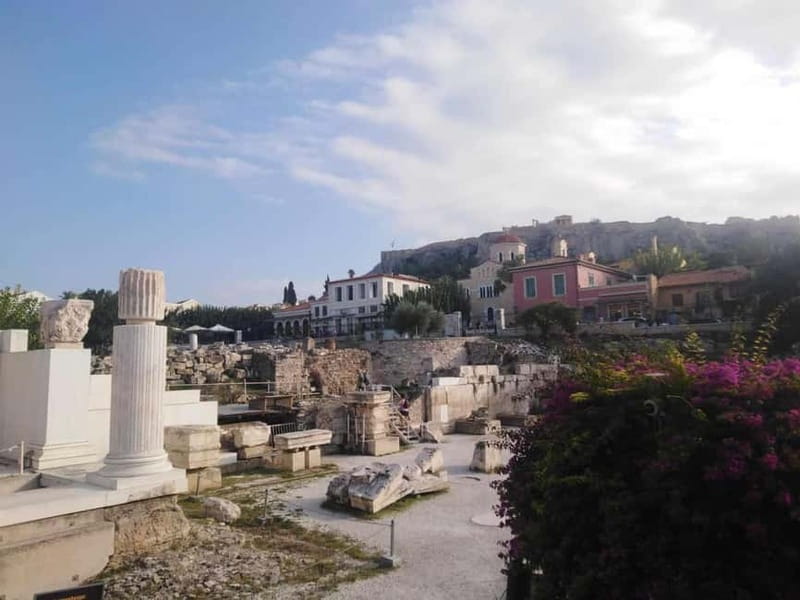
Reviewed · ATHENS WALKING TOURS
Athens: Walking Tour with a Tour Leader
Athens gets easier with a guide. In three hours with Vera D. and a small group (up to 10), you walk the core of the city and actually understand what you’re seeing, not just where to take a photo.
You’ll cover Monastiraki, the Ancient Greek Agora, the Roman Agora, and Plaka—then keep going toward major landmarks like the Temple of Zeus, plus the University and Parliament area.
I really like two things about this experience: the guide’s energy and storytelling, and the fact that you get everyday context, not only monuments. Vera’s approach is practical—she explains the background of the places you pass and helps you get a feel for daily life in Athens, including ideas for where to focus (and where you might want to eat afterward).
The main catch is simple: this is a true walking tour. It lasts 3 hours, covers central Athens streets, and it is not suitable for people with mobility impairments or wheelchair users.
In This Review
- Key things I’d bet on before you go
- Meeting at Monastiraki Square: where your bearings start
- Monastiraki to the Ancient Greek Agora: seeing the city with a story attached
- Roman Agora: the same city, different chapter
- Plaka: where the walking tour turns into real Athens
- Temple of Zeus, University, and Parliament: big landmarks, big perspective
- The guide makes the difference: Vera D.’s style
- Duration and group size: why 3 hours works
- Price and value: why $29 feels reasonable for Athens core sights
- What to bring (so the tour feels easy, not hard)
- Weather and pacing: the two things that affect your experience most
- Who should book this tour (and who might not)
- Booking notes to keep it stress-free
- Should you book this Athens walking tour with Vera?
- FAQ
- Where does the tour meet?
- How long is the walking tour?
- What group size is this tour?
- What languages does the guide speak?
- What should I bring?
- Is the tour suitable for wheelchair users or people with mobility impairments?
- What is included in the price?
Key things I’d bet on before you go

- Small group (max 10) means questions don’t get stuck in the back row.
- Vera D. leads with English and also speaks Spanish very well.
- You hit Monastiraki, the Agoras, and Plaka in one logical walking run.
- Temple of Zeus, University, and Parliament bring the story into modern Athens.
- Daily-life insights help you connect sights to how the city actually works.
On foot through Plaka and beyond
- Acropolis and Parthenon Guided Walking Tour
★ 5.0 · 4,755 reviews - Greek Food Walking Tour in Athens
★ 5.0 · 4,740 reviews - Athens: Guided Greek Food Walking Tour with Tastings
★ 4.9 · 2,859 reviews - Acropolis monuments & Parthenon Walking Tour with Optional Acropolis Museum
★ 5.0 · 2,678 reviews
Meeting at Monastiraki Square: where your bearings start
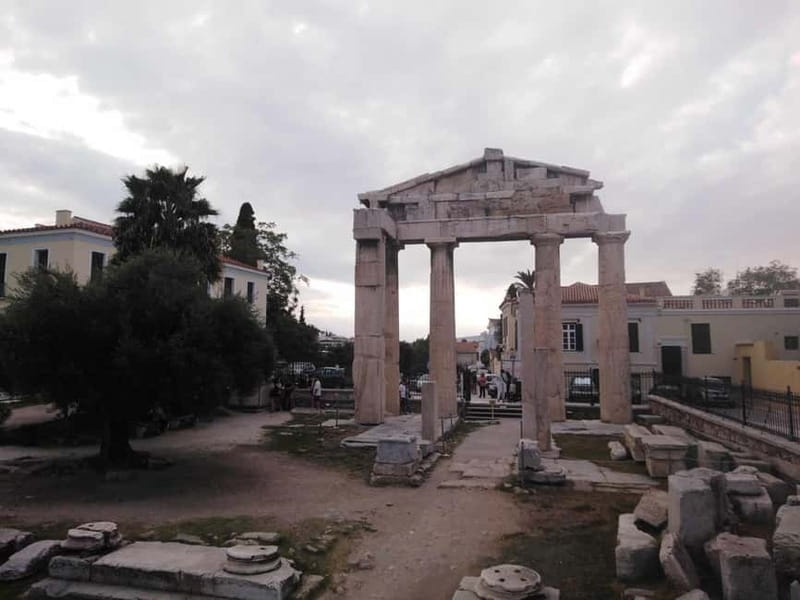
The tour meets right in front of the Metro Station at Monastiraki square. That’s a smart choice, because Monastiraki is one of those Athens hubs where you can blend right into the flow of the city. If you’re arriving by transit, you’ll likely already be oriented by the time you reach the meeting point.
This start also matters because you’ll begin with the kind of streets where Athens feels lived-in, not museum-like. The guide’s job here is to get you moving with confidence: why this area matters, what you’ll see next, and how to look at the city without getting overwhelmed. You’re not just walking—you’re learning the map in real time.
Monastiraki to the Ancient Greek Agora: seeing the city with a story attached
From Monastiraki, the tour works its way toward the Ancient Greek Agora area, and this is where the guided format really earns its money. The difference between wandering solo and walking with a leader is timing and meaning: you’ll pause where it counts, and the guide explains what the space is and how it fits into Athens’ long timeline of culture.
What I like about this stop is that it gives you a foundation for the rest of the walk. Once you understand how the guide connects the sites—rather than treating them like separate photo stops—everything feels more connected. It’s like being handed the theme key for a playlist: you still hear the songs, but you start noticing patterns.
A possible downside: if you tend to zone out when someone starts explaining details, you might want to stay mentally active. Keep a quick note in your phone for questions you want answered later (What’s the link between these places? What should I look for as I pass?). With a small group, you can usually get a response.
Roman Agora: the same city, different chapter
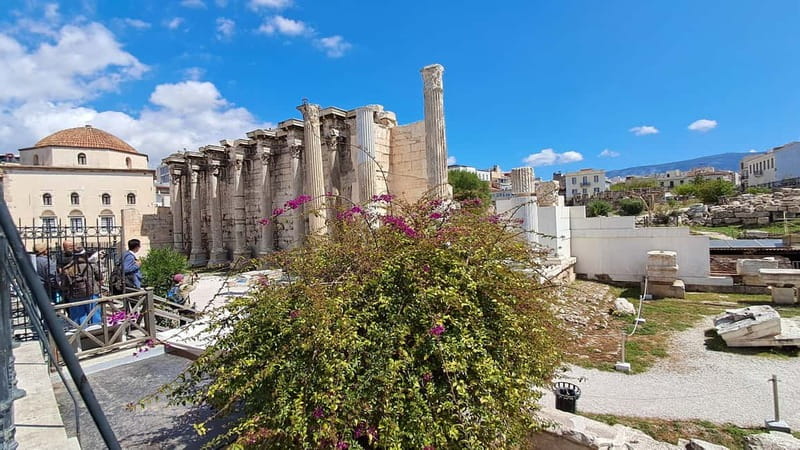
After the Ancient Greek Agora area, you’ll shift toward the Roman Agora. This part is valuable because it shows Athens as layered—different periods speaking over each other through streets, shapes, and the way people use spaces today.
The guide’s explanations focus on history and culture as you walk, which is exactly how you want it. You’re not reading a textbook in the heat; you’re seeing how the city’s past shows up in the layout and atmosphere around you. And because the tour is only three hours total, the guide has to keep it focused. That helps you stay oriented instead of overloaded.
One practical consideration here: the pace between stops can feel brisk because the tour is designed to cover several major areas in one go. If you like long pauses for photos, you’ll need to be selective—grab the key shots, then listen for what the guide points out while you’re still in position.
Athens at walking pace, more routes
Plaka: where the walking tour turns into real Athens
Next comes Plaka, and this is where the tour shifts from major historical anchors to the feel of everyday Athens. The guide doesn’t just point out sights; the whole experience is framed around daily life of Athenians as you explore the city. That changes your perspective. Instead of asking, What is this building? you also start thinking, Who passes through here, and how does this neighborhood function?
Plaka is also a great time to start making your own next-day plan. A good walking tour does more than finish—it gives you momentum. Vera’s style (including recommendations for what deserves more attention and where you might want to eat) is the kind of practical bonus that helps you use Athens beyond the tour route.
The only “watch-out” I’d give you here is weather. Plaka streets can mean more direct sun and more time on your feet. Even if the tour keeps things moving, you’ll still benefit from bringing the basics: hat, water, and sunscreen.
Temple of Zeus, University, and Parliament: big landmarks, big perspective
The later stretch of the walk includes the Temple of Zeus, and you’ll also see the University and the Parliament area. These stops matter because they help you connect ancient Greece’s story to modern Athens’ current identity. Even if you’re not a history nerd, these landmarks help you get the scale of the city—how the past and present share the same streetscape.
What’s useful is that the guide brings the history and culture back into focus as you move. You’re not just seeing famous names; you’re hearing how the city’s identity has evolved and why these areas feel significant in the daily rhythm of Athens.
A small caution: these are major, high-visibility areas. That often means you’ll see more foot traffic around you than in the quieter side-streets. It’s not a problem, just something to plan for mentally so you don’t feel rushed. Use the moment to ask questions like, What should I do next in this general area? or Where would you spend more time if you had one afternoon?
The guide makes the difference: Vera D.’s style
This is the part that most strongly separates a good walking tour from a merely decent one. Vera D. brings an energetic, confident delivery, with clear English and strong Spanish as a bonus. The guide’s presence is noticeable because you’re asked to look at Athens with a purpose: listen, notice, and connect.
One highlight from the experience is how the guide explains not just where to go, but the story behind the places and the culture around them. That’s why the tour can work even if you didn’t do much prep before arriving. You leave with a mental framework you can use the rest of your trip.
Another big plus: Vera also helps with practical Athens instincts. The tour doesn’t pretend to be a food tour, but you’ll get ideas about where to eat and what to pay extra attention to after you’ve walked away. That’s real value, because Athens can be full of choices—and you’ll make better ones when you trust what a local guide is pointing out.
Duration and group size: why 3 hours works
At 3 hours, this tour hits a sweet spot. Long enough to cover several major neighborhoods and landmarks, short enough that you don’t feel trapped in a “tour bubble.” It’s a great first-day or mid-trip option: early enough to give you orientation, but not so late that you’ve already locked in plans you can’t adjust.
The group size is limited to 10 participants. That’s small in a good way. You can actually hear explanations without playing audio roulette, and the guide can adjust if someone has questions. If you like interactive moments—asking about what to do next, or how to interpret a sight you’re passing—that small group format helps.
If you’re someone who dislikes guided talk and prefers roaming, this might feel like “too much guidance.” But if you’re open to learning as you go, you’ll probably find the structure comforting.
Price and value: why $29 feels reasonable for Athens core sights
The tour costs $29 per person for a 3-hour walking experience with a live professional guide. On paper, that’s not a steal, but it also isn’t inflated for what you actually get: key historical sites across central Athens, plus cultural context and daily-life perspective, all in one session.
Here’s the value logic I’d use if I were booking again: you’re paying for time saved and clarity gained. If you attempted the same route alone, you’d spend more time figuring out what you’re looking at, and you might miss the connections that make the city feel cohesive. With a guide, you get an organized story and a practical sense of where to focus next.
Also, small-group walking tours in a city like Athens can be worth it because distances are real. Three hours is enough to build momentum without exhausting you to the point where you stop caring about details.
What to bring (so the tour feels easy, not hard)
You’re walking, so plan like it’s a real walk—not a gentle stroll. Bring:
- Comfortable shoes (this is the biggest one)
- A hat for sun
- A water bottle to stay hydrated
Sunscreen also helps, especially if you’re touring in warmer months. And yes, photography is allowed, so you don’t need to choose between seeing and capturing. Just be mindful not to block the group when you stop.
Weather and pacing: the two things that affect your experience most
Because this is an outdoor walking tour, weather matters. Be ready for changing conditions. Even in pleasant seasons, you can get sun, wind, or brief cool-downs that affect comfort. The guide’s main job remains the same—keep you moving and informed—so it’s on you to handle comfort.
Pacing matters too. You’ll cover several named areas: Monastiraki, the Ancient Greek Agora, the Roman Agora, Plaka, Temple of Zeus, and the University/Parliament zone. That means you should expect steady walking between stops. If you like slow wandering, you might feel tempted to linger—just note where you can sneak in a photo without falling behind.
Who should book this tour (and who might not)
This is a strong fit if you want:
- A guided way to understand central Athens fast
- A walking route that hits the major anchors—Monastiraki, Agoras, Plaka, and Zeus/Parliament area
- Cultural context and day-to-day insights, not just monument names
- A small group experience led by Vera D. in English (and Spanish very well)
It may be a poor fit if:
- You need wheelchair access or mobility support, since it’s not suitable for wheelchair users and people with mobility impairments
- You struggle with continuous walking for about three hours
- You prefer fully self-paced exploring and don’t want guided explanations
Booking notes to keep it stress-free
If you like flexibility, this tour offers free cancellation up to 24 hours in advance for a full refund. It also uses a reserve now & pay later option, which is handy when your schedule is still shifting.
No hotel pickup is included, so plan to reach the Monastiraki square meeting point on your own.
Should you book this Athens walking tour with Vera?
If you’re aiming to understand Athens quickly and walk away with a clearer sense of how the city works, I think this is a smart buy. You’re not just ticking off famous stops—you’re getting a guide who connects places through history, culture, and day-to-day Athens life. The small group size is the quiet reason it feels personal instead of chaotic.
Book it if you want a confident starting point and practical follow-up ideas like where to eat and what to focus on after the tour ends. Skip it only if walking for three hours is a problem for you, or if you know you’d rather wander without someone talking through the city’s story.
If you want, tell me your travel dates (and whether you’re going in hot weather), and I’ll suggest the best time of day to do this route and what to pair it with on the rest of your Athens day.
FAQ
Where does the tour meet?
You meet in front of the Metro Station at Monastiraki square.
How long is the walking tour?
The tour lasts 3 hours.
What group size is this tour?
It’s a small group limited to 10 participants.
What languages does the guide speak?
The live guide speaks English and Spanish.
What should I bring?
Wear comfortable shoes, and bring a hat and water. Sunscreen is recommended as well.
Is the tour suitable for wheelchair users or people with mobility impairments?
No. It is not suitable for wheelchair users or people with mobility impairments.
What is included in the price?
A professional live tour leader is included, along with visits to key historical sites, a walking tour of Athens’ central region, and insight into daily life of Athenians.
More Tours in Athens
- Athens: Acropolis, Parthenon & Acropolis Museum Guided Tour★ 4.8 · 9,316 reviews
- The Acropolis, Parthenon & Acropolis Museum Guided Tour★ 4.7 · 8,493 reviews
- Acropolis: Premium Acropolis and Parthenon Guided Tour★ 4.8 · 5,208 reviews
- Athens: Mythology of Delphi, Museum and Arachova Guided Tour★ 4.7 · 5,102 reviews
- Acropolis and Parthenon Guided Walking Tour★ 5.0 · 4,755 reviews
- Greek Food Walking Tour in Athens★ 5.0 · 4,740 reviews
More Tour Reviews in Athens
- Athens: Acropolis & up to 5 Archaeological Sites Combo Pass★ 4.2 · 13,904 reviews
- Athens: Acropolis, Parthenon & Acropolis Museum Guided Tour★ 4.8 · 9,316 reviews
- The Acropolis, Parthenon & Acropolis Museum Guided Tour★ 4.7 · 8,493 reviews
- Athens: Cape Sounion & Poseidon Temple Sunset Half-Day Trip★ 4.8 · 8,241 reviews
- Acropolis: Premium Acropolis and Parthenon Guided Tour★ 4.8 · 5,208 reviews
- Athens: Mythology of Delphi, Museum and Arachova Guided Tour★ 4.7 · 5,102 reviews
Athens on Foot, Continued
- Acropolis and Parthenon Guided Walking Tour★ 5.0 · 4,755 reviews
- Greek Food Walking Tour in Athens★ 5.0 · 4,740 reviews
- Athens: Guided Greek Food Walking Tour with Tastings★ 4.9 · 2,859 reviews
- Acropolis monuments & Parthenon Walking Tour with Optional Acropolis Museum★ 5.0 · 2,678 reviews
- Athens Acropolis and Parthenon Walking Tour★ 4.5 · 1,355 reviews
- Acropolis, Parthenon & Athens Old City Heritage Walking Tour★ 4.5 · 876 reviews
Fresh Off the Boat: New Athens Reviews





Athens Walking Tours, compared.
 ★ 5.0Acropolis and Parthenon Guided Walking TourFrom $414,755 reviews
 ★ 5.0Greek Food Walking Tour in AthensFrom $874,740 reviews
 ★ 4.9Guided Greek Food Walking Tour with TastingsFrom $812,859 reviews
 ★ 5.0Acropolis monuments & Parthenon Walking Tour with Optional Acropolis MuseumFrom $422,678 reviews
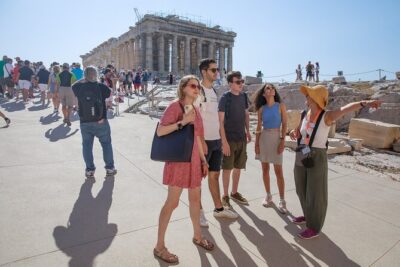 ★ 4.5Athens Acropolis and Parthenon Walking TourFrom $411,355 reviews
 ★ 4.5Acropolis, Parthenon & Athens Old City Heritage Walking TourFrom $34876 reviews
 ★ 5.0Athens Authentic Greek Food Walking Tour (Small Group)From $83809 reviews
 ★ 4.9Ultimate Food Walking Tour with 15 TastingsFrom $93567 reviews
Browse the lists this tour appears in