

Reviewed · ACROPOLIS & PARTHENON TOURS
Athens:Acropolis – Historical Center Walking Tour in Spanish
Acropolis in the morning, Plaka by lunch. This guided walk is interesting because you don’t just look at ruins; you get the why behind them, with headphones and a licensed Spanish guide keeping the pace easy to follow.
I especially like that the guide helps you connect big monuments to real city life, so the Acropolis doesn’t feel like a separate museum island. One thing to plan for: the Acropolis entrance ticket is not included, and you need a time slot from 08:00–09:00.
In This Review
- The value of a 4-hour Acropolis + Old Town focus
- Why the early entry (south slope) matters
- Inside the Acropolis: Dionysus, Propylaea, and Athena’s story
- The Parthenon stop: harmony explained, not just pointed at
- Temple of Athena Nike and the Caryatids
- Views from the top: Hadrian, Zeus, Herod’s Odeon, and more
- Photo break timing: where it helps (and where to be ready)
- Old Town and Plaka: the Athens you actually walk through
- Tower of the Winds and Mitropolis: a thoughtful ending
- Group size, guide style, and communication that lowers stress
- Logistics that can make or break your day
- Price and value: what $57 buys you (and what it doesn’t)
- Who this tour fits best
- Should you book this Acropolis + Plaka Spanish walking tour?
- FAQ
- Is the Acropolis entrance ticket included in the tour price?
- What’s included with the guided tour?
- Where do I meet the guide?
- How long is the tour?
- What language is the tour in?
- What should I bring?
- Is the tour suitable for people with mobility impairments?
The value of a 4-hour Acropolis + Old Town focus
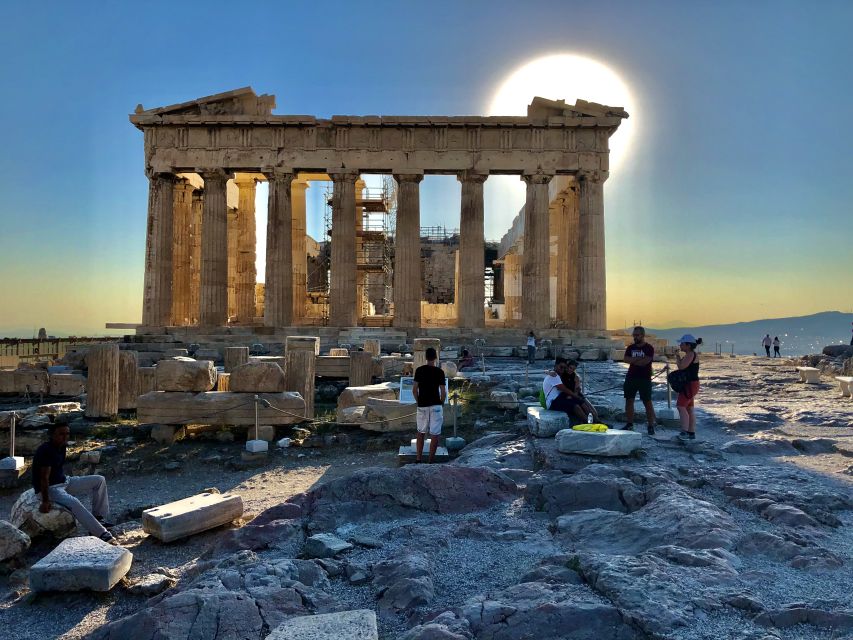
At $57 per person for a 4-hour outing, this is the kind of deal that makes sense if you want more than a quick photo stop. You’re paying for a trained guide (licensed, in Spanish) plus headphones, so you can hear details clearly even when you’re standing near stone and crowds.
The tour’s main strength is its shape. You start early, you enter the Acropolis through a less obvious route, and then you continue into Athens’ historical center with a Plaka stroll and key sights like the Ancient Agora area and the Tower of the Winds.
More ways up the sacred rock, set side by side
- Athens: Acropolis & up to 5 Archaeological Sites Combo Pass
★ 4.2 · 13,904 reviews - Athens: Acropolis, Parthenon & Acropolis Museum Guided Tour
★ 4.8 · 9,316 reviews - The Acropolis, Parthenon & Acropolis Museum Guided Tour
★ 4.7 · 8,493 reviews - Acropolis: Premium Acropolis and Parthenon Guided Tour
★ 4.8 · 5,208 reviews
Why the early entry (south slope) matters
One of my favorite parts of the plan is the way you get into the Acropolis. Instead of funneling through the busiest main access, your group enters through the south slope side door, which helps you see important spots with less crowd pressure.
That choice also sets up the storytelling. Right away you’re oriented toward Teatro de Dionisio, one of the earliest major theaters in the region, and then you move toward the main monumental entrance, the Propylaea. It feels less like sprinting and more like stepping into a sequence.
Inside the Acropolis: Dionysus, Propylaea, and Athena’s story
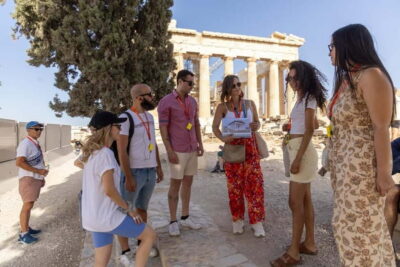
The tour begins with your official guide briefing you as you enter the Acropolis area. They frame everything with the mythology and politics that made this place matter, including the dispute between Athena and Poseidon and how Athena became patron of the city.
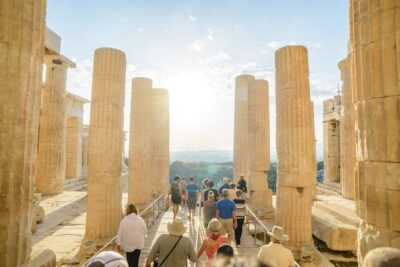
From there, you pass through the Propylaea, described as a monumental entrance designed to funnel people against enemies and to build an emotional lead-in before the Parthenon. That detail matters because it explains how architecture worked as persuasion, not just decoration.
The Parthenon stop: harmony explained, not just pointed at
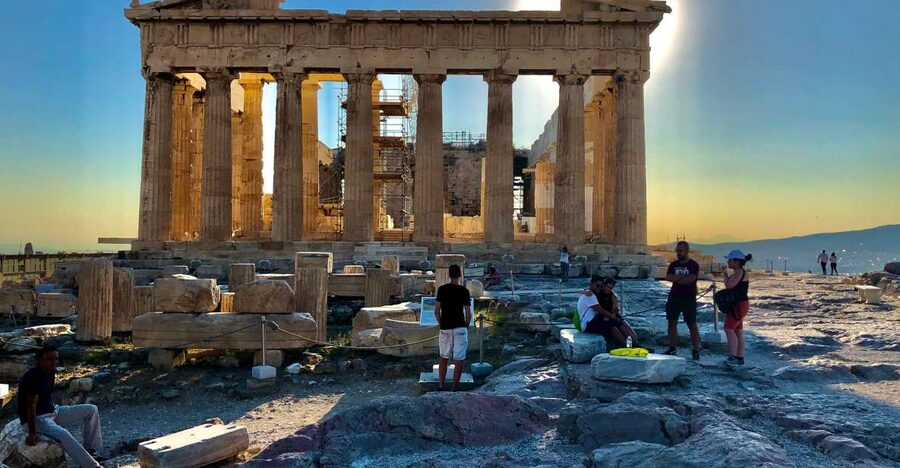
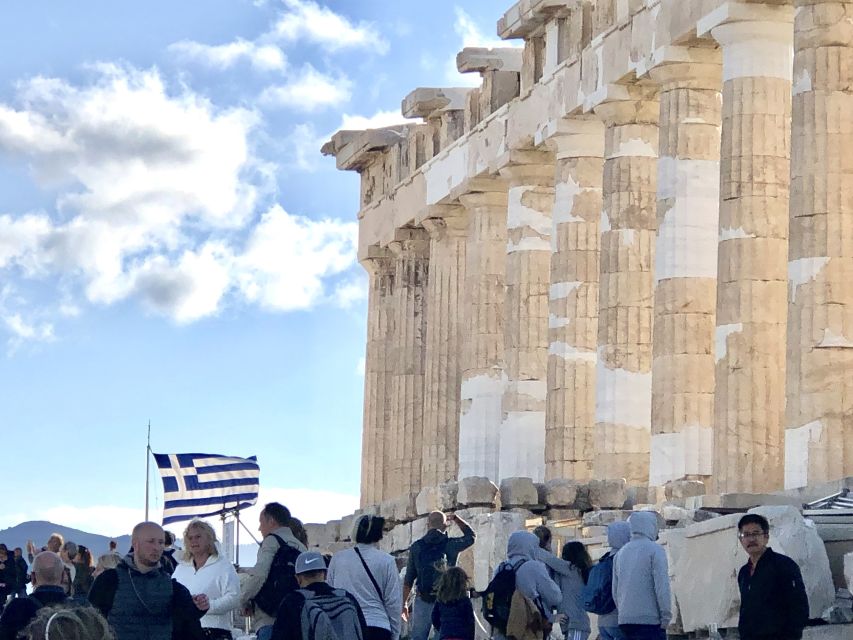
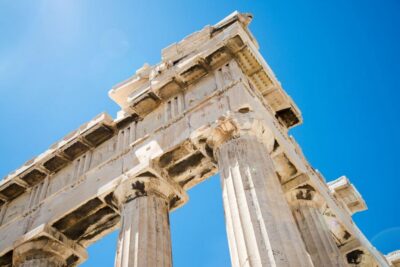
You get a dedicated stop right in front of the Parthenon, and that’s the moment the tour becomes more than sightseeing. The guide focuses on real reasons the building was created about 2,500 years ago, plus why it’s celebrated for harmony and architectural balance.
I like this approach because it keeps you from treating the Parthenon like a single famous face. You start noticing how the design language is doing work: scale, proportion, and visual clarity from different angles.
On foot through Plaka and beyond



Temple of Athena Nike and the Caryatids

After the big Parthenon moment, the tour shifts to smaller-but-significant elements that are easy to miss if you’re wandering on your own.
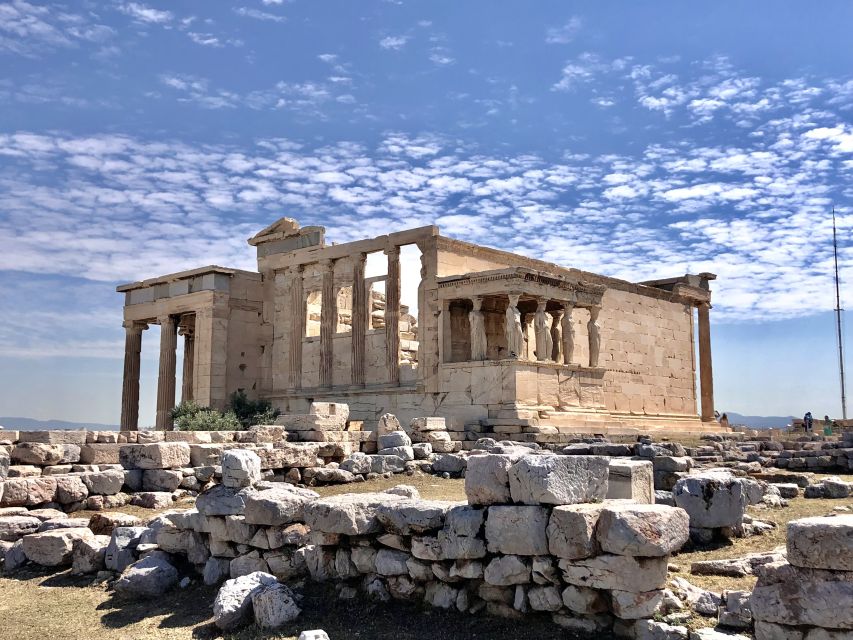
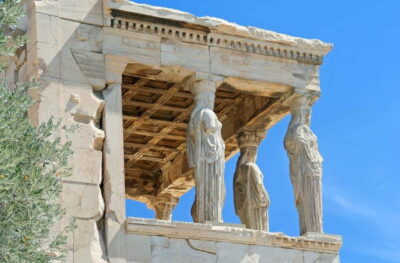
You’ll see the Temple of Athena Nike, and the guide highlights the details that make it feel like an Ionian jewel. Then you move to the Caryatids—those iconic female columns—explained as a striking part of the sculptural storytelling of the Acropolis.
These stops are worth it because they teach your eye what to look for. If you’re the kind of person who likes to photograph stone texture and figures, this section gives you something concrete to aim at besides the overall skyline.
Views from the top: Hadrian, Zeus, Herod’s Odeon, and more
Once you’re high enough, the Acropolis becomes a viewpoint tour too. The route includes stops for wide views, where the guide points out landmarks you can actually connect with the stories you’ve heard.
From the top, you contemplate the Arch of Hadrian and the Temple of Zeus. You also look toward the Odeon of Herod the Attic, described as a place where the Athens festival is held today—an excellent reminder that ancient structures can still shape modern schedules.
You’ll also hear about the National Observatory and the surrounding hills and areas, including Lycabetus (Lycabetus), Philopappos, and Areopagus. Even when you can’t see every detail clearly, the guide’s map-in-the-air explanations help you understand Athens as layers, not a single flat postcard.
Photo break timing: where it helps (and where to be ready)
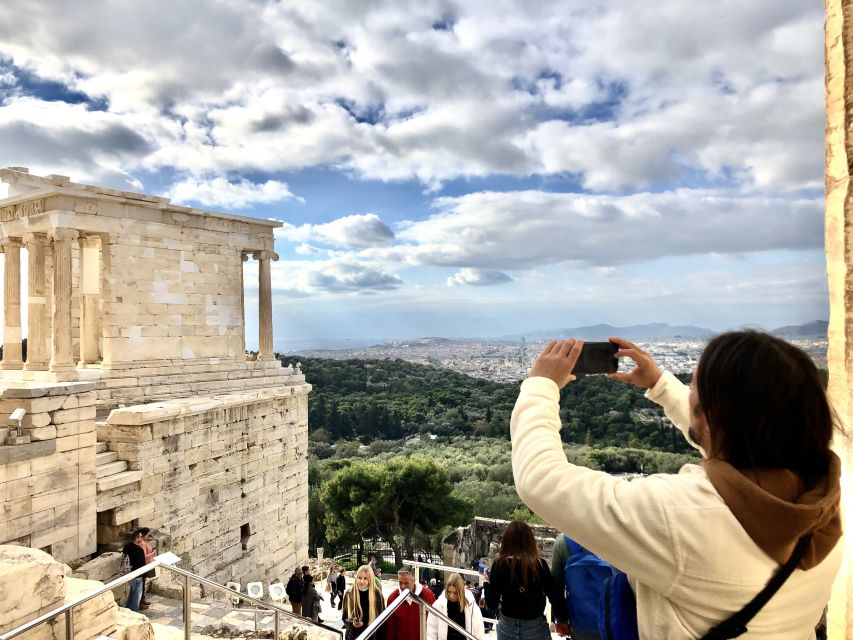
There’s a short photo break during the top section. In practice, this kind of pause is helpful because the Acropolis can feel nonstop if you’re squeezing it between other plans.
Still, I’d plan on comfortable breathing room rather than rushing back to your hotel. You’ll be walking, standing, and moving between viewpoint angles, and early-day tours can feel longer than the clock once you add in photo time.
Old Town and Plaka: the Athens you actually walk through
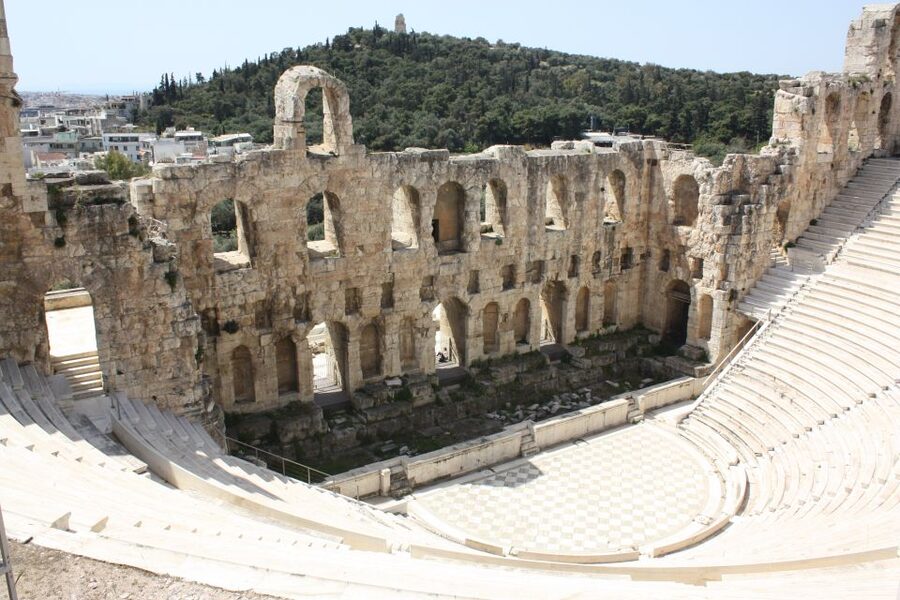
After the Acropolis, the energy shifts. You continue into the Old Town and toward Plaka, the neighborhood many visitors love for its charm and photogenic streets.
What makes this part valuable is that it changes the scale. On the Acropolis, everything is about monumental power. In Plaka, you feel the city as lived-in space—where the ancient setting becomes a backdrop to everyday Athens.
You’ll pass outside the Ancient Agora area and connect the dots to philosophy. The tour references space where Socrates, Plato, and Aristotle left their footprints, and it points you toward the best-preserved temple in Athens (the famous one many people know by reputation). Even from the outside, the explanation helps you understand why this area mattered to civic life.
Tower of the Winds and Mitropolis: a thoughtful ending
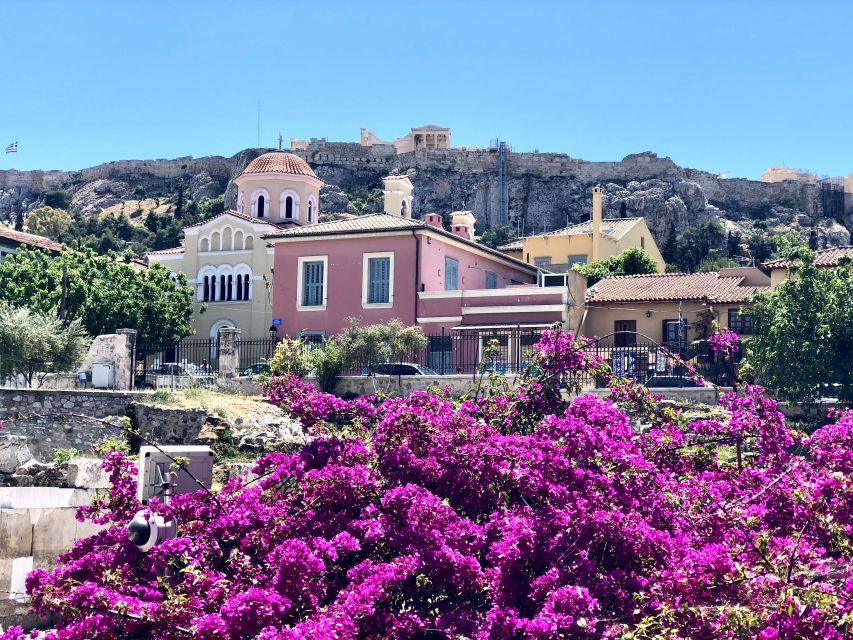
The tour closes at two final stops that add atmosphere and human context.
First is the Tower of the Winds, described as the oldest meteorological observatory in the world. That detail turns the building into something more than a relic. It becomes a piece of science and daily measurement, which balances the mythology-heavy earlier storytelling.
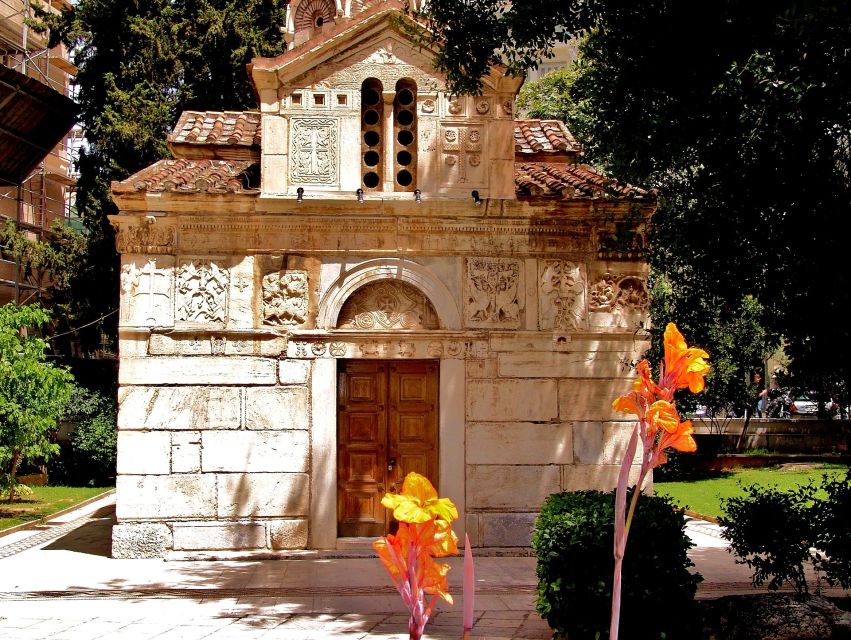
Then you visit the Mitropolis of Athens, the church connected to the marriage of Queen Sofía with Juan Carlos. You also get a chance to learn about Orthodox religion, which is the predominant religious tradition in Greece. That’s a strong finish because it brings you back from “ancient Greece” into how Greeks live today.
Group size, guide style, and communication that lowers stress
You’ll feel the difference between a tour that just moves people and one that keeps them comfortable. Past participants have highlighted the guides’ clarity and patience, with names like Efi and Andrea showing up as examples of strong communication and deep historical command.
There’s also a practical support layer that’s worth knowing about. The tour team has been described as contacting people in Spanish via WhatsApp with meeting-location details, and responding quickly if you have a question about where to go. If you’re arriving in Athens with limited time or you’re tired after a travel day, that kind of guidance is a real quality-of-life boost.
Logistics that can make or break your day
This is a walking tour, and you should treat it like one. Wear comfortable shoes, because you’ll be moving between several major points on foot, plus standing for explanations and views.
Two logistics notes are especially important:
- No Acropolis entrance fee included. You must get your Acropolis entrance ticket for the 08:00–09:00 time slot. If you book without it, the provider says they will contact you and manage the tickets at the official cost.
- The tour is not suitable for people with mobility impairments, and baby carriages or electric wheelchairs aren’t allowed.
If you know these points upfront, the day runs smoother.
Price and value: what $57 buys you (and what it doesn’t)
Here’s the honest value math. You’re paying $57 for a 4-hour guided experience with a licensed Spanish guide and headphones. The big museum element—Acropolis entry—costs extra because the tour doesn’t include entrance fees.
That means the deal is strongest when you:
- already plan to visit the Acropolis anyway, and
- can secure the correct timed ticket for 08:00–09:00.
If you need help getting the ticket after booking, the operator states they’ll manage it at official cost. So the price still works, but you’ll want to plan early so you’re not scrambling.
Who this tour fits best
This tour is a great fit if you want:
- a Spanish-language guided explanation (not just a brochure walk),
- an Acropolis visit that includes context beyond the headline monuments,
- and a transition into Athens through Plaka and the Old Town.
It’s also ideal if you like structure: a start time that pushes you into the city’s quieter hours, a clear sequence of stops, and an end that ties ancient sites to modern Athens and religion.
Should you book this Acropolis + Plaka Spanish walking tour?
If you’re choosing between a casual walk and a guided experience, I’d lean toward booking this one. The guide-led flow matters here: the south-slope entry, the Parthenon explanation, the viewpoint stops, and the ending at the Tower of the Winds and Mitropolis give you a coherent story arc in just four hours.
Just be sure you’re ready for the one big requirement: handle the Acropolis ticket for 08:00–09:00 ahead of time. If that fits your schedule, this is a solid way to see the most famous site in Greece plus the parts of Athens that make it feel like a real city.
FAQ
Is the Acropolis entrance ticket included in the tour price?
No. Entrance fees to the Acropolis are not included. You need to obtain an Acropolis entrance ticket for a time slot between 08:00 and 09:00.
What’s included with the guided tour?
The tour includes a licensed guide in Spanish and headphones.
Where do I meet the guide?
You meet at the lower gate of the Acropolis, a few meters from the Acropolis museum. The guide will hold a sign with the office logo.
How long is the tour?
The tour lasts 4 hours.
What language is the tour in?
The tour is in Spanish.
What should I bring?
Bring comfortable shoes.
Is the tour suitable for people with mobility impairments?
No. This tour is not suitable for people with mobility impairments, and baby carriages and electric wheelchairs aren’t allowed.
More Tour Reviews in Athens
- Athens: Acropolis & up to 5 Archaeological Sites Combo Pass★ 4.2 · 13,904 reviews
- Athens: Acropolis, Parthenon & Acropolis Museum Guided Tour★ 4.8 · 9,316 reviews
- The Acropolis, Parthenon & Acropolis Museum Guided Tour★ 4.7 · 8,493 reviews
- Athens: Cape Sounion & Poseidon Temple Sunset Half-Day Trip★ 4.8 · 8,241 reviews
- Acropolis: Premium Acropolis and Parthenon Guided Tour★ 4.8 · 5,208 reviews
- Athens: Mythology of Delphi, Museum and Arachova Guided Tour★ 4.7 · 5,102 reviews
Athens on Foot, Continued
- Acropolis and Parthenon Guided Walking Tour★ 5.0 · 4,755 reviews
- Greek Food Walking Tour in Athens★ 5.0 · 4,740 reviews
- Athens: Guided Greek Food Walking Tour with Tastings★ 4.9 · 2,859 reviews
- Acropolis monuments & Parthenon Walking Tour with Optional Acropolis Museum★ 5.0 · 2,678 reviews
- Athens Acropolis and Parthenon Walking Tour★ 4.5 · 1,355 reviews
- Acropolis, Parthenon & Athens Old City Heritage Walking Tour★ 4.5 · 876 reviews
The Acropolis, a Few More Ways Up
- Athens: Acropolis & up to 5 Archaeological Sites Combo Pass★ 4.2 · 13,904 reviews
- Athens: Acropolis, Parthenon & Acropolis Museum Guided Tour★ 4.8 · 9,316 reviews
- The Acropolis, Parthenon & Acropolis Museum Guided Tour★ 4.7 · 8,493 reviews
- Acropolis: Premium Acropolis and Parthenon Guided Tour★ 4.8 · 5,208 reviews
- Acropolis and Parthenon Guided Walking Tour★ 5.0 · 4,755 reviews
- Athens: Acropolis, Parthenon & Acropolis Museum Guided Tour★ 4.8 · 3,579 reviews
Fresh Off the Boat: New Athens Reviews





Acropolis & Parthenon Tours, compared.
 ★ 4.2Acropolis & up to 5 Archaeological Sites Combo PassFrom $4213,904 reviews
 ★ 4.8Acropolis, Parthenon & Acropolis Museum Guided TourFrom $409,316 reviews
 ★ 4.7The Acropolis, Parthenon & Acropolis Museum Guided TourFrom $408,493 reviews
 ★ 4.8Acropolis: Premium Acropolis and Parthenon Guided TourFrom $405,208 reviews
 ★ 5.0Acropolis and Parthenon Guided Walking TourFrom $414,755 reviews
★ 4.8Acropolis, Parthenon & Acropolis Museum Guided TourFrom $413,579 reviews
★ 5.0Acropolis and Parthenon Guided Walking TourFrom $414,755 reviews
★ 4.8Acropolis, Parthenon & Acropolis Museum Guided TourFrom $413,579 reviews
 ★ 4.0Acropolis Ticket with Audio GuideFrom $473,575 reviews
 ★ 5.0Athens Scenic Electric Bike Tour with optional Acropolis visitFrom $353,350 reviews
Browse the lists this tour appears in