
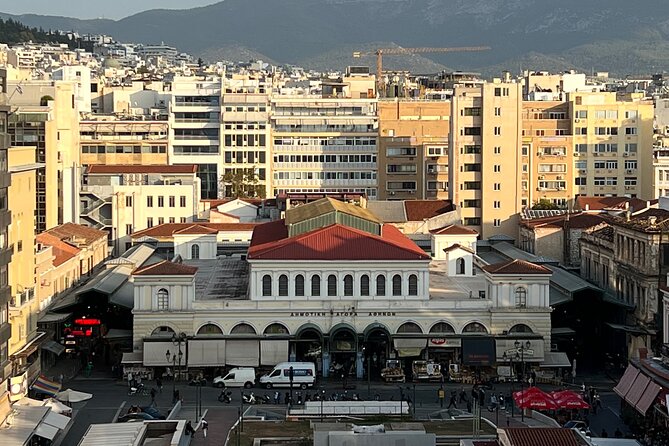
Reviewed · ACROPOLIS & PARTHENON TOURS
Best of Athens & Acropolis Full Day Private Guided City Tour
One day in Athens, and it hits the big notes fast. You get a private, English-guided route that starts on the sacred rock and then fans out through Athens’ civic neighborhoods, old markets, and neoclassical sights. It’s the kind of itinerary that helps you see how ancient power, modern politics, and street life share the same real estate.
I especially like the Acropolis portion for its clear, story-first flow: you move from the climb to the Parthenon, then through key buildings like the Propylaea and the Erechtheion without the usual feeling of wandering alone. I also like that the pickup option is built into the experience, and the provider’s communication style is known for being prompt via WhatsApp or Apple iMessage (names like Nikos and Stefanos show up in their past airport-transfer notes). One possible drawback: the schedule is tight, with several major stops timed around about 5–15 minutes each, so you’ll want to enjoy the highlights rather than linger.
In This Review
- Key Points You’ll Care About Before You Go
- What This Tour Really Feels Like From Start to Finish
- The Acropolis Climb: Marble Ground, Big Views, and Real Architecture Details
- Parthenon Highlights: Optical Refinements You Can Actually Spot
- Propylaea and Temple of Athena Nike: Gate Drama and Victory Symbolism
- Erechtheion: The Caryatids, the Myths Underfoot, and Why Replicas Matter
- Ancient Agora and Temple of Hephaestus-Area: Where Athens Worked
- Syntagma to Monastiraki: How Classical Athens Lives Under Modern Streets
- Panathenaic Stadium and the Big Ruins Moment at Olympeion
- Plaka and Monastiraki: The Athens You Actually Want to End With
- Price and Value: Is $600.12 Per Person Worth It?
- Who This Tour Fits Best (and Who Might Skip It)
- Should You Book This Private Acropolis and Athens Day?
- FAQ
- Is this tour private?
- How long does the Best of Athens & Acropolis Full Day Private Guided City Tour take?
- Does the tour include pickup?
- What language is the guide?
- Are admission tickets included?
- Where can pickup coordination happen?
- What time does it run during the day?
- Is the mobile ticket included?
- Is cancellation free?
Key Points You’ll Care About Before You Go
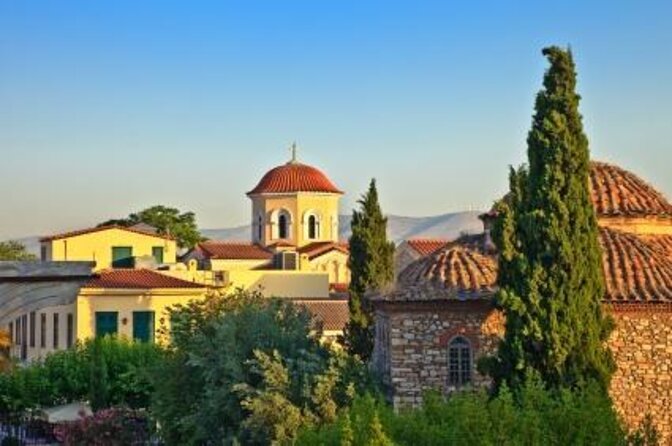
- Private tour format: only your group, so you can move at the pace you want within the planned timing.
- Acropolis sequence with practical spotting tips for quarry marks, drainage channels, and optical design tricks on the Parthenon.
- Museum logic built in: you’ll see where replicas are placed (like at the Erechtheion) and where originals are preserved.
- A full Athens arc: from ancient Agora and Hephaestus-area temples to Syntagma, Plaka, and Monastiraki.
- Pickup coordination using WhatsApp or Apple iMessage to lock the exact meeting spot.
- Value check: most major site admissions are included, but some optional entry (like the Panathenaic Stadium climb) is not.
More ways up the sacred rock, set side by side
- Athens: Acropolis & up to 5 Archaeological Sites Combo Pass
★ 4.2 · 13,904 reviews - Athens: Acropolis, Parthenon & Acropolis Museum Guided Tour
★ 4.8 · 9,316 reviews - The Acropolis, Parthenon & Acropolis Museum Guided Tour
★ 4.7 · 8,493 reviews - Acropolis: Premium Acropolis and Parthenon Guided Tour
★ 4.8 · 5,208 reviews
What This Tour Really Feels Like From Start to Finish

This is a day tour designed to keep you oriented. You don’t just get dropped at the Acropolis and told to figure it out. Instead, the route builds like a movie: you climb, you see the main architectural set pieces, then you drop down into the Agora to understand the civic machinery behind the monuments. After that, the itinerary shifts to modern Athens landmarks and the old neighborhoods where people actually live and shop.
You’ll be with a guide the whole time, and the story is meant to do two jobs at once. First, it explains the big ideas—Athens at its political peak, religious meaning, and how Roman-era ambitions later left their marks. Second, it trains your eye on what you can physically spot: marble details, restoration clues, and sculptural motifs that are easy to miss when you’re just taking photos.
The practical upside for you is less confusion. When you know what you’re looking at and why it matters, you get more out of each short stop. The tradeoff is pace: if you hate time pressure, this is not a slow wander day.
The Acropolis Climb: Marble Ground, Big Views, and Real Architecture Details
The day begins on the Acropolis itself, climbing the sacred rock via a pedestrian promenade. The whole point of the start is to help you transition from Athens’ modern city texture to the “why here” of classical Greece. As you gain elevation, the skyline changes and marble structures start to appear like set pieces.
I like that the approach is focused on specific observations, not vague admiration. Your guide points out small signs that make the site feel grounded in real construction and restoration history. Look for ancient quarry marks in the bedrock and carved drainage channels—these show how the Greeks shaped the rock and how later eras kept it alive. You’ll also notice reused marble blocks, which is a quiet but powerful reminder that monumental sites are never frozen in time.
Photo-wise, you’re encouraged to pause partway up for a Parthenon frame against the Saronic Gulf. That moment matters because it’s not just a view; it’s scale. When you can see the Parthenon set into the landscape, everything later inside the complex makes more sense.
One very practical note: the surfaces are described as smooth marble. That means grippy footwear isn’t optional if you want comfort and confidence on the slope.
Parthenon Highlights: Optical Refinements You Can Actually Spot
The Parthenon stop is short—about 15 minutes—but it’s packed with the kind of details that make a guided visit feel worth it. The core idea is that the building doesn’t look perfectly symmetrical by accident. It uses optical refinements to correct for how humans see from a distance.
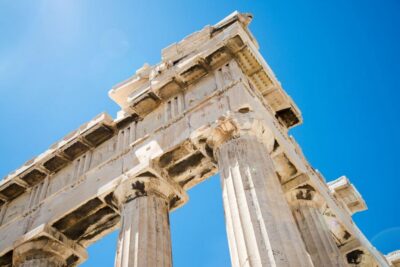
Your guide will explain things like subtle curvature and tilted columns—how they create the illusion of absolute symmetry. This is the difference between standing in front of a famous temple and understanding why it looks so correct from ground level.
I also appreciate the story about the friezes. You’ll hear how the sculpted narrative once carried vivid color, which changes how you imagine the Parthenon originally functioned as a civic storytelling space, not just a stone relic. Even if you can’t see the original paint today, being told what to imagine helps you see more than shapes.
What to watch for in the building itself: corner columns are slightly thicker to counter optical thinning. And there may be traces of ancient pigments on sheltered stones. These are the kinds of cues that turn a quick stop into a memorable one.
Practical tip: respect barriers. The guide emphasis here is clear—this is protected archaeology, and you’ll get the best experience by staying inside the safe lines.
The big Athens hits in one go

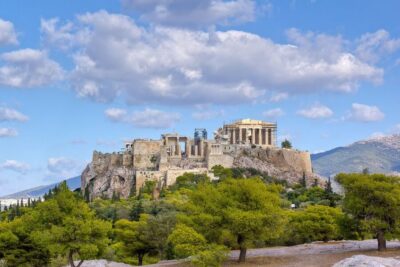
Propylaea and Temple of Athena Nike: Gate Drama and Victory Symbolism

After the Parthenon, you move to the Propylaea. This gateway is where the entrance to the sacred precinct is orchestrated, and the structure can feel like a controlled funnel for foot traffic and attention. The timing is short (again, about 15 minutes), but the focus is on what makes it feel monumental: Doric columns, Pentelic marble, and the way the design guides your arrival moment.
I like that your guide calls out asymmetry. The Propylaea isn’t shown as a rigid blueprint; it adapts to terrain and nearby shrines. That small point helps you understand how ancient sites were planned in the real world, not as ideal math.
Then you’ll visit the Temple of Athena Nike. It’s described as an Ionic elegance “jewel box,” perched on a bastion above the gate. The symbolism is victory—military and civic—and your guide connects that idea to the once-dynamic friezes that included battle scenes and winged Nikes (Victories).
You’ll also learn about one of the most famous motifs: Nike adjusting her sandal. The important practical detail is where you’ll see it. In this tour’s stop, you’ll see the replica, while the original is in the Acropolis Museum. That’s a great example of a guided approach that teaches you how to keep your expectations aligned with what’s on-site.
Photo tip for this section: try to capture both the bastion and the temple together. It gives you the cliff-edge drama that makes Athens’ sacred spaces feel like they’re built into the geography.
Erechtheion: The Caryatids, the Myths Underfoot, and Why Replicas Matter

The Erechtheion stop is only about 15 minutes, but it’s arguably the most emotionally strange part of the Acropolis complex—mysterious, sacred, and myth-layered. The plan is asymmetrical because it wraps around holy spots, and that design choice is the key to understanding why the building looks different from the Parthenon’s clean geometry.
Your guide connects multiple founding myths to the site. You’ll hear about Athena’s olive tree and Poseidon’s salt spring, plus the memory of legendary kings. That context matters because it explains why the building isn’t just a monument to architecture—it’s a physical marker of stories.
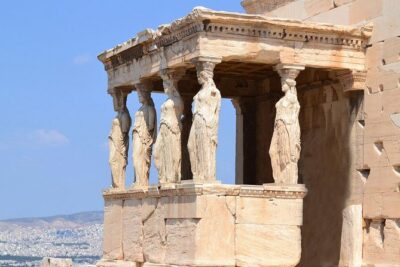
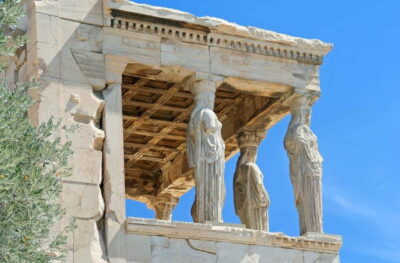
The big visual draw is the south porch with the Caryatids, the maiden statues carrying the roof like living columns. For photos, you’ll be encouraged to frame two Caryatids with the Parthenon blurred behind. That composition helps you get both the iconic foreground figures and the larger setting in one frame.
One detail I’d call out for you: the figures you see are described as faithful casts. Originals are preserved in museums. That can be a letdown if you expect the original artwork on-site, but it also makes the guided explanation valuable. It turns a quick stop into a lesson about preservation.
Also, there’s a specific myth cue to look for: the olive tree to the west—Athena’s gift in the founding story.
Ancient Agora and Temple of Hephaestus-Area: Where Athens Worked

Once you move from temples to the Ancient Agora, the tone shifts from sacred symbolism to everyday civic life. This part of the tour is designed to make democracy, philosophy, and commerce feel like lived experiences, not textbook topics.
The Agora walk is about an hour and includes the idea of colonnades where law, debate, trade, and gossip overlapped. You’ll hear references to law courts and stoas, and you’ll get a sense of how Socrates’ Athens was built around public interaction.
A smart feature here is the way your guide ties grand ideas to ordinary objects. The Stoa of Attalos (museum) is highlighted as a place where everyday life shows up through artifacts like coins, weights, and inscriptions. Even if you don’t go deep into museum time, having that “ordinary details anchor big ideas” framing makes your walk more meaningful.
In terms of what to look for on the ground, you’ll be guided toward boundary stones marking sacred vs. civic zones and ruts from ancient cart wheels. Those marks are subtle, but they make the site feel used, not staged.
After the Agora, you’ll stop at the best-preserved Doric temple in Greece: the Temple of Hephaestus (also tied to Athena Ergane and handiwork). It’s in an elevated position with panoramic views back across the Agora, which makes it feel like a logical “reward moment” after the walking.
Your guide’s focus here includes intact metopes with Heracles and Theseus myths and original roofing elements. For photos, the recommended angle is three-quarters from the southeast corner to catch strong column rhythm.
Syntagma to Monastiraki: How Classical Athens Lives Under Modern Streets

Not every part of Athens needs a ticket. The itinerary includes a cluster of modern civic stops and old neighborhoods that help you see how the city layers over itself.
Syntagma is your regroup point. Think of it as modern Athens’ civic living room, with polished stone terraces, fountains and flowerbeds, and the main boulevards radiating out from the area. The interesting twist is how it connects to history. You’ll also have a chance to spot metro station displays showing archaeological finds visible from the concourse. It’s a useful reminder that modern construction in Athens often reveals classical remains.
Next comes the Monument to the Unknown Soldier, guarded by the Evzones. This is where the tour brings in modern ceremonial rhythm. The Evzones’ precision drill and distinctive uniform—the fustanella pleats and pom-pom tsarouhia—echo centuries of tradition. The changing of the guard helps you understand why Athens feels theatrical in the best way: it’s not random pageantry, it’s civic ritual.
Then you’ll shift into neoclassical “brain power” Athens with the Academy of Athens and the National and Kapodistrian University of Athens, plus the National Library façade. These stops are quick, but they’re meant to show how Greece staged its modern identity through classical-looking form.
At the Academy of Athens, watch for the temple-like façade with statues of Athena and Apollo, and Socrates and Plato seated at the fore. There’s also a note about polychrome details—restored reds and blues—so you aren’t stuck thinking in only gray stone.
For the University stop, you’ll see frescoed porticoes and symmetrical planning, with allegorical figures in the pediment and ironwork in the forecourt. The Library stop emphasizes twin curving staircases and a Doric, temple-like poise. The guidance here is simple: center yourself for symmetry, because the architecture is designed to reward straight-on framing.
Panathenaic Stadium and the Big Ruins Moment at Olympeion
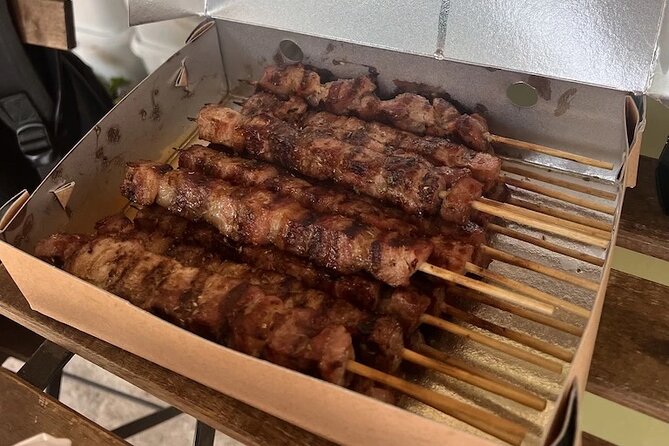
Panathenaic Stadium is carved entirely from white marble and tied to both the ancient Panathenaic festival footprint and the 1896 modern Olympics. You’ll stand on the track where the Olympics restarted, which is a neat time-connection moment for your brain.
The tour notes optional paid entry if you want to climb higher and visit the small exhibit. So you can keep it fast if you want, or add time if you’re in an Olympic mood. Either way, your stop stays focused on the marble structure and the amphitheater feel.
There’s also a quick Olympeion moment—mostly an exterior look, described as through the coach window if traffic allows. It’s a ruin built for scale: once the largest temple in Greece, begun and completed over centuries, with Roman-era ambition under Hadrian. Even from a distance, the tall Corinthian columns and the solitary fallen column help you sense what “imperial” meant in stone.
If you’re someone who loves ruins, this quick beat can hit hard even without extended walk time.
Plaka and Monastiraki: The Athens You Actually Want to End With
The last part of the day turns more relaxed and street-level. Plaka is Athens’ village under the rock, and the charm comes from the maze of neoclassical houses, flower-draped balconies, and tiny chapels. You’re guided toward practical enjoyment: cafés on lanes, ice cream stops, and artisan browsing. It’s also where the Anafiotika area comes in—whitewashed Cycladic-style houses built by island craftsmen clinging to the Acropolis slope.
Photo-wise, early afternoon light is a big deal here. Pale walls bounce brightness and make colors pop without needing heavy editing.
Monastiraki continues the layer-cake feeling. This is an area where markets overlap across eras: a mosque, a church, Roman Agora remains, and flea-market stalls selling everything from leather sandals to antiques. The stop is about an hour, so it’s long enough to wander and still feel like you had a purpose.
You’ll also look for views toward the Acropolis from the square. For a photo tip, golden hour is specifically mentioned as a good time to capture the Parthenon alight.
Practical advice: keep small valuables zipped. This place is fun and crowded, and that’s part of its charm.
Price and Value: Is $600.12 Per Person Worth It?
At $600.12 per person, this isn’t a budget day. So the real question for you is what you’re paying for beyond just sightseeing.
You’re paying for three things that add up:
- Private guide time across a long, structured route. That matters most when you’re hitting the Acropolis and need help seeing details you’d otherwise miss.
- Admission tickets included for the main Acropolis sites (and listed stops through the Ancient Agora and Temple of Hephaestus-area segments). That reduces the “surprise cost” factor.
- Pickup included, with coordination via WhatsApp or Apple iMessage and a record of prompt, professional drivers in their transfer notes (including mentions of Nikos coordinating quickly and Stefanos assisting with luggage and meet-and-greet). Even if you’re staying centrally, private pickup can save you the mental load of figuring out logistics.
Where you can decide if it’s for you: if you hate crowds and want someone to keep you on the right path through ticketed sites, this price starts to feel more reasonable. If you’d rather do Acropolis and Agora on your own with a guidebook and slower timing, you can likely spend less. But you’d give up the built-in sequencing that turns separate monuments into a single story.
Who This Tour Fits Best (and Who Might Skip It)
This is a great fit if you:
- Want a high-impact Acropolis visit with clear explanations and practical photo prompts.
- Prefer private pacing (your group only) but still like a structured route.
- Want an “ancient to modern” Athens day without the stress of planning between far-flung neighborhoods.
It may not be ideal if you:
- Want long stops inside each site. Many stops are deliberately short, around 5–15 minutes.
- Are sensitive to walking on marble surfaces and steps, especially at the Acropolis.
Should You Book This Private Acropolis and Athens Day?
If your priority is seeing the Acropolis correctly and understanding what you’re looking at, I think booking makes sense. The combination of guided spot-on details at the Parthenon and Erechtheion, plus the civic context of the Agora and the finish in Plaka and Monastiraki, is a strong use of a single day.
I’d book it early too. The tour is described as commonly booked about 122 days in advance, which usually means strong availability demand for the time windows.
FAQ
Is this tour private?
Yes. It’s a private tour/activity, and only your group participates.
How long does the Best of Athens & Acropolis Full Day Private Guided City Tour take?
It runs about 5 to 7 hours (approx.).
Does the tour include pickup?
Pickup is offered. You’ll need WhatsApp or Apple iMessage to coordinate the exact pick up spot.
What language is the guide?
The tour is offered in English.
Are admission tickets included?
Admission tickets are included for several stops (including Acropolis sites listed there, Parthenon, Propylaea, Temple of Athena Nike, Erechtheion, Ancient Agora, and Temple of Hephaestus-area). Panathenaic Stadium entry is noted as not included, with an optional paid entry to climb higher and visit the small exhibit.
Where can pickup coordination happen?
You coordinate the exact pick up location through WhatsApp or Apple iMessage.
What time does it run during the day?
The listed opening hours are Monday through Sunday from 9:00 AM to 6:00 PM.
Is the mobile ticket included?
Yes, a mobile ticket is included.
Is cancellation free?
Cancellation is free. You can cancel up to 24 hours in advance for a full refund, and poor weather can trigger a different date or a full refund.
More Tour Reviews in Athens
- Athens: Acropolis & up to 5 Archaeological Sites Combo Pass★ 4.2 · 13,904 reviews
- Athens: Acropolis, Parthenon & Acropolis Museum Guided Tour★ 4.8 · 9,316 reviews
- The Acropolis, Parthenon & Acropolis Museum Guided Tour★ 4.7 · 8,493 reviews
- Athens: Cape Sounion & Poseidon Temple Sunset Half-Day Trip★ 4.8 · 8,241 reviews
- Acropolis: Premium Acropolis and Parthenon Guided Tour★ 4.8 · 5,208 reviews
- Athens: Mythology of Delphi, Museum and Arachova Guided Tour★ 4.7 · 5,102 reviews
All of Athens in a Day
- Athens: City Sightseeing Hop-On Hop-Off Bus Tour★ 4.3 · 4,520 reviews
- Best of Athens Half Day Private Tour★ 5.0 · 3,714 reviews
- Athens & Acropolis Highlights: Greek Mythology Small-Group Tour★ 5.0 · 2,370 reviews
- Athens: Acropolis and Mythology Highlights Small Group Tour★ 4.8 · 2,275 reviews
- City Sightseeing Athens, Piraeus & Beach Riviera Hop-On Hop-Off Bus Tours★ 4.0 · 1,887 reviews
- Athens Half-Day Sightseeing Tour with Tickets of Acropolis★ 4.0 · 1,402 reviews
The Acropolis, a Few More Ways Up
- Athens: Acropolis & up to 5 Archaeological Sites Combo Pass★ 4.2 · 13,904 reviews
- Athens: Acropolis, Parthenon & Acropolis Museum Guided Tour★ 4.8 · 9,316 reviews
- The Acropolis, Parthenon & Acropolis Museum Guided Tour★ 4.7 · 8,493 reviews
- Acropolis: Premium Acropolis and Parthenon Guided Tour★ 4.8 · 5,208 reviews
- Acropolis and Parthenon Guided Walking Tour★ 5.0 · 4,755 reviews
- Athens: Acropolis, Parthenon & Acropolis Museum Guided Tour★ 4.8 · 3,579 reviews
Fresh Off the Boat: New Athens Reviews





Acropolis & Parthenon Tours, compared.
 ★ 4.2Acropolis & up to 5 Archaeological Sites Combo PassFrom $4213,904 reviews
 ★ 4.8Acropolis, Parthenon & Acropolis Museum Guided TourFrom $409,316 reviews
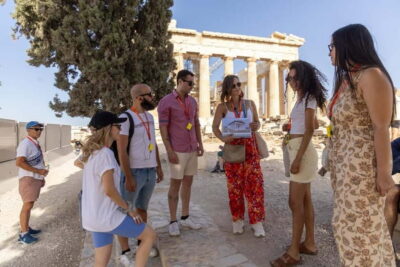 ★ 4.7The Acropolis, Parthenon & Acropolis Museum Guided TourFrom $408,493 reviews
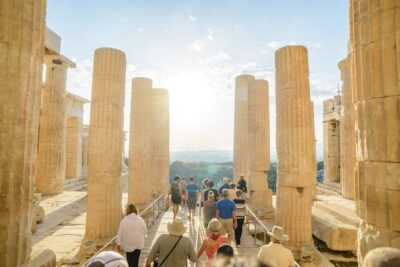 ★ 4.8Acropolis: Premium Acropolis and Parthenon Guided TourFrom $405,208 reviews
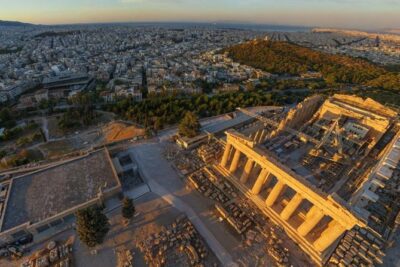 ★ 5.0Acropolis and Parthenon Guided Walking TourFrom $414,755 reviews
★ 4.8Acropolis, Parthenon & Acropolis Museum Guided TourFrom $413,579 reviews
★ 5.0Acropolis and Parthenon Guided Walking TourFrom $414,755 reviews
★ 4.8Acropolis, Parthenon & Acropolis Museum Guided TourFrom $413,579 reviews
 ★ 4.0Acropolis Ticket with Audio GuideFrom $473,575 reviews
 ★ 5.0Athens Scenic Electric Bike Tour with optional Acropolis visitFrom $353,350 reviews
Browse the lists this tour appears in