
Reviewed · CORINTH DAY TRIPS
Biblical Corinth Taste Faith & History with wine & Oil Tasting
Corinth pulls off a rare trick: Bible stories and big views in one day. This 5-hour small-group outing pairs major ruins with the geography that shaped trade for centuries. I like the private luxury mini van setup (up to 7 people) and the chance to connect sites to the world of St. Paul. One thing to factor in: key entrance sites aren’t included, and the main stop can occasionally close for safety if filming or special events roll through.
If you want your day to feel practical, not rushed, this tour is built for that. You get hotel/Airbnb/port pickup, WiFi and A/C in the vehicle, and planned time at the big photo-and-view locations. Still, because Ancient Corinth and related sites have entry fees and can have variable access, I recommend budgeting extra time and money for admissions and any optional tastings you choose.
In This Review
- The Corinth and Acrocorinth Day That Explains the Geography
- Key points to know before you go
- From Athens to Corinth Canal: Where Sailing Became Short
- Understanding the Diolkos: The Ancient Ship-Transfer Hack
- Isthmia and the St. Paul Connection You Can Actually Place
- Isthmia Museum: Small Finds That Feel Like Real Life
- Ancient Corinth: The Big Stop, With Context Before You Walk
- Archaeological Museum of Corinth: Read the City in Artifacts
- Temple of Apollo: One of the Earliest Doric Temples
- Free Time at Ancient Corinth: Lunch, Shopping, and Getting Your Bearings
- Acrocorinth: The Fortress View That Makes the Region Click
- Optional Wine and Oil Tasting: Turn Faith History Into a Taste Test
- What You’ll Get Out of This Tour (And Who It Fits Best)
- Price and Value: What $190.46 Buys (Plus the Extras)
- Should You Book This Corinth Taste and Faith Tour?
The Corinth and Acrocorinth Day That Explains the Geography
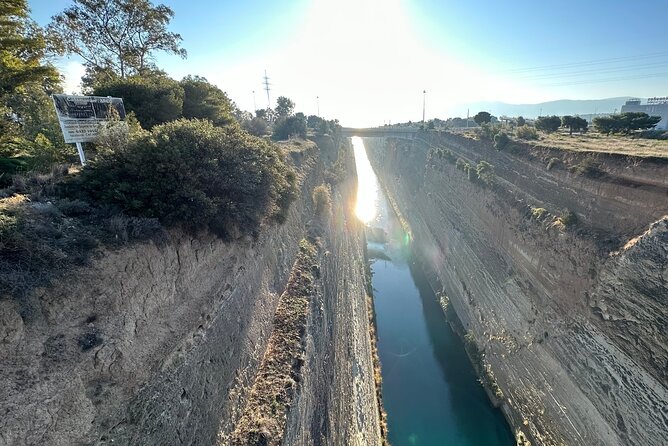
Think of Corinth like the hinge between worlds. The narrow isthmus means control of routes by land and sea, which is why the Romans cared, why traders cared, and why armies cared. When you stand near the Corinth Canal and later at Acrocorinth, the history makes physical sense.
This tour also leans into the faith-and-history angle, not as abstract religion, but as place-based context. The route ties into the area connected to St. Paul and the ancient Isthmian games. If you like learning by walking through landscapes, that’s where this day works best.
The canal and old Corinth, a few more days
- From Athens: Ancient Corinth Day Trip with Canal & VR Guide
★ 4.6 · 1,073 reviews - Biblical Tour Letters ToThe Corinthians St Paul’s Footsteps 6Hour
★ 5.0 · 1,065 reviews - Private Biblical Tour Ancient Corinth & Isthmus Canal from Athens
★ 5.0 · 762 reviews - Athens: Ancient Corinth & Nafplio Full Day Trip with Swim
★ 4.8 · 531 reviews
Key points to know before you go
- Small-group, luxury mini van (up to 7 pax) keeps the day from feeling like a cattle-car shuffle.
- Hotel/Airbnb/port pickup and drop-off mean less time wrestling with transit.
- Corinth Canal + Diolkos show how people solved the problem of sailing around the Peloponnese.
- St. Paul and the Isthmian games are part of the story, not an afterthought.
- Optional wine and oil tastings let you turn the ending into something you can taste, not just see.
From Athens to Corinth Canal: Where Sailing Became Short
You’ll start with pickup in Athens—hotel lobby, apartment entrance, or the port gate—then ride out in a modern vehicle with WiFi, A/C, and bottled water. The tour is designed as a “driver-led history day,” not a lecture that never stops. You’ll have time at each stop for photos and quick breaks.
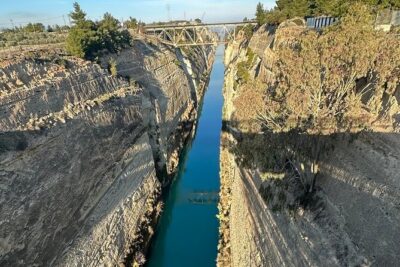
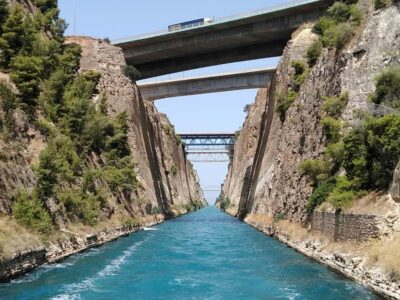
The first stop is the Corinth Canal, a waterway cutting through the narrow isthmus to connect the Gulf of Corinth with the Saronic Gulf. The modern canal was built in the late 19th century, but the dream goes back about 2,000 years. Standing there, it’s easy to picture why shipping routes mattered so much to the ancient economy.
Practical take: this is an early win for views. Even if the rest of the day involves ruins and museums, the canal gives you a clean, dramatic “orientation moment” fast.
Understanding the Diolkos: The Ancient Ship-Transfer Hack

Not far from the canal, you’ll visit the Diolkos, a paved trackway used to move boats overland across the isthmus. The point wasn’t just convenience—it was avoiding the long and dangerous circumnavigation of the Peloponnese peninsula. In other words: less time lost at sea meant more goods moved and more money made.
The Diolkos worked roughly from c. 600 BC until the middle of the 1st century AD, and it also mattered during war by helping speed up naval activity. You’ll hear the “as fast as a Corinthian” reference linked to Aristophanes, which is a fun reminder that even in ancient times, people talked about reputation and speed.
Why this stop is worth it: it’s one of those details that makes the region feel clever. Instead of just admiring ruins, you see how infrastructure shaped power.
Other plates and glasses worth the detour


Isthmia and the St. Paul Connection You Can Actually Place
Next comes Isthmia, a site tied to major ancient competitions—the Isthmians were second only to the Olympic games in ancient Olympia. You’re in a location that mattered because the Peloponnese meets Central Greece here. In practice, that meant traffic—athletes, visitors, merchants—and the kind of gathering where big ideas can spread.
This stop also brings in the faith thread: St. Paul is connected to the Isthmian games, described as working as a tent maker for athletes and visitors. The key idea is that this is considered the first official presence of a Christian at the games. Even if you’re not focused on religion, it’s a good example of why Corinth’s region kept appearing in early Christian narratives.
If you’re curious, this is also a quiet chance to step back from big ruins and think about daily life: crowds, performance, travel, and commerce all intersecting.
Isthmia Museum: Small Finds That Feel Like Real Life
You’ll then stop at the Archaeological Museum of Isthmia (admission not included). This is a focused museum stop, and that’s good. You get artifacts that explain how the sanctuary world worked—religion mixed with practical travel and trade.
Among the highlights you might see are:
- an archaic marble pediment from the end of the 7th century BC connected to the first Temple of Poseidon
- colored glass pieces reminiscent of stained glass, found submerged near the Temple of Isis on the harbor south pier (including scenes with harbor views, landscapes, animals, plants, and philosopher figures)
- commercial amphorae and offerings connected to the sanctuary
- items from Mycenaean and Roman cemeteries nearby
Why it’s a smart pause: museum artifacts often make ruins feel less “empty.” Instead of just stone foundations, you get objects that carried people, beliefs, and daily needs.
Ancient Corinth: The Big Stop, With Context Before You Walk
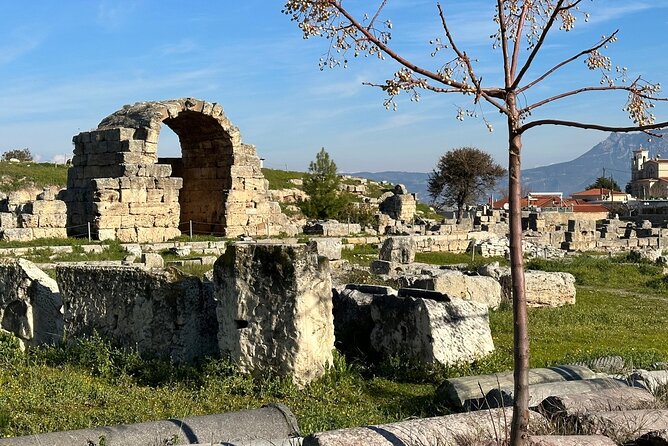
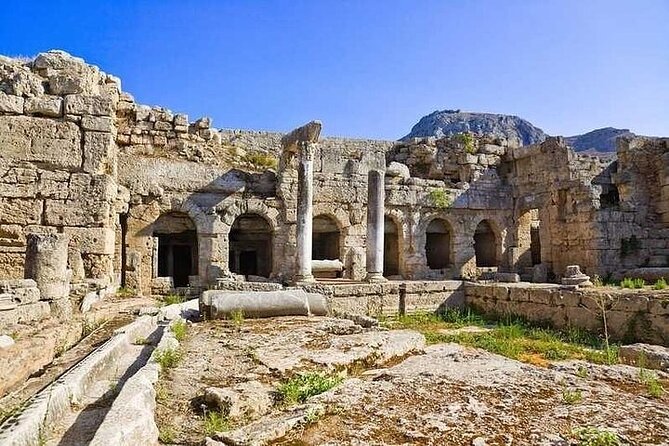
After Isthmia, the day shifts into “walk and see” mode at Ancient Corinth (Archaia Korinthos). This is where the story grows teeth. Corinth was a major Greek city on the isthmus, with a population reported around 90,000 in 400 BC. Later, Romans demolished Corinth in 146 BC, rebuilt it in 44 BC, and made it a provincial capital.
For Christians, Corinth matters in the New Testament—Paul’s letters and the Acts of the Apostles link Corinth to Paul’s missionary travels. The route uses that context so you’re not just sightseeing named places. You’re watching the geography of the Roman and early Christian worlds unfold.
A reality check: this is the part where admissions apply. The tour lists an archaeological site admission fee (and entrance fees for attractions generally), so I’d treat this as the moment your “ticket budget” gets used up.
Also, keep an eye on opening conditions. On at least one day-of-week scenario, the main site has closed due to safety because of filming activity. That’s rare, but it’s the exact kind of situation where a private driver can only do so much—so having flexibility helps.
Archaeological Museum of Corinth: Read the City in Artifacts
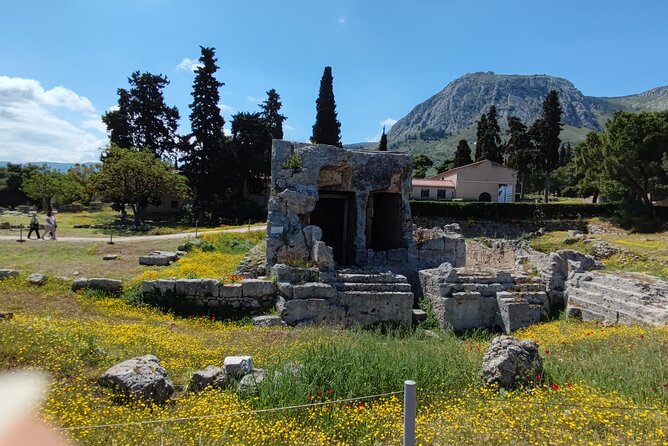
You’ll visit the Archaeological Museum of Corinth, built between 1931–1932, designed to display recent excavations from the site area. This museum sits within the archaeological context, so it keeps you in “ancient Corinth mode” instead of sending you far away to start over.
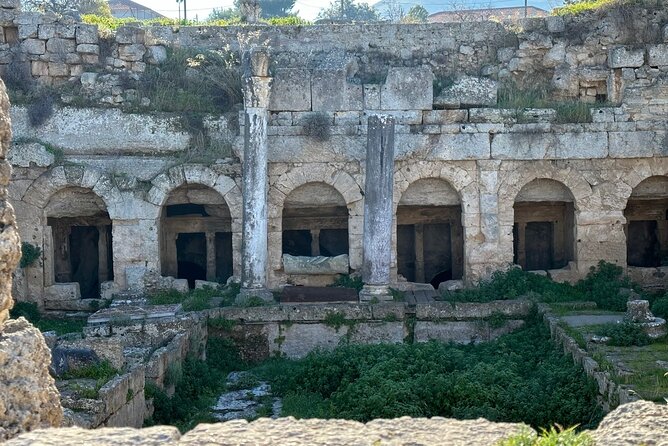
The museum stop is also where you’re likely to see connections to key site features. The route references elements like Hadgimoustafa spring, the Lechaion Road, a basilica, the Fountain of Peirene, a stoa, the agora, and other buildings and spaces tied to the ancient city’s layout.
If you like structure (cities, roads, civic spaces), you’ll appreciate this. It’s one of the best ways to turn scattered ruins into a coherent picture.
Temple of Apollo: One of the Earliest Doric Temples
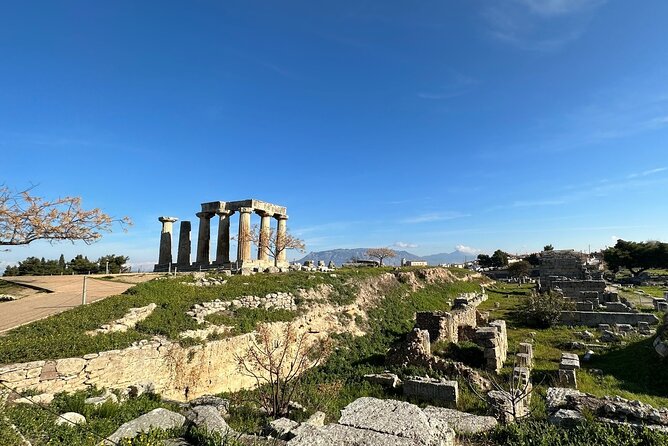
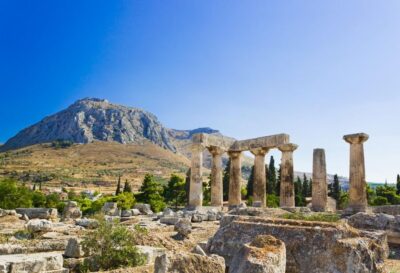
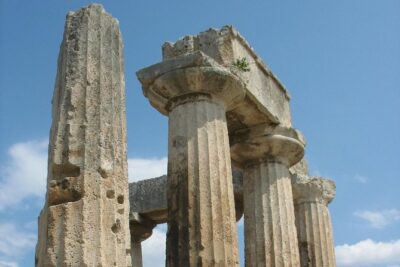
Next up is the Temple of Apollo, constructed around 550 BC, described as one of the earliest Doric temples in the Peloponnese and the Greek mainland. The temple is noted for monolithic columns, rare in the ancient world, which makes it more than just “a temple ruin.”
Even if the columns aren’t fully intact today, the context matters. Doric architecture is simple, strong, and built for impact. At Apollo’s temple, you’ll likely feel the logic: religious space designed to communicate permanence.
Free Time at Ancient Corinth: Lunch, Shopping, and Getting Your Bearings
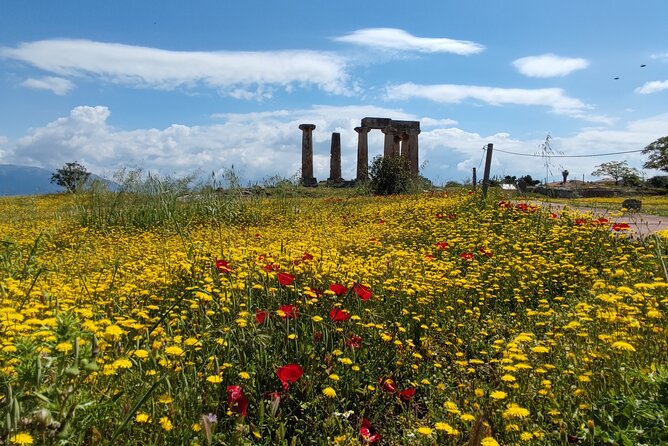
Later, you’ll get free time for lunch and shopping in the Ancient Corinth area. This is one of those “small detail, big payoff” moments. After museums and temples, you want time to slow down, grab food on your own terms, and check out what’s happening locally without the tour schedule steering you every minute.
My practical advice: eat before you go up to Acrocorinth, if you can. You’ll want your energy for walking, stairs, and waiting for good light in the fortress area.
Acrocorinth: The Fortress View That Makes the Region Click
The finale is Acrocorinth, the “Upper Corinth” fortress perched on a monolithic rock above the ancient city. This is the stop that usually sells people on the entire day. Why? Because it’s where you can see how the defense worked.
Acrocorinth was repeatedly used as a last line of defense in southern Greece. Its secure water supply helped keep the fortress viable during sieges. And the position mattered: it commanded the Isthmus of Corinth, making it a strong guard against entry into the Peloponnese peninsula.
Plan on taking your time here. Even a short window can feel long when the view is doing most of the talking. If you’re a photo person, this is your “please charge your battery” moment.
Optional Wine and Oil Tasting: Turn Faith History Into a Taste Test
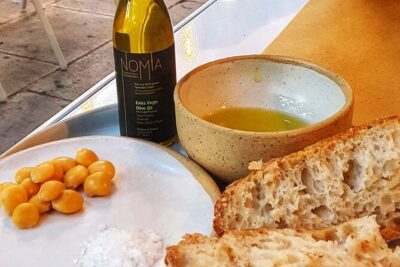
The tour’s theme is faith and history, but the title also includes wine and oil tasting—and the important detail is that tastings are listed as optional add-ons with separate prices.
- Wine tasting: €15 per person
- Oil tasting (finger food): €80 per person
So here’s how to decide: if you want a light, easy finale, wine tasting is a reasonable add. If you’re an olive-oil nerd (or just want something different from wine), the oil tasting can be worth it because it pairs food-style bites with the product.
Either way, this can be the bridge between “ancient economy” and “modern pleasure.” Corinth was a commercial hub; tasting the local staples helps the day feel less like a history lecture and more like a lived experience.
What You’ll Get Out of This Tour (And Who It Fits Best)
This is a good fit if you want a day where:
- history and geography connect instead of feeling like separate checkboxes
- you care about Corinth’s role in the New Testament world
- you like a private-driver style of touring, with time for photos and non-rushed moments
- you’d enjoy a blend of ruins, a museum, and a practical infrastructure story (Diolkos and canal)
It may not be the best fit if you prefer a huge, all-day marathon with dozens of stops. This tour is focused. That’s the charm, but it also means you’ll leave wanting more if you’re the type who wants to hit everything in a single day.
Price and Value: What $190.46 Buys (Plus the Extras)
At $190.46 per person, you’re paying for a streamlined service: pickup/drop-off in Athens, private vehicle transportation (WiFi and A/C), and a driver who’s built around Greek history interpretation. The “small group” part is a big value factor—your day doesn’t get stuck waiting for others in a big bus line.
The extras are straightforward:
- entrance fees for attractions are listed at €15.00 per person
- Ancient Corinth archaeological site admission is also listed as €15
- museum tickets (like Isthmia’s museum) are not included
- lunch isn’t included
- tastings are add-ons (wine and oil)
So you should budget “base price + admissions + optional tastings.” If you do the tastings, your day becomes more of an all-in cultural meal. If you don’t, you can keep costs more predictable.
Should You Book This Corinth Taste and Faith Tour?
Yes, if you want a high-impact Corinth day that’s easy to manage from Athens and doesn’t feel like a bus tour. The combo of Corinth Canal, Diolkos, Isthmia, Ancient Corinth, and Acrocorinth gives you the kind of arc that makes the region click.
I’d book it especially if you care about St. Paul’s connection to the games and want your religious history to be tied to real place. And if you’re the kind of traveler who enjoys optional extras, consider adding the wine tasting for a simpler splurge, and the oil tasting if you want a more involved food experience.
One last tip: bring some patience for the main site timing. When filming or safety closures hit, it’s out of your driver’s hands—so flexibility and good expectations make the day smoother.
Eat Your Way Round Athens
- Greek Food Walking Tour in Athens★ 5.0 · 4,740 reviews
- Athens: Street Food Tasting Tour★ 4.9 · 3,343 reviews
- Athens: Guided Greek Food Walking Tour with Tastings★ 4.9 · 2,859 reviews
- Small Group Greek Traditional Food Tour in Athens 20+ Tastings★ 5.0 · 1,759 reviews
- Athens: Food Market Visit and Cooking Class with Wine★ 4.9 · 1,087 reviews
- Athens Authentic Greek Food Walking Tour (Small Group)★ 5.0 · 809 reviews
More Tour Reviews in Athens
- Athens: Acropolis & up to 5 Archaeological Sites Combo Pass★ 4.2 · 13,904 reviews
- Athens: Acropolis, Parthenon & Acropolis Museum Guided Tour★ 4.8 · 9,316 reviews
- The Acropolis, Parthenon & Acropolis Museum Guided Tour★ 4.7 · 8,493 reviews
- Athens: Cape Sounion & Poseidon Temple Sunset Half-Day Trip★ 4.8 · 8,241 reviews
- Acropolis: Premium Acropolis and Parthenon Guided Tour★ 4.8 · 5,208 reviews
- Athens: Mythology of Delphi, Museum and Arachova Guided Tour★ 4.7 · 5,102 reviews
Corinth and the Canal
- From Athens: Ancient Corinth Day Trip with Canal & VR Guide★ 4.6 · 1,073 reviews
- Biblical Tour Letters ToThe Corinthians St Paul’s Footsteps 6Hour★ 5.0 · 1,065 reviews
- Private Biblical Tour Ancient Corinth & Isthmus Canal from Athens★ 5.0 · 762 reviews
- Athens: Ancient Corinth & Nafplio Full Day Trip with Swim★ 4.8 · 531 reviews
- Athens: Corinth Canal, Mycenae & Nafplio Premium Guided Tour★ 4.7 · 322 reviews
- Private Tour of Apostle Paul’s Footsteps in Ancient Corinth★ 5.0 · 275 reviews
Fresh Off the Boat: New Athens Reviews



Corinth Day Trips, compared.
 ★ 4.6From Athens: Ancient Corinth Day Trip with Canal & VR GuideFrom $411,073 reviews
 ★ 5.0Biblical Tour Letters ToThe Corinthians St Paul’s Footsteps 6HourFrom $1701,065 reviews
 ★ 5.0Private Biblical Tour Ancient Corinth & Isthmus Canal from AthensFrom $301762 reviews
 ★ 4.8Ancient Corinth & Nafplio Full Day Trip with Swim531 reviews
 ★ 4.7Corinth Canal, Mycenae & Nafplio Premium Guided TourFrom $32322 reviews
 ★ 5.0Private Tour of Apostle Paul’s Footsteps in Ancient CorinthFrom $169275 reviews
 ★ 4.3Corinth Canal, Mycenae and Nafplio Day TourFrom $129252 reviews
 ★ 4.5Corinth Half-Day Trip from Athens with Entrance TicketsFrom $91242 reviews
Browse the lists this tour appears in