
Reviewed · MYCENAE & NAFPLIO DAY TRIPS
Blue Lake, Sanctuary of Hera, Mycenae, Ancient Corinth, Canal
Corinth and Mycenae in one long, satisfying day. I love the door-to-door private transport that keeps the day smooth, and I love the Blue Lake swim at Perachora as a real break from ruins. The trade-off: it is a packed 9-hour route, so some stops give you just a taste rather than a long wander.
This is a driver-led outing, not a sit-down bus tour. Your driver’s job is to give you the story behind what you’re seeing, while you handle the site walking and museum time. I also liked the small comforts that make a long day easier—WiFi in the car, bottled water, refreshing wipes, and even handmade Greek biscuits.
One more consideration: entrance fees and museum tickets are not included, so it helps to budget for a few extras (plus any optional add-ons like a licensed guide inside the sites).
In This Review
- Key things I’d focus on before you go
- Private Athens Logistics That Actually Feel Relaxed
- Corinth Canal and Ancient Diolkos: Modern Shipping Meets Ancient Workarounds
- Mycenae: Grave Circles, Cyclopean Walls, and the Royal Palace Rooms
- Treasure Stops That Add Spark: Treasury of Atreus, Clytemnestra’s Tomb, and the Museum
- Lion Gate and Acrocorinth: Two Ways to Feel Mycenae and Corinth’s Power
- From Peirene Fountain to Ancient Corinth: Civic Life, Paul, and Apollo
- Lunch With a View: How to Make the Most of the Ancient Corinth Time
- Perachora’s Blue Lake Swim at the Sanctuary of Hera
- Price Value Check: When $337.15 Makes Sense
- Who This Tour Is Best For (and Who Might Prefer Something Different)
- Should You Book This Corinth and Blue Lake Day Trip?
- FAQ
- How long is this tour?
- Is pickup from Athens included?
- Is the tour private?
- Are entrance fees included for the sites?
- Is there a chance to skip lines?
- Will I have time to swim at the Blue Lake?
- What language is offered?
- Is lunch included?
Key things I’d focus on before you go
- Private door-to-door pickup means less stress getting out of Athens and back again
- Corinth Canal + Ancient Diolkos pairs modern engineering with an older boat-overland trick
- Mycenae sites are iconic and visual: Cyclopean walls, royal tombs, and gold burial finds
- Acrocorinth is a fortress viewpoint you feel in your legs and your camera roll
- Ancient Corinth is religious + civic with the Bema and Paul-related church mosaic
- Perachora’s Heraion ends with a swim in the Blue Lake
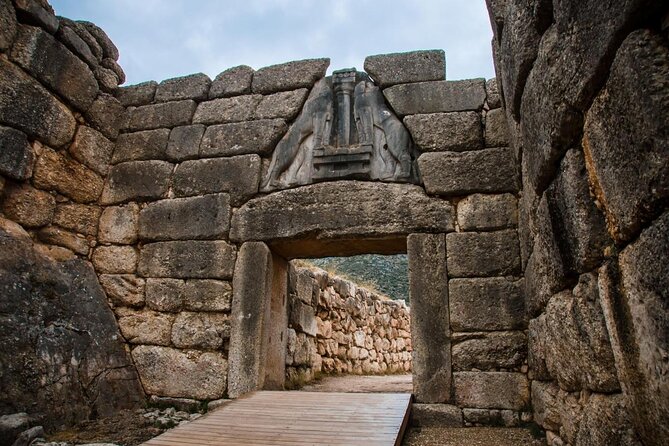
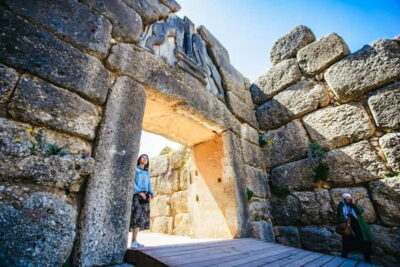
Into the Argolid, past the Lion Gate
- From Athens: Small-Group Mycenae, Epidaurus & Nafplio Trip
★ 4.8 · 2,805 reviews - From Athens: Mycenae, Epidaurus & Nafplio Full-Day Tour
★ 4.5 · 2,530 reviews - Mycenae, Epidaurus and Nafplio Tour from Athens
★ 4.6 · 2,201 reviews - 4-Day Classical Greece Tour: Epidaurus, Mycenae, Olympia, Delphi, Meteora
★ 4.5 · 732 reviews
Private Athens Logistics That Actually Feel Relaxed
This tour earns its value with simple things done well: you’re collected from your Athens hotel (or apartment entrance) and dropped back at the end of the day. The vehicle is private and comfortable, with WiFi, bottled water, and those little extras that help when you’re running a long schedule. There are also refreshing wipes on board, which sounds basic until you’re doing sun, dust, and staircases in one afternoon.
The other practical win is how your driver uses the time. You’re not just being transported between sites—you’re getting context while you ride. That matters on this route because Corinth, Mycenae, and their surrounding sites can feel like a blur if you’re reading labels only. With a good driver narration, you get your bearings fast: who built what, why the locations mattered, and what to look for while you’re standing right in front of it.
Small note on expectations: this is not described as a licensed guide who accompanies you inside every ticketed site. Instead, you get in-site time on your own, with the driver supporting history and timing outside. That’s great for people who want flexibility, but it can mean you’ll spend a bit of time reading signs if you want more detail.
Corinth Canal and Ancient Diolkos: Modern Shipping Meets Ancient Workarounds
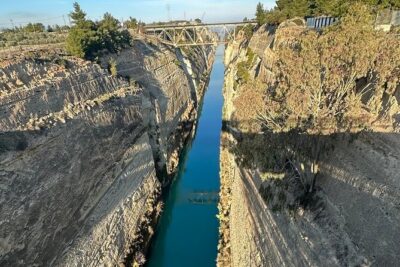
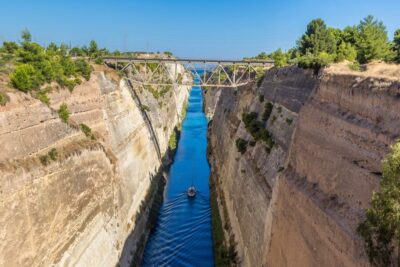
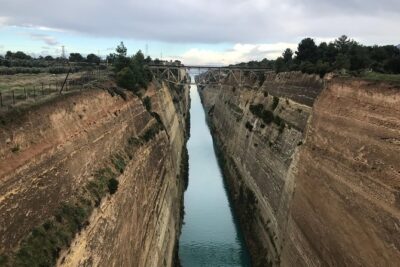
You start with the Corinth Canal area, which is one of those places that makes you pause even if you’re not a history nerd. The canal is a 19th-century engineering masterpiece, famous for cutting through the Isthmus of Corinth and shaping Mediterranean trade routes.
What I like here is the pairing: you don’t just see the canal—you also visit Ancient Diolkos, a paved trackway that helped move boats overland across the isthmus. If you’ve ever wondered how ships handled this narrow, strategic stretch before modern tools, this stops answers it in physical form. It’s one of those rare moments in Greece where the explanation is visible under your feet.
A practical timing bonus: the time here is relatively short, about 45 minutes, and admission for this stop is free as listed. That keeps the day moving without pretending you can do everything slowly.
Mycenae: Grave Circles, Cyclopean Walls, and the Royal Palace Rooms
Mycenae is why many people choose this itinerary. You get the big-picture experience of a late Bronze Age power—complete with cemeteries, walls built from huge limestone boulders, and palace structures that still communicate status even in ruins.
You’ll see Grave Circles A and B, which are royal cemeteries outside the Bronze Age citadel area and just south of the Lion Gate. Standing near them, you can feel why Mycenae mattered: power was displayed and preserved through burial, not only through fortifications.
Then comes the Cyclopean Walls. These walls are the main feature visitors picture when thinking of Mycenae, and for good reason. The description is straightforward: massive boulders, the kind you can’t imagine moving without serious labor and organization. In practical terms, the walls also help you understand the site’s layout. You’re not just looking at random stones; you’re seeing how Mycenae defended itself and defined the city center.
Next is the Royal Palace, which includes domestic apartments, the Throne Room suite, a Grand Staircase, and spaces that likely served palace officials. You get about 30 minutes at this portion, and you should use it by choosing what to focus on: if you’re into architecture, aim to look at the connections between rooms and entrances; if you’re into story, scan for the palace spaces that suggest power and ceremony.
Reality check: Mycenae’s stop times vary, and some parts list short durations (like 30 minutes for the palace area). That’s fine if your goal is seeing multiple highlights in one day. If your goal is deep, slow archaeology, you may wish you had a separate Mycenae-focused day.
The canal and old Corinth, a few more days
Treasure Stops That Add Spark: Treasury of Atreus, Clytemnestra’s Tomb, and the Museum
After you’ve walked the fortified and ceremonial areas, the itinerary turns more “wow” with tombs and museum time.
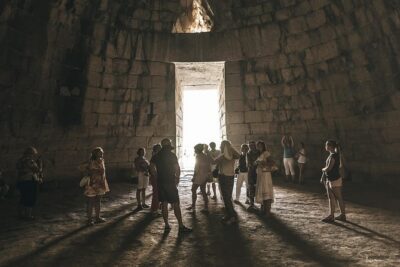
At the Citadel and Treasury of Atreus, you’ll encounter the Treasury of Atreus, a large tholos or beehive tomb built around 1250 BC. This is a top stop for many visitors because tholos tombs feel monumental even after centuries. They also make it easier to visualize how engineering and ceremony worked together.
Close by is the Tomb of Clytemnestra, another Mycenean tholos-type tomb also dated to around 1250 BC. It’s named after the wife of King Agamemnon and associated with the Trojan War tradition. Even if you approach the myths with a practical lens, the naming helps you connect the ruins to the stories people kept alive for centuries.
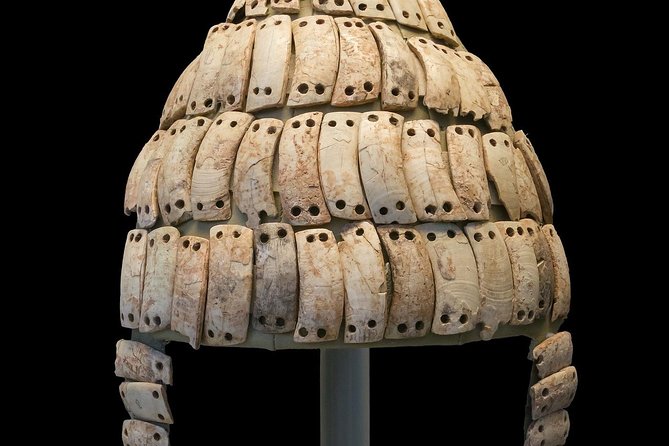
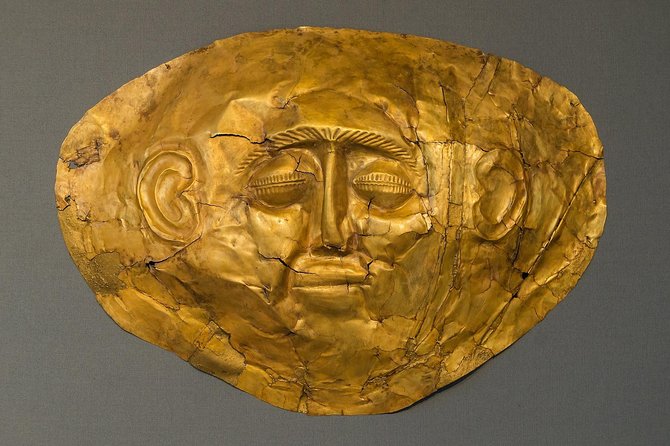
Then you’ll move to the Archaeological Museum of Ancient Mycenae for about 30 minutes. This is where you get the gold-heavy contrast to the exterior ruins: burial masks, jewelry, weapons, worship idols, and frescoes. If you only remember one museum moment from the whole day, make it this one. It turns the architecture into artifacts you can actually see.
One drawback to note: museum time is limited. If you want to read everything, you might feel rushed. The upside is that you’ll still leave with the key visuals—especially the gold grave goods.
Lion Gate and Acrocorinth: Two Ways to Feel Mycenae and Corinth’s Power
You’ll pass the Lion Gate, the main entrance of the Mycenaean citadel of Mycenae, dating to the 13th century BC. Even with limited time (about 15 minutes listed), the Lion Gate works as a visual bookmark. It’s a symbol of entrance, authority, and design. It also helps you connect your earlier walking to the citadel’s organization.
Then the itinerary shifts to Akrokorinthos (Acrocorinth), the acropolis of ancient Corinth on a steep monolithic rock above the city. This is one of those sites where you can’t fake the experience. It’s big, high, and dramatic in a way you can’t reproduce in a photo.
Acrocorinth highlights include a system of three circuit walls reinforced by towers—an impressive example of defensive layering. You’ll also see the Frankish Tower, fortified during Frankish times at the southwest edge of the rock, plus remains of churches, mosques, houses, fountains, and cisterns preserved within the fortress complex.
There are also traces of the Temple of Aphrodite on one of the highest points, so you get a religious layer on top of the military one. Expect about 1 hour here. That’s enough to walk the key sections and take in the views, though you’ll likely want more if you love exploring uphill.
If you’re sensitive to steps and heat, plan to move steadily. The reward is the viewpoint over the ancient city and the broader Corinth region.
From Peirene Fountain to Ancient Corinth: Civic Life, Paul, and Apollo
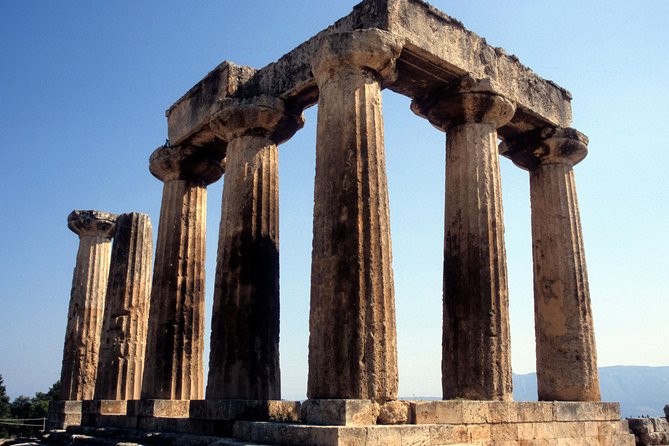
After Acrocorinth’s heights, the day flows back down into the civic and religious center of Ancient Corinth, with several quick stops that add texture.
You’ll visit the Upper Peirene Fountain, also known as Peirene Spring, located within the encircling walls. It’s described as a gift of Asopus to Sisyphus. These stops can feel short, but they help you understand that ancient cities were built around water systems, not just temples and thrones.
Then you’ll move to Geraneia for views of Geraneia Mountain and the Corinthian gulf and southwest coast of the Peloponnese. Even with limited time listed (about 15 minutes), it breaks up the walking with a wide-angle perspective.
The main stop is Ancient Corinth (Archaia Korinthos) for about 3 hours. Here you’ll encounter a dense cluster of highlights:
- The Hadgimoustafa spring, a fountain built during the Ottoman empire
- The Ancient Corinth Archaeological Museum with a collection from the local site and nearby smaller sites
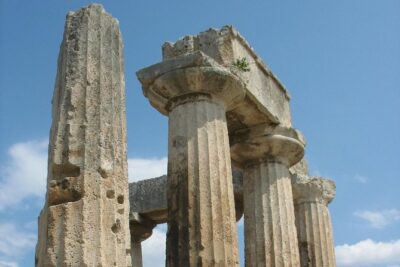
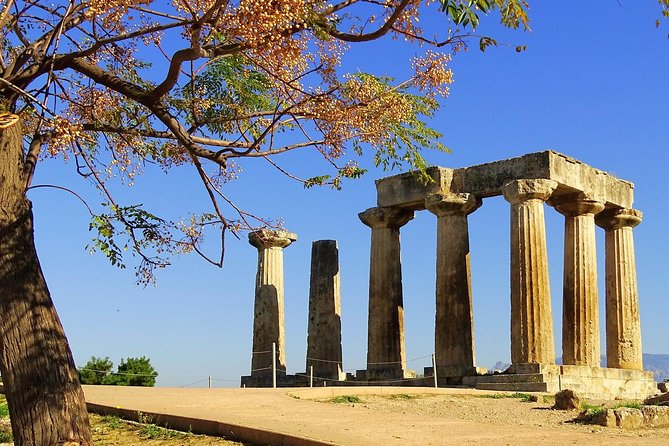
- The Temple of Apollo, one of the earliest Doric temples in the Peloponnese and mainland Greece, with monolithic columns built around 560 BCE
- The Agora, described as a rectangular construction with central shops, small temples and altars, and the Bema
The Bema is especially important if you’re connecting ruins to the New Testament tradition. The itinerary notes that Apostle Paul addressed the Corinthians from there in 52 AD. Nearby, you also see the theatre and Odeon/Asklepieion, which gives you a fuller picture of how entertainment, healing, and public life coexisted.
You’ll also pass Roman buildings and the Lechaion road, a major route facing the Corinthian gulf leading to the port of Lechaion. And yes, there’s a strong modern layer too: the stop includes St. Paul’s church, where you can admire a mosaic mural showing Saul’s vision from Christ as he traveled to Damascus to persecute Christians.
If you like an itinerary with a narrative arc, this is the stop where everything comes together: stone to city plan, city plan to civic space, civic space to faith tradition.
Lunch With a View: How to Make the Most of the Ancient Corinth Time
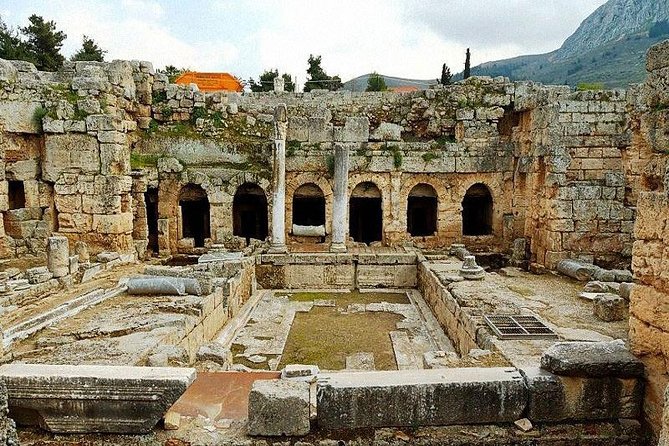
You’ll have time for a lunch designed around where you are, not a drive-by sandwich stop. The itinerary notes an authentic village-style lunch on a terrace overlooking the archaeological site and the Temple of Apollo.
That matters more than people think. When you’re visiting ancient sites all day, lunch can either be a downtime recovery moment or another hurried task. A terrace meal with a view is the difference between feeling cooked by the schedule and feeling refreshed.
Because the plan also includes walking time afterward, I’d treat lunch as strategy. Eat at a reasonable pace, then use the final stretch to stroll village shops if you want souvenirs. The village-style shops are part of the experience here, and they’re where you can grab handmade items without making it another chore.
Perachora’s Blue Lake Swim at the Sanctuary of Hera
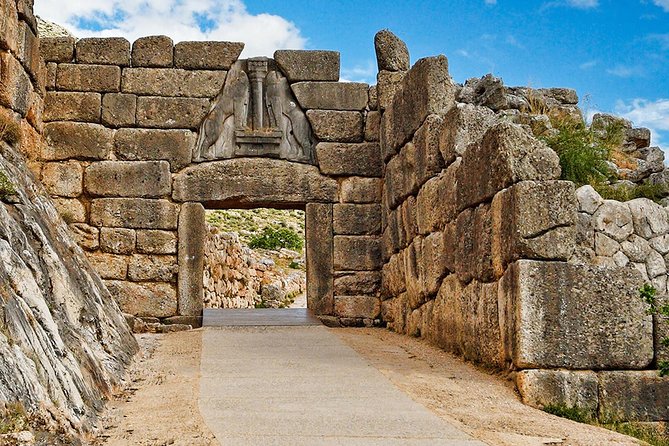
The emotional payoff of this day trip is the last big landmark: the Sanctuary of Hera in Perachora (Heraion). This is where your schedule becomes less about stones and more about relief.
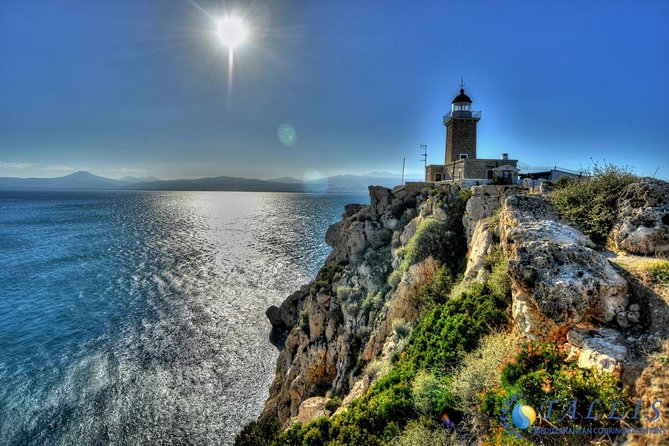
You’ll get a stop at Malagavi Lighthouse and then the Heraion / Blue Lake area. The highlight is straightforward: you enjoy your refreshing swim and bathe under the sun, with the swim time listed at about 1 hour.
This is the part that makes the whole day feel worth it. After Mycenae’s tombs and Acrocorinth’s fortress walls, the Blue Lake is a reset. It’s also practical: even if you’ve seen a lot, water time lets you cool down and take your mind off timing constraints.
If you go, plan ahead:
- Bring a swimsuit you can actually swim in comfortably
- Pack a towel if you have one (some people rely on site options, but nothing is stated here)
- Wear something easy to rinse or dry, because you’ll likely get wet
Also, remember this is a sanctuary setting. Be respectful in and around sacred spaces, even while you’re enjoying the water.
Price Value Check: When $337.15 Makes Sense
At $337.15 per person for roughly 9 hours, the value depends on what you care about most: time saved, comfort, and not dealing with transfers.
Here’s what you’re paying for beyond basic sightseeing:
- Private door-to-door transport (this is huge in Athens)
- A private luxury vehicle with WiFi, water, wipes, and biscuits
- Driver-led context, which makes the archaeological sites easier to follow
- Mobile tickets and an on-request skip-the-line ticket service
- The ability to adjust how you spend time at stops (some drivers flex within the day)
Entrance fees aren’t included, and that can add up depending on how many museums you prioritize. But the structure still feels fair because so many stops are included in the day’s route. You’re not only seeing the headline ruins; you’re also getting the canal engineering contrast, the museum moments, and the Blue Lake.
If you’re trying to do Corinth and Mycenae with multiple bus or train connections, the cost often shifts in a way that makes this more attractive. For couples, families, or friends traveling together, privacy also keeps the day from turning into a coordination headache.
Who This Tour Is Best For (and Who Might Prefer Something Different)
This tour fits best if you want:
- A stress-free day away from busy Athens
- A route that combines Corinth Canal, Mycenae, Acrocorinth, Ancient Corinth, and Perachora
- A driver who handles navigation and fills in the background while you explore
- A final payoff that isn’t another museum room: the Blue Lake swim
It might not fit as well if you:
- Want lots of long, unhurried free time at each site
- Prefer a licensed guide inside museums and archaeological areas for detailed commentary
- Dislike long days with multiple locations and limited stop durations
Given the packed stop sequence, this is a strong “first taste” itinerary. If you fall in love with Mycenae or Corinth during the day, you’ll probably come back someday for a slower, more focused repeat.
Should You Book This Corinth and Blue Lake Day Trip?
I’d book this if you want one day that feels like a highlight reel—canal engineering, Mycenae’s royal world, Acrocorinth’s fortress views, Ancient Corinth’s civic and religious spaces, and a Blue Lake swim to finish. The private door-to-door setup and driver guidance make a difference, especially for travelers who don’t want to spend the day charting buses.
Skip it only if you hate tight timing or want deep guided explanations inside every site. Otherwise, it’s a great value way to get out of Athens and see why Corinth and Mycenae shaped the Mediterranean story.
FAQ
How long is this tour?
It’s listed as about 9 hours.
Is pickup from Athens included?
Yes. Pickup and drop-off from your Athens hotel (or apartment entrance) are included.
Is the tour private?
Yes, it’s a private tour/activity with only your group.
Are entrance fees included for the sites?
No. Entrance fees are not included, and some museum/site stops are listed as admission not included.
Is there a chance to skip lines?
There is a skip-the-line ticket service available on request.
Will I have time to swim at the Blue Lake?
Yes. The Sanctuary of Hera in Perachora includes about 1 hour for the Heraion / Blue Lake swim.
What language is offered?
It’s offered in English.
Is lunch included?
No. Food and drinks are not included, though the day includes time for an authentic village-style lunch recommendation on a terrace overlooking the site.
More Tour Reviews in Athens
- Athens: Acropolis & up to 5 Archaeological Sites Combo Pass★ 4.2 · 13,904 reviews
- Athens: Acropolis, Parthenon & Acropolis Museum Guided Tour★ 4.8 · 9,316 reviews
- The Acropolis, Parthenon & Acropolis Museum Guided Tour★ 4.7 · 8,493 reviews
- Athens: Cape Sounion & Poseidon Temple Sunset Half-Day Trip★ 4.8 · 8,241 reviews
- Acropolis: Premium Acropolis and Parthenon Guided Tour★ 4.8 · 5,208 reviews
- Athens: Mythology of Delphi, Museum and Arachova Guided Tour★ 4.7 · 5,102 reviews
Corinth and the Canal
- From Athens: Ancient Corinth Day Trip with Canal & VR Guide★ 4.6 · 1,073 reviews
- Biblical Tour Letters ToThe Corinthians St Paul’s Footsteps 6Hour★ 5.0 · 1,065 reviews
- Private Biblical Tour Ancient Corinth & Isthmus Canal from Athens★ 5.0 · 762 reviews
- Athens: Ancient Corinth & Nafplio Full Day Trip with Swim★ 4.8 · 531 reviews
- Athens: Corinth Canal, Mycenae & Nafplio Premium Guided Tour★ 4.7 · 322 reviews
- Private Tour of Apostle Paul’s Footsteps in Ancient Corinth★ 5.0 · 275 reviews
Into the Argolid: Mycenae and Nafplio
- From Athens: Small-Group Mycenae, Epidaurus & Nafplio Trip★ 4.8 · 2,805 reviews
- From Athens: Mycenae, Epidaurus & Nafplio Full-Day Tour★ 4.5 · 2,530 reviews
- Mycenae, Epidaurus and Nafplio Tour from Athens★ 4.6 · 2,201 reviews
- 4-Day Classical Greece Tour: Epidaurus, Mycenae, Olympia, Delphi, Meteora★ 4.5 · 732 reviews
- Athens: Ancient Corinth & Nafplio Full Day Trip with Swim★ 4.8 · 531 reviews
- Mycenae and Nafplion Day Trip from Athens with Official guide★ 4.5 · 501 reviews
Fresh Off the Boat: New Athens Reviews





Mycenae & Nafplio Day Trips, compared.
 ★ 4.8From Athens: Small-Group Mycenae, Epidaurus & Nafplio TripFrom $342,805 reviews
 ★ 4.5From Athens: Mycenae, Epidaurus & Nafplio Full-Day TourFrom $332,530 reviews
 ★ 4.6Mycenae, Epidaurus and Nafplio Tour from AthensFrom $332,201 reviews
 ★ 4.54-Day Classical Greece Tour: Epidaurus, Mycenae, Olympia, Delphi, MeteoraFrom $766732 reviews
 ★ 4.8Ancient Corinth & Nafplio Full Day Trip with Swim531 reviews
 ★ 4.5Mycenae and Nafplion Day Trip from Athens with Official guideFrom $78501 reviews
 ★ 4.2Argolis: Full-Day Tour in Mycenae & NafplioFrom $41350 reviews
 ★ 4.53-Day Classical Greece Tour: Epidaurus, Mycenae, Nafplion, Olympia, DelphiFrom $520342 reviews
Browse the lists this tour appears in