Reviewed · WORKSHOPS
Democracy Experiential Workshop Activity on Pnyx hill, Athens
Democracy gets real at Pnyx Hill. I love the Socratic-style dialogue that gets you thinking before you start pretending, and I love that you cast a vote and feel how an Athenian assembly worked. It’s not just facts on a plaque. You’re placed in the flow of decision-making at one of Athens’ key democratic landmarks.
Here’s the one thing to watch: it’s an outdoor experience with a 300-meter uphill walk, and there aren’t toilets on the hill. If you’re sensitive to heat, steep paths, or getting caught in bad weather, plan smart and wear good shoes.
In This Review
- Pnyx Hill: Athens’ voting ground with the Acropolis in sight
- Socratic warm-up and Assembly role-play on the vema
- Ostracism practice: inscribe an ostrakon and understand the warning
- The hill walk, shaded Assembly time, and how the schedule flows
- Replicas you use (and keep): water-timer and ostrakon
- Price and what $66 really buys in Athens
- Who should book this democracy workshop (and who might not)
- Quick practical tips for a smooth Pnyx workshop
- Should you book Democracy Experiential Workshop on Pnyx Hill?
- FAQ
- How long is the Democracy Experiential Workshop on Pnyx Hill?
- Where does the workshop start and end?
- Is the workshop offered in English?
- What’s included in the price?
- Is there a guided tour of Athens included?
- Are there toilets or canteens on Pnyx Hill?
- What kind of walking is involved?
- Is it suitable for children or teenagers?
Pnyx Hill: Athens’ voting ground with the Acropolis in sight
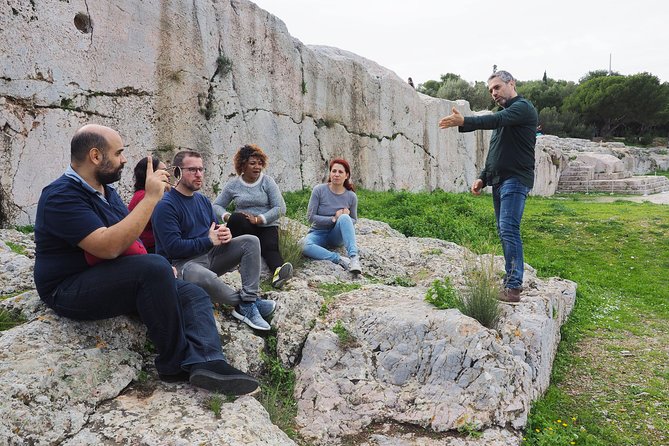
Pnyx Hill is where public assembly life happened in classical Athens. This is the spot tied to the mechanics of democracy: citizens gathering, hearing arguments, speaking up, and voting on issues that mattered. In this workshop, the place does more than look impressive. It sets the right tone for understanding why “democracy” isn’t only a word from civics class.
The payoff is the mix of big-picture meaning and very physical context. You’re moving through the same general landscape where the debate would have unfolded, and the view pulls your attention back to what mattered: Athens, the Acropolis, and the Parthenon area in front of you. That long sightline helps the role-play feel grounded, not abstract.
Also, the group stays small (maximum 10 travelers). That matters because the activities are interactive. You won’t just watch from the back.
Worth comparing before you book this Athens tour:
- Athens: Classic Cooking Class with Market Visit and Wine
★ 5.0 · 1,101 reviews - Athens: Food Market Visit and Cooking Class with Wine
★ 4.9 · 1,087 reviews - Greek Cooking Class in Athens Including Rooftop Dinner with Acropolis View
★ 5.0 · 826 reviews - Greek Small-Group Athens Cooking Class & Dinner
★ 5.0 · 574 reviews
Socratic warm-up and Assembly role-play on the vema
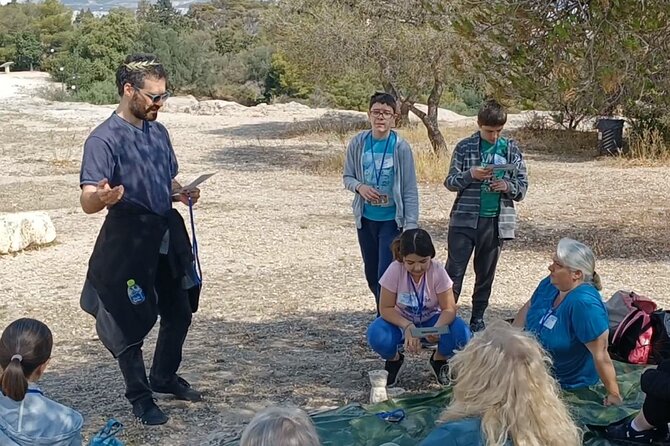
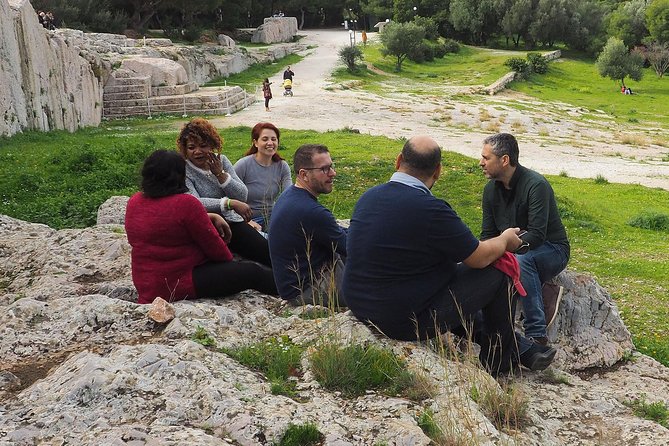
You start with an introduction tied to the theme of democracy, led by an interpreter using the Socratic method—a shared back-and-forth dialogue rather than a lecture. You’ll get guided prompts and simple, plain-English questions meant to bring you into the topic step by step. It’s a beginner-friendly approach, and it helps you understand the “how” of participation, not just the “what.”
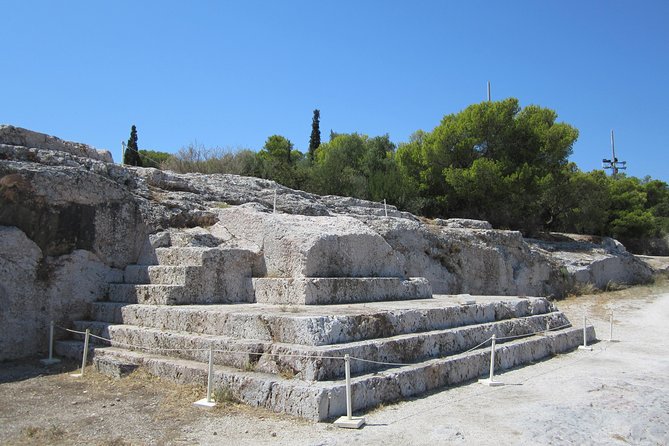
After that, you’ll head uphill along a roughly 300-meter climb to the ancient speaker’s platform, the vema. This is where speakers addressed the citizens. When you arrive, you’ll settle into the nearest shaded area and jump into a recreated Assembly meeting.
The role-play is the star of the show. You’ll debate a scenario, speak your mind as part of the group discussion, and then cast a vote. The goal isn’t to win an argument like a debate club. It’s to feel what participation required: listening, speaking, and making a decision in a group setting.
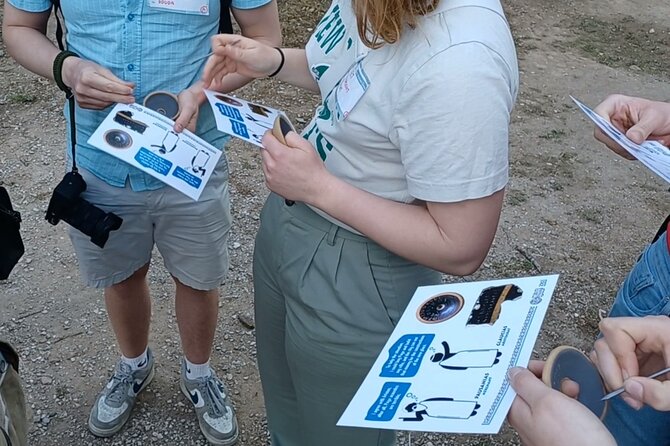
One of the coolest parts is the timing tool. You’ll use a replica of an ancient water-timer—often associated with controlling how long people spoke—so your discussion isn’t only “let’s talk until someone feels done.” It gives a sense of structure and pressure, which is exactly what changes how people argue and persuade.
A practical note: because you’ll be outdoors and moving, you’ll want to keep your pace steady. This is a workshop built around participation, so it’s worth conserving energy early.
Ostracism practice: inscribe an ostrakon and understand the warning
After the Assembly role-play, you move into the dramatic tradition of ostracism. This part is less about debate and more about the social safety valves—and risks—of democracy as it played out in Athens.
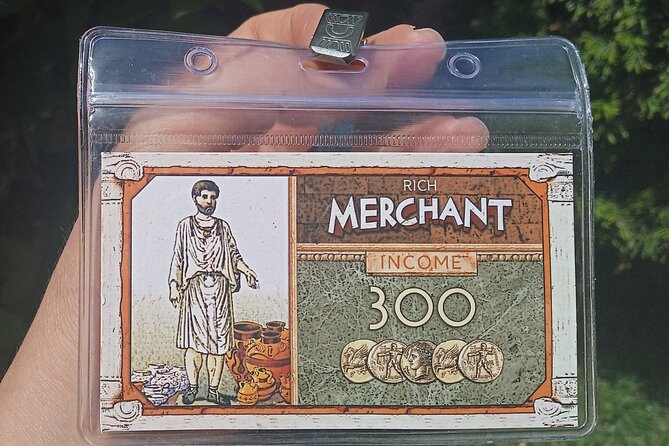
You’ll identify the so-called dangerous citizen in the scenario, then write their name on an ostrakon. That ostrakon is a ceramic voting tablet replica made for you to use. Once everyone participates, the activity turns into a symbolic “exile” from the city, which helps you understand ostracism as a political warning mechanism rather than a court-style punishment.
This exercise lands well because it forces a question most people don’t think about: what happens when fear or mistrust enters the process? Ostracism wasn’t random. It had rules and collective will behind it, and that’s the point of recreating it in a hands-on way. You’re not just hearing about it. You’re doing the action and watching what it does to group dynamics.
You’ll also keep your ostrakon as a commemorative piece. That take-home object is a nice “I was there” anchor when you later reflect on what you just role-played.
The hill walk, shaded Assembly time, and how the schedule flows
The schedule keeps a steady rhythm across a roughly 2-hour experience. You’ll start at the meeting point in central Athens (Rovertou Galli 39), then move to Pnyx Hill, climb to the vema area, and run the main interactive segments there.
Time is handled in a way that protects focus. You get a short warm-up, then the uphill walk, then role-play in the shaded area nearest to where you’ll sit. Once you’ve voted and experienced the water-timer timing, you shift into ostracism. Afterward, there’s a brief tour of the hill to connect what you did with what you’re seeing in the landscape.
One extra layer happens for groups of 4 or more: the Exploration Game. It’s a fun team challenge designed to keep energy up without turning the session into pure “sit and listen.” If you’re traveling with friends, this is a good reason to match group size to the game format.


Replicas you use (and keep): water-timer and ostrakon
This workshop leans into “history you can touch.” You use unique replicas of ancient Greek objects, including the water-timer (a ceramic water-timer replica) and the ostrakon (a ceramic voting disk replica).
The ostrakon is the one you keep. That’s a meaningful souvenir because it isn’t a generic store-bought trinket. It’s tied to the moment you participated in—the scenario, the inscribing, the symbolic vote/exile. You can bring it home as a conversation starter when someone asks what you actually did besides looking at ruins.
Even the water-timer use helps you understand an often-overlooked detail: ancient assembly talk wasn’t endless. Timing mattered, and the tools shaped behavior. Using the replica for timing makes that feel intuitive rather than theoretical.
Price and what $66 really buys in Athens
At $66.01 per person for about 2 hours, this isn’t the cheapest thing you could do in Athens—but it also isn’t trying to be a “museum tour with a stop.” You’re paying for a guided interactive workshop in a historically significant location, with hands-on replicas, an expert facilitator, and a small group cap (10 travelers).
For me, the best value piece is the combination of:
- Participation (debate, vote, ostracism)
- A real site setting (Pnyx Hill and the vema area)
- Objects that make the process tangible (water-timer and ostrakon)
If you’re the kind of traveler who likes your history active—talking, deciding, trying the ritual stuff—this format usually feels worth the price. If you only want passive viewing and you hate any “role-play” style, you might feel less payoff per dollar.
Who should book this democracy workshop (and who might not)
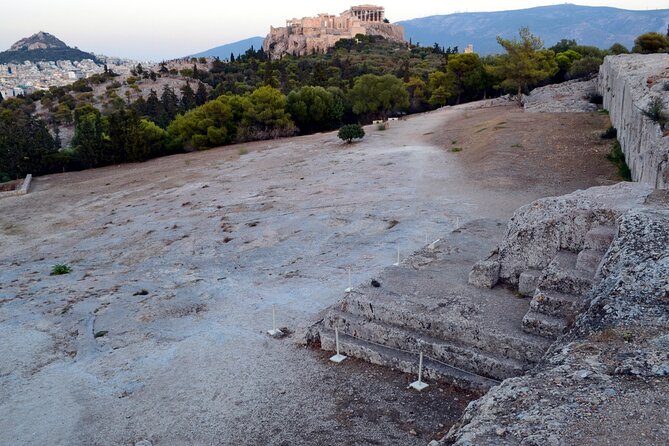
This works best for adults and teenagers over 10 years old, especially if your group is curious about how democracy functioned on the ground. The session is in plain English with no difficult terminology, so you don’t need a background in Greek history to follow what’s happening.
It’s also a good fit if you like learning by doing rather than listening. You’ll have moments where speaking up is part of the experience, and the activities are built to make you feel like a citizen making decisions.
You should think twice if:
- You struggle with uphill walking (the 300-meter climb is part of the plan)
- You dislike outdoor heat and changing weather
- You need on-site facilities. There are no toilets or canteens on the hill, so you’ll want to plan around that near the meeting area.
If you’re traveling with a mixed group, this is still a solid choice because it’s structured, guided, and small. Just remember that underaged participants can’t book alone—an adult must book and supervise.
Quick practical tips for a smooth Pnyx workshop

Do this and the experience feels easier:
- Wear comfortable shoes for a 300-meter uphill stretch. The climb is short, but it’s still uphill.
- Dress for the weather. The workshop depends on good conditions, and it stays outdoors.
- Plan for no facilities on the hill. Find a toilet near the meeting point before you head up.
- Bring any needed medication with you. First Aid trained facilitators are certified, but they can’t provide medication.
- Expect some photo/video filming. Since it’s a public-space activity, photo or video may be taken during the course (and possibly by others).
One more detail that helps: the workshop runs in plain English, so you can follow along without needing to decode jargon. That keeps the focus on the experience itself, not translation stress.
Should you book Democracy Experiential Workshop on Pnyx Hill?
Book it if you want Athens democracy to feel hands-on. This is one of those rare history activities where you don’t just “learn about” the process—you vote, you time speech with a replica tool, and you practice ostracism as a ritual of political warning. With the small group size and the vema setting, it’s built for real participation, not passive sightseeing.
Skip it if you’re mainly chasing maximum ruin photos with minimal walking and zero “interactive” parts. The hill climb and the outdoors format are the trade-offs.
If you go, go prepared: good shoes, water/comfort for the day, and a mindset that you’re there to think and participate. That’s when Pnyx stops being just a viewpoint and starts feeling like the center of a living system.
FAQ
How long is the Democracy Experiential Workshop on Pnyx Hill?
It lasts about 2 hours.
Where does the workshop start and end?
It starts at Rovertou Galli 39, Athina 117 41, Greece, and it ends back at the meeting point.
Is the workshop offered in English?
Yes. The activity is offered in English, with plain language and no difficult terminology.
What’s included in the price?
The price includes an expert facilitator, use of the ceramic water-timer replica, use of an ostrakon replica and keeping the ostrakon as a commemorative item, liability insurance, and local VAT.
Is there a guided tour of Athens included?
No. It is an interactive history workshop focused on democracy for beginners, not a guided tour.
Are there toilets or canteens on Pnyx Hill?
No. There are no toilets or canteens on the hill, though you may find one close to the meeting point.
What kind of walking is involved?
You’ll do a 300-meter uphill walk to reach the Pnyx speaker’s platform, which can be physically demanding. Comfortable shoes and weather-appropriate clothing are important.
Is it suitable for children or teenagers?
It’s suitable for adults and teenagers over 10 years old. Underaged participants cannot book alone, so at least one adult must book and supervise them.
Make a Little Greece to Take Home
- Athens: Classic Cooking Class with Market Visit and Wine★ 5.0 · 1,101 reviews
- Athens: Food Market Visit and Cooking Class with Wine★ 4.9 · 1,087 reviews
- Greek Cooking Class in Athens Including Rooftop Dinner with Acropolis View★ 5.0 · 826 reviews
- Greek Small-Group Athens Cooking Class & Dinner★ 5.0 · 574 reviews
- Athens: Greek Cooking Class & Dinner on a Rooftop★ 5.0 · 383 reviews
- Athens: Greek Cuisine Cooking Class and 3-Course Dinner★ 4.8 · 270 reviews
More Tour Reviews in Athens
- Athens: Acropolis & up to 5 Archaeological Sites Combo Pass★ 4.2 · 13,904 reviews
- Athens: Acropolis, Parthenon & Acropolis Museum Guided Tour★ 4.8 · 9,316 reviews
- The Acropolis, Parthenon & Acropolis Museum Guided Tour★ 4.7 · 8,493 reviews
- Athens: Cape Sounion & Poseidon Temple Sunset Half-Day Trip★ 4.8 · 8,241 reviews
- Acropolis: Premium Acropolis and Parthenon Guided Tour★ 4.8 · 5,208 reviews
- Athens: Mythology of Delphi, Museum and Arachova Guided Tour★ 4.7 · 5,102 reviews
Fresh Off the Boat: New Athens Reviews



Workshops, compared.
 ★ 5.0Classic Cooking Class with Market Visit and WineFrom $831,101 reviews
 ★ 4.9Food Market Visit and Cooking Class with WineFrom $811,087 reviews
 ★ 5.0Greek Cooking Class in Athens Including Rooftop Dinner with Acropolis ViewFrom $120826 reviews
 ★ 5.0Greek Small-Group Athens Cooking Class & DinnerFrom $118574 reviews
 ★ 5.0Greek Cooking Class & Dinner on a RooftopFrom $108383 reviews
 ★ 4.8Greek Cuisine Cooking Class and 3-Course DinnerFrom $115270 reviews
 ★ 5.0Traditional Greek cooking class and lunch or dinner with an Acropolis viewFrom $114250 reviews
 ★ 5.0Athens Airport Private Transfer by Mercedes-Benz E Class Wagon to City CenterFrom $131232 reviews
Browse the lists this tour appears in