

Reviewed · HISTORICAL TOURS
Explore Athens Historical Centre by Bike
First, Athens on a bike beats the usual shuffle. This small-group ride threads together the Acropolis area, agoras, and the city’s food-market streets in one 2 hours 30 minutes circuit with an expert guide, and you still get breaks at key viewpoints. I especially like the way the route mixes big monuments with everyday neighborhoods like Psirri and Plaka, and I love that you pedal on built bike lanes as much as possible instead of only fighting traffic.
One thing to consider: it’s a city-bike tour in real streets, so you’ll want reasonable comfort with pedaling and a heat-proof mindset, especially if the day runs warm.
In This Review
- Key things to know before you pedal
- Flat Tyres Start: Getting Oriented on a Real Bike Loop
- Small-Group Feel: Why Max 10 Riders Matters
- Bikes, Helmets, Water: The Included Comfort Basics
- Kerameikos to Psirri: Ancient Beginnings and Getting Lost On Purpose
- Plaka to Syntagma: Old Stones, Big Streets, Smart Crossings
- Zappeion and the Panathenaic Stadium: Athens Gets Athletic
- Zeus, Hadrian’s Arch, and the Odeon: Big Names, Tidy Stops
- The Acropolis Area by Bike: Museum-Under-Parthenon Timing
- Agora Zones and Roman Layers: Ancient Athens You Can Feel
- Monastiraki to Thiseio and Back to Petralona: Athens After the Postcard
- Pace and Safety: Where the Guide Makes the Difference
- Price and Value: What $41.03 Buys You
- Weather, Timing, and Practical Advice
- Who This Tour Suits Best
- Should You Book This Bike Tour or Skip It?
- FAQ
- What’s included in the tour price?
- Where does the tour start and end?
- How long is the tour?
- What language is the tour offered in?
- How many people are in the group?
- Do I need to bring a bike or helmet?
- Is hotel pickup or drop-off included?
- Are snacks or extra drinks provided?
- Is the tour near public transportation?
- What happens if the weather is poor?
- Is there mobile ticketing?
Key things to know before you pedal
- Max 10 riders means you’re not lost in a crowd, and you can actually hear the guide.
- Bikes, helmets, and bottled water are included, so you’re not scrambling for basics mid-tour.
- Start-time flexibility helps you fit it into a first-day orientation plan.
- Route hits the icons plus the local bits: Kerameikos, Plaka, Syntagma, Monastiraki, and more.
- Stavros sets the tone with careful navigation through busy crossings and clear directions.
- You cover a lot without feeling rushed thanks to an easy-going pace with a few short hills.
More of Athens by bike
- Athens Scenic Electric Bike Tour with optional Acropolis visit
★ 5.0 · 3,350 reviews - Athens: City Electric Bike Tour with Acropolis Visit Option
★ 4.9 · 1,017 reviews - Athens Small Group E-Bike Tour
★ 5.0 · 1,013 reviews - Historic Athens: Small Group Electric Bike Tour
★ 4.9 · 966 reviews
Flat Tyres Start: Getting Oriented on a Real Bike Loop
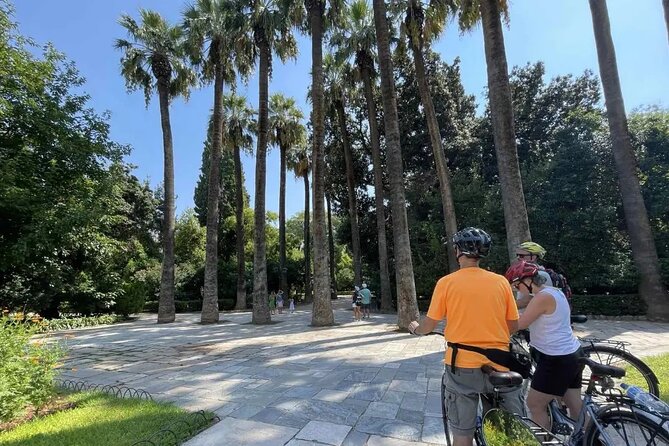
This tour begins at the Flat Tyres Psycling Club on Thessalonikis 140 (near public transport), and it ends back at the same meeting point. Plan on a true orientation lap: you’re not just seeing monuments from the outside, you’re learning how the city is laid out—where the neighborhoods connect, and how the ancient core sits inside modern Athens.
You’ll start by rolling along the metropolitan bikelane network, which is a big deal in a city where pedestrians and cars can be… sporty. From there, you transition into the older fabric of Athens—first the ancient outskirts, then the dense center streets.
Small-Group Feel: Why Max 10 Riders Matters
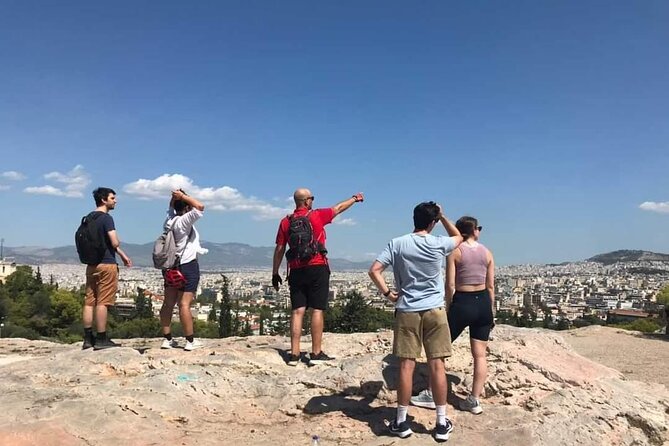
A tour with up to 10 travelers changes the whole vibe. You get more personal spacing, your guide can slow down when someone needs it, and you’re not stuck listening from far away.
The guide—Stavros, who leads the ride—also runs with an easy rhythm. Some riders talk about keeping up even if they haven’t biked in a while, because the pace is set with real people in mind, not a stopwatch fantasy.
Bikes, Helmets, Water: The Included Comfort Basics
You’ll be given a 28-inch trekking bike and a helmet, plus bottled water. That combo matters because the tour hits a lot of stops across the historic center, and you don’t want to waste energy on logistics (or show up under-equipped).
If you’re choosing between bike and electric options, this one’s a straightforward human-power loop. Reviews often mention that the ride stays manageable, with mostly flat or easy sections and only short hills when the route calls for them.
Deeper into old Athens
Kerameikos to Psirri: Ancient Beginnings and Getting Lost On Purpose
The first stretch takes you toward Kerameikos Cemetery, one of the early stops that frames Athens as a city that grew on layers. Seeing it from a bike route gives it a different rhythm than a walking-only visit—you get a sense of distance and direction, like you’re traveling through time rather than collecting photos.
Then you do the fun part: a playful “get lost” segment through Psirri. This area is where Athens feels lived-in—side streets, everyday storefronts, and the kind of texture you’d miss if you only followed a straight sightseeing checklist.
You’ll also pass major city landmarks along the way, including the Town Hall and Varvakios Market, described as the traditional and biggest food market of Athens. Even if you don’t linger long, it gives you a strong sense of what powers local life: food, vendors, and constant movement.
Plaka to Syntagma: Old Stones, Big Streets, Smart Crossings
Once you work into Plaka, you’re in the zone that many people imagine when they think of Athens—pavement streets, classic views, and layers of history stacked tight together. This is also where bike navigation becomes part of the experience: the guide helps you move through pedestrian-heavy areas without turning the ride into a stop-and-start struggle.
You’ll reach Syntagma Square, where you can spot the Greek Parliament. After that, the route moves toward the National Gardens, which is a welcome reset between monuments. It’s a cleaner-feeling stretch where you can catch your breath and let the day’s sights line up in your head.
Zappeion and the Panathenaic Stadium: Athens Gets Athletic
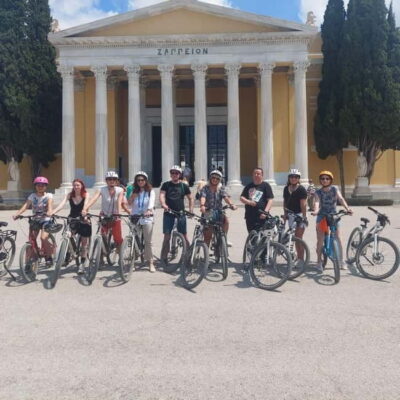
Two highlights in this area are the Zappeion Conference & Exhibition Center and the Panathenaic Stadium. The stadium is famous for a reason: it’s one of those places that makes ancient sport feel real, not just academic.
What I like about this part of the route is how it shifts from political-symbol sights to a more human scale. You’re still near central power points, but the stadium stop brings a different energy—Athens as a host city, not only a museum city.
Zeus, Hadrian’s Arch, and the Odeon: Big Names, Tidy Stops
Heading onward you reach the Temple of Olympian Zeus and Hadrian’s Arch—two major monuments tied to the city’s Roman-era story. Even if you’ve seen pictures, getting close on a bike lets you understand the spacing and the surrounding streets, which makes the ruins feel less abstract.
The itinerary also includes Herod Atticus Odeon. That’s a strong stop for anyone who wants to see where performance and power met. From a rider’s viewpoint, you get the feel of the area’s geometry—how the site sits in relation to nearby buildings and open spaces.
The Acropolis Area by Bike: Museum-Under-Parthenon Timing
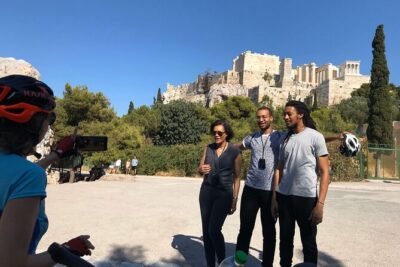
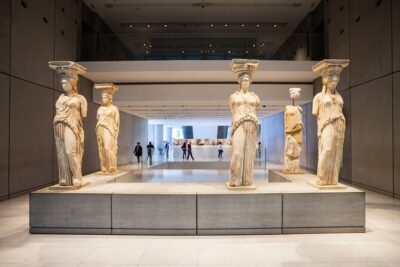
You’ll pedal toward the Acropolis Museum area, described as located right under the sacred rock of the Parthenon. The advantage of doing it as part of a bike route is timing: you get orientation first, then you’re positioned for deeper visits if you want them later.
You also stop for a viewpoint break at Filopappou Hill. Then you continue to Pnyka for panoramic views over Athens. This is the part of the day where you can feel how the ancient core relates to the modern city grid—rooftops, streets, and sightlines all connecting.
Agora Zones and Roman Layers: Ancient Athens You Can Feel
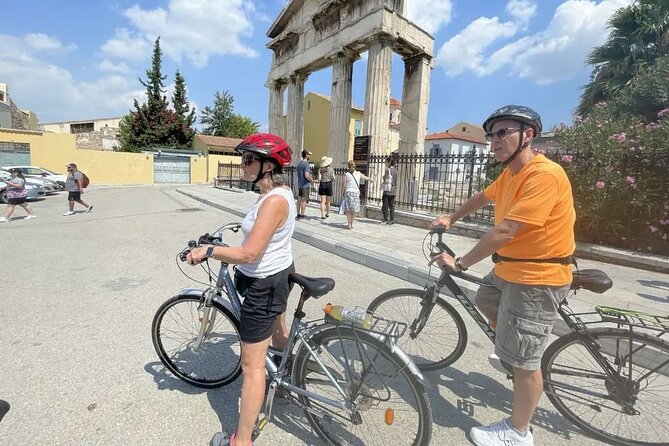
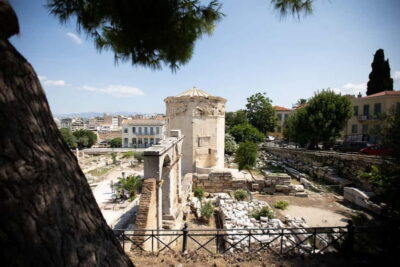
After the viewpoint stops, you move into the heart of ancient civic life: the Greek Ancient Agora and the Ancient Roman Agora. The difference between these two stops is the story of Athens itself—Greek public life and then later Roman overlays in the same general neighborhood.
A practical benefit: you’re not bouncing around Athens with random transport choices. You’re moving in a loop that keeps the historic center cohesive, so the ideas start sticking together.
Monastiraki to Thiseio and Back to Petralona: Athens After the Postcard
Not all the day’s value is ancient. You also cycle through Monastiraki, where there’s an open market atmosphere, and then onward through Thiseio paved streets. These segments help you picture what the area feels like outside of tour hours.
You finish by riding back toward Petralona, returning to the Flat Tyres meeting point. It’s a satisfying wrap because you’ve seen the city from several angles, not just a one-and-done monument sweep.
Pace and Safety: Where the Guide Makes the Difference
This is the area where reviews are most consistent: Stavros focuses on safe navigation, clear directions, and smart route choices through busy crossings. If you’re worried about mixing with cars and pedestrians, you’ll feel better knowing the guide actively manages the tricky bits instead of hoping everyone magically “gets it.”
You should still treat this as a real bike ride. Some riders note it’s easy-going with a few short hills, but that doesn’t mean it’s a stroller tour. Bring a mindset that you’re working a little—while enjoying a lot.
Price and Value: What $41.03 Buys You
At about $41.03 per person for 2.5 hours, this is strong value if you’re trying to cover the highlights without spending the day on trains, taxis, or multiple separate tickets. The big value pieces are the included bike, helmet, guide, and bottled water, plus the fact that you’re seeing far more than a single-site visit.
Also, because it’s small-group, you’re getting a more personal experience per dollar than many high-volume sightseeing options. You’re not just collecting sights—you’re building a working mental map of Athens for the rest of your trip.
Weather, Timing, and Practical Advice
The experience requires good weather, so if skies look shaky, expect the operator may reschedule or refund. It’s also smart to plan clothing for heat: even when the route isn’t all uphill, you’ll still be moving in open-air streets for over two hours.
Start-time flexibility is a plus if you’re juggling museum hours or catching a dinner plan. If it’s your first day, this tour works as a fast orientation so you know what’s worth a longer stop later.
Who This Tour Suits Best
This bike tour is ideal if you want:
- a first-time orientation to central Athens
- an efficient way to connect ancient sites and neighborhoods
- a small-group feel with clear guidance
- bike comfort ranging from beginner-friendly to moderately confident
If you’re seeking a slow walking pace with long museum time, you might want a different format. But if you want to feel Athens in motion—then park it and explore deeper later—this is a great match.
Should You Book This Bike Tour or Skip It?
Book it if you want a smart, high-value way to connect Athens’ major historic areas with local neighborhood texture, all while someone handles navigation and safety. It’s also a great choice if you like learning in context—ruins make more sense when you see how the city streets thread around them.
Consider skipping if you don’t like riding in city traffic environments, even with a guide and helmets. And if you’re visiting on a day likely to be wet or unpleasant, wait for conditions to improve.
If you can ride comfortably for a few hours and you want the city highlights in one coherent loop, this one is an easy yes.
FAQ
What’s included in the tour price?
You get a trekking bike (28-inch), a helmet, a bike guide/leader, bottled water, and all fees and taxes.
Where does the tour start and end?
It starts at Flat Tyres Psycling Club, Thessalonikis 140, Athina 118 53, Greece, and it ends back at the same meeting point.
How long is the tour?
The tour runs about 2 hours 30 minutes.
What language is the tour offered in?
The tour is offered in English.
How many people are in the group?
The maximum group size is 10 travelers.
Do I need to bring a bike or helmet?
No. Bikes and helmets are provided.
Is hotel pickup or drop-off included?
No. Hotel pickup and drop-off aren’t included.
Are snacks or extra drinks provided?
No. Snacks and drinks are not included (bottled water is).
Is the tour near public transportation?
Yes, the meeting point is near public transportation.
What happens if the weather is poor?
This experience requires good weather. If it’s canceled due to poor weather, you’ll be offered a different date or a full refund.
Is there mobile ticketing?
Yes, the tour uses a mobile ticket. Confirmation is received at the time of booking.
The Old Athens, Toured Properly
- Historical Delphi One Day Tour with Arachova Stop & Expert Guide★ 4.5 · 1,247 reviews
- Historic Athens: Small Group Electric Bike Tour★ 4.9 · 966 reviews
- Acropolis, Parthenon & Athens Old City Heritage Walking Tour★ 4.5 · 876 reviews
- Athens: Small Group E-Bike Tour of Historic Highlights★ 4.9 · 154 reviews
- The History of Athens: Greek Mythology Private Tour★ 5.0 · 138 reviews
- Athens Highlights by E-Bike: Small-Group Historic Tour★ 5.0 · 131 reviews
Athens on Two Wheels
- Athens Scenic Electric Bike Tour with optional Acropolis visit★ 5.0 · 3,350 reviews
- Athens: City Electric Bike Tour with Acropolis Visit Option★ 4.9 · 1,017 reviews
- Athens Small Group E-Bike Tour★ 5.0 · 1,013 reviews
- Historic Athens: Small Group Electric Bike Tour★ 4.9 · 966 reviews
- Athens Electric Bike Tour★ 5.0 · 836 reviews
- Athens: City Bike tour with Acropolis Visit Option★ 4.9 · 665 reviews
More Tour Reviews in Athens
- Athens: Acropolis & up to 5 Archaeological Sites Combo Pass★ 4.2 · 13,904 reviews
- Athens: Acropolis, Parthenon & Acropolis Museum Guided Tour★ 4.8 · 9,316 reviews
- The Acropolis, Parthenon & Acropolis Museum Guided Tour★ 4.7 · 8,493 reviews
- Athens: Cape Sounion & Poseidon Temple Sunset Half-Day Trip★ 4.8 · 8,241 reviews
- Acropolis: Premium Acropolis and Parthenon Guided Tour★ 4.8 · 5,208 reviews
- Athens: Mythology of Delphi, Museum and Arachova Guided Tour★ 4.7 · 5,102 reviews
Fresh Off the Boat: New Athens Reviews





Historical Tours, compared.
 ★ 4.5Historical Delphi One Day Tour with Arachova Stop & Expert GuideFrom $341,247 reviews
 ★ 4.9Historic Athens: Small Group Electric Bike TourFrom $41966 reviews
 ★ 4.5Acropolis, Parthenon & Athens Old City Heritage Walking TourFrom $34876 reviews
 ★ 4.9Small Group E-Bike Tour of Historic HighlightsFrom $53154 reviews
 ★ 5.0The History of Athens: Greek Mythology Private TourFrom $199138 reviews
 ★ 5.0Athens Highlights by E-Bike: Small-Group Historic TourFrom $54131 reviews
 ★ 5.0Half Day Historical Athens City Private Taxi Service TourFrom $11079 reviews
 ★ 5.0Half day tour to Acropolis and the must-see historical sites and downtownFrom $18069 reviews
Browse the lists this tour appears in