
Reviewed · METEORA DAY TRIPS
From Athens: 4-Days Classical Tour with Meteora
Meteora on day four feels like a reward. This 4-day classical route strings together key ruins and big-view stops with a pro guide, so you spend less time guessing and more time making sense of Greece’s timeline. I especially like the way the trip stacks world-famous sites back-to-back, then adds a few smart photo-and-break moments so the long drive doesn’t feel like punishment. The Meteora monasteries finish the itinerary with scenery that’s hard to describe until you’re there.
I also like the practical structure: you get entrance fees included, plus dinners and breakfasts, so you can budget without constantly checking tickets and meal costs. The main thing to consider is comfort. This is a tight, early-start style itinerary with long coach days, and some guests reported hotel issues in the Meteora area (noise, stairs, and room size). If you know you’re sensitive to sleep or lots of walking uphill and around ancient sites, plan accordingly.
In This Review
- Key highlights worth planning for
- A Fast Route Through Greek Icons: Corinth, Mycenae, Olympia, Delphi, Meteora
- Day 1 From the Corinth Canal to Epidaurus and Mycenae, Then Down to Olympia
- Olympia in the Morning: Zeus, the Stadium, and the Modern Torch Point
- Day 3 Delphi’s Oracle Site and Museum, Then Kalambaka at Meteora’s Foot
- Day 4 Meteora Monasteries, Byzantine Art, and a Scenic Road Back via Thermopylae
- Price and Inclusions: Does $776 Feel Like a Deal?
- Hotels and Meals: Comfort Levels Vary, But Dinners Are Included
- Coach Days, Seating, and How to Avoid Group-Trip Friction
- The Guide Factor: George, Thomas, and Antonio Proved the Difference
- Who This 4-Day Tour Fits Best
- Should You Book This 4-Day Classical Loop?
- FAQ
- What’s included in the tour price?
- Are lunches included?
- How much is the accommodation tax at the hotels?
- What languages are available for the live guide?
- What are the main cities and sites you’ll visit across the 4 days?
- Is there flexibility with booking and cancellation?
Key highlights worth planning for
- Epidaurus theater acoustics: one of those places where design still shocks modern ears
- Olympia’s modern torch location: ancient stadium energy linked to today
- Delphi and the oracle site: a full package of ruins plus museum context
- Meteora’s monasteries on giant rock pillars: Byzantine art set against unreal views
- Rion to Antirion bridge crossing: a modern-feeling break during the classical route
Monasteries in the sky, more Meteora trips
- Athens: Meteora Monasteries Day Trip with Caves and Lunch
★ 4.7 · 4,670 reviews - Athens to Meteora: Monasteries, Caves & Seaside Stopovers
★ 4.7 · 2,958 reviews - Athens: Full-Day Meteora Tour with Local Guide & Greek Lunch
★ 4.8 · 2,101 reviews - Athens: Meteora Monasteries, Caves & Coastal Stopovers with Lunch
★ 4.5 · 1,432 reviews
A Fast Route Through Greek Icons: Corinth, Mycenae, Olympia, Delphi, Meteora
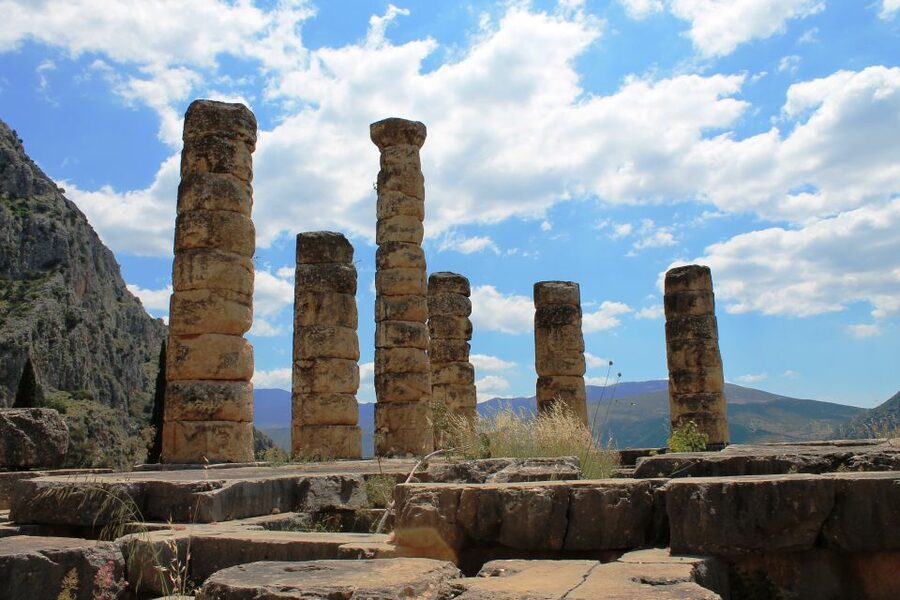
This tour is built for people who want a big Greece sampler in a short time. You’re not just “seeing places.” You’re connecting eras: prehistory roots, the classical period, Roman rule, Byzantine Christianity, Crusader-era footprints, and the modern Greek state. The guide’s job is to make the jump from one site to the next feel logical, not random.
The itinerary also has a smart rhythm. You start with theatrical and royal sites (Epidaurus, Mycenae), then shift into pan-Hellenic religion and sport (Olympia), then land in spiritual power (Delphi), and finish with living faith on top of rock (Meteora). That last turn matters, because Meteora doesn’t feel like a “ruins stop.” It feels like a place where the view is part of the point.
Day 1 From the Corinth Canal to Epidaurus and Mycenae, Then Down to Olympia
Day one is a classic Peloponnese introduction: coast, theater, royal tombs, then Olympic roots.
You leave Athens via the coastal road and make a short stop at the Corinth Canal. Even if you’ve seen photos, standing near it helps you grasp why this geography mattered. It’s a quick break early, not a long detour.
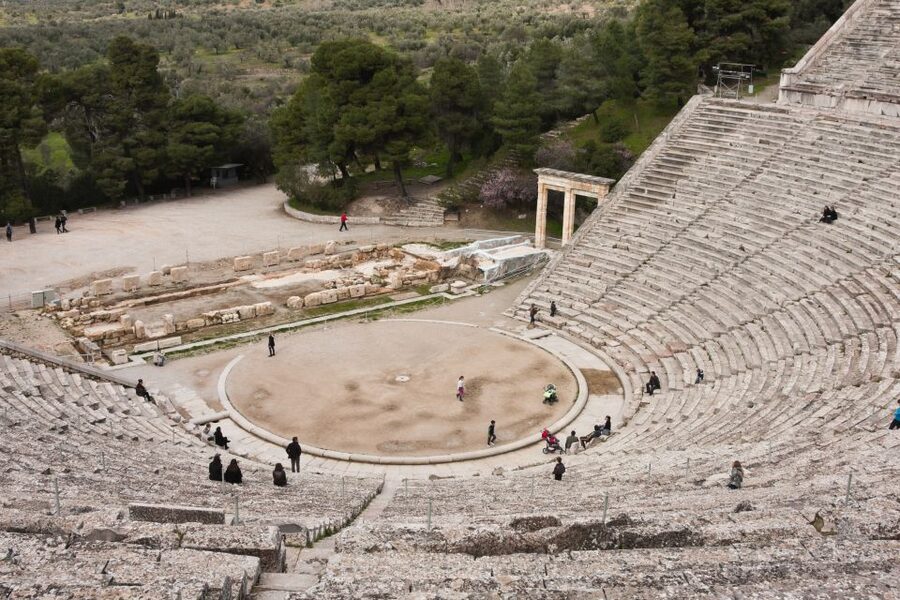
Next comes Epidaurus, where you visit the theater famous for its remarkable acoustics. This is the kind of site that teaches you something fast: Greek architecture wasn’t just pretty. It worked. Even if you’re not the type who loves performance spaces, Epidaurus makes you pay attention to shape, stone, and how sound travels.
After that, you pause briefly in Nafplio for a photo stop. It’s short on purpose. Think of it as a palate cleanser before the heavier ruins.
Then the tour heads to Mycenae, including the archaeological site and the Tomb of Agamemnon area. This is where the story shifts from public theater to power and kingship. You’ll walk through the remains and look at what was built to last, then you’ll move on before fatigue sets in.
You end the day driving through central Peloponnese—passing towns like Tripolis and Megalopolis—to Olympia, with an overnight there. Olympia isn’t just a ruin. It’s the cradle of the Olympic Games, so the dinner night feels like you’re staying where the tradition began.
Practical note: this is a day with lots of driving. Wear shoes you trust, and don’t plan on taking long, slow photos in every spot. The payoff is that day two starts you closer to the action.
Olympia in the Morning: Zeus, the Stadium, and the Modern Torch Point
Day two begins at full speed in Olympia. You visit the Sanctuary of Olympian Zeus, then move through the ancient stadium. The stadium part is key because you’re not only looking at monuments—you’re imagining crowds. It helps to picture how sport created social meaning long before modern media existed.
A stand-out moment here is the spot where the torch of the modern Olympic Games is lit. That detail makes the whole area feel less like a museum and more like a living connection. You’re looking at ancient athletics while knowing the symbolism continues today.
You also visit the Archaeological Museum, which helps you anchor what you’ve seen outside. The museum is where you can slow down a bit and connect objects to stories the guide has been building. If you ever feel like you’re “just walking among stones,” museum time is how you flip that.
After Olympia, you drive through the plains of Ilia and Achaia. The tour then makes a memorable modern break with the bridge crossing the Corinthian Bay from Rion to Antirion. It’s not an ancient site, but it gives your eyes and brain a reset before the next archaeology-heavy day.
Later you pass by Nafpactos (Lepanto) and Itea, then arrive in Delphi for dinner and overnight. If you like routes that show both culture and geography, this day does it well: monuments, then a huge engineering moment, then a scenic approach to Delphi.
Day 3 Delphi’s Oracle Site and Museum, Then Kalambaka at Meteora’s Foot
Day three is all about the spiritual “center” of ancient Greece.
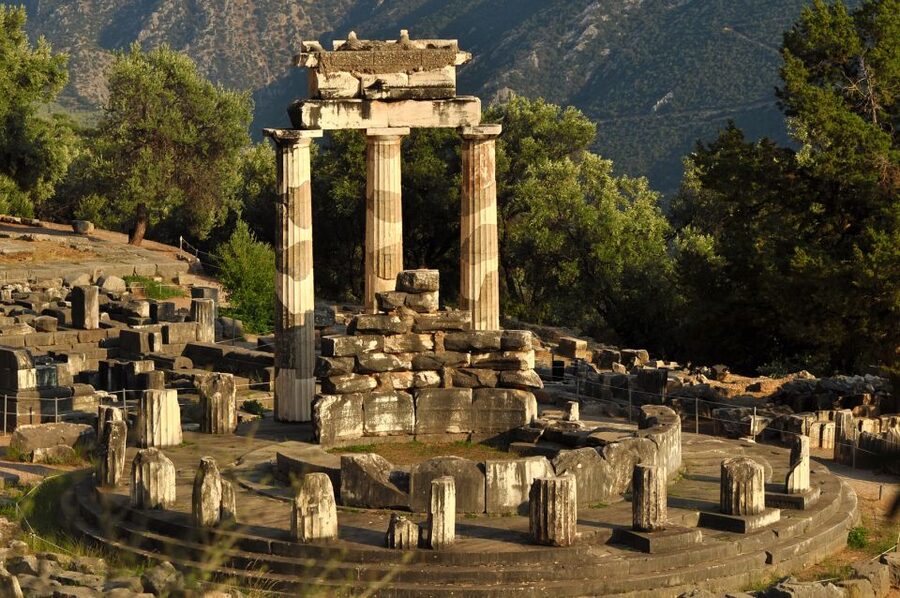
In the morning, you visit the archaeological site and the museum of Delphi, including the Oracle area. Delphi’s reputation as the most famous oracle in the ancient world isn’t just a marketing line—it’s a reason the place sits at the top of many classical itineraries. The ruins work best when you understand the logic of pilgrimage and prophecy. The guide is what turns the place from dramatic scenery into a clear idea of how people lived with uncertainty and sought answers.
Then you depart for Kalambaka, the small town at the foot of the meteoric rock complex. Meteora itself is the headline, but the approach matters. You’re heading toward those towering rock formations that seem to hover in the sky.
Overnight in Kalambaka sets you up for an early, practical day four. It’s also where you can feel that Meteora is not just a sightseeing stop. It’s a place with scale. The rocks dominate your view even before you climb.
Day 4 Meteora Monasteries, Byzantine Art, and a Scenic Road Back via Thermopylae
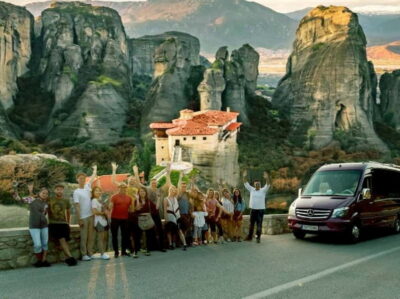
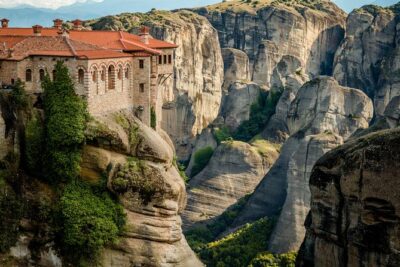
Day four is the reason many people book. Meteora is a set of monasteries perched on top of huge rock formations, and the experience works on two levels: the view and the art.
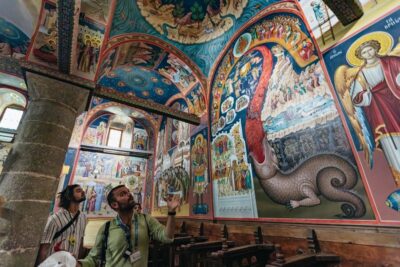
You visit Meteora and see ageless monastery spaces where you can find specimens of Byzantine art. Even if you’re not a church-architecture person, Byzantine painting and icons in that setting have a different emotional impact. The buildings feel both fragile and stubborn, balanced on rock that looks too big to move and too steep to ignore.
From there, you head back to Athens via Trikala and Lamia. You also stop at Thermopylae for a short look across the road to Leonida’s Monument. It’s brief, but it’s a useful historical punctuation mark. Then you arrive in Athens early in the evening, so you’re not stuck in transit until late night.
Practical note: Meteora is a day with stairs and uneven paths depending on which monastery sites your plan includes. Bring good grip shoes and expect some walking even if the coach does most of the distance.
Price and Inclusions: Does $776 Feel Like a Deal?
At $776 per person for four days, the value comes from what’s packed into the price. You’re not just paying for transport. You’re paying for:
- Professional guide throughout
- Luxury air-conditioned coach
- Overnights
- Meals as per itinerary: breakfasts and dinners
- Entrance fees
- Free Wi-Fi on the bus
The big cost you’ll still handle yourself is lunch and drinks. That matters because lunch can be the difference between a trip that feels like a bargain and one that quietly adds up. If you want to keep spending controlled, plan for lunches on your terms—simple meals are often your best move.
There’s also an additional line item you should expect: the overnight accommodation tax paid at the hotel before check-out. The amounts depend on the hotel star rating (listed as €1.50 to €4.00 per night per room, based on 3-, 4-, or 5-star classification). Reviews also point out a practical snag: some hotels may want cash for that tax, not card. I’d treat that as a real possibility and arrive with a little backup cash.
So is it good value? For a short time window, yes—because the entrance fees and site coverage are included, and you’re getting an organized route that links multiple major regions. If you’re a slow traveler who wants long museum hours and lots of independent wandering, you might feel the itinerary is too packed. But for most first-time Greece visitors who want a strong framework, it’s priced like a managed trip, not a backpacker experiment.
Hotels and Meals: Comfort Levels Vary, But Dinners Are Included
You get breakfast and dinner each day based on the route, and that takes pressure off. After long site days, having dinner handled means you can show up, eat, and recover without hunting.
Hotel quality is the biggest variable. One concern that popped up in feedback is Meteora-area accommodations feeling tight or uncomfortable for some people—things like very firm beds, noise, and no elevator (meaning stairs with luggage). Another guest also flagged that rooms can be small.
You can’t control the hotel building style, but you can protect your comfort:
- Pack light if you might have to carry your bag upstairs.
- Bring earplugs if you’re noise-sensitive.
- Keep expectations realistic: this is a tour that prioritizes access to the sites and included logistics.
On dinner nights, I’d expect an average, hearty pace rather than fine-dining surprises. The upside is that you’re fed and you’re in the right place for the next morning.
Coach Days, Seating, and How to Avoid Group-Trip Friction
This is a coach-based tour, which means you’ll spend a lot of time on the road. The upside is convenience: you relax while someone else handles driving and route navigation. The downside is group dynamics when the coach is full.
One issue described is that on day three, a larger group joined and the bus reached capacity, leading to seating compromises and tension within the group. You can’t predict that perfectly, but you can reduce stress:
- Choose a seat early if the coach assigns or you have a chance to settle.
- Bring a small comfort kit: water, a snack for the long stretches, and something for warmth.
- Plan your photos in your mind instead of on the spot, since time at each stop can be limited.
Also, the tour includes free Wi-Fi on the bus, which helps with downtime and maps, even if signal depends on the road.
The Guide Factor: George, Thomas, and Antonio Proved the Difference
A big part of the experience is how well the guide ties everything together. The best tours make the sites feel connected. In this case, the names that have shown up with strong praise are George, Thomas, and Antonio.
Across that praise, the common thread is clear: guide quality can turn a packed itinerary into a readable story. When the guide is organized, the timing works better and you spend less energy asking what comes next.
Also, the tour offers live guiding in French, English, and Italian, so you can pick the language that fits you best and avoid missing details.
Who This 4-Day Tour Fits Best
This tour is a great match if you:
- Want a first pass through Greece’s core classical landmarks without doing the planning yourself
- Like structure: you show up, follow the route, and learn as you go
- Prefer having entrance fees and dinners handled
- Are okay with long coach days in exchange for big-picture coverage
It may be less ideal if you:
- Need lots of independent time at museums or want slow, long walks
- Are very sensitive to sleep quality in hotels with stairs or noise risk
- Get frustrated when group seating gets tight during long drives
Should You Book This 4-Day Classical Loop?
If your goal is to see the highlights—Epidaurus, Mycenae, Olympia, Delphi, and Meteora—without turning your trip into a spreadsheet, I think this booking makes sense. The inclusion list is strong, especially the mix of entrance fees, guide time, and breakfast/dinner.
Just go in prepared for the tradeoffs: packed days, hotel comfort that can vary, and the possibility that you’ll need cash for the accommodation tax at check-out. If you pack light, bring a small comfort plan for sleeping and walking, and you’re flexible about timing at each stop, you’ll get far more out of the experience than you paid in effort.
If you want, tell me your travel month and hotel comfort priorities (sleep quality vs. location), and I’ll help you decide whether this itinerary fits your style.
FAQ
What’s included in the tour price?
The tour includes overnight accommodation, a professional guide, luxury air-conditioned coach transport, breakfast and dinner as per the itinerary, entrance fees, and free Wi-Fi on the bus.
Are lunches included?
No. Lunch and drinks are not included, so you’ll need to budget for them each day.
How much is the accommodation tax at the hotels?
An accommodation tax is required at check-out, with amounts listed as €4.00 per overnight per room for 5-star hotels, €3.00 for 4-star, and €1.50 for 3-star hotels.
What languages are available for the live guide?
The tour offers live guiding in French, English, and Italian.
What are the main cities and sites you’ll visit across the 4 days?
You’ll visit the Corinth Canal (short stop), Theatre of Epidaurus, Nafplio (short photo stop), Mycenae (including the Tomb of Agamemnon area), Olympia (including major sanctuary areas and the museum), Delphi (site and museum), Kalambaka, Meteora, and a short stop at Leonida’s Monument across from Thermopylae on the return to Athens.
Is there flexibility with booking and cancellation?
The tour lists free cancellation up to 24 hours in advance for a full refund, and also offers a reserve now and pay later option.
More Tours in Athens
- Athens: Acropolis, Parthenon & Acropolis Museum Guided Tour★ 4.8 · 9,316 reviews
- The Acropolis, Parthenon & Acropolis Museum Guided Tour★ 4.7 · 8,493 reviews
- Acropolis: Premium Acropolis and Parthenon Guided Tour★ 4.8 · 5,208 reviews
- Athens: Mythology of Delphi, Museum and Arachova Guided Tour★ 4.7 · 5,102 reviews
- Acropolis and Parthenon Guided Walking Tour★ 5.0 · 4,755 reviews
- Greek Food Walking Tour in Athens★ 5.0 · 4,740 reviews
More Tour Reviews in Athens
- Athens: Acropolis & up to 5 Archaeological Sites Combo Pass★ 4.2 · 13,904 reviews
- Athens: Acropolis, Parthenon & Acropolis Museum Guided Tour★ 4.8 · 9,316 reviews
- The Acropolis, Parthenon & Acropolis Museum Guided Tour★ 4.7 · 8,493 reviews
- Athens: Cape Sounion & Poseidon Temple Sunset Half-Day Trip★ 4.8 · 8,241 reviews
- Acropolis: Premium Acropolis and Parthenon Guided Tour★ 4.8 · 5,208 reviews
- Athens: Mythology of Delphi, Museum and Arachova Guided Tour★ 4.7 · 5,102 reviews
The Monasteries of Meteora
- Athens: Meteora Monasteries Day Trip with Caves and Lunch★ 4.7 · 4,670 reviews
- Athens to Meteora: Monasteries, Caves & Seaside Stopovers★ 4.7 · 2,958 reviews
- Athens: Full-Day Meteora Tour with Local Guide & Greek Lunch★ 4.8 · 2,101 reviews
- Athens: Meteora Monasteries, Caves & Coastal Stopovers with Lunch★ 4.5 · 1,432 reviews
- Meteora Monasteries & Caves DayTrip from Athens with Greek Lunch★ 4.5 · 879 reviews
- From Athens: Delphi and Meteora 2-Day Guided Tour★ 4.5 · 825 reviews
Fresh Off the Boat: New Athens Reviews

Meteora Day Trips, compared.
 ★ 4.7Meteora Monasteries Day Trip with Caves and LunchFrom $874,670 reviews
 ★ 4.7Athens to Meteora: Monasteries, Caves & Seaside StopoversFrom $832,958 reviews
 ★ 4.8Full-Day Meteora Tour with Local Guide & Greek LunchFrom $822,101 reviews
 ★ 4.5Meteora Monasteries, Caves & Coastal Stopovers with LunchFrom $881,432 reviews
 ★ 4.5Meteora Monasteries & Caves DayTrip from Athens with Greek LunchFrom $87879 reviews
 ★ 4.5From Athens: Delphi and Meteora 2-Day Guided TourFrom $271825 reviews
 ★ 4.54-Day Classical Greece Tour: Epidaurus, Mycenae, Olympia, Delphi, MeteoraFrom $766732 reviews
 ★ 4.5Meteora Monasteries, Hermit Caves Tour with PickupFrom $87724 reviews
Browse the lists this tour appears in