
Olympia feels unreal, even on a bus day. This full-day trip takes you to Ancient Olympia and the Temple of Hera, where the Olympic Flame tradition begins, with helpful onboard narration and added context through audio and VR. The tradeoff is simple: it’s a long 13-hour day with real walking on ancient surfaces.
I like that you’re not stuck figuring out logistics. You get round-trip air-conditioned transport, entry tickets, and an English live guide (plus multilingual audio), so you can focus on the ruins instead of planning. One thing to consider: a small number of departures may run with only the driver on board, so if you want constant live commentary, confirm your exact guide setup before you go.
From Athens, you’ll see the Corinth Canal up close, then spend several hours inside the sanctuary area and an extra chunk of time in Olympia town for a meal. It’s a good format for anyone who wants a must-see site without turning the trip into a self-guided scavenger hunt.
In This Review
- Key things I’d circle before you book
- From Athens to Corinth Canal: the road trip setup
- Entering Ancient Olympia: where games and worship meet
- Temple of Hera and the Olympic Flame: the part people remember
- Temple of Zeus and the stadium: big scale, big feelings
- Bouleuterion and the judges’ house: the rules behind the games
- Olympia village time: where the trip becomes real life again
- Audio and VR in 10 languages: how to actually use it
- Price and logistics: does $129 feel fair for a 13-hour day?
- Who this trip suits (and who should skip it)
- What to bring so the day stays pleasant
- Should you book this Ancient Olympia full-day tour?
- FAQ
- How long is the Athens to Ancient Olympia tour?
- What sites are included at Ancient Olympia?
- Are entry tickets included?
- Is lunch included in the price?
- Does the tour include audio guides and virtual reality?
- Can I cancel for a full refund, and is pay later available?
Key things I’d circle before you book
- Ancient Olympia main monuments: Temple of Hera, Temple of Zeus, stadium, and the Bouleuterion area
- The Olympic Flame connection: Temple of Hera is the ignition point tied to the Games
- A stop for real wow-factor views: Corinth Canal photo break on the way
- Audio + VR in 10 languages: a modern layer that helps the ruins make sense
- Time to reset: both a structured site visit and a separate break in Olympia village
- Price includes more than you’d think: entry tickets, transportation, and onboard tech are part of the package
Olympia to Delphi over several days
- 4-Day Classical Greece Tour: Epidaurus, Mycenae, Olympia, Delphi, Meteora
★ 4.5 · 732 reviews - Delphi, Thermopylae, Corycian Cave 300 Spartans Tour
★ 5.0 · 492 reviews - Athens: Delphi, Corycian Cave, and 300 Battlefield Day Trip
★ 4.8 · 344 reviews - 3-Day Classical Greece Tour: Epidaurus, Mycenae, Nafplion, Olympia, Delphi
★ 4.5 · 342 reviews
From Athens to Corinth Canal: the road trip setup
This is a 13-hour day out of Athens with Sights of Athens-Gray Line, built around a straightforward rhythm: travel first, then deep time at Ancient Olympia, then back to Athens for drop-off.
You start at Hondos Center (with pickup and drop-off offered up to your preferred location in Athens). Once you’re on the air-conditioned bus, the trip immediately becomes part of the experience. You’ll have around an hour of riding, then a 30-minute stop at the Corinth Canal for a photo break. It’s one of those spots where you briefly stop staring at your phone and remember you’re traveling through Greece, not just visiting a site.
After the canal stop, expect about three more hours on the road before you reach the archaeological area. That long drive is the cost of admission for Olympia. The upside is you’ll arrive ready, not rushed, because the itinerary gives you a full block of time at the site afterward.
If you’re the type who hates long transit days, plan for it like you would a hike day: water, snacks if you need them, and comfortable shoes that can handle walking in and around ruins.
Entering Ancient Olympia: where games and worship meet
Ancient Olympia is a sanctuary first, and a sports complex second. That matters, because the buildings and open spaces aren’t just where athletic competitions happened; they’re where devotion, festivals, and competition were connected.
Your main visit is about three hours at the archaeological site. That’s enough time to walk the key paths, pause for details, and take photos without feeling like you’re sprinting from one stop to the next. I like this timing because Olympia rewards slower attention—columns, shapes, and layout help you picture how the place worked.
You’ll start the walk through the core sanctuary monuments, guided by live narration in English and reinforced through audio. Even if you don’t catch every detail in one pass, the combination helps you build a clearer picture.
Also, there’s an express security check included. That little time-saver can make the start of your visit feel less stressful, especially if crowds are present.
Temple of Hera and the Olympic Flame: the part people remember
Temple of Hera is one of the anchors of the site visit, and it has a reason beyond ancient architecture. It’s the place where the modern Olympic Flame is still ignited ahead of the Games. That gives you a rare moment where the ancient purpose and the modern tradition connect in a direct way.
When you stand near the Temple of Hera area, you’re not just looking at stones. You’re standing in a place that still holds an ongoing ritual link. That’s why this stop often feels like the emotional center of the day.
Your tour also includes time for the surrounding monuments in the same overall zone. One of the highlights listed is the Pelopion, and that’s worth paying attention to as you move through the sanctuary. Even without long explanations, noticing where structures sit relative to each other helps you understand how the space guided movement and ceremony.
If the day is rainy, you might get slick patches on the ground. In winter, I’d be ready for wet conditions—your best friend here is footwear with grip and the willingness to slow down when the surface changes.
More days made easy with a guide

Temple of Zeus and the stadium: big scale, big feelings
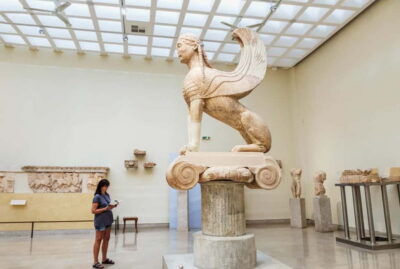
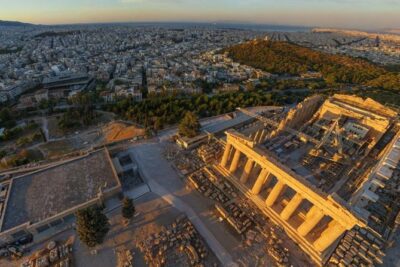
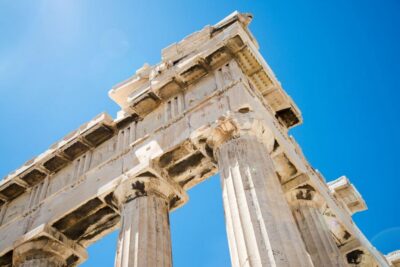
After Hera, the tour heads toward the Temple of Zeus. This is where the “scale check” happens. The highlight here is the legend of the colossal gold-and-ivory statue of Zeus, listed as one of the Seven Wonders of the ancient world. Even if you know the story already, seeing the temple area in person brings a physical sense of grandeur that photos can’t quite replicate.
From there you continue to the stadium and related Olympic facilities. You’ll be able to step into the original Stadium area, where ancient athletes competed for eternal glory. The important thing is not just the fact of it—it’s the layout. The stadium shape and the way space opens help you imagine movement, crowds, and the attention focused on competitors.
I also like that the tour keeps you moving through the main monuments rather than doing quick outside glimpses. You get enough time at the archaeological site to reorient after each cluster of ruins, so the day doesn’t feel like a nonstop blur.
If you’re traveling with someone who loves sports, this section is often their favorite. If you’re more of a history-and-architecture person, the Zeus temple area usually works just as well because it’s dramatic in its setting and deeply tied to the mythic reputation of Olympia.
Bouleuterion and the judges’ house: the rules behind the games
Next up is the Bouleuterion, the council house where Olympic judges once gathered. This is a subtle stop compared to the stadium or Zeus temple, but it’s exactly the kind of detail that makes the whole trip click.
Why? Because it shows you Olympia wasn’t only about athletic performance. There was a structure for decisions, fairness, and administration. Sitting in your mind alongside the stadium lets you connect competition with governance.
This is where the audio and VR components can help most. Even with strong live guide narration, these are the monuments that can blur together unless you have a mental anchor for what happened there. The included tech gives you a second chance to frame the site.
Olympia village time: where the trip becomes real life again
Once your archaeological time is done, you’ll make a short transfer (just minutes by coach) to the modern village of Olympia, next to the site. Then you get free time—about 1.5 hours.
This block is useful. It lets you step out of the ruins mode and reset your day with a normal street experience: you can stroll traditional alleys, shop for local goods, and grab a Greek lunch.
Lunch is not included, and drinks aren’t included either, so I recommend planning for at least a basic meal budget. If you want to conserve energy, this is also the time to sit down and cool off before the long return drive to Athens.
You’ll likely feel the fatigue creep in on the ride back. That’s normal. The village time is there so you don’t go directly from stones to a long bus ride without food or a chance to stretch.
Audio and VR in 10 languages: how to actually use it
One of the smarter parts of this tour package is the mix of live narration plus tech support. You get audio that works across 10 languages, and there’s a VR application included to help you relive the ancient past.
Here’s how to make that tech useful instead of distracting:
- Listen first, then watch. Let the live English guide set the stage for a monument, then use audio/VR when you’re standing in the right spot.
- Use it as a tool for layout. VR tends to help most when you’re trying to understand how buildings looked within the sanctuary complex.
- Don’t force it. If you prefer reading ruins quietly, use the audio as a backup rather than treating VR like the main event.
The tour also mentions immersive commentary across 10 languages. So even if your own language isn’t the one being spoken live, you can still follow along through the audio system.
This is one of the reasons the day works well for groups with mixed interests. The history-focused people get context; the visually oriented people get help seeing what the spaces might have looked like.
Price and logistics: does $129 feel fair for a 13-hour day?
At $129 per person, you’re paying for more than admission tickets. This price includes round-trip transportation by air-conditioned bus, entry tickets for the sites, an English live guide, and onboard audio/VR in multiple languages. It also includes fuel costs, toll fees, and taxes.
So the value equation depends on what you want most:
- If you hate the hassle of arranging transport and buying tickets, this price starts to make sense fast.
- If you already plan to drive or use local buses, you might compare and feel the bus day is expensive.
- If you strongly prefer constant live guide commentary, you should double-check that your departure includes a guide on board. One report noted a departure where a guide wasn’t present, which makes a huge difference in how much meaning you get from the ruins.
The long drive is also the real cost. You’re paying to trade control for convenience. For me, the sweet spot is when you want Olympia but don’t want your day to turn into a self-made transportation puzzle.
Who this trip suits (and who should skip it)
This tour is best for:
- First-time visitors who want the biggest Olympic monuments in one day from Athens
- People who like guided structure but still appreciate a block of free time in the village
- Travelers comfortable with a long day and walking through open-air ruins
It may not suit you if:
- You’re not good with extended transit and uneven ground
- You want lots of deep, slow museum time. This is a ruins-and-monuments day, not a multi-museum marathon.
- You need a very quiet day. With audio in multiple languages and a guided flow, the experience isn’t “solitude travel.”
A couple of rules to note: pets aren’t allowed, and the tour says it’s not suitable for people over 95 years.
What to bring so the day stays pleasant
You’ll be walking around ruins, including stadium areas and temple zones, so practical choices matter more than “nice” ones.
Bring:
- Comfortable shoes with grip
- A light rain layer if you’re going in winter or any rainy season
- Sun protection in warmer months
- A small amount of cash or card for lunch/snacks in Olympia village since meals aren’t included
Also, since drinks aren’t included, you may want to buy water in town or bring something where allowed.
Should you book this Ancient Olympia full-day tour?
If you want Olympia without turning your trip into logistics homework, I’d book this. The mix of Temple of Hera and Olympic Flame connection, the Temple of Zeus and stadium highlights, plus the audio/VR tools make it a strong day for first-timers.
I’d only hesitate if you’re extremely sensitive to long travel days, or if you expect constant detailed live guiding from start to finish. In that case, confirm your departure’s guide setup and plan to rely on audio/VR when needed.
For most people, the big win is simple: you get the essential Olympia story in one organized day from Athens, with enough room to breathe in the village afterward.
FAQ
How long is the Athens to Ancient Olympia tour?
The tour duration is 13 hours.
What sites are included at Ancient Olympia?
You’ll visit Ancient Olympia’s sanctuary area, including the Temple of Hera, Temple of Zeus, Pelopion, the original stadium, and the Bouleuterion.
Are entry tickets included?
Yes. Entry tickets for the sites are included.
Is lunch included in the price?
No. Lunch and snacks are not included, and drinks are also not included.
Does the tour include audio guides and virtual reality?
Yes. You get audio and VR application support in 10 languages, along with an English live tour guide.
Can I cancel for a full refund, and is pay later available?
Yes. You can cancel up to 24 hours in advance for a full refund, and you can reserve now and pay later.
More Tours in Athens
- Athens: Acropolis, Parthenon & Acropolis Museum Guided Tour★ 4.8 · 9,316 reviews
- The Acropolis, Parthenon & Acropolis Museum Guided Tour★ 4.7 · 8,493 reviews
- Acropolis: Premium Acropolis and Parthenon Guided Tour★ 4.8 · 5,208 reviews
- Athens: Mythology of Delphi, Museum and Arachova Guided Tour★ 4.7 · 5,102 reviews
- Acropolis and Parthenon Guided Walking Tour★ 5.0 · 4,755 reviews
- Greek Food Walking Tour in Athens★ 5.0 · 4,740 reviews
More Tour Reviews in Athens
- Athens: Acropolis & up to 5 Archaeological Sites Combo Pass★ 4.2 · 13,904 reviews
- Athens: Acropolis, Parthenon & Acropolis Museum Guided Tour★ 4.8 · 9,316 reviews
- The Acropolis, Parthenon & Acropolis Museum Guided Tour★ 4.7 · 8,493 reviews
- Athens: Cape Sounion & Poseidon Temple Sunset Half-Day Trip★ 4.8 · 8,241 reviews
- Acropolis: Premium Acropolis and Parthenon Guided Tour★ 4.8 · 5,208 reviews
- Athens: Mythology of Delphi, Museum and Arachova Guided Tour★ 4.7 · 5,102 reviews
Classical Greece, Coast to Coast
- 4-Day Classical Greece Tour: Epidaurus, Mycenae, Olympia, Delphi, Meteora★ 4.5 · 732 reviews
- Delphi, Thermopylae, Corycian Cave 300 Spartans Tour★ 5.0 · 492 reviews
- Athens: Delphi, Corycian Cave, and 300 Battlefield Day Trip★ 4.8 · 344 reviews
- 3-Day Classical Greece Tour: Epidaurus, Mycenae, Nafplion, Olympia, Delphi★ 4.5 · 342 reviews
- Delphi & Thermopylae Full Day Private Tour from Athens★ 5.0 · 259 reviews
- Thermopylae, Meteora and Delphi Private Full Day Tour★ 5.0 · 216 reviews
Fresh Off the Boat: New Athens Reviews



Classical Greece Multi-Day Tours, compared.
 ★ 4.54-Day Classical Greece Tour: Epidaurus, Mycenae, Olympia, Delphi, MeteoraFrom $766732 reviews
 ★ 5.0Delphi, Thermopylae, Corycian Cave 300 Spartans TourFrom $169492 reviews
 ★ 4.8Delphi, Corycian Cave, and 300 Battlefield Day TripFrom $170344 reviews
 ★ 4.53-Day Classical Greece Tour: Epidaurus, Mycenae, Nafplion, Olympia, DelphiFrom $520342 reviews
 ★ 5.0Delphi & Thermopylae Full Day Private Tour from AthensFrom $338259 reviews
 ★ 5.0Thermopylae, Meteora and Delphi Private Full Day TourFrom $287216 reviews
 ★ 4.84-Day Tour of Mycenae, Epidaurus, Olympia, Delphi & MeteoraFrom $747168 reviews
 ★ 5.0Thermopylae and Delphi Private Full-Day Tour from AthensFrom $270114 reviews
Browse the lists this tour appears in