
Reviewed · WORKSHOPS
Greek dance lessons
Dance lessons are fun. This one is also cultural.
I like how this class turns Greek dancing into something you can do, not just something you watch. You learn well-known folk dances connected to different parts of Greece, with a focus on Aegean and Ionian islands plus mainland traditions.
The setting helps too. You start near Acropolis Metro and walk through Plaka’s old streets to a preserved building tied to George Finlay, then dance in a flower-filled yard. One possible drawback: you’ll be on your feet for the whole 1.5 hours, so it’s not ideal if you want a mostly seated, lecture-style experience.
In This Review
- Key things I think you’ll love most
- Meeting in Plaka near Acropolis Metro and reaching George Finlay’s building
- What 1.5 hours of Greek folk dance actually feels like
- What you’ll be doing during the lesson
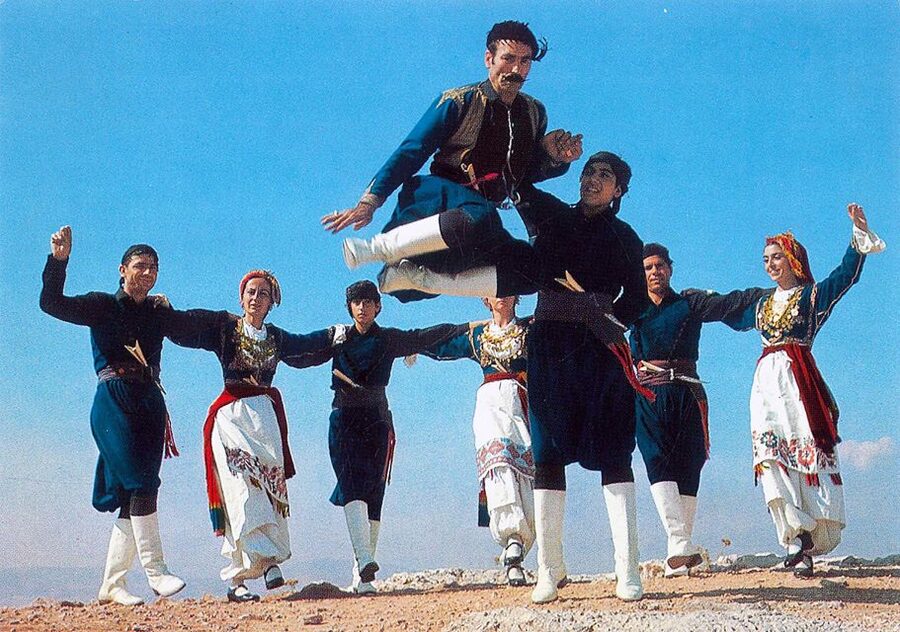
- Dances from Aegean, Ionian, and mainland Greece: the cultural meaning behind the steps
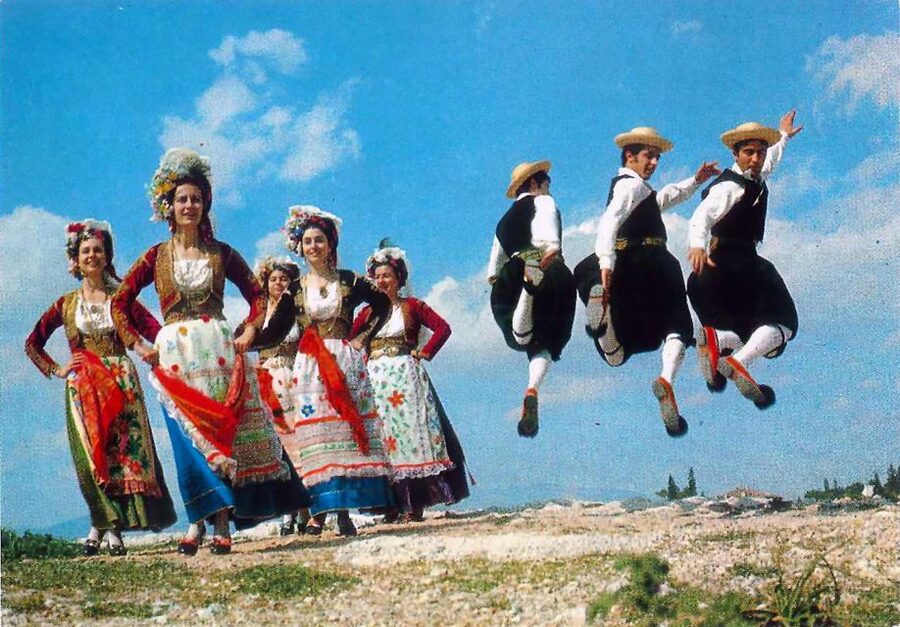
- Costumes and jewelry: learning what to look for when you see Greek traditional dress
- Is $73 worth it for 90 minutes of dancing and culture in Athens?
- Languages, teaching style, and what to wear (and what to double-check)
- What to wear
- Who should book this Greek dance lesson—and who might skip it
- Should you book Greek dance lessons in Athens?
- FAQ
- How long is the Greek dance lesson?
- Where do I meet for the activity?
- What languages is the instructor available in?
- What does the lesson include besides dancing?
- Is the lesson suitable for beginners?
- What is the price?
- What is the cancellation policy?
- Is it wheelchair accessible?
- Can I book if I want flexible payment?
Key things I think you’ll love most
- A beginner-friendly, hands-on format for learning multiple dances in just 90 minutes
- Regional culture through movement, not just facts and photos
- Costumes and jewelry education, including how Greek traditional clothing is put together
- Plaka’s easy walk-in atmosphere, starting close to the Acropolis Metro
- A professional, English- and Spanish-speaking teacher guiding you step by step
- Short enough for a tight Athens schedule, long enough to actually learn something
Worth comparing before you book this Athens tour:
- Athens: Classic Cooking Class with Market Visit and Wine
★ 5.0 · 1,101 reviews - Athens: Food Market Visit and Cooking Class with Wine
★ 4.9 · 1,087 reviews - Greek Cooking Class in Athens Including Rooftop Dinner with Acropolis View
★ 5.0 · 826 reviews - Greek Small-Group Athens Cooking Class & Dinner
★ 5.0 · 574 reviews
Meeting in Plaka near Acropolis Metro and reaching George Finlay’s building

This starts in Athens in a way that feels immediately local. You gather at an office very close to Acropolis Metro Station—about a three-minute walk. From there, you head through the picturesque alleys of Plaka, the old-town area right below the Acropolis.
Plaka can be touristy, yes. But on foot like this, you get a good sense of the scale and texture of the neighborhood before you stop. Small streets, stone and balconies overhead, and that slow shift from “I’m looking at landmarks” to “I’m actually walking through the city.”
Your final destination is a well-preserved, four-floor building associated with George Finlay, a British historian connected with the Greek Revolution. The lesson happens at the property level, in a flowery yard, which matters more than you’d think. Open-air movement makes a dance lesson feel less like a classroom and more like a gathering.
One practical note: the meeting point is described as an 18th-century building. If you’re arriving early, use the time to orient yourself—Plaka lanes can look similar fast when you’re hunting for one specific doorway.
What 1.5 hours of Greek folk dance actually feels like
The core experience is the dance lesson itself, taught for about 1.5 hours by an experienced teacher. The goal isn’t perfection. It’s learning the steps and learning them in a way that stays fun while you pick up the rhythm.
The class is designed to be easy and fun, which is exactly what you want for folk dancing if you’re new. You learn well-known Greek folk dances—the kind you’ll recognize if you’ve ever seen Greek music and dance performances in Athens or on Greek islands.
In that time, you also get more than one dance. That’s a big deal. Many short activities teach just one routine. Here, you get a mini sampler, so you leave with a bigger sense of how Greek dance changes in feel from one region or style to another.
Also, don’t overthink your body. One common theme in the feedback for this lesson is that even people who think they have no rhythm still manage to enjoy it, because the teaching style focuses on what to do next. You’re not left “to figure it out.”
What you’ll be doing during the lesson
You can expect a teacher-led flow where you:
- learn steps in an approachable way
- practice the movements enough to feel the dance take shape
- connect the dance to the cultural meaning behind it
The lesson includes singing and expressive elements through context (Greek dances are traditionally linked with music, voices, and community celebration), even if your main task is the steps.


Dances from Aegean, Ionian, and mainland Greece: the cultural meaning behind the steps
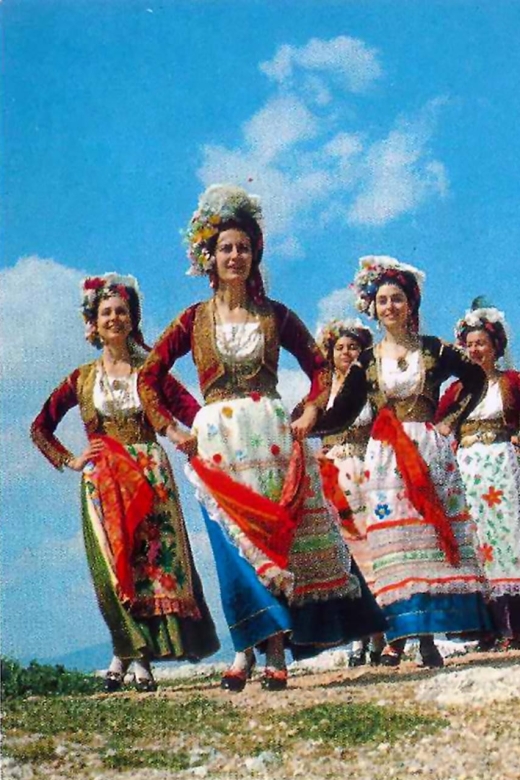
What makes this more than a “dance class” is the context. The lesson ties Greek folk dancing to the way Greek people understand seasons, celebrations, and identity.
The background they share is compelling: ancient Greeks believed dance was created by the gods, and that it was connected to cults and religious events. That’s not just mythology as trivia. It’s the reason dance shows up in many Greek moments—welcoming, commemorating, and celebrating.
In the same spirit, the class explains why dance and song have meaning for everyday life. Greek dances are described as expressions of feelings—things you do to celebrate the different seasons of the year, to welcome events, and to share emotion with others.
That framing changes how you experience the steps. Instead of thinking, I’m learning a sequence, you start thinking, I’m learning a form of communication. That’s where folk dance becomes memorable.
The lesson covers dances from:
- the Aegean Islands
- the Ionian Islands
- mainland regions
Now, you won’t get a museum-style breakdown of every regional detail. But you do get cultural orientation—enough to help you notice differences later when you hear music or see costumes. You’ll also have a clearer sense of why Greek traditional dance is not one single style.
Costumes and jewelry: learning what to look for when you see Greek traditional dress
One of the most useful parts of this experience is the costume and jewelry focus. You’re not just told what dancers wear. You get general clothing information about Greek costumes, plus insight into the special jewels that adorn them.
Greek traditional clothing can look decorative at first glance, especially if you’re used to modern outfits. What you’ll learn here is how costumes function as more than decoration. They’re part of regional identity and often tied to the way people present themselves during celebrations.
Even in a short 1.5-hour class, the costume segment helps you build “recognition skills.” Later, when you’re in Athens, you’ll be more likely to catch details like:
- how different parts of a costume coordinate
- how adornment changes the look and feel
- how clothing can signal region and occasion
No, you won’t suddenly become a costume historian. But you’ll leave with a stronger eye. And that matters because Greek costume displays are everywhere—shops, events, and museum exhibits—and it’s easy to pass them by without understanding what you’re seeing.
Is $73 worth it for 90 minutes of dancing and culture in Athens?
Let’s talk value plainly.
$73 per person for a 1.5-hour lesson is not a bargain price. It’s also not outrageous for a guided activity that includes:
- a live teacher in English or Spanish
- hands-on movement instruction
- cultural context about different Greek regions
- costume and jewelry learning
If your goal is a quick, high-impact Athens experience near the Acropolis area, this is a good use of time. You’re getting a physical activity plus cultural interpretation in one slot, which is often the best way to spend a tight schedule.
Where the math can feel less good is if you already know Greek dance well, or if you mainly want historical lectures. This is built for doing, not for sitting.
I’d also call out the pacing: because the class is short, it’s a sampler. You’ll leave knowing more than you started with, but you won’t have months of training. Think of it as a taste that makes you want to learn more, not a complete course.
Languages, teaching style, and what to wear (and what to double-check)
The teacher instruction is available in English and Spanish. That’s useful if you’re traveling with someone whose Greek language skills are nonexistent (which is most people). It also means you’re not stuck guessing what to do when you’re in the middle of learning steps.
About accessibility: the activity includes notes that say wheelchair accessible, but it also includes a line saying not suitable for wheelchair users. That contradiction is worth treating seriously. If accessibility matters for you, contact the provider ahead and ask what the actual on-site setup is like (surface, space in the yard, and whether participants can follow comfortably).
What to wear
The data doesn’t list specific dress code items, so follow common sense:
- Comfortable shoes you can move in
- Clothes you can turn and step in without fuss
- Light layers, since you’ll be moving the whole time
Also bring your energy. If you’re the type who gets shy, this format can still work. The lesson is aimed at beginners and is described as easy and fun.
Who should book this Greek dance lesson—and who might skip it
This is a strong fit if you:
- want a short Athens activity that’s hands-on, not just sightseeing
- like learning culture through the body—music, rhythm, expression
- want to cover Aegean and Ionian themes plus mainland context in one go
- are a beginner and want to feel guided
It may be less ideal if you:
- dislike standing and moving for a full hour and a half
- need a mostly seated experience
- need to confirm accessibility details carefully (due to conflicting notes)
The biggest practical reason to book: it’s located so you can tie it neatly into a day near the Acropolis. Starting close to Acropolis Metro and ending in Plaka makes it easier to plan around other sights.
Should you book Greek dance lessons in Athens?
If you want an activity that feels like Greece, not just about Greece, I’d book it. For $73, you’re paying for real instruction, cultural meaning, and costume context—delivered in a setting that’s already part of the story, from Plaka alleys to George Finlay’s building and its flower-filled yard.
Skip it only if you’re looking for quiet, museum-style learning or if you’re unwilling to move for 90 minutes. Otherwise, this is the kind of experience that leaves you with a memory you can repeat—because once you’ve felt the rhythm and learned the steps, you’ll recognize Greek dance long after you’re back home.
FAQ
How long is the Greek dance lesson?
The duration is 1.5 hours.
Where do I meet for the activity?
You meet at an office very close to Acropolis Metro Station (about a three-minute walk), in an 18th-century building.
What languages is the instructor available in?
The instructor teaches in English and Spanish.
What does the lesson include besides dancing?
It includes learning about Greek costumes and the special jewels that adorn them, plus general clothing information about Greek traditional dress and culture of different Greek regions.
Is the lesson suitable for beginners?
The experience is described as easy and fun, and the feedback highlights that it works well for beginners.
What is the price?
The price is $73 per person.
What is the cancellation policy?
You can cancel up to 24 hours in advance for a full refund.
Is it wheelchair accessible?
The activity notes say wheelchair accessible, but it also states it is not suitable for wheelchair users. You should confirm details with the provider before booking.
Can I book if I want flexible payment?
Yes. The activity offers reserve now & pay later, so you can book without paying immediately.
Make a Little Greece to Take Home
- Athens: Classic Cooking Class with Market Visit and Wine★ 5.0 · 1,101 reviews
- Athens: Food Market Visit and Cooking Class with Wine★ 4.9 · 1,087 reviews
- Greek Cooking Class in Athens Including Rooftop Dinner with Acropolis View★ 5.0 · 826 reviews
- Greek Small-Group Athens Cooking Class & Dinner★ 5.0 · 574 reviews
- Athens: Greek Cooking Class & Dinner on a Rooftop★ 5.0 · 383 reviews
- Athens: Greek Cuisine Cooking Class and 3-Course Dinner★ 4.8 · 270 reviews
More Tour Reviews in Athens
- Athens: Acropolis & up to 5 Archaeological Sites Combo Pass★ 4.2 · 13,904 reviews
- Athens: Acropolis, Parthenon & Acropolis Museum Guided Tour★ 4.8 · 9,316 reviews
- The Acropolis, Parthenon & Acropolis Museum Guided Tour★ 4.7 · 8,493 reviews
- Athens: Cape Sounion & Poseidon Temple Sunset Half-Day Trip★ 4.8 · 8,241 reviews
- Acropolis: Premium Acropolis and Parthenon Guided Tour★ 4.8 · 5,208 reviews
- Athens: Mythology of Delphi, Museum and Arachova Guided Tour★ 4.7 · 5,102 reviews
Fresh Off the Boat: New Athens Reviews





Workshops, compared.
 ★ 5.0Classic Cooking Class with Market Visit and WineFrom $831,101 reviews
 ★ 4.9Food Market Visit and Cooking Class with WineFrom $811,087 reviews
 ★ 5.0Greek Cooking Class in Athens Including Rooftop Dinner with Acropolis ViewFrom $120826 reviews
 ★ 5.0Greek Small-Group Athens Cooking Class & DinnerFrom $118574 reviews
 ★ 5.0Greek Cooking Class & Dinner on a RooftopFrom $108383 reviews
 ★ 4.8Greek Cuisine Cooking Class and 3-Course DinnerFrom $115270 reviews
 ★ 5.0Traditional Greek cooking class and lunch or dinner with an Acropolis viewFrom $114250 reviews
 ★ 5.0Athens Airport Private Transfer by Mercedes-Benz E Class Wagon to City CenterFrom $131232 reviews
Browse the lists this tour appears in