
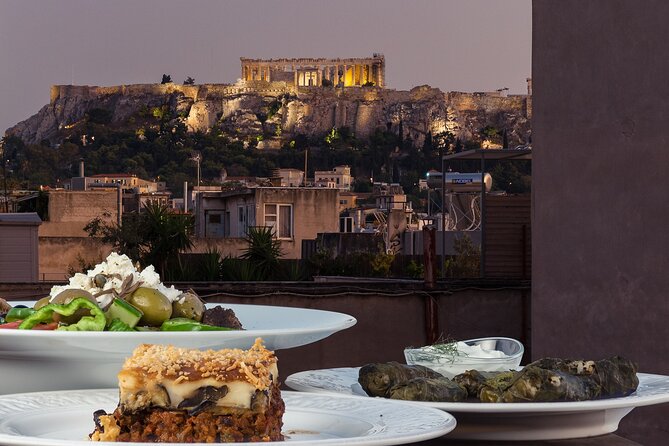
Reviewed · ACROPOLIS & PARTHENON TOURS
Greek Meze Cooking class and dinner with an Acropolis view
Greek meze cooking with an Acropolis view sounds like a dream, and this one really has the parts that make it work: hands-on cooking plus a scenic dinner. I like the small-group feel (max 15) and the way the hosts keep things fun and clear, with guides like Marilena and Katarina getting praised for being warm, funny, and patient.
The second thing I really like is the payoff. You learn at least seven Greek dishes, including dough work for pies from scratch, then sit down to eat what you make with Greek wine. One possible drawback: the menu can include dairy and meat, so if you’re sensitive (or you’re strict vegetarian/vegan), you’ll want to flag it at booking so they can adapt.
In This Review
- Key takeaways before you go
- Why this Acropolis-view meze class feels better than a restaurant meal
- The meze menu you’ll cook: seven-plus dishes with big variety
- What you actually learn: techniques that transfer to your kitchen
- The meal part: wine, meze energy, and easy conversation
- The Athens setting: CookinAthens near transit, with a view that changes the vibe
- Diet needs, food allergies, and how flexible this class can be
- Price and value: is $114.14 worth it?
- Who should book this meze cooking class?
- What to watch out for before you go
- Should you book? My honest take
- FAQ
- What dishes will I learn during the class?
- How long is the experience?
- Is the class offered in English?
- Can the class be vegetarian or vegan?
- Are there options for food allergies or dislikes?
- How big is the group?
- What’s the meeting point and start time?
Key takeaways before you go

- Acropolis view with real cooking time: you’re not just watching a show; you’re working at the stations.
- Seven-plus meze dishes: tzatziki, cheese pies, dolmades, stuffed peppers, eggplant with tomato sauce and cheese, plus more.
- Techniques you can repeat: everyone practices key steps, including dough for pies from scratch.
- Wine with dinner: meze is built for social eating with drinks—expect a true “linger” meal.
- Diet can be adapted: vegetarian and vegan options are available if you request it in advance.
More ways up the sacred rock, set side by side
- Athens: Acropolis & up to 5 Archaeological Sites Combo Pass
★ 4.2 · 13,904 reviews - Athens: Acropolis, Parthenon & Acropolis Museum Guided Tour
★ 4.8 · 9,316 reviews - The Acropolis, Parthenon & Acropolis Museum Guided Tour
★ 4.7 · 8,493 reviews - Acropolis: Premium Acropolis and Parthenon Guided Tour
★ 4.8 · 5,208 reviews
Why this Acropolis-view meze class feels better than a restaurant meal
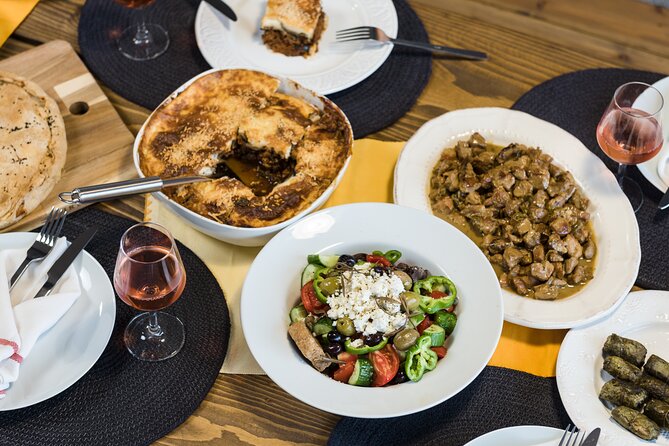
Athens is full of great dinners. The difference here is that you’re doing the work first, then enjoying the results. Meze is meant for sharing—small plates that keep conversation moving and make it easier to try many things at once. When you cook it yourself, every bite has a story: why the sauce tastes the way it does, how the filling comes together, and what makes one dish feel Greek and not just “Mediterranean.”
I especially like the way the class mixes structure with good vibes. Hosts are repeatedly described as warm and funny, but also professional and organized. That matters because Greek cooking can look intimidating on TV—phyllo pastry, rolled fillings, spiced meat dishes—but a good teacher breaks it into doable steps. In this setting, even people who don’t think of themselves as cooks say they felt supported.
Also, the timing helps. The class runs about 3 hours starting at 3:00 pm, which means you still get a full evening afterward. If you like traveling with momentum—see a little, do a little, eat well—that schedule usually fits nicely.
The meze menu you’ll cook: seven-plus dishes with big variety
This experience is built around a meze spread, not just one or two “main-event” dishes. Your sample menu includes classic flavors you’ll recognize, plus enough variety to keep the afternoon interesting.
Here’s what you may make (based on the menu they teach and serve):
- Tzatziki (starter): yogurt with garlic, cucumber, and dill. This is the dish that teaches balance—cool, creamy, and sharp in a way that makes the rest of the meal taste even better.
- Small cheese pies (starter): cheese pies made with handmade phyllo. This is the most “crafty” item on the list and the one that tends to feel most satisfying when you understand the dough workflow.
- Dolmades (main): vine leaves with rice and herbs. These are all about patience and texture—small rolls that taste fresh and herby, even though they’re filling-heavy.
- Stuffed peppers with cheeses (main): baked banana peppers stuffed with cheese. You get sweet pepper flavor plus the cozy stretch of baked cheese.
- Baklava rolls (dessert): phyllo with almonds and spices. Think fragrant, crunchy layers, with the sweetness kept in check by spice notes.
- Soutzoukakia (main): beef with spices served with pita bread. This adds a heartier, spiced comfort note to the mix.
- Eggplants (starter): eggplants with tomato sauce and cheese. This rounds out the menu with something smoky-ish and saucy, the kind of dish that makes you want extra bread.
A key detail: the class is designed so you learn the important parts of the menu. They don’t just hand out food and hope you catch on. You’ll practice key techniques so you can recreate the full menu later.
What you actually learn: techniques that transfer to your kitchen
A lot of cooking classes teach recipes. Fewer teach skills. Here, the instruction is focused on the steps that let you repeat the dishes at home.
One standout example is making dough for pies from scratch, where everyone participates in a key technique. Even if you’ve never worked with dough before, learning the “how” helps you avoid the most common mistake: grabbing phyllo or dough like it’s store-bought when, in Greek cooking, the process and handling matter.
You also get guidance across dishes that require different thinking:
- Cold-and-fresh mix (like tzatziki), where balance is everything.
- Rolled and stuffed items (dolmades and stuffed peppers), where consistency improves results.
- Pastry work (cheese pies and baklava rolls), where thin layers and gentle handling are key.
- Spiced cooking (soutzoukakia), where seasoning is doing the heavy lifting.
And you don’t just leave with memories. You get recipes and tips to take back for your remaining days in Athens. That’s practical. It turns the class into a guide you can use right away while you’re still in the city, and then again months later.
Still hungry? More souvlaki, meze and market stalls


The meal part: wine, meze energy, and easy conversation
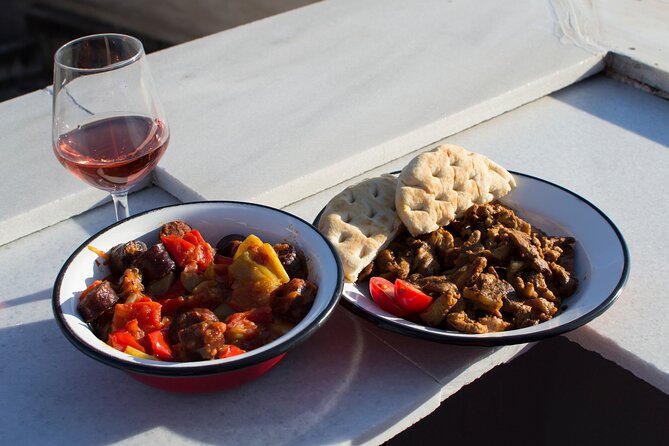
Meze isn’t just food. It’s a social format. It’s meant to pair with drinks—Greek spirits like ouzo or raki come up in the explanation of how meze works—and it’s also a reason to gather and keep things moving.
In your class, you’ll cook and then “devour” the meal together while enjoying Greek wine. This isn’t a quiet, timed dinner. It’s the kind of table where people talk because the food is constantly coming and the flavors prompt questions. If you like sharing travel stories, the setup makes that easier without being forced. And because the group is kept small, the staff can give real attention instead of disappearing into the background.
One practical note: the class is known for being a lot of food. So plan this afternoon like it’s your main event, not a snack break.
The Athens setting: CookinAthens near transit, with a view that changes the vibe
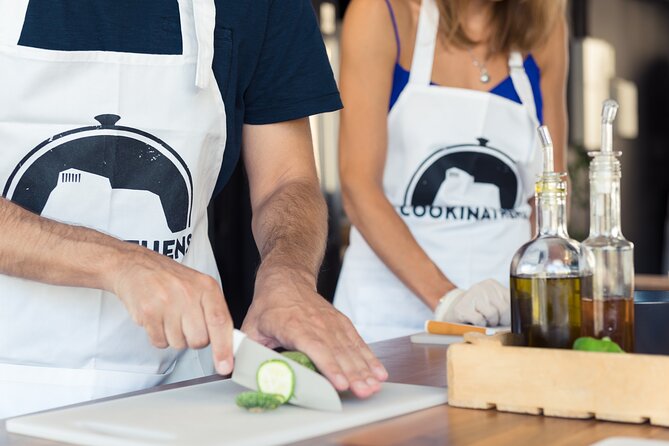
Your start point is CookinAthens, Evripidou 90 (105 53), Athens. The class starts at 3:00 pm and ends back at the same meeting point. That matters because you’re not scrambling across town for the next activity.
They also note the location is near public transportation, which is useful if you’re doing other sightseeing earlier in the day. If you’re planning to hit major viewpoints the morning or early afternoon, you can use this as a later anchor: cook, eat, then transition back out into Athens for sunset plans.
Most importantly, the experience is sold as a small-group meze cooking class with an Acropolis view. Even if you already plan to see the Acropolis from the usual photo spots, this is a different angle: instead of just looking up, you’re eating and learning with that landmark as your backdrop. It changes the emotional feel of the meal.
Diet needs, food allergies, and how flexible this class can be
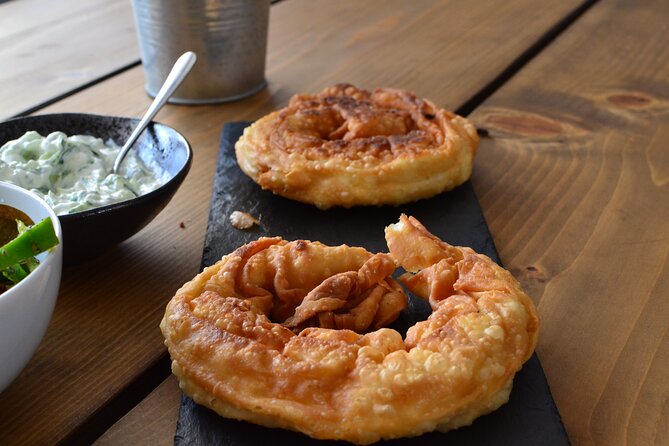
Greek food can be wonderfully forgiving, but it’s not one-size-fits-all. The good news: they explicitly say the class can be adapted for vegetarians and vegans if you tell them when you book.
They also ask you to inform them about food allergies or dislikes upon booking. That’s the big practical point. Don’t wait until you arrive. If you have concerns—especially with dairy, eggs, gluten-containing pastry, or specific ingredients—send the details early so they can plan substitutions.
Here’s the other thing to think about: the sample menu includes items with cheese and beef. If you’re not used to adjusting menus on the fly while cooking, this is where advance communication helps the class stay smooth for everyone.
Price and value: is $114.14 worth it?
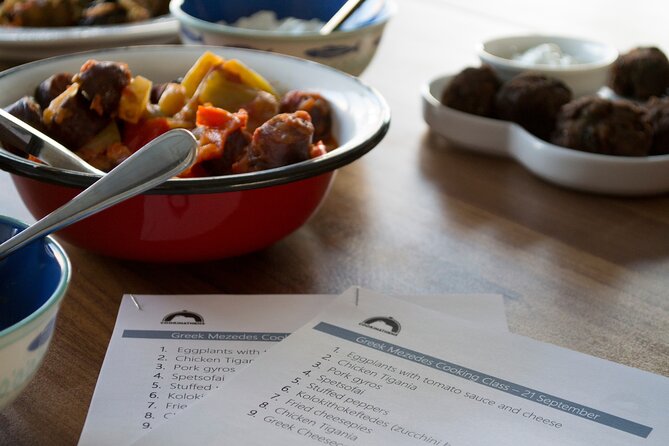
At about $114.14 per person for roughly 3 hours, this isn’t “cheap,” but it also isn’t priced like a fancy tasting menu. The value comes from three things you usually pay extra for elsewhere:
- Hands-on teaching with a small group
With a maximum of 15, the hosts can keep instruction more personal than you get in large classes.
- A multi-dish menu, not a single recipe
You’re learning seven-plus dishes, and you’re also eating them as part of the meal.
- Wine and take-home materials
The dinner includes Greek wine, and you leave with recipes and tips you can use later.
If you’re the type of traveler who wants to taste Greece but also wants a real skill you can bring home, this format tends to feel like good value. You’re paying for food plus instruction plus a social, scenic setting.
Who should book this meze cooking class?
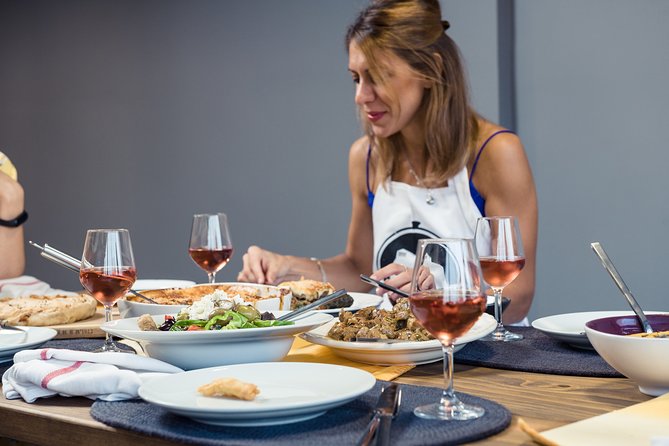
This is a strong fit for people who like:
- Cooking experiences even if you’re not a “real cook”
- Families and mixed groups (the class format is described as inclusive, with instructors helping participants stay involved)
- Food lovers who want a wide sampler of Greek flavors in one sitting
- Anyone who wants practical recipes, not just a meal
It’s also a solid pick if you want a break from the “walk, look, take photos” Athens day. Cooking gives you something hands-on to do, and it builds a memory that’s harder to replicate later.
If you’re traveling with dietary needs, ask early about vegan/vegetarian adaptation and make sure your request is clear at booking. The class can adjust, but your clarity helps them do it well.
What to watch out for before you go
Keep these in mind so the experience stays comfortable and fun:
- Bring your appetite: the meal is described as plentiful, and you’ll eat what you cook.
- Plan around a 3:00 pm start: it’s an afternoon activity, so don’t book it right before a tight evening reservation.
- Tell them your allergies and dislikes when you book: it’s explicitly requested, and it’s the only way they can tailor ingredients safely.
- Expect craft work: dough and pastry are part of the teaching plan, so there’s learning involved, not just assembly.
- Private or custom timing may be possible: if you want a private class or a specific day/time, that’s available upon request.
Should you book? My honest take
If your goal is a memorable Athens evening that goes beyond another restaurant table, I’d say book it. The combination is hard to beat: hands-on meze lessons, a small group, and an Acropolis view that makes the food feel like more than calories.
I’d skip it only if you’re trying to keep your schedule ultra light, or if you want zero cooking and just want someone to serve you dinner. This class is active. You’ll work a bit, learn a lot, and eat well.
If that sounds like your kind of travel day, you’ll likely walk away with both recipes you can use later and a clearer sense of what makes Greek food taste Greek.
FAQ
What dishes will I learn during the class?
The sample menu includes tzatziki, small cheese pies made with handmade phyllo, dolmades, stuffed peppers with cheeses, baklava rolls, soutzoukakia, and eggplants with tomato sauce and cheese. The class is designed so you learn the key parts of the menu.
How long is the experience?
It runs about 3 hours.
Is the class offered in English?
Yes, it’s offered in English.
Can the class be vegetarian or vegan?
Yes. They state the class can be vegetarian or vegan upon request—please advise when you book.
Are there options for food allergies or dislikes?
Yes. They ask you to inform them of allergies or dislikes upon booking.
How big is the group?
The class has a maximum of 15 travelers.
What’s the meeting point and start time?
The meeting point is CookinAthens, Evripidou 90, Athens 105 53. The class starts at 3:00 pm and ends back at the same meeting point.
Cook It Yourself: Greek Classes
- Athens: Classic Cooking Class with Market Visit and Wine★ 5.0 · 1,101 reviews
- Athens: Food Market Visit and Cooking Class with Wine★ 4.9 · 1,087 reviews
- Greek Cooking Class in Athens Including Rooftop Dinner with Acropolis View★ 5.0 · 826 reviews
- Greek Small-Group Athens Cooking Class & Dinner★ 5.0 · 574 reviews
- Athens: Greek Cooking Class & Dinner on a Rooftop★ 5.0 · 383 reviews
- Athens: Greek Cuisine Cooking Class and 3-Course Dinner★ 4.8 · 270 reviews
Eat Athens: More Food Walks
- Greek Food Walking Tour in Athens★ 5.0 · 4,740 reviews
- Athens: Street Food Tasting Tour★ 4.9 · 3,343 reviews
- Athens: Guided Greek Food Walking Tour with Tastings★ 4.9 · 2,859 reviews
- Small Group Greek Traditional Food Tour in Athens 20+ Tastings★ 5.0 · 1,759 reviews
- Athens: Food Market Visit and Cooking Class with Wine★ 4.9 · 1,087 reviews
- Athens Authentic Greek Food Walking Tour (Small Group)★ 5.0 · 809 reviews
The Acropolis, a Few More Ways Up
- Athens: Acropolis & up to 5 Archaeological Sites Combo Pass★ 4.2 · 13,904 reviews
- Athens: Acropolis, Parthenon & Acropolis Museum Guided Tour★ 4.8 · 9,316 reviews
- The Acropolis, Parthenon & Acropolis Museum Guided Tour★ 4.7 · 8,493 reviews
- Acropolis: Premium Acropolis and Parthenon Guided Tour★ 4.8 · 5,208 reviews
- Acropolis and Parthenon Guided Walking Tour★ 5.0 · 4,755 reviews
- Athens: Acropolis, Parthenon & Acropolis Museum Guided Tour★ 4.8 · 3,579 reviews
Fresh Off the Boat: New Athens Reviews





Acropolis & Parthenon Tours, compared.
 ★ 4.2Acropolis & up to 5 Archaeological Sites Combo PassFrom $4213,904 reviews
 ★ 4.8Acropolis, Parthenon & Acropolis Museum Guided TourFrom $409,316 reviews
 ★ 4.7The Acropolis, Parthenon & Acropolis Museum Guided TourFrom $408,493 reviews
 ★ 4.8Acropolis: Premium Acropolis and Parthenon Guided TourFrom $405,208 reviews
 ★ 5.0Acropolis and Parthenon Guided Walking TourFrom $414,755 reviews
★ 4.8Acropolis, Parthenon & Acropolis Museum Guided TourFrom $413,579 reviews
★ 5.0Acropolis and Parthenon Guided Walking TourFrom $414,755 reviews
★ 4.8Acropolis, Parthenon & Acropolis Museum Guided TourFrom $413,579 reviews
 ★ 4.0Acropolis Ticket with Audio GuideFrom $473,575 reviews
 ★ 5.0Athens Scenic Electric Bike Tour with optional Acropolis visitFrom $353,350 reviews
Browse the lists this tour appears in