
Reviewed · WINE TOURS
Greek Retsina: Time, Pine, Wine
Retsina can surprise you fast. This Athens tasting turns Greece’s pine-resin wine into a story you can taste, not a joke you politely endure. I like the five-different retsinas (including a sparkling style) and the food pairings that actually explain why each sip works, but I do think the pine-resin flavor is a deal-breaker for some people.
You’ll be in a small group (max 12) and guided in English, with a steady pace over about two hours. The setting is warm and focused, and the whole point is to show how retsina went from misunderstood to worth your attention.
One thing to consider: retsina is still retsina, meaning you’ll get that resinous, pine note throughout the tasting. If you hate anything piney or medicinal, start with the sparkling pour and see how your palate reacts.
In This Review
- Key points you’ll care about
- Retsina 101: pine resin, preservation, and why it got a bad rap
- CHNOPS in Athens: what the format feels like in real life
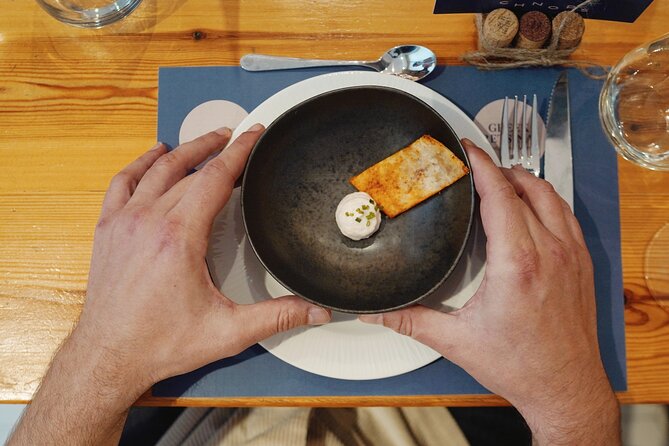
- The first pour: Afros-Kechris retsina and pan-fried cheese
- Botanic Sparkling Retsina: tarama mousse, tortilla, and lemony freshness
- Amphorε Nature and marinated anchovies: when the earthiness clicks
- Pitys Ritinitis: split pea purée with smoked mackerel
- Retsina-Aoton in Attica with meatballs and toasted pine nuts
- The sweet landing: Greek spoon sweet
- What to expect from the pacing (and how to get the most out of it)
- Is this worth $71.01? A value check for a 2-hour Athens tasting
- Who this Athens retsina tasting suits best
- Should you book Greek Retsina: Time, Pine, Wine?
- FAQ
- Where does the Greek Retsina: Time, Pine, Wine tour start?
- How long is the experience?
- How many people are in the group?
- Is the tour offered in English?
- What will I taste during the tour?
- Is there a mobile ticket?
- What is the cancellation policy?
Key points you’ll care about

- Five retsinas to taste, not just one style with a quick explanation
- Each pour comes with a dish pairing, built from local, seasonal ingredients
- A clear origin story: pine resin used historically to seal and preserve wine
- Multiple Greek regions represented (Thessaloniki, Attica, Aigialeia, Mantineia)
- Small group size (12 max) for better conversation and questions
- A sweet Greek finish with Greek spoon sweet at the end
More Greek labels to try
- Athens: Classic Cooking Class with Market Visit and Wine
★ 5.0 · 1,101 reviews - Athens: Food Market Visit and Cooking Class with Wine
★ 4.9 · 1,087 reviews - Best rated Acropolis Wine Tasting
★ 5.0 · 568 reviews - PREMIUM Semi-Private Athens Afternoon Food Tour & Wine Tasting
★ 5.0 · 363 reviews
Retsina 101: pine resin, preservation, and why it got a bad rap
Retsina is Greek wine flavored with pine resin, and that’s exactly why it can be confusing on a menu. When people first try it, they often expect wine to behave like wine. Instead, retsina tastes like wine plus a piney, resin edge that can feel sharp or even strange—until you understand the logic behind it.
Historically, pine resin wasn’t just style. It was used to seal wine, helping preserve it before modern winemaking took over. That ancient technique is the backbone of tonight’s storytelling, even if the wine in your glass today is more about craft than survival. The tour frames retsina as something Greece has always made, argued about, and improved over time.
What I appreciate is that the tasting doesn’t ask you to pretend the flavor is subtle. It helps you listen to it: the resin note, the acidity, and how different foods react to those flavors. You’ll taste how modern winemakers approach retsina with care and creativity, so it feels less like a novelty and more like a genuine Greek identity.
CHNOPS in Athens: what the format feels like in real life
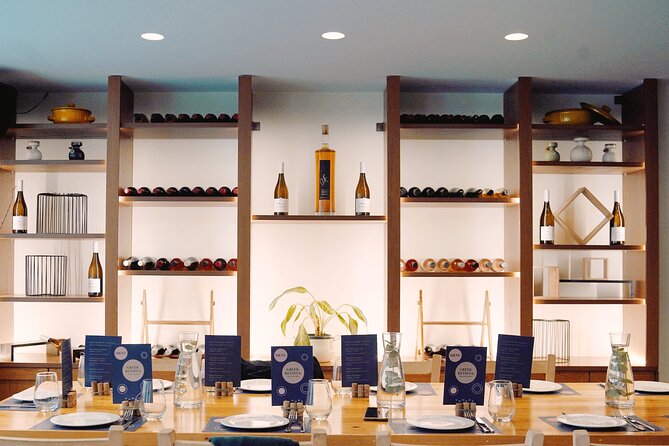
This tasting is run by CHNOPS Flavouring Curiosity, and the vibe is simple: you come in, you get guided, you taste, you eat, you talk. The group stays small (up to 12 people), which matters because retsina is polarizing. In a big room, you might only nod politely. In a small room, you can actually ask how something tastes and why it’s paired the way it is.
The activity lasts about 2 hours and uses a mobile ticket. It’s offered in English, and it starts and ends at Veikou 93, Athina 117 41, Greece, so you’re not doing a long hop across town.
Also worth noting: it’s near public transportation, and service animals are allowed. That makes it easy to slot in as a low-stress, early-evening option when you don’t want to fight traffic or plan multiple stops.
The first pour: Afros-Kechris retsina and pan-fried cheese
You start with Retsina Afros-Kechris Winery (Thessaloniki), paired with pan-fried cheese. This is a smart opening because cheese tells you something right away. It adds salt and fat, and it gives your palate a cushion for the resin.
The pairing logic here is straightforward: the saltiness of the cheese blends with the wine’s natural acidity. That acidity is key. Without it, retsina can feel heavy or one-note. With it, the pine-resin flavor gets a lift, so it reads more like a flavor accent than a lump in the throat.
Practical tip: take your first sip slowly, then eat a small bite of the cheese. Let your mouth recalibrate between tastes. This first round is where you decide whether the resin is annoying or interesting for you.
If you’re coming in as a retsina skeptic, this pairing is one of the easiest ways to give the wine a fair shot.



Botanic Sparkling Retsina: tarama mousse, tortilla, and lemony freshness
Next comes Botanic Sparkling Retsina (Attica) with white tarama mousse and a housemade tortilla. Sparkling retsina changes the game because bubbles amplify acidity and lighten perception. Instead of the resin sitting still, it moves with every sip.
The dish pairing is built for that freshness. Tarama is creamy and briny, and the lemon accent helps keep the whole moment bright rather than thick. Even if you’re not a seafood person, the mousse-and-lemon combo tends to make the wine feel more lively.
I also like that the tour doesn’t treat the sparkling style as a gimmick. It uses it as a palate tool. If you’re unsure about retsina, this is the checkpoint. Do you enjoy it when the wine feels crisp? If yes, you’ll likely find the later pours more rewarding.
Amphorε Nature and marinated anchovies: when the earthiness clicks
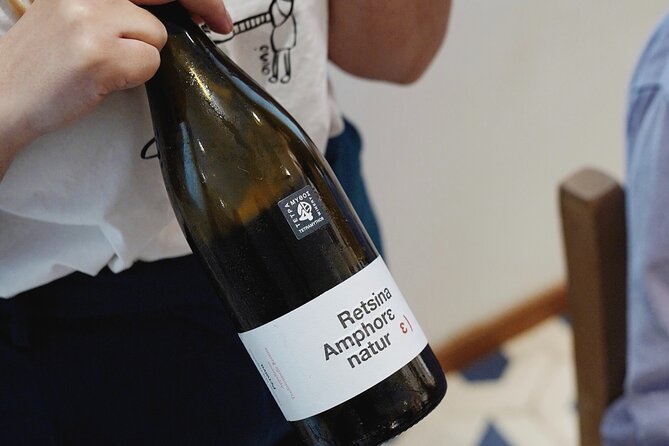
Third is Retsina Amphorε Nature (Aigialeia) served with house-marinated anchovies with olive oil and herbs. This pairing leans into seafood flavors and makes retsina feel more grounded.
Anchovies bring a deep savory edge—salty, earthy, and aromatic. That’s exactly what helps bring out retsina’s less sweet, more “serious” side. The wine also has an aromatic orange note, and the tour ties that into how the acidity plays with the citrus-like aromas around the fish.
If you’ve only had retsina once and remember it as harsh, this is one of the moments where that memory can change. Resin + salty anchovy isn’t a default combination you’d guess. In practice, it works because both flavors have backbone.
A small technique you can use: alternate bites and sips, not mouthfuls of only wine. Let the food reset the palate before the next pour.
Pitys Ritinitis: split pea purée with smoked mackerel
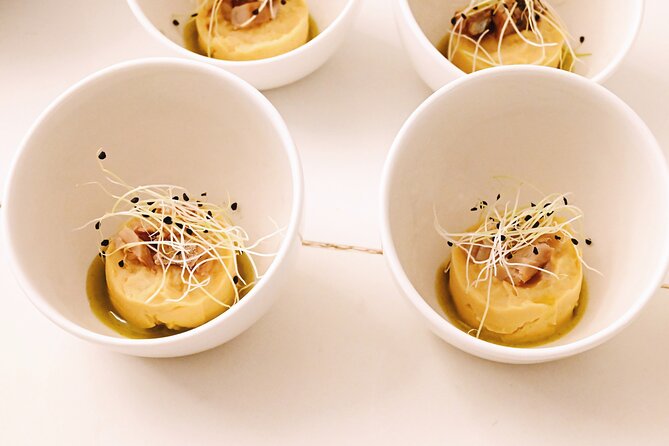
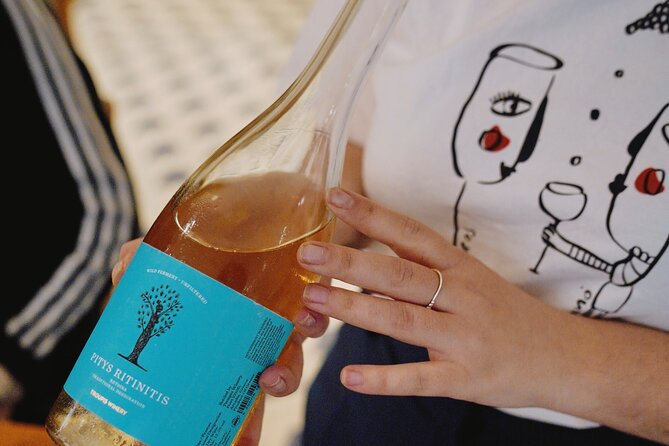
Fourth tasting: Pitys Ritinitis (Mantineia) with yellow split pea purée topped with smoked mackerel. This stop is about comfort flavors meeting smoke and pine resin.
Yellow split pea purée has a gentle sweetness and a creamy texture. Then you add smoked mackerel, which brings a stronger flavor punch—smoky, salty, and aromatic. The pairing aims to highlight the wine’s richer character, especially through the resin and pine-like notes that show up as the taste evolves.
Even if you don’t have “wine vocabulary,” you’ll still feel the structure: creamy base, smoky top, resin finish. It makes the retsina feel more dimensional than the stereotype suggests.
If you’re the type who enjoys food more than wine, you’ll probably like this stop. It feels like a real Greek meal directionally, not just a formal tasting course.
Retsina-Aoton in Attica with meatballs and toasted pine nuts
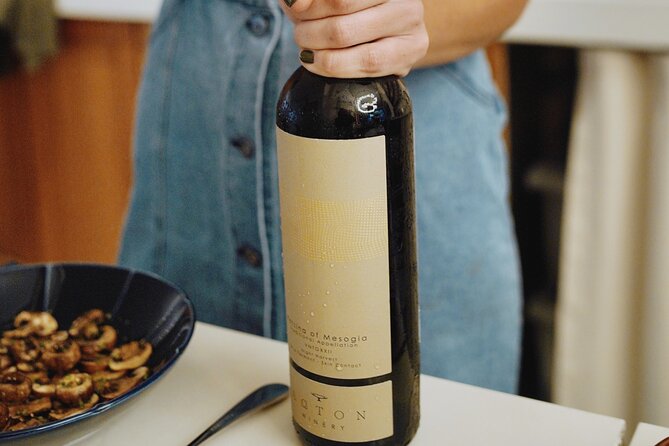
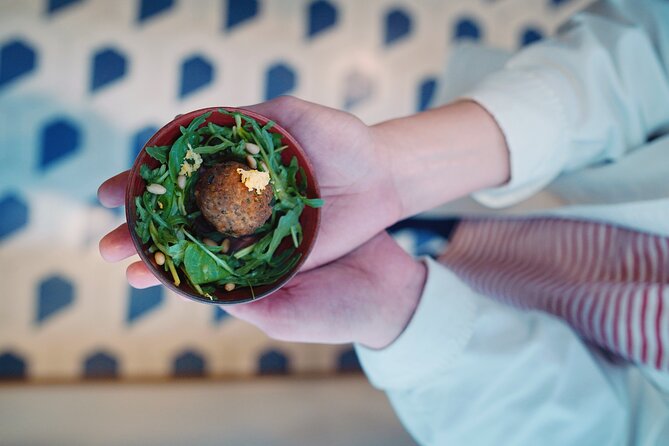
You close with Retsina-Aoton (Attica) paired with handcrafted meatballs with toasted pine nuts. This is a strong ending because it connects retsina to a classic Mediterranean flavor map: herbs, toasted nuts, and hearty comfort.
Toasted pine nuts matter here. They echo the pine-resin world, but in a softer, roasty way rather than a sharp resin slap. Meanwhile, meatballs bring savory richness so the wine can lean into its acidity without tasting thin or watery.
This combo also does something important for first-timers: it turns retsina from a foreign tasting note into a familiar dinner rhythm. By the final pour, you’re not just trying to identify flavors. You’re understanding how the wine behaves with substantial food.
The sweet landing: Greek spoon sweet
After the last sip, you finish with Greek spoon sweet. Spoon sweet is more than dessert. It’s a palate closer that helps your taste buds stop chasing resin and start smoothing out the final impression.
I like endings like this because retsina can linger. The sweet finish resets your mouth and keeps the flavor story from feeling abrupt.
And yes, if you’ve been hesitant about retsina up to this point, dessert can be the moment you realize you did enjoy the experience overall—because your mouth isn’t fighting the pine note anymore.
What to expect from the pacing (and how to get the most out of it)
Over about two hours, you’ll move through five retsina pours and five paired dishes, then dessert. The pacing is intentionally structured so each wine has a “job”:
- One helps you understand resin with comfort (cheese)
- One tests freshness and sparkle (tarama + tortilla)
- One pushes savory seafood and acidity (anchovies)
- One adds smoke and creamy depth (split pea + mackerel)
- One ties it all together with hearty dinner flavors (meatballs + toasted pine nuts)
That’s why the experience tends to land with people who thought they didn’t like retsina. You’re not stuck with a single flavor profile. You get to see how the same idea changes with style and pairing.
Practical advice: plan to taste, not to rush. You’ll get more out of small sips and bites than big swallows and faster movement. And if you have questions about why something works, this format is the right time to ask.
Is this worth $71.01? A value check for a 2-hour Athens tasting
At $71.01 per person for about two hours, the value depends on what you want from your evening.
If you want a typical wine glass and a quick snack, this won’t match that expectation. But if you want to understand retsina—why it tastes the way it does, how it’s tied to Greece historically, and how modern producers shape it—this pricing looks fair. You’re getting:
- Five distinct retsinas, named by producer/style/region
- Multiple courses that are clearly chosen to pair with each wine
- A guided explanation focused on the pine-resin idea and how taste changes with food
This is also one of those experiences where the food is not filler. Each dish is part of the tasting lesson, and the menu is built around seasonal, local ingredients. For me, that’s the difference between paying for alcohol and paying for understanding.
Who this Athens retsina tasting suits best
This is a great fit if you:
- Like learning through food and drink, not lectures
- Want a retsina tasting that treats the wine seriously
- Prefer a small group format where you can ask questions
- Are curious about Greek tradition and how it’s reinterpreted today
It may be less fun if:
- You dislike pine-resin flavors in general
- You only like wines that taste neutral or purely fruity
- You want a non-alcoholic experience (the tour is built around wine tastings)
Should you book Greek Retsina: Time, Pine, Wine?
If you’re on the fence about retsina, I’d book it. The whole structure is designed to help you experience pine resin in different moods: cheesy and salty, sparkling and bright, briny and earthy, smoky and creamy, then hearty and grounded.
If you already love retsina, you’ll probably enjoy the range of styles—especially the sparkling bottle—and the fact that the food pairings explain why the wine works.
Just be honest with yourself about the pine note. If piney flavors make you cranky, this won’t suddenly turn into a honeyed white wine. But if you can handle pine and you enjoy food, this is an efficient, memorable way to understand one of Greece’s most debated drinks.
FAQ
Where does the Greek Retsina: Time, Pine, Wine tour start?
It starts at Veikou 93, Athina 117 41, Greece, and it also ends back at the same meeting point.
How long is the experience?
The duration is about 2 hours.
How many people are in the group?
The maximum group size is 12 travelers.
Is the tour offered in English?
Yes, it is offered in English.
What will I taste during the tour?
You’ll taste five retsinas with paired dishes, and the experience also includes Greek spoon sweet at the end.
Is there a mobile ticket?
Yes, the experience uses a mobile ticket.
What is the cancellation policy?
Free cancellation is available up to 24 hours before the experience starts for a full refund. Changes within 24 hours of the start time aren’t accepted.
More Greek Wine to Taste
- Athens: Classic Cooking Class with Market Visit and Wine★ 5.0 · 1,101 reviews
- Athens: Food Market Visit and Cooking Class with Wine★ 4.9 · 1,087 reviews
- Best rated Acropolis Wine Tasting★ 5.0 · 568 reviews
- PREMIUM Semi-Private Athens Afternoon Food Tour & Wine Tasting★ 5.0 · 363 reviews
- Athens: Acropolis Wine Tasting with Cheese and Olives★ 4.9 · 337 reviews
- Athens: Wine Tasting with a Sommelier under the Acropolis★ 4.7 · 311 reviews
More Tour Reviews in Athens
- Athens: Acropolis & up to 5 Archaeological Sites Combo Pass★ 4.2 · 13,904 reviews
- Athens: Acropolis, Parthenon & Acropolis Museum Guided Tour★ 4.8 · 9,316 reviews
- The Acropolis, Parthenon & Acropolis Museum Guided Tour★ 4.7 · 8,493 reviews
- Athens: Cape Sounion & Poseidon Temple Sunset Half-Day Trip★ 4.8 · 8,241 reviews
- Acropolis: Premium Acropolis and Parthenon Guided Tour★ 4.8 · 5,208 reviews
- Athens: Mythology of Delphi, Museum and Arachova Guided Tour★ 4.7 · 5,102 reviews
Fresh Off the Boat: New Athens Reviews





Wine Tours, compared.
 ★ 5.0Classic Cooking Class with Market Visit and WineFrom $831,101 reviews
 ★ 4.9Food Market Visit and Cooking Class with WineFrom $811,087 reviews
 ★ 5.0Best rated Acropolis Wine TastingFrom $59568 reviews
 ★ 5.0PREMIUM Semi-Private Athens Afternoon Food Tour & Wine TastingFrom $211363 reviews
 ★ 4.9Acropolis Wine Tasting with Cheese and OlivesFrom $44337 reviews
 ★ 4.7Wine Tasting with a Sommelier under the AcropolisFrom $68311 reviews
 ★ 4.9Wine O’Clock Tasting!From $41311 reviews
 ★ 4.9Premium Food and Wine Tasting Tour in the eveningFrom $170212 reviews
Browse the lists this tour appears in