
Reviewed · CLASSICAL GREECE MULTI-DAY TOURS
Indulge to the beauty of Greece with the 4 days Classical Greece private tour
A few sites just feel inevitable. This private Classical Greece route stitches together Corinth, Mycenae, Olympia, Delphi, and Meteora in a way that feels logical, not rushed. You get door-to-door pickup, a private car with an English-speaking driver, and three hotel nights with breakfast, so you spend your energy on the ruins and viewpoints instead of logistics.
I really like how the trip hits two different “Greek classics” moods: the Peloponnese’s myth-and-empire feel (Corinth, Mycenae, Nafplio), then the big spiritual and athletic “anchors” (Olympia and Delphi). I also love that free time is built in, so you can pause, look longer, and move at your own speed instead of being yanked from stop to stop.
One consideration: many of the most memorable pieces of the day are not free—entrance fees (especially museums and several Meteora monasteries) add up, and you’ll want practical shoes. Add in long car days between regions, and you’ll be happiest if you plan snacks and keep expectations realistic about pacing.
In This Review
- Key things to know before you go
- The route that turns “classics” into a story
- Day 1 around Corinth and Mycenae: modern engineering meets ancient empires
- A quick Day 1 caution
- Day 1 night and Day 2 morning: Olympia’s sanctuary and the Olympic idea
- Traveling through Central Greece to Delphi: it’s part sightseeing, part transfer
- Day 3 Delphi: the oracle site and the symbols you should look for
- Delphi timing and ticket reality
- Day 3 to Day 4: the long road to Kalambaka and the Meteora shift
- Meteora monasteries: what makes the cliff setting worth the stairs
- Thermopylae and Leonidas: a fast history closer with big symbolism
- Price and value: what you’re really paying for
- Driver vs. licensed guide: the inside-the-sites limitation
- What to pack and how to pace this 4-day push
- Should you book the Classical Greece private tour?
- FAQ
- How long is the tour?
- Is pickup available in Athens?
- How many people are in a group?
- What’s included in the price?
- Are entrance fees included for the archaeological sites and museums?
- Does the driver guide you inside museums and archaeological sites?
- Is the tour offered in English?
- What kind of physical activity should I expect?
- What is the cancellation policy?
- Are admissions tickets recommended to be purchased ahead of time?
Key things to know before you go
- Private transportation from Athens, with a driver who understands the history enough to make the drive feel useful
- Three hotel nights with breakfast, giving you actual recovery time between major archaeological stops
- Delphi + Meteora are the headline pair, with Delphi’s oracle site and Meteora’s cliff monasteries both on the route
- You won’t always have an inside guide, since drivers aren’t licensed to walk with you inside sites and museums
- Stair-heavy moments exist, including 145 carved steps for one Meteora monastery you may visit
- Some stops are free, others not, so pre-planning for tickets helps avoid last-minute stress
Olympia to Delphi over several days
- 4-Day Classical Greece Tour: Epidaurus, Mycenae, Olympia, Delphi, Meteora
★ 4.5 · 732 reviews - Delphi, Thermopylae, Corycian Cave 300 Spartans Tour
★ 5.0 · 492 reviews - Athens: Delphi, Corycian Cave, and 300 Battlefield Day Trip
★ 4.8 · 344 reviews - 3-Day Classical Greece Tour: Epidaurus, Mycenae, Nafplion, Olympia, Delphi
★ 4.5 · 342 reviews
The route that turns “classics” into a story
This is a private 4-day plan based out of Athens, but it’s designed to feel like a single unfolding narrative. You start with the Corinth area and the Peloponnese’s myth-steeped past, then continue north to Greece’s central heartlands for Olympia, Delphi, and finally Meteora.
What makes this itinerary work for you is the mix of places that explain different parts of Greek civilization. Corinth and Mycenae help you understand trade, power, and early state-building. Olympia frames the religious-and-sport culture through the Olympic sanctuary. Delphi then delivers the oracle vibe—myth, ritual, and politics in one compact sacred site.
And Meteora closes the loop in a very Greek way: not ancient temples, but Eastern Orthodox monasteries built on towering rock formations. The result is a trip that doesn’t just list sites—it connects the themes.
Day 1 around Corinth and Mycenae: modern engineering meets ancient empires
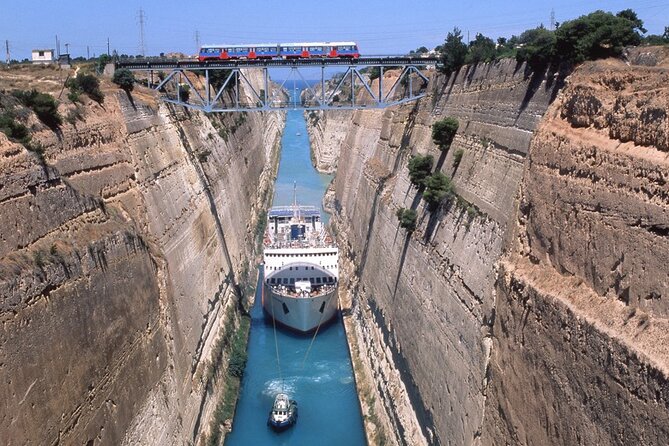
Day 1 starts with the Corinth Canal, a modern project that still feels like it belongs to a myth. It cuts through the narrow Isthmus of Corinth, linking the Gulf of Corinth (Ionian Sea) to the Saronic Gulf (Aegean Sea). The canal is also a reminder that people tried to solve this problem long ago—idea first appeared around Periander’s time (602 B.C.), but the canal was completed about 25 centuries later.
From a value standpoint, this stop is great because it’s quick and free. It also sets your brain up for the next theme: geography shaping history. You’re not just seeing ruins; you’re learning why routes mattered.
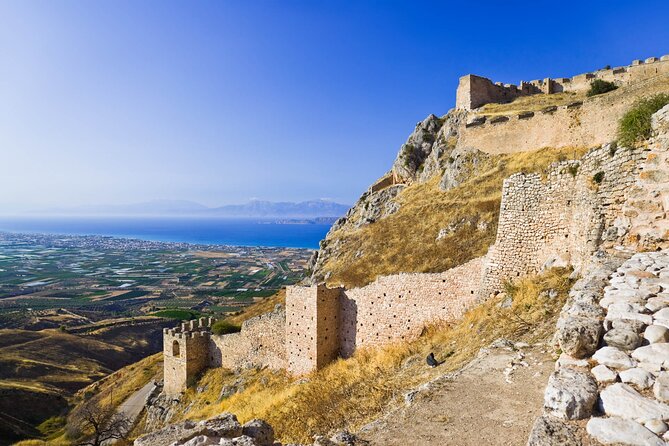
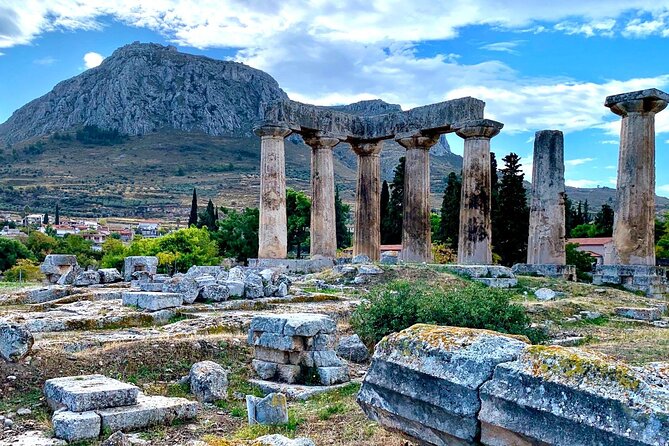
Next comes Ancient Corinth. This site sits at a crossroads of land routes and waterways—fertile soil plus strategic location helped it grow fast. The story reaches beyond the classical era, too, starting in Neolithic times and carrying through Mycenaean and later periods. You’re also seeing why Corinth mattered for Mediterranean communication, trade, and colonization.
My practical tip here: Ancient Corinth can be visually bigger than you expect, so wear shoes that handle uneven ground. Give yourself time to read the site’s layout before rushing into the main features.
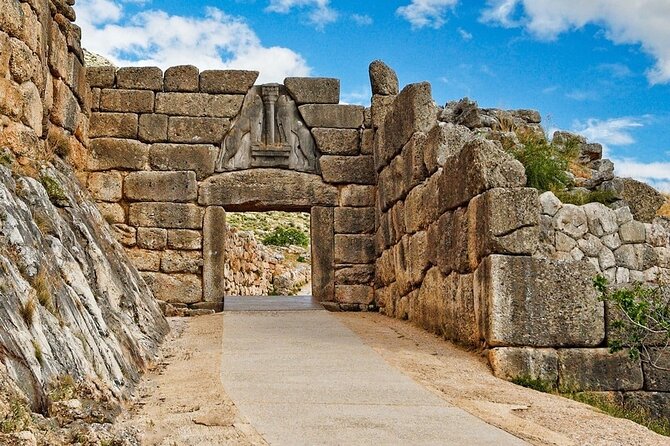
After that, you move to Mycenae—the mythical kingdom associated with Agamemnon and the Mycenaean civilization. This is Late Bronze Age Greece at its most “legend meets archaeology.” The myths around Perseus and the naming of Mycenae might feel like storytelling, but the point for you is that the ruins anchor those traditions to a real palace center.
Mycenae is scheduled for about two hours. That’s usually enough if you keep a steady pace and focus on the biggest impressions rather than trying to read every stone label at human-speed.
Then you end the day in Nafplio, one of the most romantic towns in the Argolis region and the first capital of the newly born Greek state between 1823 and 1834. Nafplio’s layering is part of what you’ll enjoy: prehistoric participation in major myths, a Roman decline, Byzantine renewal, then Frankish, Venetian, and Turkish influences in the architecture and fountains.
This stop is also where you get real flexibility. Even with fixed timing, a town like Nafplio is perfect for slow wandering—coffee, a walk along the old streets, and an easy reset after archaeological intensity.
A quick Day 1 caution
Corinth Canal is free, but the archaeology stops often require paid admission. If you haven’t pre-booked or at least budgeted for tickets, Day 1 can be the moment you realize entrance fees are part of the true cost.
Just your group, at your own pace


Day 1 night and Day 2 morning: Olympia’s sanctuary and the Olympic idea
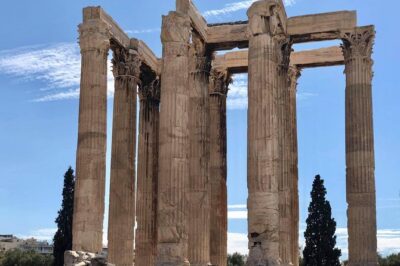
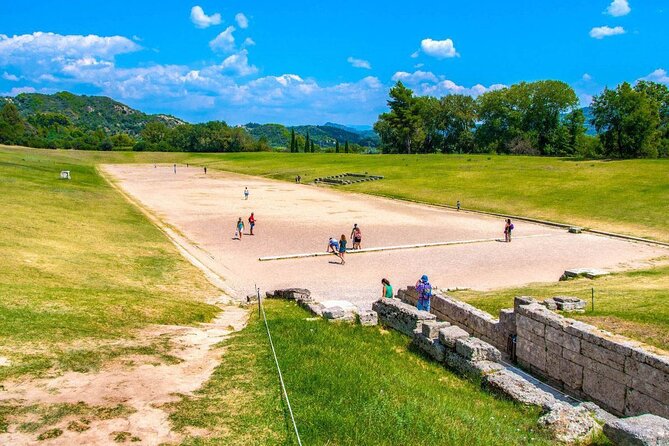
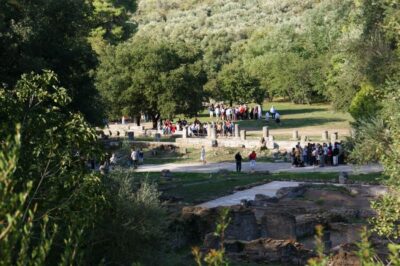
Day 1 finishes with an overnight near Olympia, and Day 2 begins in the “valley of the gods” with Ancient Olympia. This is UNESCO territory and the birthplace of the Olympic Games as the ancient Greeks practiced them, starting in 776 B.C. The sanctuary wasn’t just sports—it was a religious center with worship areas, sports spaces, and spaces for symposia.
When I picture what you should aim to see at Olympia, it’s the big three: temples dedicated to Zeus and Hera, the training areas, and the stadium setting that once held major games. The place is famous for a reason, but it’s even more impressive when you understand that the Olympics were wrapped in sacred ceremony and community rules.
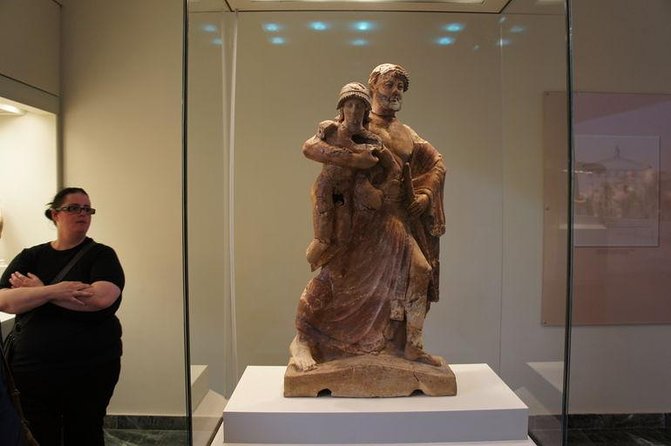
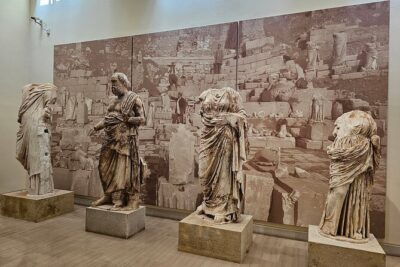
You’ll also have nearby access to museums connected to the sanctuary. The Olympia museum complex covers the sanctuary’s timeline across thousands of years, and it’s described as especially strong for ancient Greek bronzes. The practical upside: museums help you process what you see outdoors while the details are still fresh.
A small nuance matters here: the program doesn’t treat everything as free. The archaeological areas can be free, while museum entries often are not included. So plan your “museum priorities” in advance. If you’re someone who loves seeing statues and artifacts up close, budgeting for the museum time is worth it.
Traveling through Central Greece to Delphi: it’s part sightseeing, part transfer
After Olympia, the route moves through Sterea Ellada, Central Greece. You’ll pass by places like Thebes, Livadia, and Arachova before reaching Delphi. Even if you’re mostly in transit, this is where the private format earns its keep: you’re not hunting buses, and the driver can set context as scenery changes.
This is a good day to use the long-drive time correctly. I suggest you pack small snacks and water. The itinerary includes multiple regions in short order, and road time can turn hungry fast—especially if you’re splitting meals between travel and site breaks.
Day 3 Delphi: the oracle site and the symbols you should look for
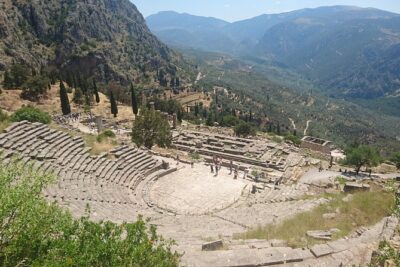
Delphi is where ancient Greece gets most philosophical, and the program makes sure you see the core elements rather than just a quick photo stop. Delphi sits at the foot of Mount Parnassos and was treated as the center of the world. The myth element is not just decoration: it’s tied to the sanctuary’s identity and how Greeks understood fate, prophecy, and sacred geography.
You’ll tour the sanctuary with a focus on the major ruins and sacred spaces, including Apollo’s area. The Temple of Apollo is central among the ruins and the narrative here is the long life of the building: built around the 7th century B.C., rebuilt after a fire, damaged again by an earthquake, and rebuilt multiple times through centuries.
A smart way to approach Delphi is to look for the symbols that repeat in your mind. The omphalos, or navel-stone, is one of them. It represents Delphi as the world’s center, explained through the myth of eagles sent from opposite directions meeting over the site. Even if the stone you see is a later copy, the real value for you is the idea it represented in ancient ritual life.
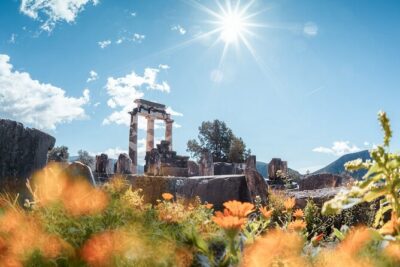
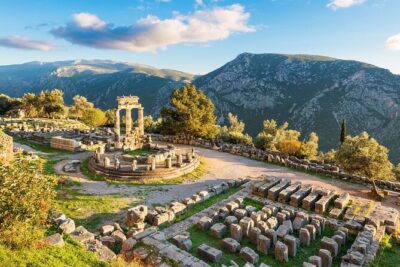
Next comes the Tholos of Athena Pronaia, a circular structure tied to Classical architecture and the sanctuary’s smaller cult structures. You might not instantly know what every ruin was used for, but this stop helps you see Delphi as a complete spiritual complex—not just one dramatic temple.
Delphi timing and ticket reality
Delphi’s sanctuary elements include both free and paid admission categories. Because entrance fees aren’t included in the price, Delphi is a moment to confirm which stops require tickets when you arrive. Pre-purchasing is specifically suggested because availability can be limited.
Day 3 to Day 4: the long road to Kalambaka and the Meteora shift
Once Delphi wraps up, you travel toward Kalambaka in Thessaly. This is where the itinerary changes tone. You’re leaving the oracle and entering an area known for mountain settings and the Meteora rock formations—one of Greece’s most distinctive places to see monastic life.
Kalambaka itself is where many visitors stay for Meteora. The program also highlights Kastraki, a town district built among the cliffs and a base for climbers and walkers. Even if you only get limited time, this region is visually dramatic because the monasteries dominate your sense of place.
And then Meteora begins.
Meteora monasteries: what makes the cliff setting worth the stairs
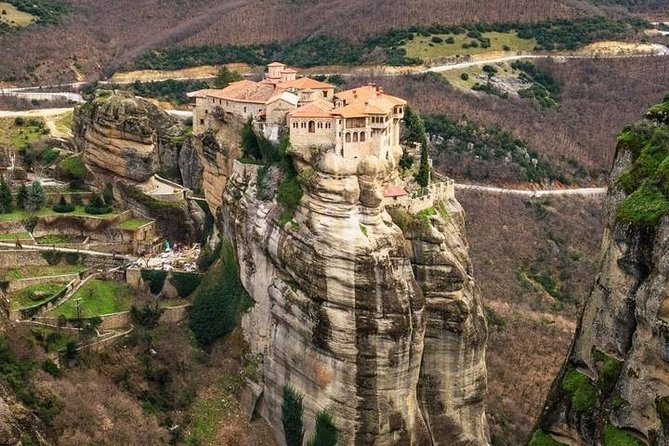
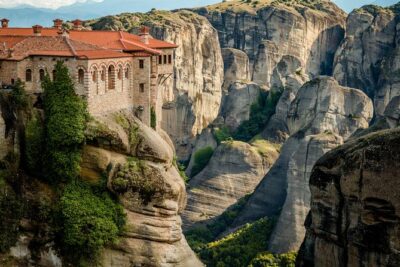
Meteora is a rock formation hosting one of Greece’s largest Eastern Orthodox monastic complexes, with six monasteries built on massive natural pillars. UNESCO inclusion since 1988 adds a layer of respect, but the real reason you’ll care is the sheer building logic: monks placed sacred spaces on top of difficult-to-reach pillars for centuries.
You can expect major viewing time here, plus stops at multiple monasteries. The big names you may visit include:
- Holy Monastery of the Great Meteoron (Transfiguration of the Saviour), the oldest and largest of the extant monasteries, founded shortly before the mid-14th century by Saint Athanasios the Meteorite.
- Holy Monastery of Saint Nicholas Anapafsas, tied to monastic life from the 14th century and renovated in the early 1500s, with frescoes in the small chapel area.
- Holy Monastery of Saint Stephen, historically active since the 12th century and completed through the 15th and 16th centuries, linked to Byzantine-era family names in the program details.
- Varlaam Monastery, associated with a hermit-anchorite Varlaam from the 14th century, with later construction updates and a winch tower mentioned in the monastery story.
- Holy Trinity Monastery (Agia Triada), where getting there can mean crossing a pedestrian path and climbing 145 carved steps after reaching the foot of the cliff.
- Holy Monastery of Rousanos – Saint Barbara, built into a present form in the 1500s and operating today as a nunnery after restoration in 1980.
Here’s the key practical point for you: Meteora is where comfort meets friction. If you have any knee trouble or dislike repeated stairs, plan to choose the monastery stops carefully and expect uneven, step-based access. Also, bring water and give yourself buffer time—your schedule can’t always account for how long you’ll want to stand and look outward.
Thermopylae and Leonidas: a fast history closer with big symbolism
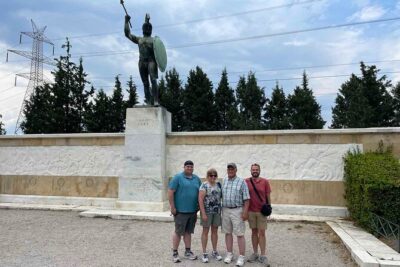
After Meteora, the itinerary adds Thermopylae and the Leonidas Monument on the return drive to Athens. Thermopylae’s name links to hot sulfur springs, and in Greek myth it connects to the entrance to Hades. In 480 B.C., it was the tight pass where Greeks resisted Persian forces under Xerxes.
The narrative centers on Leonidas and the stand at the narrow passage, including the betrayal that led to the Persians finding a route around the defenders. The program keeps this stop compact, around 20 minutes, which is about right if you’re trying to maintain energy after a full day of Meteora stairs.
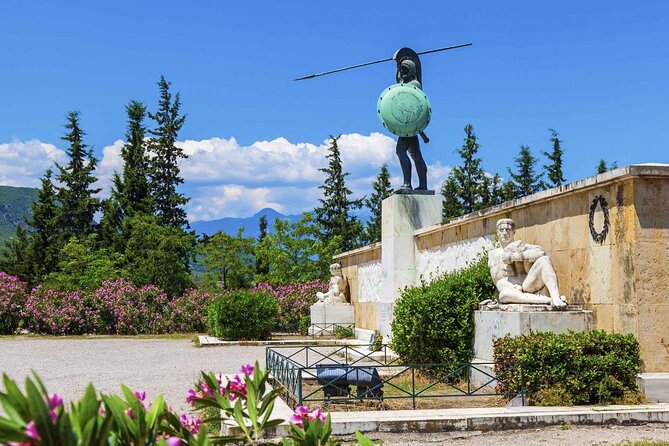
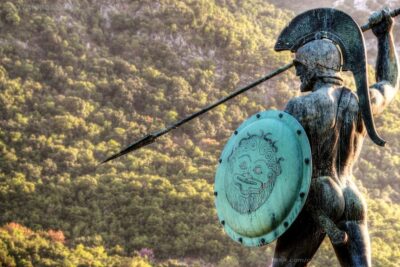
Then you’ll see the Leonidas memorial statue near the national road connecting Athens to Thessaloniki, with an inscription translating to Stranger, tell Spartans that we lay here, staying faithful to Sparta’s laws. It’s a simple ending, but it lands because the meaning of the battle is so widely known.
Finally, you drive back to Athens.
Price and value: what you’re really paying for
At $3,275.19 per group (up to 2), this is not a budget tour. The value equation comes down to two things: private transport plus meaningful time in major sites.
You’re paying for:
- A private, air-conditioned vehicle for long intercity stretches
- A professional English-speaking driver with cultural and historical knowledge up to site entrances
- Three mornings of breakfast included and three nights of comfortable accommodation with breakfast
- A plan that strings together multiple high-demand locations without you doing the schedule work
Entrance fees and museum tickets are not included, and food and drinks aren’t included either. So you should budget additional money for tickets, especially for paid museums and the monasteries at Meteora.
If you travel with a second person, the per-person cost drops sharply because the tour price is per group up to two. If you’re solo, you’ll pay the full group rate, which makes it even more important to maximize site time and ticket planning.
Driver vs. licensed guide: the inside-the-sites limitation
One detail that matters for your expectations: the driver is English-speaking and helps with history and culture until you enter archaeological sites and museums. But drivers are not licensed to accompany you inside.
If you want a state-licensed guide to walk you through interiors, the program says arrangements can be made for an extra cost subject to availability on booking day. For many ruins, you can still enjoy a self-guided experience, especially if you like reading signs and taking your time. But if you prefer a deeper spoken explanation inside museums and key structures, it’s worth discussing that add-on early.
What to pack and how to pace this 4-day push
This itinerary includes moderate walking and includes sites where you climb steps. Comfortable shoes matter more than anything else. For summer visits, the program specifically recommends sunscreen and hats, and you’ll feel that advice quickly at open-air ruins and sun-exposed viewpoints.
Also: because the car rides between Peloponnese, central Greece, and Thessaly can be long, snacks are smart. The route is set up for convenience, but the day still moves fast, and you may find meal timing not as flexible as you’d like.
Finally, consider buying admission tickets in advance if possible. The program notes there can be limited availability, and it can be hard to fix ticket issues on short notice.
Should you book the Classical Greece private tour?
Book it if you want a private plan that hits Delphi and Meteora as true priorities, not side quests. I think it’s a strong choice if you value having transportation and lodging handled, and you like the idea of learning while you move between regions.
Skip or rethink it if you’re very budget-sensitive, because entrance fees and museum/monastery tickets will add to the cost. Also rethink if the idea of stairs and repeated walking feels stressful—Meteora includes routes like 145 carved steps at one monastery, and the day is designed for sight time.
If you want classical Greece that feels organized, story-driven, and comfortable enough for a first-time or second-time visit, this tour is one of the more sensible ways to do it in four days.
FAQ
How long is the tour?
The duration is about 4 days, with timing described as approximate and subject to local traffic and conditions.
Is pickup available in Athens?
Yes. You can be picked up at your hotel main entrance, or if you are at a cruise port, outside the terminal exit door where the driver/guide waits with your name on a sign.
How many people are in a group?
It’s a private tour/activity, limited to only your group, with pricing listed per group up to 2 people.
What’s included in the price?
Included items are air-conditioned vehicle, private transportation, a professional English-speaking tour driver, and breakfast for 3 days.
Are entrance fees included for the archaeological sites and museums?
No. Entrance fees to archaeological sites and museums are not included.
Does the driver guide you inside museums and archaeological sites?
The driver can guide you with history and culture up to the point of entering sites and museums. Drivers are not licensed to accompany you inside. Licensed state tour guides can be arranged for an extra cost if available.
Is the tour offered in English?
Yes, it is offered in English, and confirmation is received at booking.
What kind of physical activity should I expect?
You should have a moderate physical fitness level. There is a moderate amount of walking, and comfortable shoes are recommended.
What is the cancellation policy?
You can cancel up to 6 days in advance for a full refund. If you cancel 2–6 full days before, it’s a 50% refund. Less than 2 full days before start time is not refunded.
Are admissions tickets recommended to be purchased ahead of time?
The program suggests pre-purchasing admission tickets since availability may be limited. It also notes the operator can buy tickets in advance under a small service fee.
More Tour Reviews in Athens
- Athens: Acropolis & up to 5 Archaeological Sites Combo Pass★ 4.2 · 13,904 reviews
- Athens: Acropolis, Parthenon & Acropolis Museum Guided Tour★ 4.8 · 9,316 reviews
- The Acropolis, Parthenon & Acropolis Museum Guided Tour★ 4.7 · 8,493 reviews
- Athens: Cape Sounion & Poseidon Temple Sunset Half-Day Trip★ 4.8 · 8,241 reviews
- Acropolis: Premium Acropolis and Parthenon Guided Tour★ 4.8 · 5,208 reviews
- Athens: Mythology of Delphi, Museum and Arachova Guided Tour★ 4.7 · 5,102 reviews
Just Your Group: More Private Days
- Best of Athens Half Day Private Tour★ 5.0 · 3,714 reviews
- Athens Full Day Private Tour★ 5.0 · 2,903 reviews
- Athens Greece Full Day private tour★ 5.0 · 785 reviews
- 4 Hours – Athens & Acropolis Highlights Private Tour★ 5.0 · 681 reviews
- Athens Full Day Private Tour★ 5.0 · 667 reviews
- Enjoy Cape Sounio Private Majestic Sunset With Seaside Dinner★ 5.0 · 613 reviews
Classical Greece, Coast to Coast
- 4-Day Classical Greece Tour: Epidaurus, Mycenae, Olympia, Delphi, Meteora★ 4.5 · 732 reviews
- Delphi, Thermopylae, Corycian Cave 300 Spartans Tour★ 5.0 · 492 reviews
- Athens: Delphi, Corycian Cave, and 300 Battlefield Day Trip★ 4.8 · 344 reviews
- 3-Day Classical Greece Tour: Epidaurus, Mycenae, Nafplion, Olympia, Delphi★ 4.5 · 342 reviews
- Delphi & Thermopylae Full Day Private Tour from Athens★ 5.0 · 259 reviews
- Thermopylae, Meteora and Delphi Private Full Day Tour★ 5.0 · 216 reviews
Fresh Off the Boat: New Athens Reviews


Classical Greece Multi-Day Tours, compared.
 ★ 4.54-Day Classical Greece Tour: Epidaurus, Mycenae, Olympia, Delphi, MeteoraFrom $766732 reviews
 ★ 5.0Delphi, Thermopylae, Corycian Cave 300 Spartans TourFrom $169492 reviews
 ★ 4.8Delphi, Corycian Cave, and 300 Battlefield Day TripFrom $170344 reviews
 ★ 4.53-Day Classical Greece Tour: Epidaurus, Mycenae, Nafplion, Olympia, DelphiFrom $520342 reviews
 ★ 5.0Delphi & Thermopylae Full Day Private Tour from AthensFrom $338259 reviews
 ★ 5.0Thermopylae, Meteora and Delphi Private Full Day TourFrom $287216 reviews
 ★ 4.84-Day Tour of Mycenae, Epidaurus, Olympia, Delphi & MeteoraFrom $747168 reviews
 ★ 5.0Thermopylae and Delphi Private Full-Day Tour from AthensFrom $270114 reviews
Browse the lists this tour appears in