
Reviewed · METEORA DAY TRIPS
Meteora Monasteries & Caves Unesco Wonder in Greece Day Trip
Meteora hits different on day trips. This is a private, small-group ride that removes the transport headache from Athens to Kalabaka, then hands you a full, paced visit of UNESCO Meteora monasteries plus Thermopylae. I like that the driver keeps the day moving with history talk in the car, and you get real time to look up at those rock-top churches instead of rushing through them like a checklist.
One thing to plan around: monastery entrances cost extra, and you’ll be walking stairs and paths that can get crowded—especially around Orthodox Easter and weekends.
In This Review
- Key Things to Know Before You Go
- Price and Logistics: Is $276.35 Actually Good Value?
- The Athens–Kalabaka Drive: Early Start, Real Comfort
- Kalabaka: Your Base for Meteora Views and Timing
- Entering Meteora: How the Monasteries Feel Up Close
- Varlaam Monastery: A Big Name Stop Worth Your Time
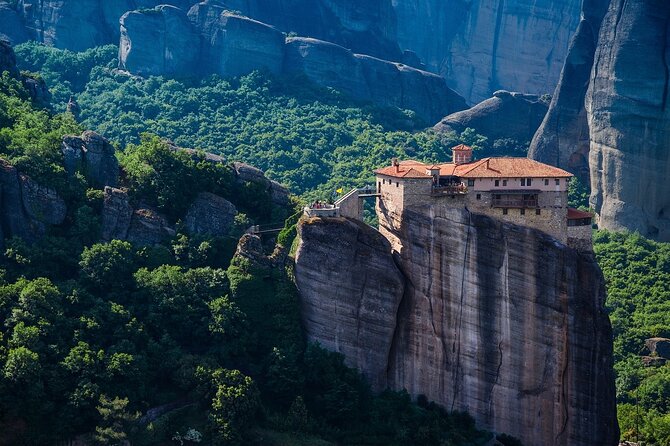
- Rousanou (Saint Barbara): The Stop That Adds Variety
- Natural History Museum Stop: When You Need a Break
- Thermopylae: The Pass, the Myth, and the Meaning
- Leonidas Monument and Battlefield Time: A 20-Minute Anchor
- Kastraki Lunch and Free Time: Where the Day Breathes
- Crowds, Weather, and the Real Walk to the Monasteries
- What the Driver Actually Does (and What It Doesn’t)
- Best For: Who Will Enjoy This Day Trip Most
- Should You Book This Meteora and Thermopylae Day Trip?
- FAQ
- How long is the Meteora and Thermopylae day trip?
- Will I be picked up from my hotel or the airport?
- How many monasteries will I visit?
- Are entrance tickets included in the price?
- What vehicle will I travel in?
- Is the tour guide inside the monasteries?
- What should I wear and bring?
Key Things to Know Before You Go

- Private pickup from Athens: hotel, Airbnb, or the port, so you skip meeting-point stress.
- Up to four monasteries total: budget for monastery fees (listed as €20 per person for four).
- A long day, but in comfort: WiFi, A/C, bottled water, plus roomy vehicles for small groups.
- Driver commentary, not site guiding: your driver explains in fluent English, but doesn’t go inside the sites with you.
- Built-in history stop at Thermopylae: quick but meaningful time at the battlefield and the Leonidas monument.
- A human touch: multiple guides are praised for flexibility and photo help, including phone charging and a hotspot.
Monasteries in the sky, more Meteora trips
- Athens: Meteora Monasteries Day Trip with Caves and Lunch
★ 4.7 · 4,670 reviews - Athens to Meteora: Monasteries, Caves & Seaside Stopovers
★ 4.7 · 2,958 reviews - Athens: Full-Day Meteora Tour with Local Guide & Greek Lunch
★ 4.8 · 2,101 reviews - Athens: Meteora Monasteries, Caves & Coastal Stopovers with Lunch
★ 4.5 · 1,432 reviews
Price and Logistics: Is $276.35 Actually Good Value?
At $276.35 per person for about 12 hours, this isn’t a budget day trip. But it’s priced like what it is: a full long-distance day with pickup, a private vehicle, and an English-speaking driver managing the drive back and forth.
Here’s where the value comes from for real life in Athens:
- You’re not figuring out routes, timetables, or connections. The drive is about 4.5 hours each way, so missing one bus or transfer can ruin the whole day.
- You’re riding in a car sized for your group (sedan for 1–3 people, mini van for 4–7), with WiFi, A/C, and bottled water.
- You’re visiting Meteora as an organized day, with time at multiple key points rather than only one monastery viewpoint.
The only “gotcha” is that entrance fees are not included, and the info notes €20 per person for four monasteries. Also, you’re not paying for a licensed museum/archaeology guide inside every site—your driver will guide you on the journey and help with context, while site explanations inside buildings may rely on what you can access on your own.
If you want Meteora with less friction and a smoother schedule, the price usually makes sense.
The Athens–Kalabaka Drive: Early Start, Real Comfort
This tour leaves Athens early in the morning. The travel time to Meteora is about 4.5 hours, and your pickup is either from your hotel/ apartment, or from the airport/ port (Piraeus). That matters because Athens days can be chaotic. The driver meets you with a name sign and brings you directly to the vehicle—no hunting around a terminal with your luggage or trying to decode a landmark.
On the road, you’ll get more than silence. The drivers are repeatedly praised for storytelling and keeping the drive from feeling like wasted time. Names that show up in the experiences include Chris, Christos, Costas, and Costas/Costas’ style of telling myths and history during the trip. One practical touch: at least one guide (Chris, in one account) provides a hotspot and phone charging so photos don’t drain your battery at the worst possible moment.
Comfort details are also handled for you:
- WiFi and A/C
- bottled water
- room based on small group size
- child/infant car seats available if booked in advance
The tradeoff: it’s still a long day. Plan on being out for around 12 hours, and treat the car time as part of the experience, not a nap you can fully count on.
Kalabaka: Your Base for Meteora Views and Timing
Once you arrive in the Meteora/Kalabaka area, you’ll be close enough to move quickly between overlooks and monastery access points. Kalabaka itself is a town seat of the municipality of Meteora, and it’s the main hub near the monasteries.
Why this stop matters on a day trip:
- It helps reduce backtracking. When you only have one day, time lost to detours feels brutal.
- It gives you an easy jump-off to the monastery roads and the viewpoints around Kastraki later.
Also, the day can run into crowds. One experience noted that the town of Meteora/Kalabaka can get busy on a Saturday, and holidays can add even more people. If you’re sensitive to crowds, I suggest mentally preparing for that and focusing on your monastery priorities first.
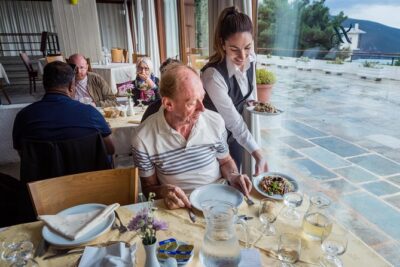
Worth comparing before you book this Athens tour:
Entering Meteora: How the Monasteries Feel Up Close
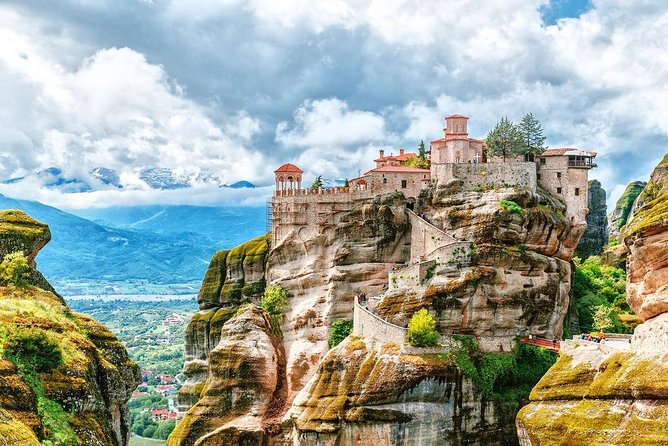
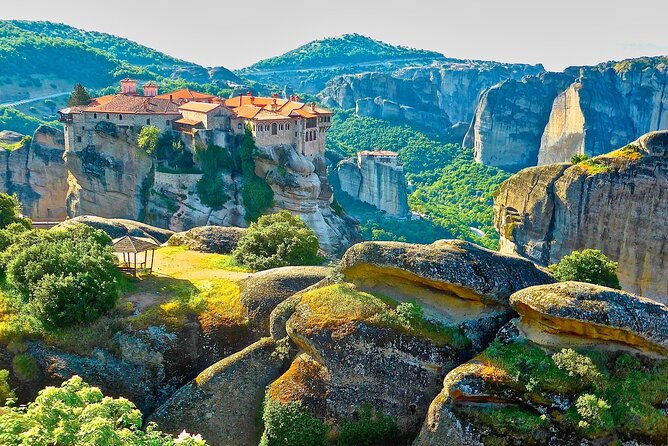
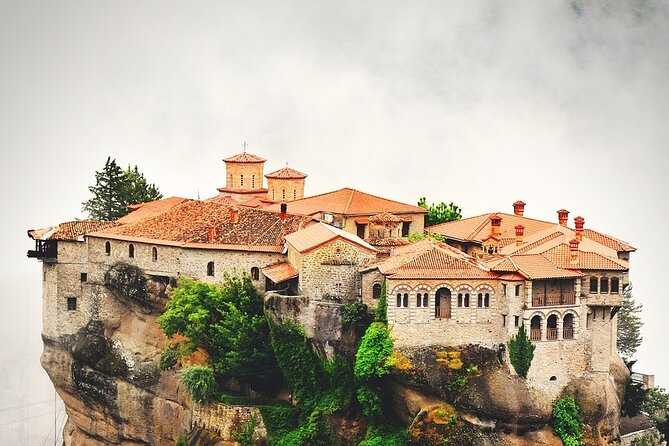
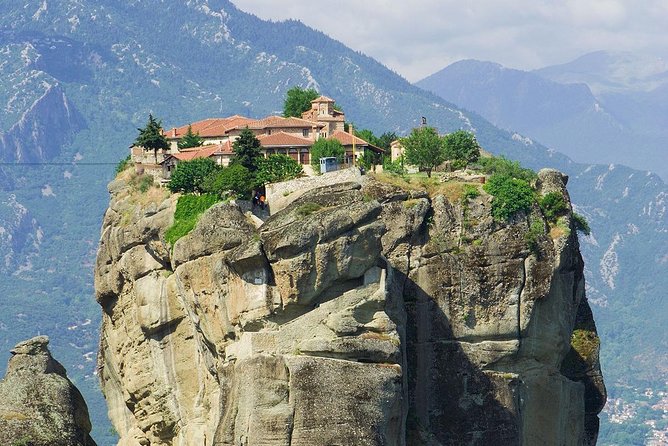
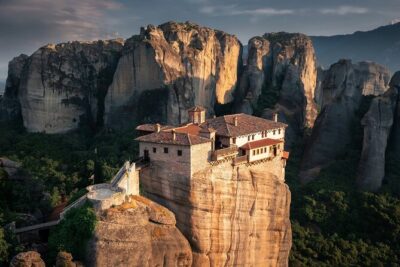
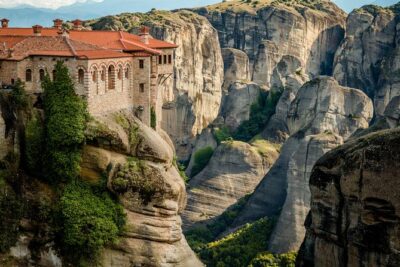
Meteora is one of those places where the photos don’t really prepare you. The monasteries perch atop giant rock pillars and rounded boulders, reaching up to about 400 meters (1200 ft) in height. These complexes are among the most important Eastern Orthodox monastic sites, with six monasteries today and an original 24 historically.
From the visitor side, what makes Meteora special isn’t only the spiritual setting. It’s the physics of it:
- The rock formations were shaped over millions of years, and the monasteries were split and weathered by wind and water.
- The buildings look like they’re clinging to the rock by faith and engineering, not just tourism marketing.
The tour’s plan aims to balance awe with logistics. You’ll arrive at Meteora and visit up to three monasteries as part of that block, then add more specific monastery stops later (including Varlaam and Rousanou). The phrasing “up to” matters because some monasteries can be closed for maintenance, so your final list might shift day to day.
One thing I’d treat as non-negotiable: dress and walking comfort. Meteora is full of stairs and uneven stone paths. A strong piece of advice from an experience: wear comfortable shoes and cover your legs and shoulders out of respect for the religious nature of the sites.
Varlaam Monastery: A Big Name Stop Worth Your Time
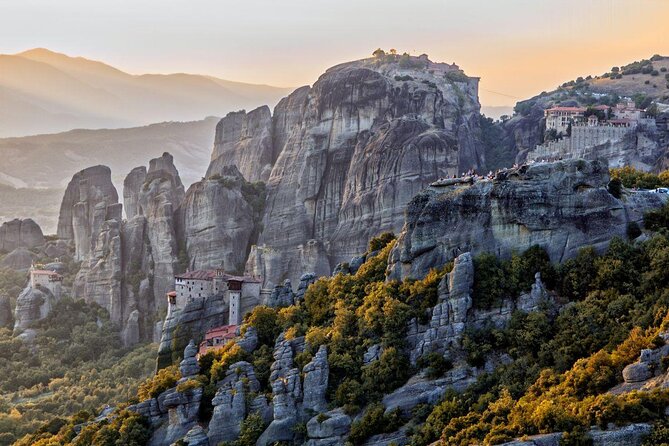
Varlaam is a major Meteora monastery, and the plan includes a dedicated visit there (about 1 hour). You should expect:
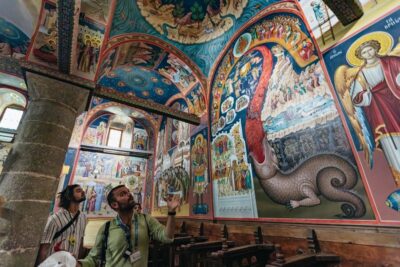
- More time inside to look at details and religious art
- Some uphill walking and interior stair sections
- A chance to slow down and absorb what it means to build and live on vertical rock
It’s also the type of place where crowds can build, because it’s a key name on nearly every Meteora route. If you’re the type who likes quiet, go in ready to wait a bit for the best angles and don’t let the flow of people steal your calm.
Rousanou (Saint Barbara): The Stop That Adds Variety
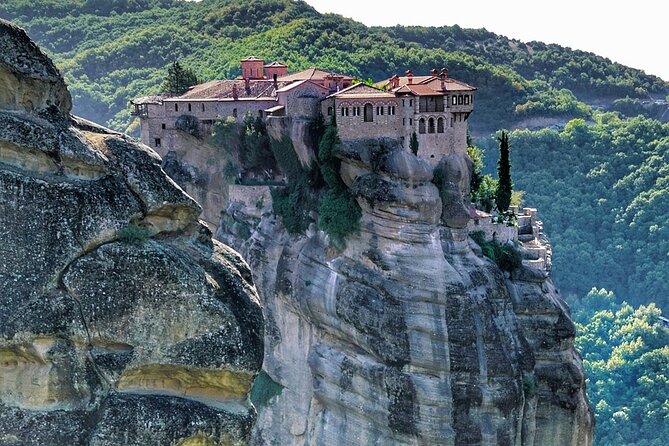
Rousanou—also connected with Saint Barbara—is another monastery visit on this day trip (about 1 hour). Adding Rousanou after Varlaam helps because you don’t just see one “style” of monastery life. Even though the setting is the same cliff-and-boulder world, each monastery gives a different feel through layout, fresco focus, and how the structures sit against the rock.
In one account, visitors described seeing 15th-century frescoes and religious artifacts, and that kind of detail tends to be exactly what monastery time is for. If the weather is poor (rain, fog, wind), Rousanou still gives you a solid look—just bring the right expectations: colder conditions can make walking more tiring, and you’ll move slower.
Natural History Museum Stop: When You Need a Break
The tour summary says you’ll also visit the Natural History Museum as part of the day. Even without a detailed itinerary breakdown, the practical value is clear: it breaks up the physical pace.
Meteora is all stairs, viewing platforms, and rock steps. A museum stop lets you:
- rest your legs for a bit
- reset mentally
- keep the day balanced between faith sites and something lighter on your body
If you’re traveling with kids or anyone who tires easily, this kind of mid-day pivot can be the difference between a fun day and a frustrating one.
Thermopylae: The Pass, the Myth, and the Meaning
Thermopylae comes after you leave Meteora behind, with a stop designed to be quick but focused.
The story here is the Battle of Thermopylae between the Spartans and the invading Persian forces under Xerxes. You’ll also learn about the narrow coastal passage in antiquity and the hot sulphur springs tied to the name Thermopylae (Hot Gates). The famous epitaph associated with Simonides of Ceos is part of what people carry away: the idea of laws obeyed and a final stand.
Tour timing is short (about 20 minutes), so don’t expect a full museum-level explanation. Instead, use it like a historical snapshot:
- Look at the battlefield space as a geographic shape—narrow passage, hills, and coast
- Let the story give context to the terrain
- Then move on before you burn out on quick stops
If you like myth and history in the same breath, this is one of the stronger pairings with Meteora in a single day.
Leonidas Monument and Battlefield Time: A 20-Minute Anchor
Next up is the battlefield area plus a dedicated stop at the Leonidas Monument (another about 20 minutes). Even though it’s brief, it works well because Leonidas is the symbol most visitors want to connect with directly after learning the battle story.
The benefit of including this on the same day:
- It ties the earlier Thermopylae history to a physical marker
- It gives you a photo anchor
- It reinforces the idea that the pass mattered strategically, not just romantically
One practical note: if crowds are heavy and you’re moving fast, keep your time budget mentally ready. That 20 minutes can feel like five if you get stuck waiting for the best viewpoint.
Kastraki Lunch and Free Time: Where the Day Breathes
You’ll get about 1 hour of free time in Kastraki, a village near Meteora. This is where you can grab lunch at a traditional Greek tavern or do some casual shopping.
Why this stop helps:
- It prevents the day from turning into a nonstop march
- It gives you an area where people actually relax between viewpoints
- It lets you buy water or snacks if your day started earlier than planned
If you’re traveling with a child, this extra buffer can also be useful. One experience highlighted how a guide (Vasilis, in that account) was very patient and accommodating with kids, while still keeping the schedule workable. Even if your group doesn’t have kids, that patience translates to a smoother day for everyone.
Crowds, Weather, and the Real Walk to the Monasteries
This tour can run beautifully—or it can feel cold and tight—depending on weather and timing.
From the information you have:
- Meteora requires good weather (if canceled due to poor conditions, you’re offered a different date or a full refund).
- The monasteries are visible from viewpoints, but to actually see interiors and frescoes you’ll do real climbing.
From the on-the-ground experiences:
- Cold, wind, and light rain can happen, even when you arrive with high hopes.
- Fog may clear later, giving you a better second half.
- Crowds can be surprising for the time of year, and Orthodox Easter holiday can add local visitors.
My practical advice:
- Wear layers. Meteora can feel colder when wind hits the rocks.
- Carry a small umbrella or rain shell if the forecast is iffy.
- Plan for stairs. Even if you take breaks, you’ll still feel the physical work.
What the Driver Actually Does (and What It Doesn’t)
This is important because it affects your expectations.
Your driver is described as:
- English-speaking
- well-versed in Greek history
- not licensed to accompany you into sites
So think of the driver as:
- your navigation and timing expert
- your story engine during the ride
- your practical helper for where to go, what to notice, and how to manage your day
Your time inside monuments may include:
- self-guided looking
- whatever signage and in-site interpretation you can access
The good part: the driver can answer questions throughout. In multiple accounts, guides like Chris and Costas were praised for being entertaining and flexible, and for giving tips on what to look for at the stops.
Best For: Who Will Enjoy This Day Trip Most
This fits best if you want:
- a stress-free Meteora day without figuring out transport
- a structured itinerary that hits Meteora plus Thermopylae
- small-group attention (maximum 7 travelers)
- comfortable long-ride logistics
It’s also a strong choice if you’re traveling with mixed ages. One account specifically mentioned the trip being accommodating for a 4-year-old, with the driver flexible enough to match family needs.
If you’re the type who loves unplanned wandering with no schedule at all, you might feel the constraints of a full day. But if you want your Meteora experience to actually happen smoothly, this format is hard to beat.
Should You Book This Meteora and Thermopylae Day Trip?
Book it if you:
- value pickup and a private vehicle for a long drive
- want to see multiple monasteries in one day
- don’t want to spend your Athens hours on logistics
- like history storytelling during transit
Consider something else if you:
- hate stairs and are unsure you can manage monastery steps
- want a fully guided experience inside every archaeological or religious site (since the driver isn’t licensed to accompany you into the sites)
- are trying to keep costs ultra-low after the stated tour price, since monastery entrances are extra
Overall, I’d call this a smart “one-day hit” for Meteora. You get the UNESCO rock-top experience, meaningful Thermopylae context, and a day that’s set up to run smoothly—provided you show up ready for the walking and the possibility of crowds or weather changes.
FAQ
How long is the Meteora and Thermopylae day trip?
It runs about 12 hours total, including the drive from Athens to Meteora (around 4.5 hours each way).
Will I be picked up from my hotel or the airport?
Yes. Pickup is offered from Athens hotels/Airbnbs, and also from the airport or the port. Your driver meets you with a name sign.
How many monasteries will I visit?
The plan includes visits to four monasteries total, with the monasteries visit entrance fee listed as €20 per person. The schedule notes that you may visit up to three monasteries at Meteora during the arrival block, plus additional specific stops.
Are entrance tickets included in the price?
No. Entrance fees are not included. The info specifically lists monastery visits (four monasteries) as €20 per person. Lunch costs are also not included.
What vehicle will I travel in?
For small groups 1–3 people, you’ll use a luxury sedan. For 4–7 people, you’ll use a comfortable mini van. Car seats are available if you book in advance for infants/children.
Is the tour guide inside the monasteries?
Your driver is not licensed to accompany you inside sites, though they are knowledgeable and can answer questions in fluent English. You’ll visit the sites on your own during the stop times.
What should I wear and bring?
Bring comfortable shoes for climbing stairs and cover legs and shoulders as a sign of respect at religious sites. The day can also be cold or windy, so layers help if weather turns.
More 1-Day Tours in Athens
- Athens: Cape Sounion & Poseidon Temple Sunset Half-Day Trip★ 4.8 · 8,241 reviews
- Athens: Meteora Monasteries Day Trip with Caves and Lunch★ 4.7 · 4,670 reviews
- From Athens: Small-Group Delphi, Museum & Arachova Day Trip★ 4.8 · 2,476 reviews
- Delphi English Day Trip from Athens with Official Guide★ 4.5 · 2,199 reviews
- Historical Delphi One Day Tour with Arachova Stop & Expert Guide★ 4.5 · 1,247 reviews
- Premium Delphi Day Trip with an Expert Guide, Museum & Lunch★ 4.5 · 1,100 reviews
More Tour Reviews in Athens
- Athens: Acropolis & up to 5 Archaeological Sites Combo Pass★ 4.2 · 13,904 reviews
- Athens: Acropolis, Parthenon & Acropolis Museum Guided Tour★ 4.8 · 9,316 reviews
- The Acropolis, Parthenon & Acropolis Museum Guided Tour★ 4.7 · 8,493 reviews
- Athens: Cape Sounion & Poseidon Temple Sunset Half-Day Trip★ 4.8 · 8,241 reviews
- Acropolis: Premium Acropolis and Parthenon Guided Tour★ 4.8 · 5,208 reviews
- Athens: Mythology of Delphi, Museum and Arachova Guided Tour★ 4.7 · 5,102 reviews
The Monasteries of Meteora
- Athens: Meteora Monasteries Day Trip with Caves and Lunch★ 4.7 · 4,670 reviews
- Athens to Meteora: Monasteries, Caves & Seaside Stopovers★ 4.7 · 2,958 reviews
- Athens: Full-Day Meteora Tour with Local Guide & Greek Lunch★ 4.8 · 2,101 reviews
- Athens: Meteora Monasteries, Caves & Coastal Stopovers with Lunch★ 4.5 · 1,432 reviews
- Meteora Monasteries & Caves DayTrip from Athens with Greek Lunch★ 4.5 · 879 reviews
- From Athens: Delphi and Meteora 2-Day Guided Tour★ 4.5 · 825 reviews
Fresh Off the Boat: New Athens Reviews

Meteora Day Trips, compared.
 ★ 4.7Meteora Monasteries Day Trip with Caves and LunchFrom $874,670 reviews
 ★ 4.7Athens to Meteora: Monasteries, Caves & Seaside StopoversFrom $832,958 reviews
 ★ 4.8Full-Day Meteora Tour with Local Guide & Greek LunchFrom $822,101 reviews
 ★ 4.5Meteora Monasteries, Caves & Coastal Stopovers with LunchFrom $881,432 reviews
 ★ 4.5Meteora Monasteries & Caves DayTrip from Athens with Greek LunchFrom $87879 reviews
 ★ 4.5From Athens: Delphi and Meteora 2-Day Guided TourFrom $271825 reviews
 ★ 4.54-Day Classical Greece Tour: Epidaurus, Mycenae, Olympia, Delphi, MeteoraFrom $766732 reviews
 ★ 4.5Meteora Monasteries, Hermit Caves Tour with PickupFrom $87724 reviews
Browse the lists this tour appears in