

Reviewed · ATHENS WALKING TOURS
Myths and Legends of Athens Walking Tour
Greek myths turn real when you walk. This Athens tour uses storytelling to connect gods, heroes, and the city around you. You move at an easy pace through central neighborhoods and museums, and you come away with names you can actually place on the map.
Two things I especially like: the mix of myth + actual places (not just lectures), and the guide’s knack for making the stories fun and clear. One guide, Kara (as named in one review), also has an entertaining, friendly way of explaining the myths, including a modern-day feel that helps everything stick.
One possible drawback: it’s still a guided walking tour. If you prefer long museum time or you hate even light walking, you might want to plan more downtime on your own afterward.
In This Review
- Key highlights to know before you go
- A guided myth walk that starts with the big-picture gods
- The Academy of Athens stop: where creation myths start to make sense
- Numismatic Museum: Trojan War stories you can place in your head
- National Garden break: shade, short play, and fate you can act out
- Syntagma Square fountain: modern Athens with ancient myth fingerprints
- Plaka stroll near the Acropolis area: myths in everyday streets
- Price and what $41.70 actually covers
- Who this tour is best for (and who should consider alternatives)
- Practical tips for a smooth Athens evening walk
- Should you book this Athens myths walking tour?
- FAQ
- How long is the Myths and Legends of Athens Walking Tour?
- Where does the tour start and end?
- Is the tour in English?
- How big is the group?
- Are museum admissions included?
- Do I need good weather for the tour?
- Can I get a refund if my plans change?
- Are service animals allowed?
- Is it easy enough for most people to join?
Key highlights to know before you go

- A tight group (max 10) means you’re less lost and more part of the story.
- Academy of Athens + Numismatic Museum keep the mythology grounded with free entry stops.
- National Garden break includes short, playful improv inspired by the gods.
- Syntagma Square fountain moment shows how myth shows up in Athens even today.
- Plaka stroll near the Acropolis area gives you that classic neighborhood atmosphere.
- End near Monastiraki so it’s easy to keep exploring without backtracking.
On foot through Plaka and beyond
- Acropolis and Parthenon Guided Walking Tour
★ 5.0 · 4,755 reviews - Greek Food Walking Tour in Athens
★ 5.0 · 4,740 reviews - Athens: Guided Greek Food Walking Tour with Tastings
★ 4.9 · 2,859 reviews - Acropolis monuments & Parthenon Walking Tour with Optional Acropolis Museum
★ 5.0 · 2,678 reviews
A guided myth walk that starts with the big-picture gods

Athens can feel like information overload when you’re doing it alone. This tour avoids that problem by giving you a story thread you can follow. You’ll start in central Athens at Korai 4 (near public transit), then you’ll work your way through a handful of stops without needing to plan anything.
The group stays small, so the experience feels more like a shared evening walk than a conveyor belt. The guide format matters here: multiple reviews call out storytelling that works for adults and kids, including a family where two children ages 10 and 12 stayed engaged. You also get a slower, steadier rhythm, with little need for steep climbing.
One practical bonus: this is timed well for an evening feel. It’s long enough to be satisfying (around 2 hours 15 minutes) but not so long that you’re still dragging yourself at bedtime. If you’re arriving in Athens and want a smart way to get your bearings fast, this is one of the better starting points.
The Academy of Athens stop: where creation myths start to make sense
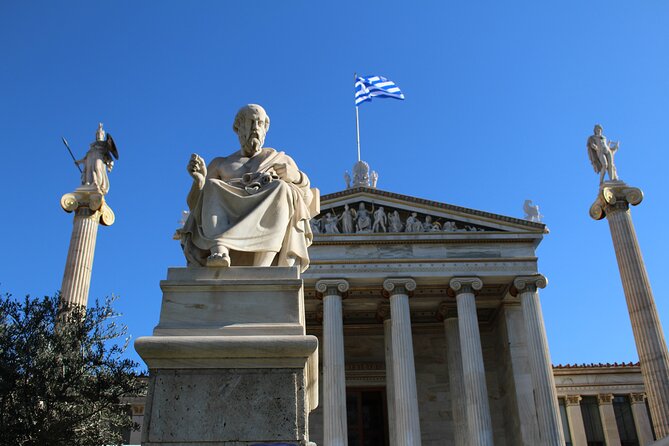
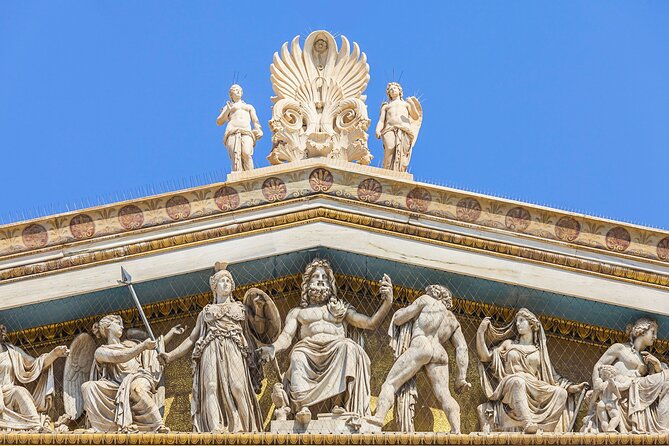
Your first major stop is the Academy of Athens, and the focus is broad: the main gods and goddesses, plus the Greek mythology version of how the world gets made. This is a good way to begin because it gives you names, roles, and relationships right up front.
What I like about starting here is that you’ll later hear myth references everywhere in Athens. When you’ve just been introduced to the gods as characters instead of distant textbook names, you’ll spot those connections more easily in museums and street scenes. It also helps that the stop is planned for about 50 minutes, so you’re not rushed through the basics.
The Academy stop also includes a free admission ticket for your tour time, which is part of what keeps the price feeling fair. You’re paying for guided interpretation and a route that strings these places together, not just for someone to point at buildings.
A minor consideration: museum-time storytelling can be a lot if you’re already exhausted from the day. If that’s you, pace yourself with water and consider grabbing a light snack before the meeting.
Numismatic Museum: Trojan War stories you can place in your head
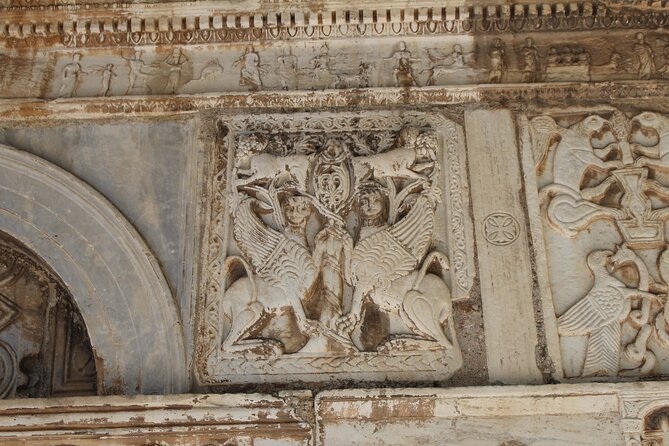
Next comes the Numismatic Museum, where the emphasis shifts from creation myths to one of Greece’s most famous story engines: the Trojan War. The guide frames it through the heroes and the gods involved, so you learn the cast and the stakes, not just the battle scene.
This is a strong stop if you want mythology with context. “Trojan War” gets thrown around a lot, but this kind of guided walkthrough helps you understand why it mattered and how Greek myths used heroes and divine interference to explain human drama. You get roughly 30 minutes here, which is long enough to leave with names and themes, but short enough that you still move on while the story energy stays high.
Another reason this works for value: the admission is free for this tour stop too. That means you’re not stacking multiple paid museum tickets on top of the walking tour price. You’re getting a structured route through multiple venues without the usual financial and planning headaches.
If you’re traveling with kids, this part can be especially helpful. One review described how the guide’s storytelling captivated children, and the Trojan War is exactly the kind of myth that sparks questions and follow-up curiosity.
Athens at walking pace, more routes
National Garden break: shade, short play, and fate you can act out

Then you hit a very different scene: the National Garden. After museum rooms and street noise, this break matters. It’s quiet, green, and it gives your brain a breather from mythology facts. You’ll spend about 15 minutes here, and it’s used in a clever way.
Instead of turning the garden into just another stop-by-stop explanation, the guide adds a light improv storytelling game inspired by the whims of the gods and the chaos of fate. The point is not to turn you into an actor. It’s to help you experience the myths as something you can “try on” for a few minutes, which makes the characters and themes feel less distant.
What I like about this approach is that it breaks the usual walking-tour pattern. Many tours spend the whole time talking. Here you get a small reset: shade, atmosphere, and a quick interactive moment. If you’ve ever learned a myth and then forgotten it a day later, this kind of playful memory trick can help.
A consideration: improv-style activities aren’t everyone’s favorite. If you’d rather just listen, you can still enjoy the garden scene and the story framing. But if you hate participation, keep that in mind.
Syntagma Square fountain: modern Athens with ancient myth fingerprints
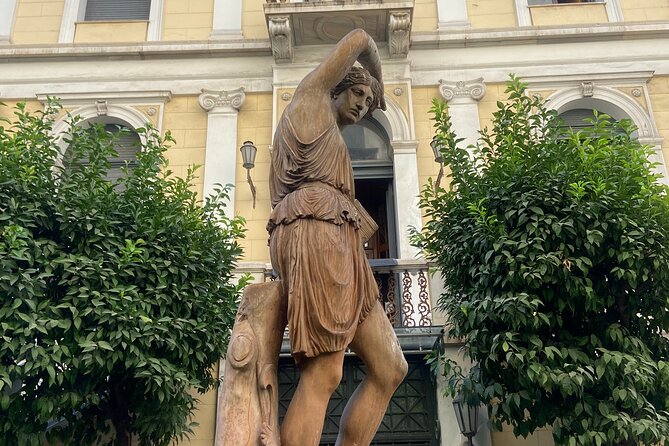
After the garden, you move to Syntagma Square Fountain for a short stop of about 10 minutes. The guide uses this moment to connect mythology to Athens as it exists right now. You’ll have a chance to admire a statue and learn about a mysterious god, plus how Greek mythology still shows up around you today.
This is one of my favorite types of stops because it solves a common problem: people come to Athens expecting ruins and don’t realize how long myth language stuck around. When the guide ties the story to the real buildings and public art in central Athens, you start seeing the city differently. The myths stop being just “ancient stuff” and become part of the city’s visual vocabulary.
Also, the short timing is practical. You don’t get trapped in a long explanation when you could just be taking in the main sights nearby. Ten minutes is enough to plant the idea and move on.
If you’re the kind of person who loves symbolism, this stop will feel satisfying. If you’re mainly looking for a big Acropolis moment, you’ll still get something out of it, but it’s more about perspective than wow-factor.
Plaka stroll near the Acropolis area: myths in everyday streets

Your final walking chunk is in Plaka, near the Acropolis area. This section runs about 30 minutes and is more neighborhood-focused than museum-focused. You’ll stroll through the older area of Athens and talk about myths connected to Athens itself.
This is where the tour pays off most for first-timers. You’ve learned the gods, you’ve met major myth stories like the Trojan War, you’ve had a garden reset, and now you’re walking through streets where that mythology can be referenced in everyday sights. Plaka’s charm helps, but the guide’s job is to keep the thread going so it doesn’t become just a casual stroll.
One review called out how the guide tied storytelling to modern day buildings, which is exactly what you want in Plaka. It’s how you keep the experience from feeling like a theme park version of Athens. You’re still in the real neighborhood, at real street level, learning the myth connections as they appear.
You end near Monastiraki, which is a smart finish point. It gives you easy access to more wandering, dinner options, and the feeling that your walking tour smoothly transitions into independent time.
Price and what $41.70 actually covers
At about $41.70 per person, you’re not buying a “museum tickets only” deal. You’re paying for three things that add up: a storytelling guide, a route across multiple key points in central Athens, and free admission time at venues included in the plan.
Because the tour covers stops where entry is free for your tour time, you avoid the common trap of paying for a guide plus separate museum ticket costs. You also avoid the planning grind of figuring out which small sites connect well by foot. With a small group limit, you’re also paying for a guided experience that doesn’t feel too crowded.
Duration matters too. At roughly 2 hours 15 minutes, you’re getting a meaningful introduction without spending half a day doing only museums. If you’re on a tight itinerary, the timing gives you a strong “myths orientation” before you choose what to do next in Athens.
One note on booking timing: the experience is often booked about 28 days in advance on average. That’s a clue it’s a popular choice for first-time myth seekers, families, and people who want an easy evening plan. If you’re traveling during a busy season or on a specific date, it’s smart to lock it in earlier.
Who this tour is best for (and who should consider alternatives)
This is a great fit if you fall into any of these groups:
- You’re new to Greek mythology and want the basics explained clearly.
- You prefer learning through stories, not through a wall of dates.
- You like a mix of museums and city wandering.
- You’re traveling with kids and want an engaging pace.
Reviews also point out that the tour works well for families, including kids ages 10 and 12. If your children like questions, this kind of guided myth storytelling can turn into a mini conversation at each stop.
It’s also ideal if you’re the kind of traveler who wants to understand what you’re looking at. The tour includes time focused on major gods, the Trojan War, and myth references in public spaces. That’s the kind of knowledge that makes later sights more meaningful.
Who might want to think twice? If you dislike walking even at an easy pace, or if you want a deep, solo museum experience with no movement, you may prefer a sit-down museum option. This tour’s whole design is movement plus storytelling, and it keeps you on a schedule.
Practical tips for a smooth Athens evening walk
A few small moves can make a big difference with a walking tour like this.
First, dress for the weather. The experience requires good weather, and Athens can swing fast from comfortable to too hot or too windy depending on the day. If it’s not cooperating, you may be offered a different date or a full refund, but it’s better to plan like you’re going to walk.
Second, wear comfortable shoes. This is not a marathon, but you’ll be on your feet across multiple stops, including indoor museum time and outdoor streets.
Third, use transit to get to the meet-up area. The start near Korai 4 is described as convenient to public transportation, which helps you avoid parking stress and saves energy.
Fourth, plan your end-of-tour evening. Because you finish near Monastiraki, you’ll likely want a dinner or a stroll right after. It’s a natural transition point, so don’t schedule something far away immediately.
Finally, keep expectations realistic about pacing. Reviews describe the tour as slow and steady with not too much walking or climbing. That’s a big plus for many people, but it doesn’t eliminate movement.
Should you book this Athens myths walking tour?
If you want an Athens introduction that’s story-driven, easy on your legs, and built around a route you can follow without thinking too hard, I think this is a strong choice. It uses the city itself as the teaching tool: gods at the Academy of Athens, myth through the Trojan War at the Numismatic Museum, a calm reset in the National Garden, a myth “still here” moment at Syntagma Square, and then Athens neighborhood atmosphere in Plaka.
The price feels reasonable for what you’re getting, especially with the included free admission time at the stops. The small group size also makes it feel more personal, and multiple reviews specifically praise how entertaining the guide is.
Only skip it if you hate walking tours or you want a purely self-paced museum day. Otherwise, this is one of the best ways to turn Greek mythology from names on a page into something you can recognize while you’re actually standing in Athens.
FAQ
How long is the Myths and Legends of Athens Walking Tour?
It runs for about 2 hours 15 minutes.
Where does the tour start and end?
It starts at Korai 4, Athina 105 64, Greece, and ends in Monastiraki, Athens.
Is the tour in English?
Yes, the tour is offered in English.
How big is the group?
The tour has a maximum of 10 travelers.
Are museum admissions included?
Admission tickets for the stops listed (Academy of Athens and Numismatic Museum, plus the other stops) are included as free for your tour time.
Do I need good weather for the tour?
Yes. The experience requires good weather, and if it’s canceled due to poor weather, you’ll be offered a different date or a full refund.
Can I get a refund if my plans change?
Yes. Free cancellation is available up to 24 hours in advance for a full refund.
Are service animals allowed?
Service animals are allowed.
Is it easy enough for most people to join?
Most travelers can participate, and the pace is described as slow and steady with not too much walking or climbing required.
More Tours in Athens
- Athens: Acropolis, Parthenon & Acropolis Museum Guided Tour★ 4.8 · 9,316 reviews
- The Acropolis, Parthenon & Acropolis Museum Guided Tour★ 4.7 · 8,493 reviews
- Acropolis: Premium Acropolis and Parthenon Guided Tour★ 4.8 · 5,208 reviews
- Athens: Mythology of Delphi, Museum and Arachova Guided Tour★ 4.7 · 5,102 reviews
- Acropolis and Parthenon Guided Walking Tour★ 5.0 · 4,755 reviews
- Greek Food Walking Tour in Athens★ 5.0 · 4,740 reviews
More Tour Reviews in Athens
- Athens: Acropolis & up to 5 Archaeological Sites Combo Pass★ 4.2 · 13,904 reviews
- Athens: Acropolis, Parthenon & Acropolis Museum Guided Tour★ 4.8 · 9,316 reviews
- The Acropolis, Parthenon & Acropolis Museum Guided Tour★ 4.7 · 8,493 reviews
- Athens: Cape Sounion & Poseidon Temple Sunset Half-Day Trip★ 4.8 · 8,241 reviews
- Acropolis: Premium Acropolis and Parthenon Guided Tour★ 4.8 · 5,208 reviews
- Athens: Mythology of Delphi, Museum and Arachova Guided Tour★ 4.7 · 5,102 reviews
Athens on Foot, Continued
- Acropolis and Parthenon Guided Walking Tour★ 5.0 · 4,755 reviews
- Greek Food Walking Tour in Athens★ 5.0 · 4,740 reviews
- Athens: Guided Greek Food Walking Tour with Tastings★ 4.9 · 2,859 reviews
- Acropolis monuments & Parthenon Walking Tour with Optional Acropolis Museum★ 5.0 · 2,678 reviews
- Athens Acropolis and Parthenon Walking Tour★ 4.5 · 1,355 reviews
- Acropolis, Parthenon & Athens Old City Heritage Walking Tour★ 4.5 · 876 reviews
Fresh Off the Boat: New Athens Reviews





Athens Walking Tours, compared.
 ★ 5.0Acropolis and Parthenon Guided Walking TourFrom $414,755 reviews
 ★ 5.0Greek Food Walking Tour in AthensFrom $874,740 reviews
 ★ 4.9Guided Greek Food Walking Tour with TastingsFrom $812,859 reviews
 ★ 5.0Acropolis monuments & Parthenon Walking Tour with Optional Acropolis MuseumFrom $422,678 reviews
 ★ 4.5Athens Acropolis and Parthenon Walking TourFrom $411,355 reviews
 ★ 4.5Acropolis, Parthenon & Athens Old City Heritage Walking TourFrom $34876 reviews
 ★ 5.0Athens Authentic Greek Food Walking Tour (Small Group)From $83809 reviews
 ★ 4.9Ultimate Food Walking Tour with 15 TastingsFrom $93567 reviews
Browse the lists this tour appears in