
Reviewed · WORKSHOPS
Philosophy Experiential Workshop at Plato’s Academy Park -Athens
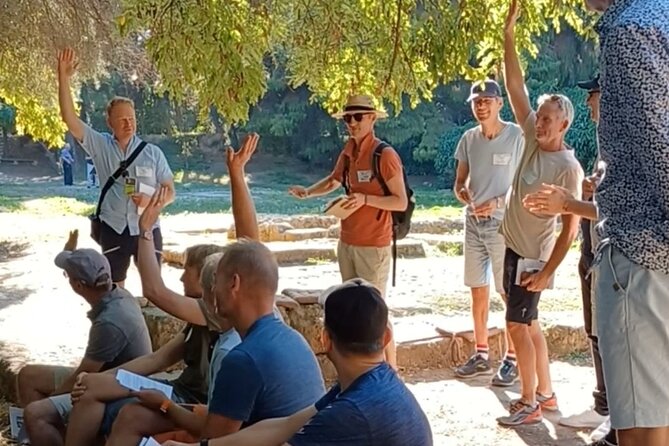
Philosophy, in the ruins of an ancient school. At Plato’s Academy Park you don’t just look at history—you work with texts, talk through ideas, and act out arguments in a real outdoor setting tied to the roots of Western philosophy, with a Socratic-method feel to it.
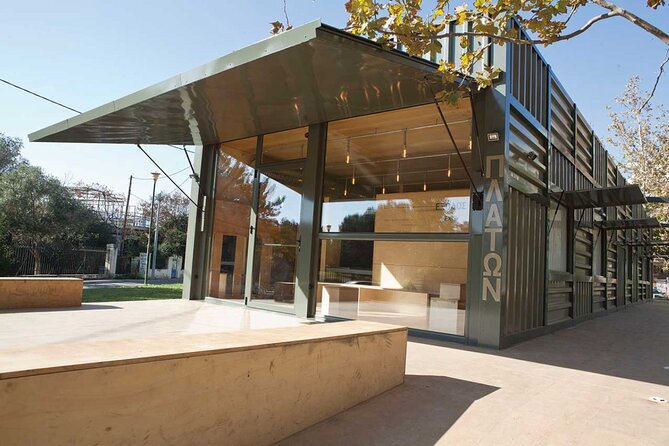
I especially liked two parts. First, you start at the small Plato’s Digital Museum, which has a free entrance and gives you quick context before you step into the park. Second, the session turns into an active discussion of Plato’s Allegory of the Cave, then ends with a role-play debate using an ancient-style water-timer replica.
One thing to consider: this is weather-dependent since it’s outdoors, and museum access can vary because opening days/hours can change.
In This Review
- Key things to know before you go
- Why Plato’s Academy Park feels different from a standard Athens stop
- Stop at Plato’s Digital Museum: a short start that saves you later
- Walking the Academy Park: from ruins to a clear philosophy timeline
- Reading and interpreting ancient Greek texts (without getting stuck)
- Plato’s Allegory of the Cave: Socratic method in real conversation
- Role-play debate with an ancient-style water-timer replica
- Optional extra hour: Aristotle on virtue and choice
- Price and value: what $53.92 buys you in Athens
- Who this workshop is perfect for (and who might want a different style)
- Practical tips for a smooth session at a historical outdoor site
- Should you book Plato’s Academy Park Experiential Workshop?
- FAQ
- How long is the Plato’s Academy philosophy workshop?
- What age range is it for?
- What language is the workshop conducted in?
- Is Plato’s Digital Museum included?
- When is the Digital Museum open?
- What if the museum is closed unexpectedly?
- Is this an indoor tour?
- How big are the groups?
- Can I add Aristotle’s philosophy to my experience?
Key things to know before you go
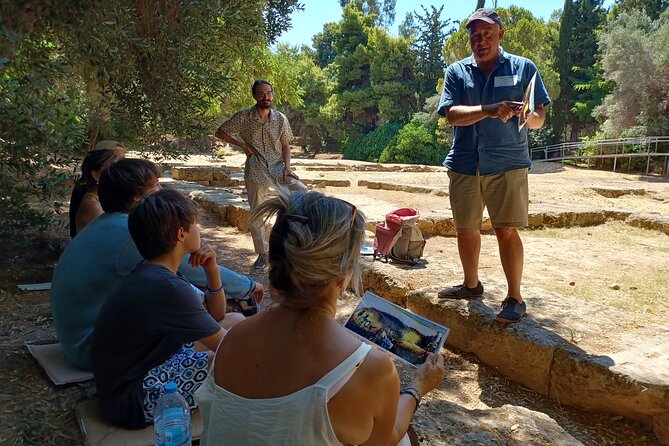
- Small group size (up to 10 travelers) means more time to answer questions and speak up.
- Free entrance at Plato’s Digital Museum helps you get oriented fast.
- Socratic questioning, not a lecture keeps the pace lively and personal.
- Outdoor ruins route can change slightly if there’s archaeological activity.
- A real replica water-timer makes the final debate feel hands-on, not theatrical-for-the-sake-of-it.
- Optional extra hour on Aristotle adds a virtue-and-choice game for deeper practice.
Worth comparing before you book this Athens tour:
- Athens: Classic Cooking Class with Market Visit and Wine
★ 5.0 · 1,101 reviews - Athens: Food Market Visit and Cooking Class with Wine
★ 4.9 · 1,087 reviews - Greek Cooking Class in Athens Including Rooftop Dinner with Acropolis View
★ 5.0 · 826 reviews - Greek Small-Group Athens Cooking Class & Dinner
★ 5.0 · 574 reviews
Why Plato’s Academy Park feels different from a standard Athens stop
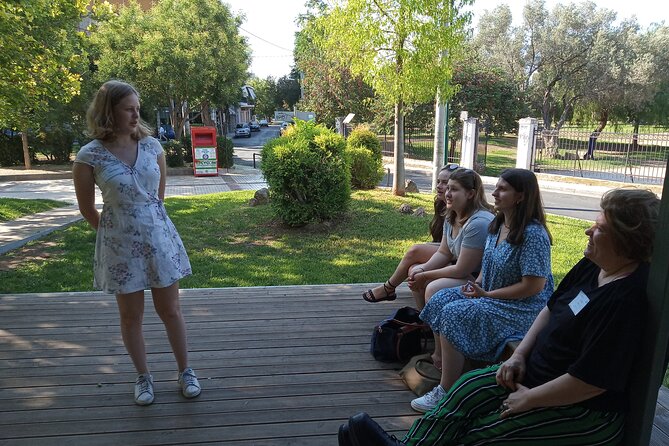
This isn’t a typical Athens “walk past old stones and hope you remember the names” experience. The setting matters: you’re at the site connected to Plato’s Academy, and the workshop uses the park like a classroom. You’re not memorizing facts—you’re using questions and simple interpretation to understand what ideas might mean, then testing those ideas in discussion.
The timing also helps. It’s about two hours long, which is just enough to get a clear story arc: background context, then key concepts, then an active debate. And because it’s offered in English, you’re not fighting language barriers while trying to think your way through ancient philosophy.
Another quiet advantage: the group stays small. With a maximum of 10 travelers, you’re more likely to get pulled into the discussion, rather than watching from the sidelines. If you like learning that feels social, not passive, this format fits well.
Stop at Plato’s Digital Museum: a short start that saves you later
You begin at Plato’s Academy Digital Museum on Alkmeonos 1, Athina 104 42. The museum visit is brief, and that’s a good thing. It’s designed to set the stage before you walk the park.
Here’s the practical value: you get key context early, so later, when you’re interpreting ancient Greek texts and following a timeline connecting Socrates, Plato, and Aristotle, the ideas land faster. It’s also friendly for first-timers because everything is explained in plain English, with no heavy jargon.
One useful detail to plan around: the Digital Museum is open Tuesday to Friday, 10:00 AM to 4:00 PM. On other days, the workshop replaces the museum stop with a discussion that covers the same key insights. The listing also notes that museum hours can change constantly and it may sometimes be closed without advance notice. So if you’re booking for a weekend or a Monday, expect the session to adapt on the spot.
Walking the Academy Park: from ruins to a clear philosophy timeline
After the museum piece, you move into Plato’s Academy Park and stroll through the area toward the ancient Gymnasium ruins. This part is where the workshop starts building momentum. Your philosophy instructor sets the scene with a timeline of Greek philosophical heritage and connects the big thinkers—Socrates, Plato, and Aristotle—so you see relationships, not isolated names.
The park walk isn’t meant to be long and sightseeing-heavy. It’s purposeful pacing: you’re shifting from background learning into discussion mode. And because the park is a historical site, you’ll also be expected to show basic respect in a way that matches an active heritage space—things like keeping noise down, staying clean, and dressing appropriately for an outdoor cultural site.
There’s also a contingency you should know: if archaeological excavation is happening during your visit, you may view the gymnasium ruins from a short distance and then settle at a different spot in the park. That’s still part of the experience, but it can affect photos and how close you feel to the ruins.
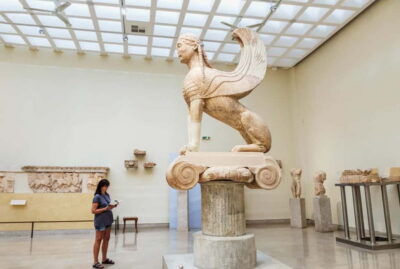


Reading and interpreting ancient Greek texts (without getting stuck)
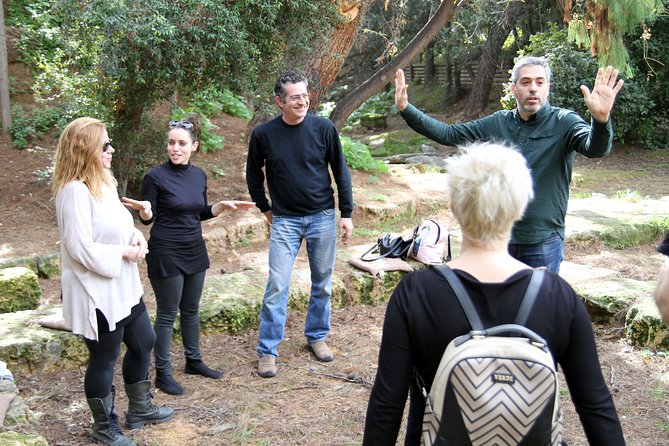
One of the workshop’s smarter choices is how it handles texts. You’ll read and interpret ancient Greek writings with guided help, then use the discussion to turn language into meaning. You’re not expected to be a scholar. In fact, the session is described as suitable for people without previous knowledge, explained in plain English with no difficult terminology.
This “text to ideas to conversation” structure is exactly what makes the experience useful for a traveler. You come away with more than a site stamp. You leave with a way to think about the concepts and discuss them, even if you’re rusty on ancient history.
And since you’re actively interpreting, not passively listening, you also get a better sense of why Socratic-style questioning works. You practice the mental move: answer, challenge, clarify, and re-check your assumptions.
Plato’s Allegory of the Cave: Socratic method in real conversation
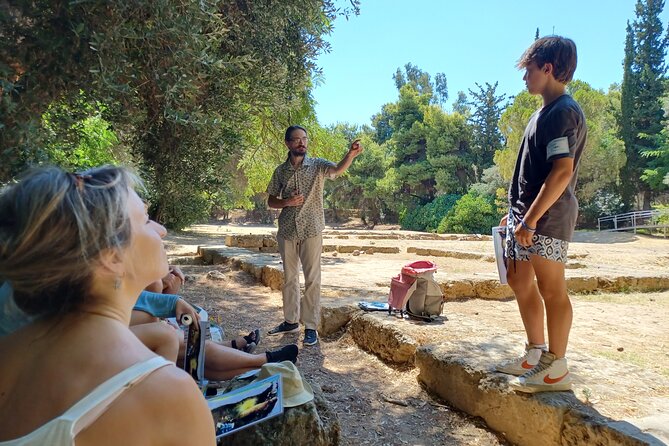
The workshop’s center is a dynamic discussion of Plato’s Allegory of the Cave. What stands out is the method: the group uses the Socratic method, meaning it’s not just someone explaining a conclusion and moving on. You’ll ask and answer guided questions, and the discussion stays interactive.
Sitting in the ruins of Plato’s world, the allegory doesn’t feel like a textbook. It feels like a live problem: What does it mean to see clearly? What counts as real knowledge? How do you tell comfort from truth? The setting helps because the ideas match the physical vibe—learning, debate, and the search for clarity happening in a place linked to the origin of that tradition.
If you like conversations that have structure (not chaos), this part is for you. It’s also a great fit for adults and teens, especially those who like questions and enjoy thinking out loud.
Role-play debate with an ancient-style water-timer replica
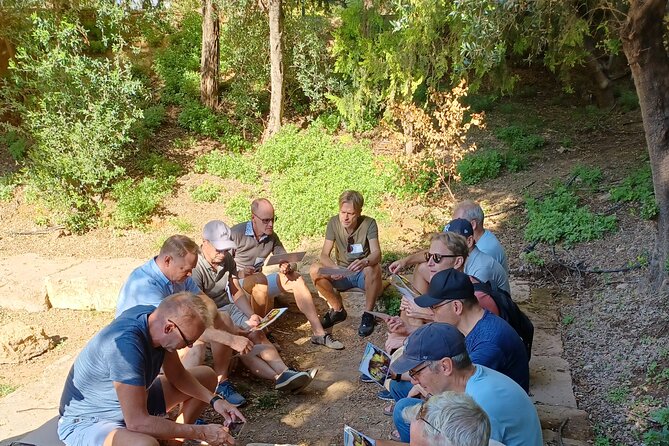
To close, the workshop turns playful but still thoughtful: you’ll do a role-play debate using a real replica of an ancient water-timer. Yes, a water-timer. That detail matters because it reminds you that debate wasn’t just an idea—it had timing, rules, and a social rhythm.
The role-play format makes the concepts practical. Instead of only talking about what Plato meant, you’re rehearsing how arguments can sound when they’re meant to persuade. It also adds energy at the end, so the experience doesn’t feel like a lecture that drifts toward fatigue.
One more benefit: doing this in a group helps you learn from different perspectives. Even if you start with only a basic idea of philosophy, the debate helps you test and refine your understanding.
Optional extra hour: Aristotle on virtue and choice
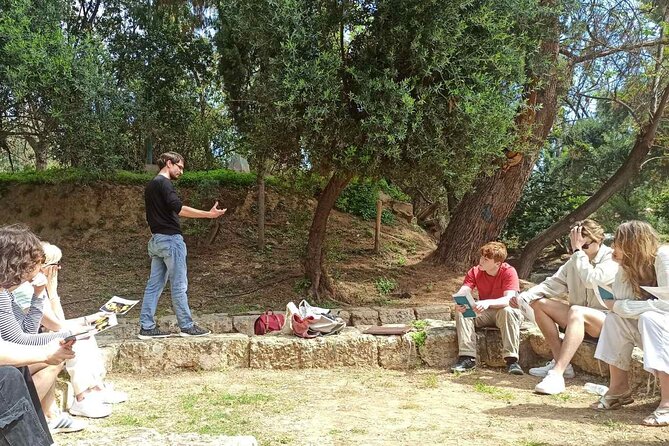
If you want more time (and more practice with ideas), there’s an optional add-on: an extra hour focused on Aristotle’s philosophy. This includes a thought-provoking game about virtue and choice.
This works well if you’re the type who likes to shift from “What does it mean?” to “How do we apply it?” Aristotle’s angle is often about habits, character, and decision-making, and the game format is meant to keep it concrete rather than theoretical.
If you’re visiting Athens with teens, it’s also a strong option because it gives structured fun while still landing educational outcomes. For adults, it adds a second thinker so your morning-or-afternoon philosophy story feels more complete.
Price and value: what $53.92 buys you in Athens
At $53.92 per person, this isn’t a bargain bus-ticket. But for what you get, it’s closer to a focused learning session than a sightseeing product. Here’s where the value comes from:
- Expert facilitator guiding you through texts, discussion, and debate mechanics
- A small group cap (maximum of 10), which makes participation realistic
- A hands-on format with Socratic questioning and role-play
- Museum time plus park time in a compact 2-hour window
You also get liability insurance and local VAT included in the price. That won’t change your day-to-day experience, but it’s a real part of what you’re paying for: a professionally run session, not an informal meet-up.
One tiny planning insight: this activity is commonly booked about 34 days in advance on average. That’s a sign it’s popular enough that you shouldn’t wait too long, especially if you want a specific day or time slot.
Who this workshop is perfect for (and who might want a different style)
This workshop is a strong match if you want more than photos. It’s for people who like structured conversation, enjoy questions, and don’t mind thinking while walking around ruins.
It’s also described as perfect for families, and suitable for adults and teenagers over 14. Underaged participants can’t book alone, so plan for at least one adult to supervise.
You’ll probably enjoy it most if you’re traveling with:
- Older kids or teens who can follow discussion (the workshop is designed for teens)
- Adults who like lively learning rather than museum-monologue
- Anyone who’s tired of passive tours and wants participation
If you’re the kind of traveler who wants pure sightseeing at your own pace, this may feel a bit “school-like.” But if you want the site to mean something, this format is the point.
Practical tips for a smooth session at a historical outdoor site
Since this is an outdoor experience, wear shoes that work on uneven ground and bring a layer if Athens feels cooler in the evening. The notes also emphasize respectful conduct at a heritage site, including sobriety, cleanliness, dressing appropriately, and not being loud.
Plan for equipment-free participation. Most of the learning happens in conversation and guided interpretation, so you don’t need to bring anything special beyond comfort.
Two more situational notes:
- Public space photo/video consent applies since the workshop takes place in a public area. You can withdraw consent in writing, but by default, photos/videos may occur within the service.
- Service animals allowed, and the meeting point is near public transportation, which is helpful if you’re pairing this with other Athens stops.
Finally, since the museum hours can be unpredictable, check in on the day. The workshop is designed to adapt if the museum visit can’t happen.
Should you book Plato’s Academy Park Experiential Workshop?
Yes, if you want philosophy to feel like something you do, not something you read alone. The combination of the setting, the Socratic discussion, and the role-play debate with the water-timer replica makes this feel more memorable than a standard site tour.
I’d especially book it if you’re traveling with teens 14+ or you’re the adult in the group who always asks why something mattered. This workshop answers that question by getting you to practice the thinking process.
If weather is shaky during your dates, keep your flexibility. It’s outdoors, and the workshop can be canceled due to poor weather, with options offered (another date, a similar workshop, or a full refund). If you can handle that planning reality, it’s a strong choice.
FAQ
How long is the Plato’s Academy philosophy workshop?
It runs for about 2 hours.
What age range is it for?
It’s suitable for adults and teenagers over 14. Participants under 18 cannot book alone, so at least one adult must book and supervise.
What language is the workshop conducted in?
It’s offered in English, with explanations in plain language.
Is Plato’s Digital Museum included?
Yes. The workshop starts with a brief visit to the small Plato’s Digital Museum, and the museum has a free entrance.
When is the Digital Museum open?
The Digital Museum is open Tuesday to Friday from 10:00 AM to 4:00 PM. On other days, the museum stop is replaced with a discussion covering the same key insights.
What if the museum is closed unexpectedly?
The workshop notes that museum operations can change and it may sometimes be closed without notice. When that happens, the museum visit is typically replaced by an engaging discussion with the same key insights.
Is this an indoor tour?
No. It’s an outdoor experience, and good weather is required.
How big are the groups?
The workshop has a maximum of 10 travelers.
Can I add Aristotle’s philosophy to my experience?
Yes. There’s an optional additional hour on Aristotle’s philosophy, including a game on virtue and choice.
Make a Little Greece to Take Home
- Athens: Classic Cooking Class with Market Visit and Wine★ 5.0 · 1,101 reviews
- Athens: Food Market Visit and Cooking Class with Wine★ 4.9 · 1,087 reviews
- Greek Cooking Class in Athens Including Rooftop Dinner with Acropolis View★ 5.0 · 826 reviews
- Greek Small-Group Athens Cooking Class & Dinner★ 5.0 · 574 reviews
- Athens: Greek Cooking Class & Dinner on a Rooftop★ 5.0 · 383 reviews
- Athens: Greek Cuisine Cooking Class and 3-Course Dinner★ 4.8 · 270 reviews
More Tour Reviews in Athens
- Athens: Acropolis & up to 5 Archaeological Sites Combo Pass★ 4.2 · 13,904 reviews
- Athens: Acropolis, Parthenon & Acropolis Museum Guided Tour★ 4.8 · 9,316 reviews
- The Acropolis, Parthenon & Acropolis Museum Guided Tour★ 4.7 · 8,493 reviews
- Athens: Cape Sounion & Poseidon Temple Sunset Half-Day Trip★ 4.8 · 8,241 reviews
- Acropolis: Premium Acropolis and Parthenon Guided Tour★ 4.8 · 5,208 reviews
- Athens: Mythology of Delphi, Museum and Arachova Guided Tour★ 4.7 · 5,102 reviews
Fresh Off the Boat: New Athens Reviews





Workshops, compared.
 ★ 5.0Classic Cooking Class with Market Visit and WineFrom $831,101 reviews
 ★ 4.9Food Market Visit and Cooking Class with WineFrom $811,087 reviews
 ★ 5.0Greek Cooking Class in Athens Including Rooftop Dinner with Acropolis ViewFrom $120826 reviews
 ★ 5.0Greek Small-Group Athens Cooking Class & DinnerFrom $118574 reviews
 ★ 5.0Greek Cooking Class & Dinner on a RooftopFrom $108383 reviews
 ★ 4.8Greek Cuisine Cooking Class and 3-Course DinnerFrom $115270 reviews
 ★ 5.0Traditional Greek cooking class and lunch or dinner with an Acropolis viewFrom $114250 reviews
 ★ 5.0Athens Airport Private Transfer by Mercedes-Benz E Class Wagon to City CenterFrom $131232 reviews
Browse the lists this tour appears in