
Reviewed · WALKING TOURS
Private Walk Women in Ancient Greece
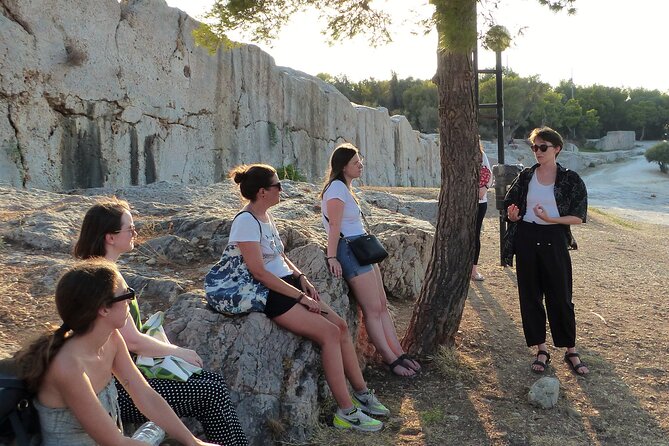
A women’s-eye view makes Athens feel new. This private walk threads Greek mythology and real-life roles for women through central landmarks, from Monastiraki to a knockout view over the Acropolis.
What I like most is the way it swaps the usual parade of dates for stories about marriage, eros, education, and public life. You’ll also have time to ask questions, since it’s private and paced for your group.
The main thing to consider is walking. You’re moving between several spots and the tour is not recommended for mobility issues, so plan on steady, comfortable shoes.
In This Review
- Key highlights worth planning for
- Women in Ancient Greece: why this Athens walk clicks
- Price and what you’re really paying for at $90.22 per person
- Start in Monastiraki: grounding the tour in everyday Athens
- Hadrian’s Library and women’s education in Ancient Athens
- Marriage, love, and religious symbolism: the Taxiarchs and the Virgin Mary
- Gate of Athena Archegetis: women, married life, and myth
- Dioskouron: a festival dedicated exclusively to women
- Ancient Agora, seen from outside: women in public life
- Areopago: trials, sinners, and one woman’s risk
- Pnyx and democracy: where men voted, and a woman influencing politics
- Philopappos Hill: closing with the Hill of the Muses
- What you’ll learn (and why it matters in Athens)
- Who should book this women-in-Ancient-Greece tour
- Should you book Private Walk Women in Ancient Greece?
- FAQ
- How long is the Private Walk Women in Ancient Greece?
- Where does the tour start and end?
- Is this tour private and is it in English?
- Are archaeological site tickets included, and do you go inside sites?
- Is it suitable for mobility issues?
- What happens if the weather is bad or you need to cancel?
Key highlights worth planning for

- Private by default: only your group, so you can ask questions and move at a comfortable pace
- Women-centered storytelling: you’ll link mythology and everyday roles across Athens and Sparta themes
- No archaeological site entrances: you’ll see key places from outside, keeping things smoother on the ground
- Tied to civic power: the walk includes where democracy worked, plus the presence of a woman influencing politics
- Great end-view: the route finishes on Philopappos Hill for a memorable Acropolis perspective
Athens at walking pace, more routes
- Acropolis and Parthenon Guided Walking Tour
★ 5.0 · 4,755 reviews - Greek Food Walking Tour in Athens
★ 5.0 · 4,740 reviews - Athens: Guided Greek Food Walking Tour with Tastings
★ 4.9 · 2,859 reviews - Acropolis monuments & Parthenon Walking Tour with Optional Acropolis Museum
★ 5.0 · 2,678 reviews
Women in Ancient Greece: why this Athens walk clicks

Athens is easy to overdo if you stick to the standard script: temples, monuments, dates, done. This tour flips the angle. It asks a simple question that changes everything—what did women’s lives look like, and how did myth and culture frame them?
I especially like how the tour connects the personal and the political. You’re not only hearing about goddesses or romance. You also get stories that point to education for girls and women, ideas around marriage in Athens and Sparta, and women’s roles in public life. That makes the city feel like a place where different kinds of people had agency, limits, and influence.
The second big win is pacing and control. A private walk means you’re not stuck with a loud group herding rhythm. You can slow down when something catches your eye, or ask why a specific story matters. If you like learning in a way that feels human—less like a lecture, more like a guided conversation—this format fits.
Price and what you’re really paying for at $90.22 per person
The price is listed as $90.22 per person for roughly 2 hours. On paper, that’s not “cheap,” but it can be fair value for Athens—especially when you compare it to the time you lose on tours that rush and repeat the same highlights.
Here’s what you’re paying for that matters:
- A private experience, meaning you’re not divided into a big mass.
- An English guide who can shape the route around what your group wants to understand.
- A women-focused theme that you won’t get from the standard sightseeing flow.
Also, the tour includes group discounts. That matters if you’re booking with a friend or family unit. The tour is per person, but group discount options can take some of the sting out.
And because the tour doesn’t require you to get deep into multiple archaeological entrances, the experience stays efficient. You spend more time learning and less time standing in lines trying to make schedule math work.
Start in Monastiraki: grounding the tour in everyday Athens
The walk begins in Monastiraki, at Pl. Monastirakiou 2. This is a good starting point because you’re right in the mix of central Athens, not out in the quiet outskirts. It’s also a useful “orientation anchor” for the theme: Monastiraki helps you picture where people lived, shopped, and moved before you start layering in the ancient stories.
At this stage, you’re essentially being set up. Instead of rushing straight into a landmark, the tour’s early moments help you understand the city as a lived-in space—then the guide brings in women’s roles as part of the same urban fabric.
If you like to get your bearings fast, this start location makes sense. You can also expect easy access if you need to adjust plans, since it’s near public transportation.
More private options, your group only



Hadrian’s Library and women’s education in Ancient Athens
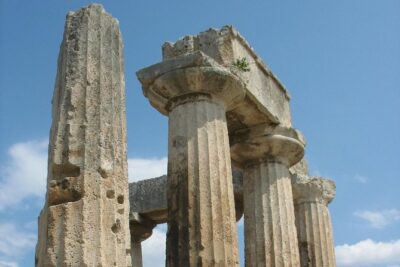
Next comes Hadrian’s Library, a stop that’s only about 10 minutes, but with a strong payoff. The focus here is education—specifically the education of girls and women in Ancient Athens.
Even if you don’t know much about ancient schooling, I like this angle because it avoids a common trap: treating “women in antiquity” as only about restrictions. Education is the kind of topic that forces nuance. It implies there were structures—formal or informal—that mattered in how women developed knowledge and social standing.
From a practical view, the short time at each stop also helps your brain. You’re not stuck at one place for so long that you forget why you came. You get a clean story, then you move.
Marriage, love, and religious symbolism: the Taxiarchs and the Virgin Mary
The tour then heads to the Holy Church Of The All-Great Taxiarchs And The Virgin Mary Gregorousa. This stop is a quick 15 minutes, but it carries multiple story threads tied to ancient ideas.
The tour connects this place to the meaning of marriage in Ancient Athens and Ancient Sparta. It also brings in EROS, described as the passionate kind of love.
That mix is a smart teaching tool. Marriage isn’t just a social contract; it’s tied to emotion, family expectations, and cultural ideals. By including both the relationship concept (marriage) and the emotion concept (eros), the story becomes more “felt,” not just memorized.
Also, you’re in a church, which helps you compare what the ancient ideas were doing with later traditions living in the same city. Even if you don’t make a deep comparison, it gives you a sense that Athens keeps reusing the same space across eras.
Gate of Athena Archegetis: women, married life, and myth
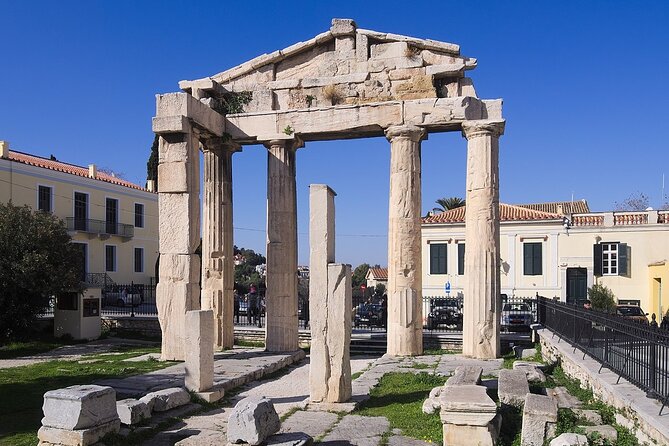
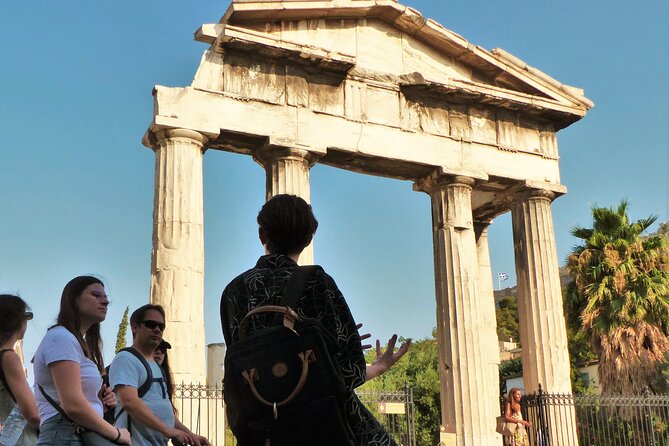
Stop four is the Gate of Athena Archegetis, another 15-minute stop. Here the tour focuses on what married life was for women in Athens and Sparta, plus the myths linked with goddess Athena.
I like stopping at gates because gates are about rules and entry—who belongs, who moves through, and under what assumptions. When Athena comes into the story, it also reframes the goddess not as a distant statue, but as a lens people used to interpret life.
This stop is also helpful if you’re worried the tour will feel abstract. The guide is expected to tie these myths to practical themes: married life, societal roles, and how stories shaped expectations.
If you want a tour that connects mythology to daily meaning, this is one of the more satisfying segments.
Dioskouron: a festival dedicated exclusively to women
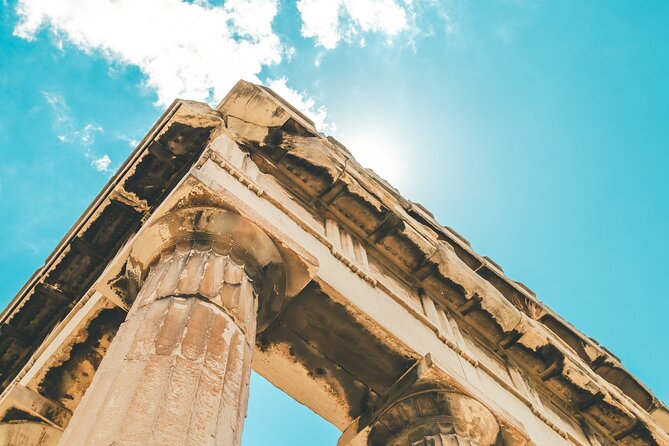
The walk continues to Dioskouron, a stop of about 10 minutes. The key theme is a mysterious ancient festival dedicated exclusively to women.
This is the kind of topic that turns curiosity into a concrete question: what did women do that was theirs, that wasn’t just defined by men’s schedules and decisions? Even when ancient sources can be limited, a tour that centers women-only celebrations helps break the mindset that everything was either male public space or private home space.
It also keeps the tour varied. After education and marriage themes, this festival stop adds a social and cultural layer that feels distinct. It’s one thing to hear rules; it’s another to hear about gatherings and shared rites.
Ancient Agora, seen from outside: women in public life
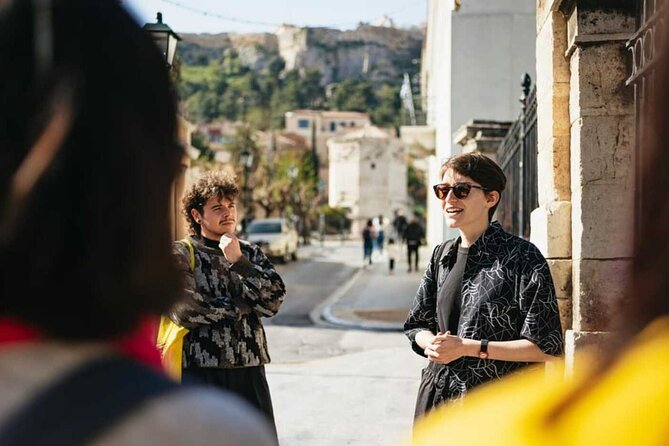
Next is the Ancient Agora of Athens—but with an important practical detail: there’s no entrance to the archaeological site. You’ll see it from outside, in about 15 minutes.
The tour uses the Agora as a way to explain the marketplace as the center of public life, and then asks a pointed question: what role did women play in public space?
You’ll hear about the life of female slaves or courtesans in the city. That’s a heavy theme, but it’s exactly the kind of realistic context that makes history feel less sanitized. Athens wasn’t only philosophers and politicians. It was also a place where different social groups lived within a system.
A quick note for your expectations: because you aren’t going inside, this stop won’t feel like a museum visit. It’s more about using the location as a stage for the story.
If you want deep ruins plus a women-centered narrative, you might later add separate museum time. But for a walking tour built around interpretation and stories, this approach is efficient.
Areopago: trials, sinners, and one woman’s risk
At about 10 minutes, the tour visits Areopago. This stop is tied to trials in ancient times—specifically where the worst sinners were trialled—and then shifts to an inspiring story about a woman who risked a death sentence to change women’s rights.
That’s the kind of moment that changes your whole mental picture of power. It’s not only about how women were defined by others. It’s about how women pushed back, even at extreme personal cost.
I also like that it’s not left vague. The tour frames this as an attempt to change women’s rights, which makes the story feel like an action with stakes—not a symbolic anecdote.
As you’re walking, this stop can also make you pause and absorb. Areopago is about judgment and consequences. Pairing that with women’s rights themes forces you to think about how societies enforce norms—and how people can challenge them.
Pnyx and democracy: where men voted, and a woman influencing politics
The tour reaches Pnyx for about 15 minutes. Here the guide explains where democracy began and notes that only men citizens used to vote.
Then comes the twist that makes the stop memorable: you get the story of a woman who influenced politics during Athens’ Golden Age.
This is smart framing. It doesn’t pretend voting was equal, which would be misleading. Instead, it shows how influence can exist even when formal power is limited. For me, that’s the heart of this whole tour theme: power doesn’t only exist through ballots. It can exist through relationships, ideas, and social reach—at least in the way the tour chooses to tell the story.
If you enjoy political history but hate tours that flatten everything into “men did everything,” Pnyx is a perfect stop in this itinerary.
Philopappos Hill: closing with the Hill of the Muses
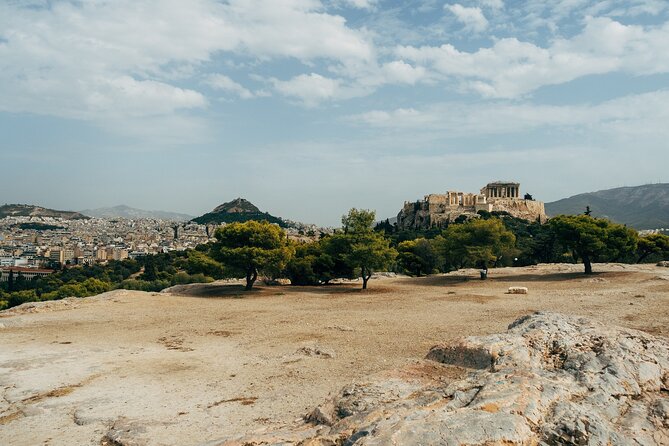
The walk ends at Philopappos Hill (around 10 minutes on the final segment), at Φυλής 215, Athina 117 41. This is where the tour leans into the visual reward: the Hill of the Muses, with a view on the Acropolis.
The “Muses” idea is also a nice thematic callback. The whole tour is about stories—myth, love, rights, education—so ending where inspiration is associated feels natural. And the Acropolis view gives you a physical memory hook.
If you’re the kind of person who needs a satisfying endpoint, this finish helps. It’s close enough to the center by foot, and it’s easy to access by metro if you’re ready to head back after the walk.
What you’ll learn (and why it matters in Athens)
The tour’s promise isn’t just women’s names and dates. It’s how the guide connects themes across different locations:
- Education for girls and women
- Marriage and what it meant in Athens and Sparta
- EROS as a passionate kind of love
- Athena’s myths tied to married life
- A women-only festival linked to Dioskouron
- Women in public space in the Agora context
- Legal and moral judgment at Areopago tied to women’s rights
- Democracy beginning at Pnyx, with a woman influencing politics
That mix matters because it shows women’s lives weren’t one neat category. Sometimes they appear as students. Sometimes as spouses. Sometimes as participants in rites. Sometimes as people caught in social systems. Sometimes as agents who risk everything to push for change.
And the private format helps you keep up. When something sounds surprising—like a women-only festival or a woman influencing politics—you can ask follow-up questions immediately instead of waiting for the group to catch up.
Who should book this women-in-Ancient-Greece tour
This is a great match if you:
- Want a less typical Athens experience than the usual “big monuments only” plan
- Like mythology that connects to real social questions
- Prefer private conversations over group lectures
- Care about how women lived, loved, learned, and resisted in ancient contexts
It’s less ideal if you:
- Have mobility limitations, since the tour is not recommended for mobility issues
- Want lots of indoor archaeological exploring, because you’ll be seeing sites from outside
Also, it’s adapted for participants over 10 years old, so it can work for older teens who enjoy story-based history.
Should you book Private Walk Women in Ancient Greece?
If you want Athens to feel personal and story-driven, I’d book it. The value comes from the format (private time), the theme (women’s perspectives across multiple aspects of life), and the practical routing that ends with a real Acropolis view.
Skip it if walking is difficult for you, or if you only want museum-style entrances and deep ruin time. This is an interpretation-heavy walk. When you’re in the mood for meaning—not just monuments—it’s a strong choice.
FAQ
How long is the Private Walk Women in Ancient Greece?
It’s listed as approximately 2 hours.
Where does the tour start and end?
It starts at Pl. Monastirakiou 2, Athina 105 55, Greece, and ends at Philopappos Hill, Φυλής 215, Athina 117 41, Greece.
Is this tour private and is it in English?
Yes. It’s a private tour/activity with only your group, and it’s offered in English.
Are archaeological site tickets included, and do you go inside sites?
Admission tickets are listed as free for the stops, and the tour notes that you’ll see archaeological sites from outside with no entrance to the archaeological site.
Is it suitable for mobility issues?
No, it’s not recommended for travelers with mobility issues.
What happens if the weather is bad or you need to cancel?
The experience requires good weather. If it’s canceled due to poor weather, you’ll be offered a different date or a full refund. Cancellation is free up to 24 hours in advance for a full refund if you cancel at least 24 hours before the start time.
Private Days, Your Group Only
- Best of Athens Half Day Private Tour★ 5.0 · 3,714 reviews
- Athens Full Day Private Tour★ 5.0 · 2,903 reviews
- Athens Airport Private Arrival Transfer with Meet & Greet★ 4.5 · 1,495 reviews
- Athens Airport to Athens Hotels Private Arrival Transfer★ 5.0 · 947 reviews
- Athens Greece Full Day private tour★ 5.0 · 785 reviews
- Private Biblical Tour Ancient Corinth & Isthmus Canal from Athens★ 5.0 · 762 reviews
Athens on Foot: More Walks
- Acropolis and Parthenon Guided Walking Tour★ 5.0 · 4,755 reviews
- Greek Food Walking Tour in Athens★ 5.0 · 4,740 reviews
- Athens: Guided Greek Food Walking Tour with Tastings★ 4.9 · 2,859 reviews
- Acropolis monuments & Parthenon Walking Tour with Optional Acropolis Museum★ 5.0 · 2,678 reviews
- Athens Acropolis and Parthenon Walking Tour★ 4.5 · 1,355 reviews
- Acropolis, Parthenon & Athens Old City Heritage Walking Tour★ 4.5 · 876 reviews
More Tour Reviews in Athens
- Athens: Acropolis & up to 5 Archaeological Sites Combo Pass★ 4.2 · 13,904 reviews
- Athens: Acropolis, Parthenon & Acropolis Museum Guided Tour★ 4.8 · 9,316 reviews
- The Acropolis, Parthenon & Acropolis Museum Guided Tour★ 4.7 · 8,493 reviews
- Athens: Cape Sounion & Poseidon Temple Sunset Half-Day Trip★ 4.8 · 8,241 reviews
- Acropolis: Premium Acropolis and Parthenon Guided Tour★ 4.8 · 5,208 reviews
- Athens: Mythology of Delphi, Museum and Arachova Guided Tour★ 4.7 · 5,102 reviews
Fresh Off the Boat: New Athens Reviews





Walking Tours, compared.
 ★ 5.0Acropolis and Parthenon Guided Walking TourFrom $414,755 reviews
 ★ 5.0Greek Food Walking Tour in AthensFrom $874,740 reviews
 ★ 4.9Guided Greek Food Walking Tour with TastingsFrom $812,859 reviews
 ★ 5.0Acropolis monuments & Parthenon Walking Tour with Optional Acropolis MuseumFrom $422,678 reviews
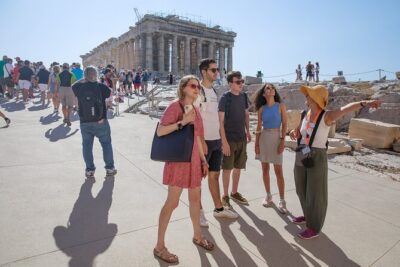 ★ 4.5Athens Acropolis and Parthenon Walking TourFrom $411,355 reviews
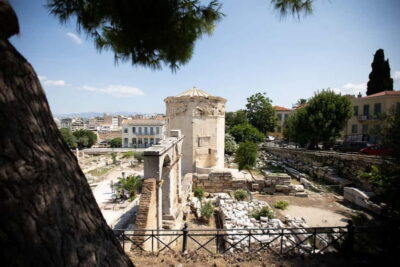 ★ 4.5Acropolis, Parthenon & Athens Old City Heritage Walking TourFrom $34876 reviews
 ★ 5.0Athens Authentic Greek Food Walking Tour (Small Group)From $83809 reviews
 ★ 4.9Ultimate Food Walking Tour with 15 TastingsFrom $93567 reviews
Browse the lists this tour appears in