
Reviewed · ATHENS WALKING TOURS
Sacred Athens: Byzantine Churches Walking Tour
Athens has a quieter, older soul. This Sacred Athens Byzantine churches walk takes you from the big ceremonial church at Mitropoleos square to tiny, 12th-century gems and 11th-century sanctuaries, with clear explanations of how Greek Orthodox devotion survived wars, earthquakes, and changing empires. I especially like the contrast between monumental sacred space and palm-sized worship rooms, and I like that you don’t just see churches—you understand why they matter in Athens identity.
One thing to plan for: there’s a strict dress code for entering churches (no bare feet, no shorts, and you’ll need your shoulders covered), so show up ready and you’ll keep the day flowing.
In This Review
- Key moments you’ll remember from this Byzantine churches walk
- Where the tour starts: Mitropoleos square and the Metropolitan Cathedral (Mitropoli)
- Panagia Gorgoepikoos: a 12th-century chapel built from ancient stone
- Walking out into Ermou Street: Panagia Kapnikarea in the middle of modern commerce
- Plaka side streets to Agios Nikolaos Ragavas: frescoes, electric light, and the freedom bell
- Filopappou Hill’s Agios Demetrios Loumbardiaris: restored to fit the woods
- How a small-group, 90-minute format changes what you notice
- Dress code and practical tips so you don’t slow everyone down
- Price and value: why $36 for Byzantine churches can feel fair
- Who should book Sacred Athens, and who might want a different plan
- Should you book this Byzantine churches walking tour?
- FAQ
- Where does the Sacred Athens tour start and finish?
- How long is the walking tour?
- What churches are included?
- What time does the tour begin?
- How big is the group?
- What should I wear and bring?
Key moments you’ll remember from this Byzantine churches walk
- Mitropoli mosaics at the Metropolitan Cathedral of Athens: ceremonial center of Greek Orthodox Athens
- Panagia Gorgoepikoos and its repurposed marble blocks: a 12th-century chapel built from ancient salvage
- The tiny “Little Metropolis” vibe: quiet intimacy right next to big-city noise
- Panagia Kapnikarea in a shopping street: a Middle Byzantine church around 1050, right where daily life happens
- Agios Nikolaos Ragavas and the freedom bell: electric lighting in 1910 and bell ringing during the War of Independence
- Agios Demetrios Loumbardiaris on Filopappou Hill: church restored to fit the wooded setting
On foot through Plaka and beyond
- Acropolis and Parthenon Guided Walking Tour
★ 5.0 · 4,755 reviews - Greek Food Walking Tour in Athens
★ 5.0 · 4,740 reviews - Athens: Guided Greek Food Walking Tour with Tastings
★ 4.9 · 2,859 reviews - Acropolis monuments & Parthenon Walking Tour with Optional Acropolis Museum
★ 5.0 · 2,678 reviews
Where the tour starts: Mitropoleos square and the Metropolitan Cathedral (Mitropoli)
If you want to understand Athens in layers, start with the Metropolitan Cathedral of Athens, locally known as Mitropoli. The tour meets you near Syntagma Square and then heads toward Mitropoleos square, where the cathedral’s scale tells you what it represents: a spiritual center and a ceremonial anchor for the Greek Orthodox Church.
What I like here is the way the tour sets context before you jump into smaller churches. The cathedral is tied to the Greek nation’s rebirth after independence, and that framing helps you notice something you might otherwise miss: these aren’t only religious buildings. They’re also markers of cultural survival—what a society chooses to rebuild, honor, and keep visible.
And yes, the interior mosaics are the kind of detail that reward slowing down. When you’re moving around Athens, it’s easy to treat churches like quick stops. Here, you’ll get a reason to look: mosaics, sacred art, and architectural choices all connect back to Orthodox practice and belief.
Panagia Gorgoepikoos: a 12th-century chapel built from ancient stone
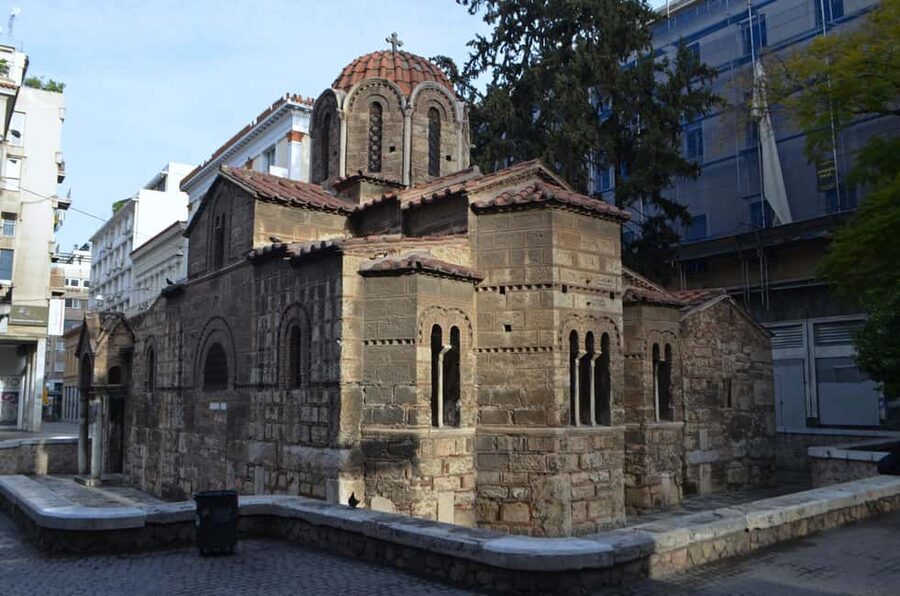
Next comes one of the most fascinating stops on the route: Panagia Gorgoepikoos, also called Agios Eleftherios or the Little Metropolis. This is the moment where Athens switches gears from “big cathedral” to “tiny time capsule.”
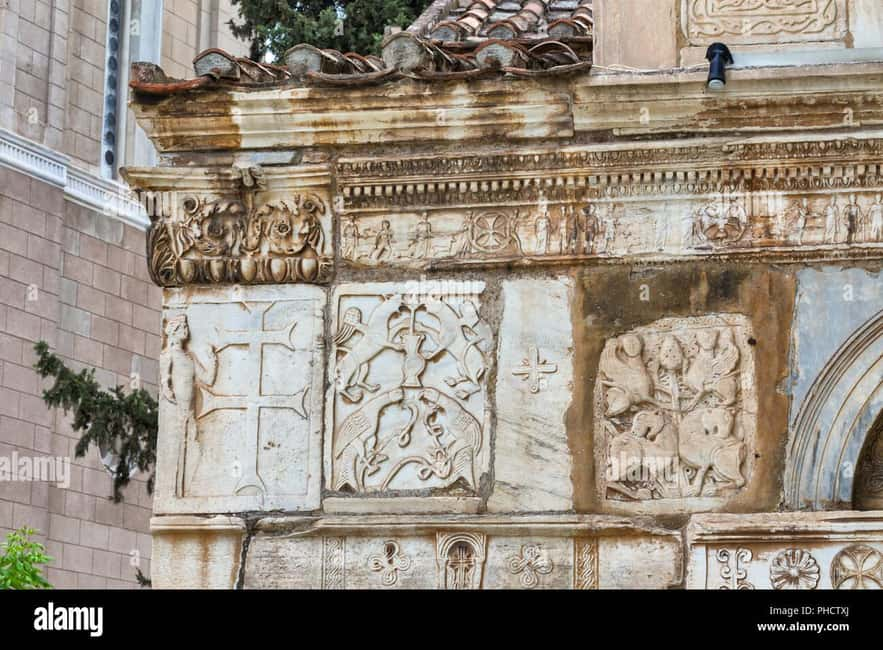
This chapel is small, but its details are loud. It dates to the 12th century and is one of the oldest surviving churches in Athens. The walls are built entirely from repurposed ancient marble blocks, and the effect is like reading a city’s biography in stone. You’ll see a patchwork of pagan reliefs, early Christian symbols, classical motifs, and medieval stonework—all mixed together as if the city couldn’t help but reuse what it had.
That’s a big deal, because it’s not just about aesthetics. It tells you how Athenians dealt with the past: rather than treating older material as untouchable, they folded it into a new sacred purpose. Even through wars, earthquakes, and urban upheaval, this chapel has remained intact—so you’re seeing continuity you can actually stand inside.
Practical note: because it’s a small building, you’ll want comfortable shoes and patience for close spacing. It’s not a place to rush. If you’re the kind of person who likes to stare at details for a while, this stop will feel like a gift.
Walking out into Ermou Street: Panagia Kapnikarea in the middle of modern commerce
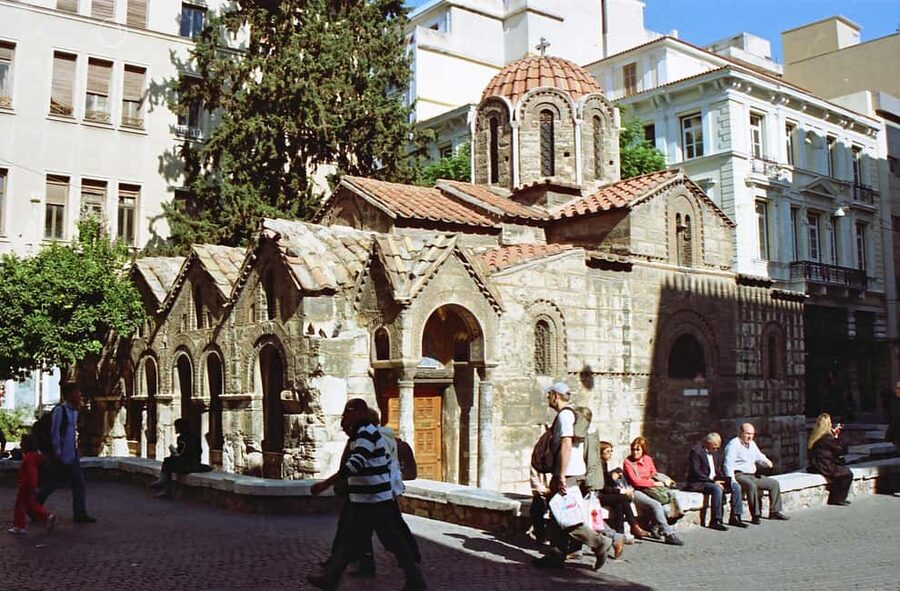
After the hush of a tiny Byzantine chapel, you’ll walk into the more everyday Athens energy around Ermou Street. Here sits Panagia Kapnikarea, a Middle Byzantine church dating to around 1050, and it feels almost surreal: a historic dome and brickwork presence placed right in the middle of shopping.
This is why the tour works. It doesn’t isolate church buildings in a museum bubble. Instead, it shows how Orthodox devotion stayed relevant even when Athens was under Ottoman rule. You’re looking at a rare thing: Byzantine architecture and religious continuity that simply kept existing in the same streets where modern life carries on.
Inside, you can expect traditional Byzantine style cues—especially the dome and the distinctive brick patterns—and you’ll also see 20th-century mosaics. That blend matters. It’s not frozen in one century. The building’s story includes restoration and later artistic layers, meaning the church has continued to serve people and reflect changing times.
If you prefer your history with a pulse—buildings still functioning, still surrounded by normal city rhythms—this stop is a highlight.
Athens at walking pace, more routes
Plaka side streets to Agios Nikolaos Ragavas: frescoes, electric light, and the freedom bell
Next you move through winding streets toward Agios Nikolaos Ragavas, in Plaka. This is an 11th-century church restored in a way that brings the interior forward—so you don’t just see the exterior and move on.
What you’re walking toward here is a careful return of surfaces and decoration. The church has been restored to reveal delicate frescoes and soft stone textures, which can be hard to appreciate when you’re only seeing a church from the street. In person, you’ll feel the difference between a building that’s lived-in and a building that’s merely preserved.
The tour also gives you an important national layer. Agios Nikolaos Ragavas wasn’t only religious; it became symbolic. It was the first church in Athens to install electric lighting in 1910. Later, its bell tower rang during the Greek War of Independence, earning the nickname the freedom bell.
That combo—electric light at the dawn of the 20th century plus a bell linked to independence—makes this stop more than devotional sightseeing. It turns the church into a marker of how Athens modernized without fully abandoning its sacred identity.
If you like history that connects everyday technology and political change to real places you can point at, you’ll appreciate how the story fits into one building.
Filopappou Hill’s Agios Demetrios Loumbardiaris: restored to fit the woods
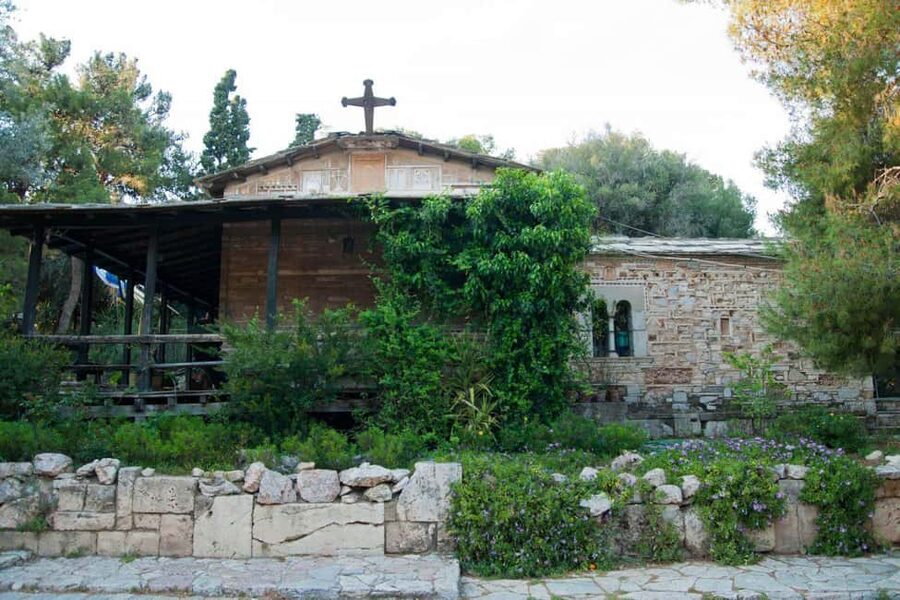
To finish, the tour heads toward Filopappou Hill, where Agios Demetrios Loumbardiaris sits tucked into a wooded area. This last stop is a change of mood. After city streets and church interiors, you get a calmer setting and a feeling that the church was planned to harmonize with its surroundings.
Architect Dimitris Pikionis restored it in the 1950s using local materials, aiming to make the church blend with the hill’s natural character. In practice, this means the building doesn’t feel pasted onto the setting. It feels like it belongs there—and that’s the point.
This is also where a walking tour really helps. If you only did a quick hop between major sights, you’d miss the way Athens shifts from dense streets to hillside quiet. Ending here is a smart move because it gives your brain a small reset before you head back into the city.
How a small-group, 90-minute format changes what you notice
This is a 90-minute walk, led by an English-speaking guide, with a small group limited to 6 participants. That small size matters more than you might think in Athens, because churches can get busy and explanations can get rushed in larger crowds.
With a compact group, you get space to ask questions, look longer at mosaics, and ask your guide to point out specific details—especially in places like Panagia Gorgoepikoos, where the stonework is part puzzle, part timeline. You also spend less time waiting. The route is built for moving at a human pace, not a sprint.
Still, it’s not a sit-and-stare itinerary. You’ll be walking between stops around the central Athens area, including into neighborhoods like Plaka and up toward Filopappou Hill. Bring comfortable shoes and water, even in cooler seasons. And if you’re sensitive to steps or uneven pavement, take your time on transfers between streets.
What you might notice most: the guide doesn’t treat these churches like isolated artifacts. You’re getting a guided story that links architecture, Orthodox practice, and Athens political turns.
Dress code and practical tips so you don’t slow everyone down
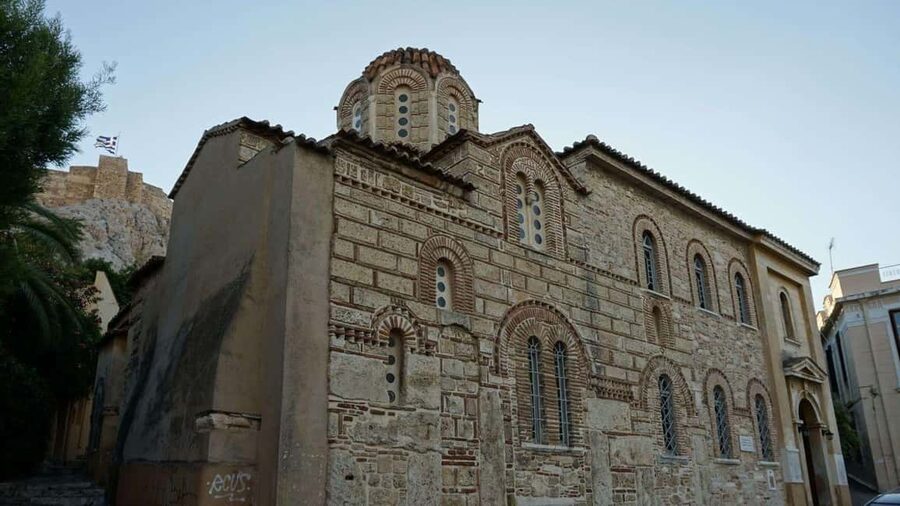
Church entry rules are real here. Plan on covering up properly before you arrive at each stop.
- Wear pants and cover your shoulders
- Avoid shorts and bare feet
- Bring water, plus a camera if you like architecture details
This is one of those details that can ruin a tour if you ignore it. If you’re traveling in hot weather, it’s worth thinking ahead about breathable pants. You’ll have a better time if you’re not frantically finding a solution at the last second while everyone else is ready to go inside.
Price and value: why $36 for Byzantine churches can feel fair
At $36 per person for about 90 minutes, this price lands in the “reasonable for a specialist tour” category. Here’s why it can be good value:
- You’re not paying just for entry. You’re paying for guided interpretation—especially in churches where the significance isn’t obvious at street level.
- The route includes multiple distinct Byzantine/Orthodox sites, not just one highlight.
- The small group size helps the guide tailor attention and keep the walk moving efficiently.
If you’re the kind of traveler who likes to understand what you’re seeing—why a chapel is built a certain way, why a bell rings in a national story, why a church can sit in a shopping district—you’ll likely feel like the cost translates into clearer context.
If you only want photos and don’t care much about explanation, any guided tour may feel pricey. But if you’re curious about how Athens went from ancient to Christian to modern without ever fully erasing the old, this format is a strong match.
Who should book Sacred Athens, and who might want a different plan
Book this tour if you:
- Want the Byzantine Athens angle, not just the classical highlights
- Like small-group guiding where you can ask questions and look closely
- Enjoy understanding how religion, art, and national identity show up in real buildings
It may feel less ideal if you:
- Don’t want to follow a church dress code
- Prefer tours that include food stops or long sit-down breaks (this is a walking-focused experience)
- Don’t enjoy spending time walking uphill or through older streets
A nice bonus from the way this tour is framed: it corrects the common Athens pattern where visitors focus heavily on ancient Greece and skip the Orthodox centuries. It’s a practical reminder that Athens didn’t stop at antiquity. Its church buildings helped shape what people believed, built, and remembered.
Should you book this Byzantine churches walking tour?
Yes—if you want Athens with a religious and architectural storyline you can actually trace through specific churches. The biggest reason is the range: you go from Mitropoli to a tiny marble-block chapel, then to a Middle Byzantine church inside a modern shopping area, then to a historically symbolic church in Plaka, and finally to a hilltop church restored to fit nature.
That mix is hard to replicate on your own without a strong guide explaining the details. If you’re comfortable with a short walking route, good shoes, and church-appropriate clothing, this is an efficient, high-value way to see Byzantine Athens up close.
FAQ
Where does the Sacred Athens tour start and finish?
The tour starts at Syntagma Square at the fountain, where you’ll see a sign. It finishes at Mouson 21, Athina 117 41, Greece.
How long is the walking tour?
The tour lasts about 90 minutes.
What churches are included?
You’ll visit the Metropolitan Cathedral of Athens (Mitropoli), Panagia Gorgoepikoos, Church of Panagia Kapnikarea, Agios Nikolaos Ragavas, and Agios Demetrios Loumbardiaris.
What time does the tour begin?
The tour starts at 10:00 AM.
How big is the group?
It’s a small group, limited to 6 participants.
What should I wear and bring?
Wear comfortable shoes and bring water and a camera if you want photos. For church entry, you’ll need pants and shoulders covered, and shorts and bare feet are not allowed.
More Tours in Athens
- Athens: Acropolis, Parthenon & Acropolis Museum Guided Tour★ 4.8 · 9,316 reviews
- The Acropolis, Parthenon & Acropolis Museum Guided Tour★ 4.7 · 8,493 reviews
- Acropolis: Premium Acropolis and Parthenon Guided Tour★ 4.8 · 5,208 reviews
- Athens: Mythology of Delphi, Museum and Arachova Guided Tour★ 4.7 · 5,102 reviews
- Acropolis and Parthenon Guided Walking Tour★ 5.0 · 4,755 reviews
- Greek Food Walking Tour in Athens★ 5.0 · 4,740 reviews
More Tour Reviews in Athens
- Athens: Acropolis & up to 5 Archaeological Sites Combo Pass★ 4.2 · 13,904 reviews
- Athens: Acropolis, Parthenon & Acropolis Museum Guided Tour★ 4.8 · 9,316 reviews
- The Acropolis, Parthenon & Acropolis Museum Guided Tour★ 4.7 · 8,493 reviews
- Athens: Cape Sounion & Poseidon Temple Sunset Half-Day Trip★ 4.8 · 8,241 reviews
- Acropolis: Premium Acropolis and Parthenon Guided Tour★ 4.8 · 5,208 reviews
- Athens: Mythology of Delphi, Museum and Arachova Guided Tour★ 4.7 · 5,102 reviews
Athens on Foot, Continued
- Acropolis and Parthenon Guided Walking Tour★ 5.0 · 4,755 reviews
- Greek Food Walking Tour in Athens★ 5.0 · 4,740 reviews
- Athens: Guided Greek Food Walking Tour with Tastings★ 4.9 · 2,859 reviews
- Acropolis monuments & Parthenon Walking Tour with Optional Acropolis Museum★ 5.0 · 2,678 reviews
- Athens Acropolis and Parthenon Walking Tour★ 4.5 · 1,355 reviews
- Acropolis, Parthenon & Athens Old City Heritage Walking Tour★ 4.5 · 876 reviews
Fresh Off the Boat: New Athens Reviews




Athens Walking Tours, compared.
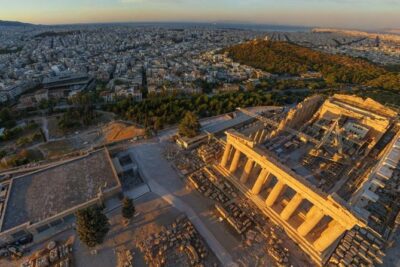 ★ 5.0Acropolis and Parthenon Guided Walking TourFrom $414,755 reviews
 ★ 5.0Greek Food Walking Tour in AthensFrom $874,740 reviews
 ★ 4.9Guided Greek Food Walking Tour with TastingsFrom $812,859 reviews
 ★ 5.0Acropolis monuments & Parthenon Walking Tour with Optional Acropolis MuseumFrom $422,678 reviews
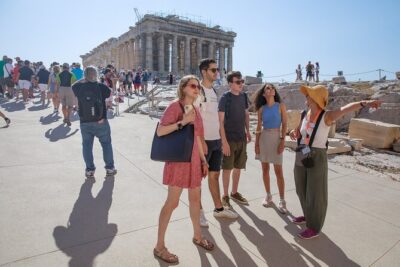 ★ 4.5Athens Acropolis and Parthenon Walking TourFrom $411,355 reviews
 ★ 4.5Acropolis, Parthenon & Athens Old City Heritage Walking TourFrom $34876 reviews
 ★ 5.0Athens Authentic Greek Food Walking Tour (Small Group)From $83809 reviews
 ★ 4.9Ultimate Food Walking Tour with 15 TastingsFrom $93567 reviews
Browse the lists this tour appears in