
Reviewed · ACROPOLIS & PARTHENON TOURS
The Acropolis Walking Tour with a French Guide
Some monuments are better with a voice. This Acropolis walking tour pairs skip-the-line entry with a licensed French-speaking guide who explains how the ruins fit together and why they mattered. I especially like the included entrance tickets (so you’re not juggling extra steps), and I also like how the stops move you through big-name sights like the Parthenon and Temple of Athena Nike in a logical order. One consideration: if you’re traveling with kids, you may want to pick your timing carefully, since at least one review flagged hot sun and not much room for questions.
One more practical note: French quality can vary by guide, so if you depend on precise French to follow every detail, aim for a guide with strong communication in past reviews (many praised Anna as excellent). With a small group capped at 20 and microphones provided, the experience generally supports good listening—but the tour style is mostly explanation-led, not open conversation.
In This Review
- Key things I’d watch for before you go
- Why a French-led Acropolis walk makes the site click
- Meeting points, timing, and how much walking it really is
- Price and value: what you’re actually paying for
- Acropolis in one trip: what you see and what it means at each stop
- Stop 1: Acropolis (about 1 hour)
- Stop 2: Parthenon (about 45 minutes)
- Stop 3: Propylaea (about 15 minutes)
- Stop 4: Temple of Athena Nike (timing not listed, part of the route)
- More than the main ruins: Theatre, missing marbles, Erechtheion
- What the guide style really feels like in practice
- Getting the most out of the Parthenon photos and views
- Who should book this tour, and who might want a different option
- Should you book it?
- FAQ
- How long is the Acropolis walking tour with a French guide?
- Does the tour include skip-the-line entrance tickets?
- What language is the guide?
- Where do I meet, and where does the tour end?
- How big is the group?
- What if the weather is bad?
Key things I’d watch for before you go
- Skip-the-line entry is built in so you start learning fast, not waiting.
- A French guide with archaeology focus helps you connect what you see to the stories behind it.
- A tight 2-hour route covers major landmarks without turning into a long hike day.
- Microphones help you hear the guide clearly when the group is spread out.
- Sun and pacing are real factors if you need frequent breaks or question time.
More ways up the sacred rock, set side by side
- Athens: Acropolis & up to 5 Archaeological Sites Combo Pass
★ 4.2 · 13,904 reviews - Athens: Acropolis, Parthenon & Acropolis Museum Guided Tour
★ 4.8 · 9,316 reviews - The Acropolis, Parthenon & Acropolis Museum Guided Tour
★ 4.7 · 8,493 reviews - Acropolis: Premium Acropolis and Parthenon Guided Tour
★ 4.8 · 5,208 reviews
Why a French-led Acropolis walk makes the site click
The Acropolis is famous, but it can also feel like a pile of marble unless someone gives you the map in your head. What works well here is that the guide is more than a facts machine. You get a guided narrative that helps you understand how pieces of the complex relate—what came first, what was built for, and what changes over time mean.
I also appreciate that the tour doesn’t treat the Acropolis like a single photo stop. You move from the big picture (the citadel) to the central temple (the Parthenon), then onward to the monumental entrance (the Propylaea) and the iconic Nike temple (Temple of Athena Nike). That sequence helps your brain organize the ruins instead of just snapping them like postcards.
Finally, there’s something quietly valuable about the “French archaeologist + licensed guide” combination: you’re less likely to get random opinions and more likely to get explanations tied to how scholars read architecture.
Meeting points, timing, and how much walking it really is
You’ll start at Porinou 5, Athina 117 42, Greece, and the tour ends at Areopagus, Athens 105 55. That matters because you don’t finish back where you began, so it’s easier to tack on an afternoon stroll through central sights afterward.
The tour runs about 2 hours. That’s long enough to get beyond the basics, but short enough that you’re not spending your whole day in heat and crowds. The physical requirement is described as moderate fitness—so if you can comfortably walk uneven stone paths for a couple hours with a few stops, you’re likely fine.
Practical tip: the reviews include a clear theme—bring water and wear good walking shoes. If you can, consider the evening slot. One review specifically mentioned that an evening time frame is a bit less hot and has fewer people.
Price and value: what you’re actually paying for
At $80.64 per person, this isn’t the cheapest way to see the Acropolis—but it’s also not just a talking tour. The price includes the licensed French-speaking guide plus skip-the-line entrance tickets. That combination is where the value comes from.
If you’ve ever tried to visit the Acropolis without a guide, you know the main problem isn’t the walking. It’s the lost time and the missing context. Skip-the-line entry reduces waiting, and the guide turns your time on site into something you can understand and remember.
Also worth knowing: European Union citizens under 25 can get free entrance with a passport. If that applies to you, you may want to double-check how the free-entry rule interacts with the tour ticket you’re given, but it’s a big potential savings lever.
On foot through Plaka and beyond



Acropolis in one trip: what you see and what it means at each stop
This tour is designed as a guided route through the key elements of the Acropolis complex. Even when you’re not looking at the stones up close, the guide helps you interpret what you’re seeing and why it matters.
Stop 1: Acropolis (about 1 hour)
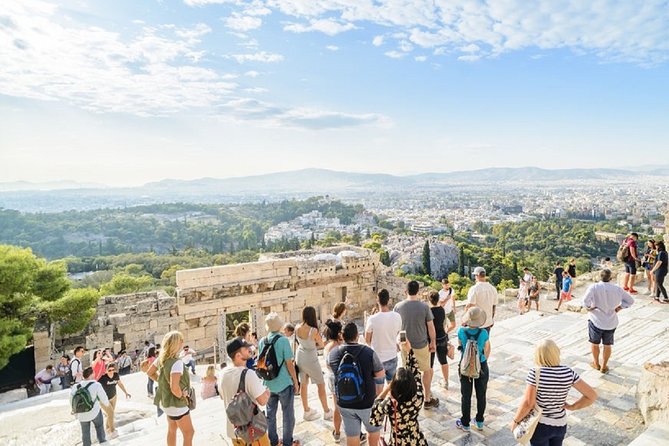
You begin at the Acropolis itself—the ancient citadel perched above Athens on a rocky outcrop. You’ll learn that the word acropolis comes from Greek roots meaning high point and city, which is a simple detail but helps anchor the place in your head.
This first stretch is where the guide should do the heavy lifting: set the stage, explain the purpose of the complex, and point you toward the most important buildings. Reviews also mention reminders about the foundation of Athens, plus a clear effort to connect big ancient topics to today in a way that feels relevant to French speakers.
One story line you’ll hear as you orient yourself is how theater has its roots here, with the Theatre of Dionysus coming into the conversation. You might also get context around the Parthenon’s famous missing marbles—those gaps are part of the modern story of the site, not just an archaeological footnote.
Possible drawback here: if the group is standing in full sun while the guide talks, it can feel long. One review described sun stops as hard, especially for kids.
Stop 2: Parthenon (about 45 minutes)
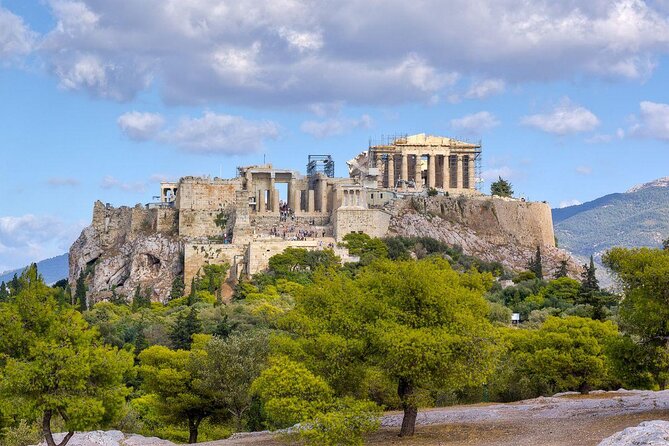
Next is the Parthenon, the former temple dedicated to Athena—Athens’ patron goddess. Construction began in 447 BC, during the peak of Athenian power. That date matters because it helps you understand the Parthenon not as a random big building, but as a statement.
What I like about this stop is that the guide’s job is to explain what you’re looking at, not just name it. The Parthenon is visually dramatic, but it’s also easy to miss the logic of why certain features exist. With the guide, you’re more likely to come away with an understanding of purpose and symbolism rather than just awe.
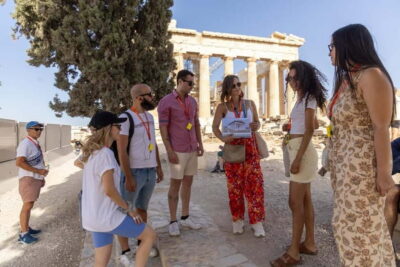
There’s also a practical perk mentioned in reviews: the guide made time to photograph each member of the group in front of the Parthenon. That’s small, but it can save you the scramble of trying to coordinate photos while everyone else is moving on.
Heads-up: 45 minutes sounds manageable, but the Parthenon area is also a busy photo zone. If you get impatient waiting for space to frame your shots, plan to be flexible.
Stop 3: Propylaea (about 15 minutes)
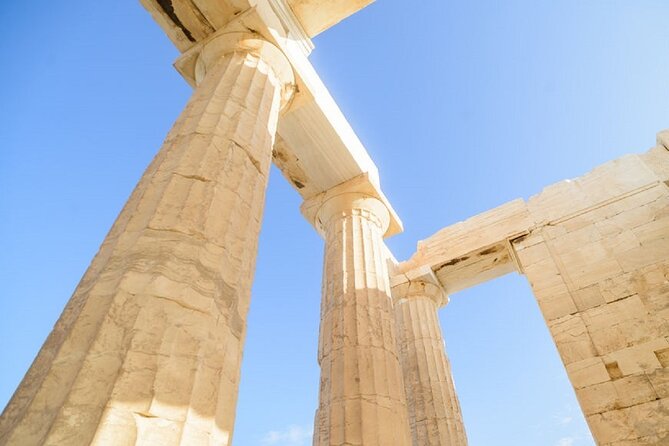
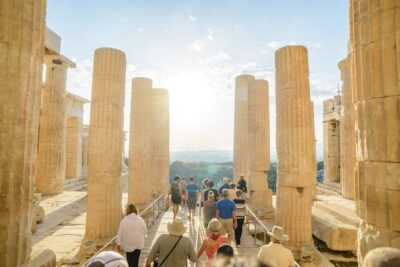
Then you reach the Propylaea—the monumental gateway that serves as the entrance to the Acropolis. In Greek architecture, a propylaea is essentially a grand threshold, and walking through this idea helps you understand the Acropolis as a designed experience, not just random buildings on a hill.
Because this is a short stop, the guide should keep it focused. If you’re the kind of person who loves how buildings choreograph movement, this is a nice palate cleanser after the Parthenon.
Stop 4: Temple of Athena Nike (timing not listed, part of the route)
Finally, you’ll see the Temple of Athena Nike, dedicated to Athena Nike. It was built around 420 BC and is described as the earliest fully Ionic temple on the Acropolis. Ionic details can be subtle if you don’t know what to look for, so this is where a guide helps again: they can point out what makes this temple different in style and why it’s significant.
This stop also works well because it gives your eyes variety. After the heavy presence of the Parthenon, Temple of Athena Nike offers a different architectural language—one that helps the whole complex feel like a set of coordinated works over time.
More than the main ruins: Theatre, missing marbles, Erechtheion
Even though the walk focuses on key stops, the best part of a good Acropolis guide is context. This tour is positioned to give you exactly that.
You’ll hear about the Theatre of Dionysus and the origins of theater connected to this cultural world. You’ll also get stories around missing marbles—an easy topic to overlook if you’re only focused on what’s still standing. And you’ll be introduced to other major landmarks like the Erechtheion.
That matters because the Acropolis isn’t a single building. It’s a complex, built and reused by generations, with layers of meaning. A guide helps you see the site as a system, where each structure has a role.
What the guide style really feels like in practice

The tone varies by guide, but the strongest reviews share a few consistent traits: detailed explanations, good pacing, and a sense of humor.
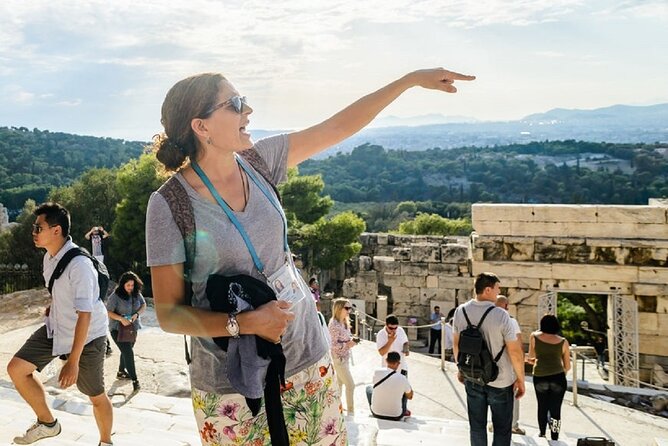
Anna is named in multiple reviews as an outstanding guide. People praised her for selecting the right topics for a French audience, making links to modern life, and explaining with clarity. Another review highlighted her humor and the fact she took time to help with group photos.
At the same time, one review flagged an issue: the guide seemed to have learned the talk by heart, with less spontaneity, and the tour felt too explanation-heavy for their concentration. That same review also said it didn’t seem adapted for children and that there wasn’t much room for questions.
So here’s how I’d translate that into a smart booking decision: if you love structured storytelling and you’re comfortable listening for most of the time, you’ll likely enjoy this format. If you need frequent dialogue and lots of back-and-forth, you might find the pace limiting.
Getting the most out of the Parthenon photos and views
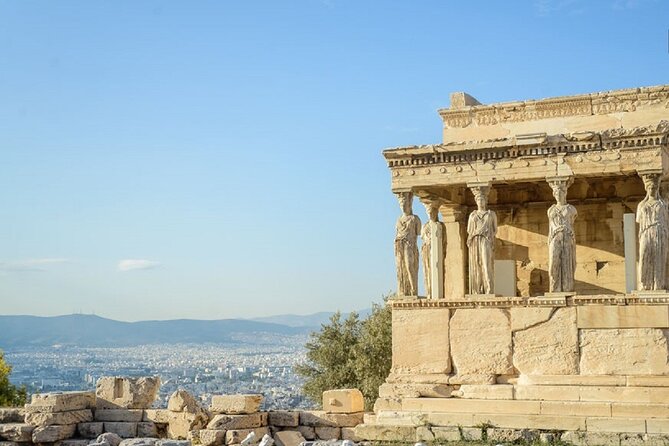
The Acropolis is a picture machine, but it’s also a place where people rush. The tour’s setup helps you slow down in the right places—especially at the Parthenon, where reviews mention a deliberate pause to photograph each person.
If you want better photos, the evening timing tip is worth taking seriously. One review specifically recommended the evening slot because it’s less hot and has less crowding. That alone can make the difference between a chaotic shot and one where you can frame the Parthenon without fighting for space.
And for your own comfort: water and comfortable shoes show up repeatedly as the practical essentials. Bring them and you’ll be free to focus on the stones, not your feet.
Who should book this tour, and who might want a different option
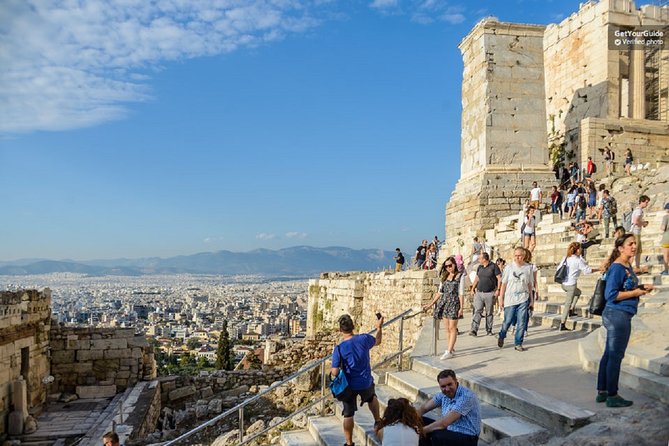
This is a great fit if you:
- Want skip-the-line access and a guided route instead of self-guided wandering
- Like history that connects architecture to culture (theatre stories, Athena themes, civic meaning)
- Enjoy a French-speaking lecture style that explains how the complex fits together
- Prefer smaller groups (max 20) and better listening support (microphones)
It may be less ideal if:
- You’re traveling with young children who need frequent interaction and lots of breaks
- You strongly depend on a question-led format, since one review said there weren’t spaces for questions
- You’re sensitive to sun exposure during standing stops
Should you book it?
If you’re planning to visit the Acropolis anyway, I think booking this tour is a smart move for most people—mostly because you get two things that are hard to reproduce solo: context from a French licensed guide and skip-the-line entrance that starts your experience sooner.
I’d book it especially if you care about understanding what you’re seeing—how the Parthenon connects to Athena, how the gateway fits the movement into the complex, and what makes Temple of Athena Nike architecturally distinct. And if you pick an evening time, you’ll likely get a more comfortable experience with fewer crowd headaches.
But if your main goal is casual sightseeing with lots of open-ended conversation, or if you need a very kid-flexible format, consider your timing and your expectations. One review suggested the tour isn’t built around children’s attention spans and limited question time.
FAQ
How long is the Acropolis walking tour with a French guide?
The tour lasts about 2 hours.
Does the tour include skip-the-line entrance tickets?
Yes. Skip-the-line entrance tickets are included.
What language is the guide?
The guide is licensed and French speaking.
Where do I meet, and where does the tour end?
You start at Porinou 5, Athina 117 42, Greece, and the tour ends at Areopagus, Athens 105 55, Greece.
How big is the group?
The tour has a maximum of 20 travelers.
What if the weather is bad?
This experience requires good weather. If it’s canceled due to poor weather, you’ll be offered a different date or a full refund.
If you tell me your dates and whether you’re thinking morning or evening, I can help you choose the best timing for comfort and photos.
More Tour Reviews in Athens
- Athens: Acropolis & up to 5 Archaeological Sites Combo Pass★ 4.2 · 13,904 reviews
- Athens: Acropolis, Parthenon & Acropolis Museum Guided Tour★ 4.8 · 9,316 reviews
- The Acropolis, Parthenon & Acropolis Museum Guided Tour★ 4.7 · 8,493 reviews
- Athens: Cape Sounion & Poseidon Temple Sunset Half-Day Trip★ 4.8 · 8,241 reviews
- Acropolis: Premium Acropolis and Parthenon Guided Tour★ 4.8 · 5,208 reviews
- Athens: Mythology of Delphi, Museum and Arachova Guided Tour★ 4.7 · 5,102 reviews
Athens on Foot, Continued
- Acropolis and Parthenon Guided Walking Tour★ 5.0 · 4,755 reviews
- Greek Food Walking Tour in Athens★ 5.0 · 4,740 reviews
- Athens: Guided Greek Food Walking Tour with Tastings★ 4.9 · 2,859 reviews
- Acropolis monuments & Parthenon Walking Tour with Optional Acropolis Museum★ 5.0 · 2,678 reviews
- Athens Acropolis and Parthenon Walking Tour★ 4.5 · 1,355 reviews
- Acropolis, Parthenon & Athens Old City Heritage Walking Tour★ 4.5 · 876 reviews
The Acropolis, a Few More Ways Up
- Athens: Acropolis & up to 5 Archaeological Sites Combo Pass★ 4.2 · 13,904 reviews
- Athens: Acropolis, Parthenon & Acropolis Museum Guided Tour★ 4.8 · 9,316 reviews
- The Acropolis, Parthenon & Acropolis Museum Guided Tour★ 4.7 · 8,493 reviews
- Acropolis: Premium Acropolis and Parthenon Guided Tour★ 4.8 · 5,208 reviews
- Acropolis and Parthenon Guided Walking Tour★ 5.0 · 4,755 reviews
- Athens: Acropolis, Parthenon & Acropolis Museum Guided Tour★ 4.8 · 3,579 reviews
Fresh Off the Boat: New Athens Reviews





Acropolis & Parthenon Tours, compared.
 ★ 4.2Acropolis & up to 5 Archaeological Sites Combo PassFrom $4213,904 reviews
 ★ 4.8Acropolis, Parthenon & Acropolis Museum Guided TourFrom $409,316 reviews
 ★ 4.7The Acropolis, Parthenon & Acropolis Museum Guided TourFrom $408,493 reviews
 ★ 4.8Acropolis: Premium Acropolis and Parthenon Guided TourFrom $405,208 reviews
 ★ 5.0Acropolis and Parthenon Guided Walking TourFrom $414,755 reviews
★ 4.8Acropolis, Parthenon & Acropolis Museum Guided TourFrom $413,579 reviews
★ 5.0Acropolis and Parthenon Guided Walking TourFrom $414,755 reviews
★ 4.8Acropolis, Parthenon & Acropolis Museum Guided TourFrom $413,579 reviews
 ★ 4.0Acropolis Ticket with Audio GuideFrom $473,575 reviews
 ★ 5.0Athens Scenic Electric Bike Tour with optional Acropolis visitFrom $353,350 reviews
Browse the lists this tour appears in