
Reviewed · ATHENS SIGHTSEEING TOURS
The Highlights of Athens Private Shore Excursion 8 Hours
One day in Athens, done right. This private excursion packs the big legends—especially the Acropolis and the new Acropolis Museum—into a cruise-friendly 8-hour plan. I like the hands-on feel of a dedicated driver who keeps your day moving, yet still gives you time to look and ask questions. The one thing to consider is that entrance fees and museum tickets are extra, and you’ll do real walking on marble steps.
I also love how the day mixes ancient Athens with the modern heart of the city. You get the Acropolis walk, then the sights around Syntagma Square with the Presidential Guard, plus the calmer breaks like the National Garden and Mount Lycabettus.
For some travelers, the pace can feel intense—especially if you want to linger at every stop. If you’re bringing a stroller or you don’t do well with stairs, plan ahead, because parts of the Acropolis are tough underfoot.
In This Review
- Key points at a glance
- Why this 8-hour Athens plan feels worth it
- Meeting at Piraeus: the part that can make or break the day
- The drive that sets the mood: Saronic Gulf to Athens Riviera
- Acropolis on foot: Propylaea, Athena Nike, Parthenon, Erechtheion
- Propylaea: the monumental gate moment
- Temple of Athena Nike: wingless victory
- Parthenon: the centerpiece you came for
- Erechtheion and the Caryatids: human details
- How the tour handles crowds and timing around the monuments
- Syntagma Square and the Changing of the Greek Guards
- Hellenic Parliament and the Presidential Guard
- Tomb of the Unknown Soldier: a moment of pause
- National Garden and the neoclassical trio (quick, but good)
- National Garden: a green reset behind the square
- Academy of Athens, University, National Library: the Athens of scholars
- Plaka’s village feel and Ancient Agora’s long timeline
- Plaka: cobblestones, shops, and a slow-lunch mood
- Ancient Agora: the marketplace that was also the town square
- Acropolis Museum: where the stones get translated
- Olympeion, Kallimarmaro, and Lycabettus: the big Athens mix
- Olympeion: sanctuary of Olympian Zeus
- Kallimarmaro: the marble stadium
- Mount Lycabettus: highest viewpoint in central Athens
- Price and value: what you’re actually paying for
- Who should book this, and who should think twice
- Practical tips so your day goes smoothly
- Should you book Athens Private Shore Excursion (8 hours)?
- FAQ
- How many people are in a group?
- Where do cruise passengers get picked up?
- Is hotel pickup included?
- How long is the tour?
- Are entrance fees included?
- Will the driver guide me inside museums and sites?
- What language is the tour?
- When can I see the Changing of the Greek Guards?
- Can I cancel if plans change?
Key points at a glance
- Port-to-port convenience: pickup at Piraeus Terminal A and return to the same spot so you don’t play transportation roulette.
- Small group feel: up to 3 people, which means fewer delays and more flexible timing.
- Acropolis first, museum second: you see the buildings, then you confirm what they meant at the Acropolis Museum.
- Guard ceremony viewing: time your stroll around Syntagma Square for the Changing of the Guards.
- Plaka + Agora + lunch break: you get both the atmosphere and the context, without turning lunch into a scramble.
- Big views included: Mount Lycabettus gives you a high payoff when the day is long.
The big Athens hits in one go
- Athens: City Sightseeing Hop-On Hop-Off Bus Tour
★ 4.3 · 4,520 reviews - Best of Athens Half Day Private Tour
★ 5.0 · 3,714 reviews - Athens & Acropolis Highlights: Greek Mythology Small-Group Tour
★ 5.0 · 2,370 reviews - Athens: Acropolis and Mythology Highlights Small Group Tour
★ 4.8 · 2,275 reviews
Why this 8-hour Athens plan feels worth it
This tour is built for people who have limited time and don’t want to outsource their Athens day to guesswork. You’re picked up at the port, driven around major sight clusters, and dropped back where you started. That matters on a cruise day, when even a small delay can turn into stress.
The structure is also smart: start with the Acropolis monuments, then shift to modern Athens at Syntagma, then come back to culture with Plaka, the Ancient Agora, and the Acropolis Museum. It’s not just a checklist. The order helps your brain connect the stones on the hill to what the museum shows.
Meeting at Piraeus: the part that can make or break the day
The pickup is at the Port of Piraeus, Terminal A, 28 Akti Xaveriou Street, Port E11. When you get off your ship, you walk outside the terminal exit doors, and the driver/guide waits holding a sign with your name.
I like this because it removes the most annoying uncertainty: where to meet, and whether you’ll be late finding the right vehicle. It’s also straightforward if you’re traveling with family and need someone to help with bags.
The drive that sets the mood: Saronic Gulf to Athens Riviera
After pickup, you’ll head along the coastal road of the Saronic Gulf. This isn’t just travel time. It gives you a quick “big-city Athens” preview—sea, roadway, and the feeling of how close the ancient capital is to the port.
As the car moves inland toward the Acropolis area, the day shifts from scenery to serious history. That transition is useful: you arrive ready to look, not still stuck in travel mode.
More private options, your group only



Acropolis on foot: Propylaea, Athena Nike, Parthenon, Erechtheion
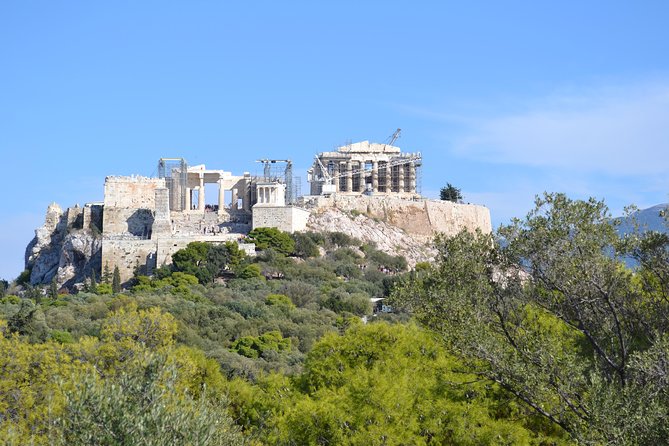
This is the core experience. You’ll spend time walking the sacred rock and focusing on the key monuments that define the Acropolis.
Here’s what to expect as you move through the area:
Propylaea: the monumental gate moment
The Propylaea is your introduction to the Acropolis precinct. It’s the grand entrance structure built as part of the Periclean program, with its pie-shaped framing in Pentelic marble. It’s designed to guide you in—so when you step through, the space feels ceremonial rather than random.
Practical tip: this stop is shorter, so use it to get your bearings and decide where you want your photos from before the Parthenon crowds press in.
Temple of Athena Nike: wingless victory
At the southeast edge sits the Temple of Athena Nike. It’s associated with the idea of Apteros Nike, wingless victory—because the goddess was imagined as not leaving Athens. Under the floor and inside the bastion area, older temple foundations remain, which adds a layered feeling: you’re standing in a place where earlier worship structures once stood.
Even though the visit time is brief, it’s one of those spots where a good guide can explain why the details matter. Look for how the temple sits on the bastion and how it frames the edge of the sacred rock.
Parthenon: the centerpiece you came for
The Parthenon is the marquee monument: built between 447 and 438 BC, dedicated to Athena Parthenos, and closely tied to Athens at the height of its power. You’ll be close enough to appreciate the scale and the design logic—without needing an architecture degree.
The practical reality: you’ll be on uneven ground and likely climbing steps. Wear shoes with traction. Marble can be slick, and the surfaces are smooth with age and wear.
Also, note the tour’s key logistics: your English-speaking driver can guide you up to the archaeological sites and explain until you enter. Drivers aren’t licensed to accompany you inside the sites and museums. If you want a state-licensed guide walking you through interiors, you can arrange that for an extra cost (subject to availability).
Erechtheion and the Caryatids: human details
On the north side is the Erechtheion, built in the early 5th century BC to replace an older Athena Polias temple. It’s named for Erechtheus, a mythical king connected to the sanctuary’s stories.
The standout here is the Karyatides porch—the roof supported by sculpted female figures instead of standard columns. If you look closely, you’ll understand why this became one of the Acropolis’s most copied artistic ideas. Some Karyatides are in other museums as well, but the building’s own presence makes it feel unmistakably original.
How the tour handles crowds and timing around the monuments
You can’t control crowd volume in Athens. What you can control is timing and order. This tour is designed to flow through multiple Acropolis landmarks and then pivot to the city center.
One thing I love in this kind of private setup: you can ask your driver to adjust pacing where it counts. In the real-world versions people have done, guides like Andreas and George are praised for keeping the day on track without rushing you, and for building in extra minutes when the group wants them.
If you want the best photos, aim to take them during movement points: when you turn a corner, when you reach an overlook, and when the light is changing. Don’t wait until you’re tired to start shooting.
Syntagma Square and the Changing of the Greek Guards
After the Acropolis, the day shifts to modern Athens at Syntagma Square. This is where you get the ceremonial side of Greek identity—serious uniforms, crisp timing, and a crowd that’s there for the same reason you are.
Hellenic Parliament and the Presidential Guard
The Hellenic Parliament building sits on a site tied to the modern Greek state. Originally a palace for kings Otto and George I, it became parliament and still houses it today.
The Presidential Guard unit is the Evzones, famous for the ceremonial uniform: the fustanella with 400 pleats representing the years Greece was under Turkish occupation. Handcrafted and time-consuming to make, it’s one of those details you don’t fully appreciate until you see it up close.
The tour includes stops where you can watch the changing ceremony. The schedule you’re working with: changes occur every day at the top of the hour, and a Sunday ceremony at the Tomb of the Unknown Soldier is noted for 11:00. If you’re on a cruise weekday, don’t panic—use the top-of-the-hour timing as your anchor, and let your driver position you.
Tomb of the Unknown Soldier: a moment of pause
The Tomb of the Unknown Soldier is a war memorial guarded by the Evzones. It’s guarded by the same ceremonial unit, with the changing carried out in slow motion at the hourly sentry change. It’s striking because the pageantry isn’t empty. It’s tied to remembrance of soldiers who were never individually identified.
National Garden and the neoclassical trio (quick, but good)
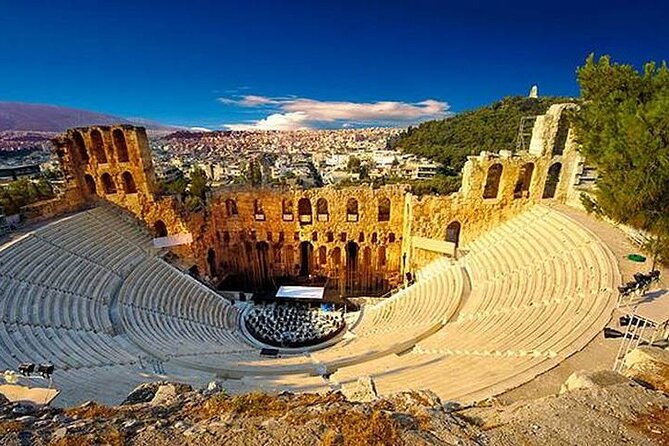
Once you’re in the Syntagma/Parliament area, the tour adds a few short stops that make Athens feel like a real living capital—not just ruins.
National Garden: a green reset behind the square
The National Garden is a green oasis behind Parliament and Syntagma Square. It’s over 160,000 square meters with 500+ plant types from around the world. The garden traces back to royal gardens ordered in 1839 by Queen Amalia, and it opened to the public in 1923 under the name National Garden.
Even if you only take a short walk here, it’s an effective break from stone and sun. Use it to cool down and reset your feet before the next round of walking.
Academy of Athens, University, National Library: the Athens of scholars
The tour also includes stops at the Academy of Athens, founded by a constitutional decree in 1926, and the National and Kapodistrian University of Athens, inaugurated in 1837 and noted as the oldest higher education institution in the modern Greek state.
Then you pass the National Library of Greece, part of the so-called Neoclassical Trilogy: Academy–University–Library. The library history includes a build period from 1887 to 1902, linked to Danish architect Theophile Hansen, with Ernest Ziller supervising.
These are shorter viewpoints. But they add context: Athens isn’t only ancient. It also keeps producing thinkers, researchers, and writers.
Plaka’s village feel and Ancient Agora’s long timeline
The day includes time for Plaka, plus the Ancient Agora. These two stops work well together because they show different layers of everyday Athens.
Plaka: cobblestones, shops, and a slow-lunch mood
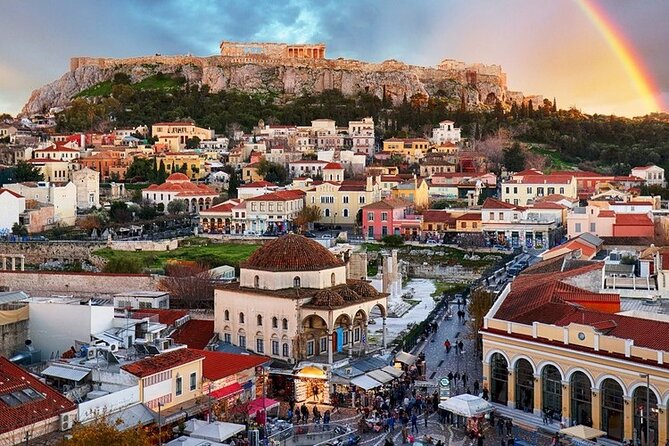
Plaka sits under the northeastern slope of the Acropolis, with winding streets, tiny shops, jewelry, clothes, and local ceramics. The neighborhood has that village feel, plus sidewalk cafés and family-run tavernas that stay open late.
The tour schedules free time for lunch here, about 1 hour 30 minutes. That’s enough time to eat without turning it into a race. And if weather or crowds are heavy, you can shift your plan to a café or quick shop visit and still stay on schedule.
Ancient Agora: the marketplace that was also the town square
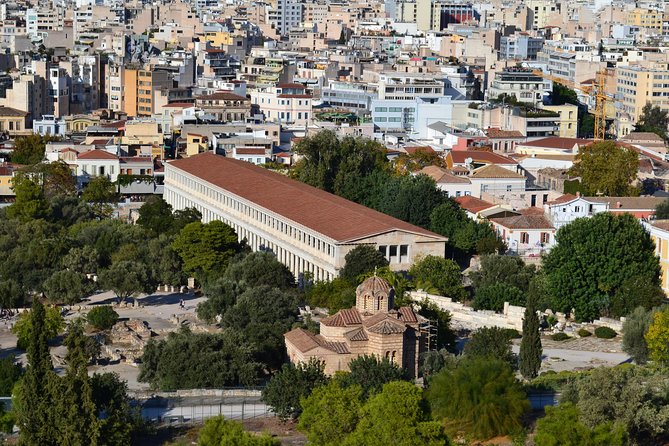
The Ancient Agora of Athens is positioned northwest of the Acropolis, near the hill of Areopagus and bounded by Market Hill areas. It’s where assemblies happened and where commercial life played out—basically, the ancient version of civic life with commerce built in.
What’s useful is the long span: the Agora has been in use for about 5,000 years, and today’s excavations expose layers from Archaic through Greco-Roman and Byzantine periods. Even with a shorter visit window, a guide-driven walk through what you’re seeing helps you understand why this place kept mattering.
Acropolis Museum: where the stones get translated
After seeing the monuments, the Acropolis Museum helps you see them in context.
The museum focuses on findings from the Acropolis site itself, built specifically to house artifacts from the Greek Bronze Age through Roman and Byzantine eras. The building’s background includes an architectural competition in 2000, foundations completed in 2004, and the opening in 2009. It’s located about 300 meters from the monuments, on the south side of the Acropolis.
Time here is listed as about 1 hour 30 minutes. That’s a practical amount: enough to see key pieces without sacrificing the rest of the day.
If you’re the type who likes to understand what you’re looking at, this stop pays off. If you’re more of a wanderer than a museum person, still give it a fair shot—this one is built around the Acropolis, so it connects directly to the buildings you just saw.
Olympeion, Kallimarmaro, and Lycabettus: the big Athens mix
The later part of the day turns more panoramic and more “Athens now.”
Olympeion: sanctuary of Olympian Zeus
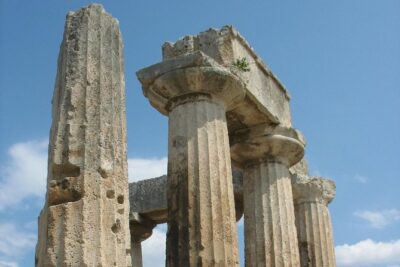
The sanctuary of Olympian Zeus includes the great temple of Zeus. The site also includes the temple of Apollo Delphinios, and a tripartite building identified as the Delphinion Court. Even if you don’t spend long here, it adds scale—you’re seeing a different kind of monument than the Acropolis: a grand sanctuary spread in its own major zone.
Kallimarmaro: the marble stadium
Next is Kallimarmaro, also called the Panathenaea Stadium. It’s made of marble from Pentelic stone, and the marble is known to change color with daylight—cooler in the morning and turning bone-gold in the afternoon.
It’s also tied to the first modern Olympic Games in 1896. The payoff here is how the stadium’s form feels athletic and human rather than only monumental.
Mount Lycabettus: highest viewpoint in central Athens
Finally, you get Mount Lycabettus (Lykavitos Hill). At 277 meters above sea level, it’s a top viewpoint over Athens and the coastline. It’s accessible on foot, by funicular railway, or by car, and there’s a chapel of Saint George up on the hill.
The tour schedule allows about 1 hour 10 minutes. This is the “exhale” stop—the place where you can step back from ancient stone and just enjoy the view. You’ll also get dropped off back at the same spot you were picked up, so the end of the day stays simple.
Price and value: what you’re actually paying for
At $407.41 per group (up to 3 people), this isn’t a budget excursion. But it’s also not just a seat in a van.
Your price covers:
- round-trip transportation in an air-conditioned vehicle
- hotel pickup and drop-off in Athens (and Piraeus port pickup/drop-off for cruises)
- a professional English-speaking tour driver
Entrance fees, food, and drinks are not included. And importantly, licensed English-speaking tour guides inside archaeological sites and museums are also not included, though the provider can arrange one for an additional cost.
So the real value is stress reduction plus private pacing. You’re not negotiating public transit, you’re not trying to time buses, and you’re not picking between taxis while juggling a cruise deadline. If you want one smooth day that hits the biggest sites—Acropolis, Acropolis Museum, Plaka, guard ceremony, and a viewpoint—this is priced like a convenience service, and it often earns its keep.
Who should book this, and who should think twice
This tour fits best if you:
- have only one day in Athens (especially on a cruise)
- want private, flexible timing rather than a large-group schedule
- like seeing the big Acropolis monuments and connecting them to what the museum shows
- enjoy the mix of ancient sites plus modern ceremonial Athens
Think twice if:
- your mobility is limited. There are steps and marble surfaces, and some areas are not easy for strollers. One past guest specifically reported the Acropolis part isn’t stroller accessible due to steps and slippery marble.
- you want to spend very long inside museums or archaeological areas. With multiple stops in one day, you’ll be thankful for the guide’s pacing, even if you occasionally wish you had more time.
Practical tips so your day goes smoothly
- Buy site tickets in advance if you can. The plan suggests pre-purchasing because availability can be an issue. The provider can also purchase tickets for you under a small service fee.
- Wear shoes with traction. Marble steps and polished stone can be slick.
- Bring water and something for sun. The day includes outdoor walking and a late-city viewpoint.
- Ask your driver about ceremony timing before you settle into viewing spots for the Evzones.
- For lunch, use your Plaka break to eat nearby, then come back to your meeting rhythm. You’ll enjoy Athens more when you’re not rushed.
Should you book Athens Private Shore Excursion (8 hours)?
I’d book this if you want a high-yield Athens day without doing the logistics math. The combination of Acropolis monuments + Acropolis Museum, plus Plaka, plus the Changing of the Guards stops, makes it a strong one-day sampler that still feels connected rather than random.
I’d skip it or choose something else if your priority is slow museum time, or if stairs and slippery marble will be a real problem for you. For most people, though, the private pacing, port-to-port convenience, and the way the day is ordered make it a practical Athens win.
If you decide to go, book ahead. The tour is often reserved well in advance (on average about 71 days), and that’s a good sign when you’re sailing with limited options.
FAQ
How many people are in a group?
This is priced per group of up to 3 people, so it stays private rather than crowded.
Where do cruise passengers get picked up?
Cruise passengers are picked up at Port of Piraeus, Terminal A, 28 Akti Xaveriou Street, Port E11. You disembark and walk outside the terminal exit door, and the driver/guide waits with a sign with your name.
Is hotel pickup included?
Yes. Hotel pickup and drop-off in Athens are included, with the meeting point at the main entrance.
How long is the tour?
The tour runs about 8 hours.
Are entrance fees included?
No. Entrance fees to archaeological sites and the museum are not included, and food and drinks are also not included.
Will the driver guide me inside museums and sites?
Your driver can guide you with history and culture until you enter archaeological sites and museums. Drivers are not licensed to accompany you inside. A licensed English-speaking tour guide can be arranged for an extra cost (subject to availability).
What language is the tour?
The tour offers an English-speaking driver.
When can I see the Changing of the Greek Guards?
The changing of the guard occurs every day at the top of the hour. The ceremony at the Tomb of the Unknown Soldier is specifically noted for Sundays at 11:00.
Can I cancel if plans change?
Yes, cancellation is free up to 24 hours in advance for a full refund.
More Tours in Athens
- Athens: Acropolis, Parthenon & Acropolis Museum Guided Tour★ 4.8 · 9,316 reviews
- The Acropolis, Parthenon & Acropolis Museum Guided Tour★ 4.7 · 8,493 reviews
- Acropolis: Premium Acropolis and Parthenon Guided Tour★ 4.8 · 5,208 reviews
- Athens: Mythology of Delphi, Museum and Arachova Guided Tour★ 4.7 · 5,102 reviews
- Acropolis and Parthenon Guided Walking Tour★ 5.0 · 4,755 reviews
- Greek Food Walking Tour in Athens★ 5.0 · 4,740 reviews
More Tour Reviews in Athens
- Athens: Acropolis & up to 5 Archaeological Sites Combo Pass★ 4.2 · 13,904 reviews
- Athens: Acropolis, Parthenon & Acropolis Museum Guided Tour★ 4.8 · 9,316 reviews
- The Acropolis, Parthenon & Acropolis Museum Guided Tour★ 4.7 · 8,493 reviews
- Athens: Cape Sounion & Poseidon Temple Sunset Half-Day Trip★ 4.8 · 8,241 reviews
- Acropolis: Premium Acropolis and Parthenon Guided Tour★ 4.8 · 5,208 reviews
- Athens: Mythology of Delphi, Museum and Arachova Guided Tour★ 4.7 · 5,102 reviews
All of Athens in a Day
- Athens: City Sightseeing Hop-On Hop-Off Bus Tour★ 4.3 · 4,520 reviews
- Best of Athens Half Day Private Tour★ 5.0 · 3,714 reviews
- Athens & Acropolis Highlights: Greek Mythology Small-Group Tour★ 5.0 · 2,370 reviews
- Athens: Acropolis and Mythology Highlights Small Group Tour★ 4.8 · 2,275 reviews
- City Sightseeing Athens, Piraeus & Beach Riviera Hop-On Hop-Off Bus Tours★ 4.0 · 1,887 reviews
- Athens Half-Day Sightseeing Tour with Tickets of Acropolis★ 4.0 · 1,402 reviews
Fresh Off the Boat: New Athens Reviews


Athens Sightseeing Tours, compared.
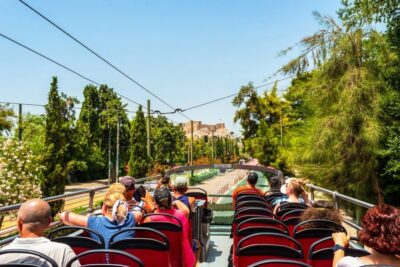 ★ 4.3City Sightseeing Hop-On Hop-Off Bus TourFrom $254,520 reviews
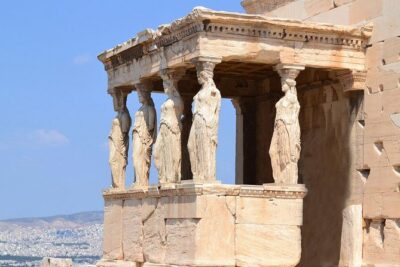 ★ 5.0Best of Athens Half Day Private TourFrom $913,714 reviews
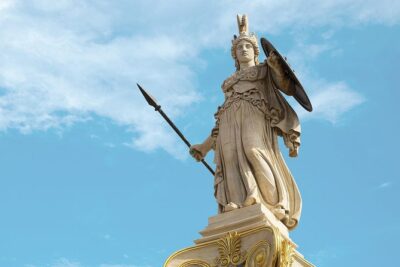 ★ 5.0Athens & Acropolis Highlights: Greek Mythology Small-Group TourFrom $542,370 reviews
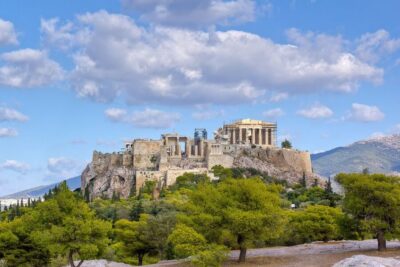 ★ 4.8Acropolis and Mythology Highlights Small Group TourFrom $532,275 reviews
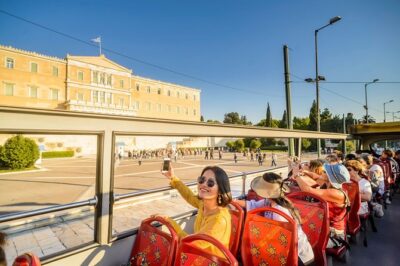 ★ 4.0City Sightseeing Athens, Piraeus & Beach Riviera Hop-On Hop-Off Bus ToursFrom $261,887 reviews
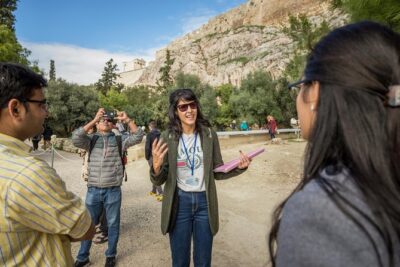 ★ 4.0Athens Half-Day Sightseeing Tour with Tickets of AcropolisFrom $1041,402 reviews
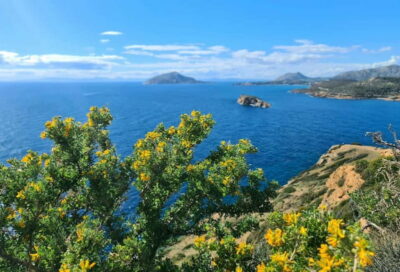 ★ 4.3From Athens: Temple of Poseidon & Cape Sounion Half-Day TourFrom $221,082 reviews
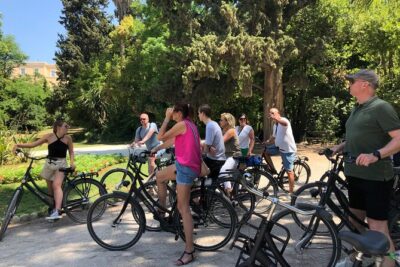 ★ 5.0Highlights of Athens biketourFrom $47840 reviews
Browse the lists this tour appears in