
Reviewed · WINE TOURS
Traditional Wines of Ancient & Modern Greece
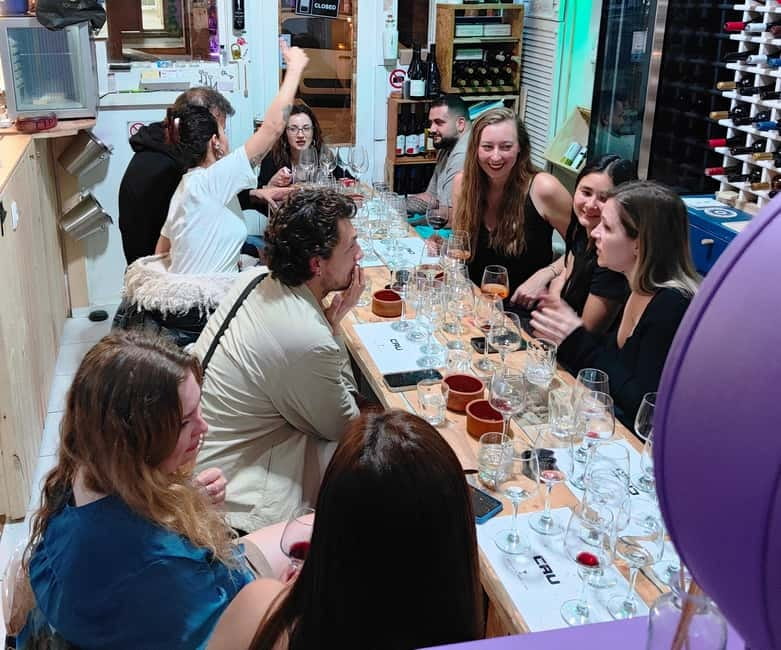
Wine with a time machine flavor. This Greek tasting traces ancient and modern wine side by side, walking backward through a story that spans thousands of years. In about 80 minutes in central Greece at CRU, you’ll sample a modern starting point and then move toward two ancient-style wines made on their premises.
I especially like how the tasting is structured like a guided timeline, not just a lineup of sips. I also love the pairing logic: you get nibbles with each wine, so you can notice how flavor changes as you move through styles and eras. One thing to consider: this is a seated tasting, so if you’re chasing outdoor views and a long walking tour, you’ll want to pair it with other sightseeing.
In This Review
- Key points I’d mark in bold
- A 4,000-Year Wine Timeline in 80 Minutes
- Savvatiano to Retsina: Starting With Modern Greece
- Natural Red and the On-Site Ancient Styles
- Nibbles, Pairing Logic, and How Flavors Shift
- What You Learn About Greek Wine Culture Without Feeling Like a Lecture
- Price and Value: What $44 Gets You
- Who This Tour Fits Best (And Who Might Skip It)
- Practical Tips Before You Go to CRU
- Should You Book This Wine-Through-Time Tasting?
- FAQ
- How long is the tasting?
- How many people are in the group?
- What languages are available?
- What wines and food are included?
- Where do I meet for the tour?
- Is there an age limit?
- Who runs the experience?
- Is it possible to get a refund if plans change?
Key points I’d mark in bold
- A reverse timeline: modern wines first, then ancient styles
- On-site ancient-style pours: you taste versions made at the premises
- Pairing built in: nibbles come with each wine to track flavor shifts
- Small group pacing: limited to 10 participants
- English instruction: an English-speaking instructor guides you through the how and why
- Strong value for a focused format: multiple pours in 80 minutes for $44
More Greek labels to try
- Athens: Classic Cooking Class with Market Visit and Wine
★ 5.0 · 1,101 reviews - Athens: Food Market Visit and Cooking Class with Wine
★ 4.9 · 1,087 reviews - Best rated Acropolis Wine Tasting
★ 5.0 · 568 reviews - PREMIUM Semi-Private Athens Afternoon Food Tour & Wine Tasting
★ 5.0 · 363 reviews
A 4,000-Year Wine Timeline in 80 Minutes
Greek wine culture is old. The tasting leans on that with the idea that you can understand where today’s styles come from by tasting toward earlier traditions. You’ll start with a modern white, then work backward through newer takes and, finally, the ancient-style wines made at CRU. The whole point is comparison: you’re not just tasting what’s in the glass, you’re learning how styles connect across time.
I like that the timeline approach keeps things practical. Instead of forcing you to memorize dates, you taste, pause, and reset. That rhythm matters because wine is sensory work: smell, sip, bite, then talk about what changed. In a tour that runs 80 minutes, that structure helps you actually remember something when you walk away.
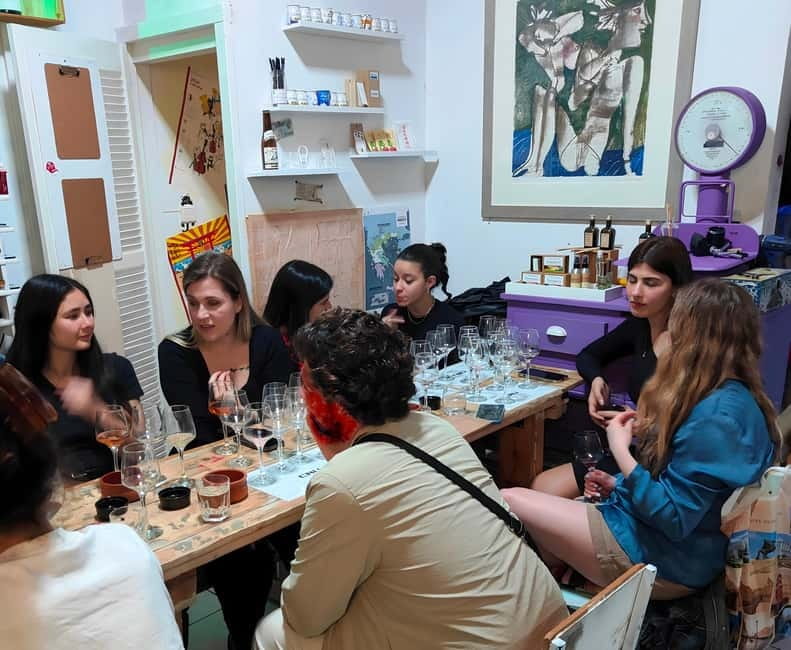
CRU runs this as a small-group experience limited to 10 participants. That means you’re not lost in a crowd. You’ll get time with the instructor and enough space to ask follow-ups, especially if your interest is history and flavors rather than speed-running a checklist.
Savvatiano to Retsina: Starting With Modern Greece
The tasting begins with a modern white wine made from the Savvatiano grape. Starting here gives your palate a clean baseline. If you’ve been sipping whatever’s nearby on vacation, this first glass is a helpful calibration: you get a sense of what a newer Greek style tastes like in this context.
Next comes a newer, more sophisticated Retsina style. This is a key step in the experience because it bridges two worlds: you’re still in modern territory, but the flavor profile is different enough that you can notice how stylistic choices shape what you perceive. The tasting doesn’t ask you to treat Retsina as a single fact. It encourages you to pay attention to how the wine behaves in your mouth, especially after a nibble.
Along the way, you’ll also have a natural red in the sequence. That’s the moment where the tasting starts feeling like a journey rather than a straight line. Whites and reds can read like completely different languages to many people, and natural styles add another layer of comparison. This is where your bite-and-sip cycle really helps you track what’s happening.
One practical note: the tasting is described as moving backward in time, so you should expect the story to feel like it’s tightening around ancient traditions as you go. It’s not chronological in the schoolbook sense. It’s reverse chronological in taste.
Natural Red and the On-Site Ancient Styles
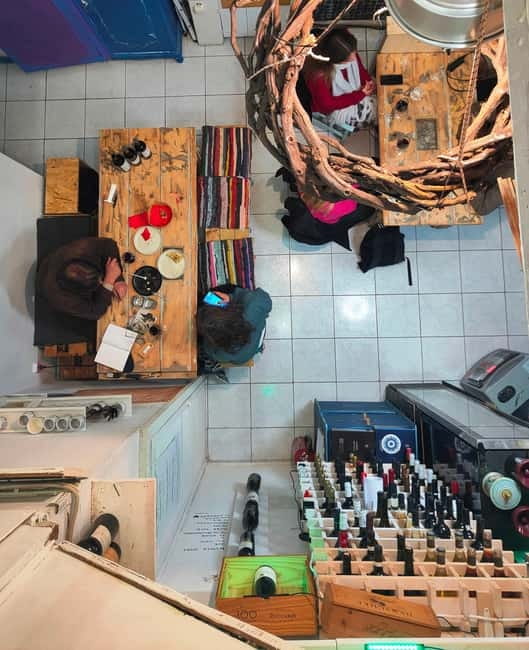
After the modern steps, the tasting turns toward the past with two ancient wines made in CRU’s premises. This is one of the most compelling parts of the experience because you’re not just hearing about antiquity; you’re drinking a reconstructed style in the present.
The ancient portion is built to let you compare flavor development across about four millennia. That’s a big claim, but the way it’s handled matters: you won’t be asked to pretend you can smell ancient Greece perfectly. Instead, you’ll be guided to notice differences between modern expectations and earlier-style wines, using the nibbles to keep your tasting consistent from one pour to the next.
In a tasting like this, I find it helps to think of the ancient-style wines as conversation starters. They give you something tangible to ask about: what elements feel familiar, what elements feel unfamiliar, and how those contrasts connect to “modern styles.” If you come in curious, you’ll leave with questions that actually make sense.
There’s also a quiet advantage here: since the ancient styles are made on-site at CRU, the tasting feels more grounded. You’re tasting with the same team that’s explaining it, not reaching across distance or relying on secondhand impressions.


Nibbles, Pairing Logic, and How Flavors Shift
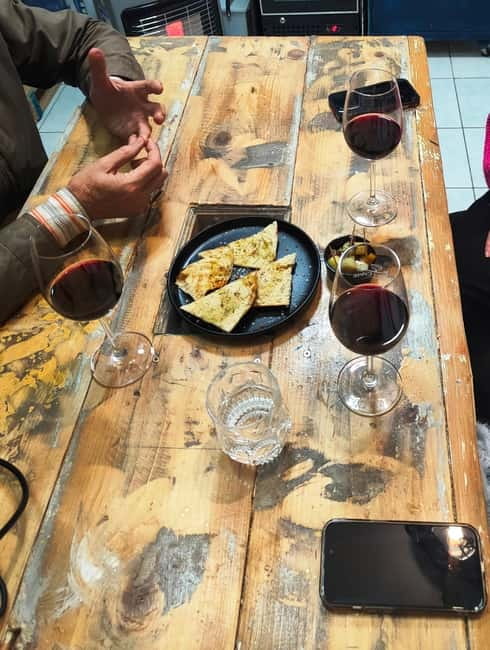
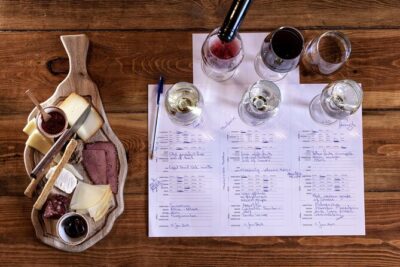
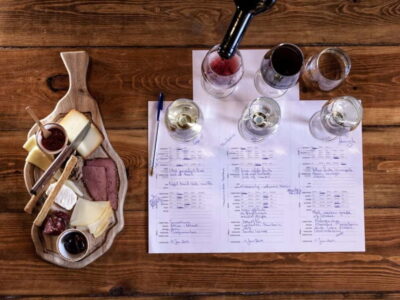
Wine tastings often treat food as an afterthought. Here, it’s part of the method. You’ll have nibbles paired with each wine, and the sequence is designed so you can notice how flavor develops rather than just judging each wine in isolation.
I like the approach because it trains your palate to think in comparisons. A sip can be one thing on its own, but after a bite, the wine may feel softer, sharper, more aromatic, or more structured. That kind of change is exactly what helps you understand how styles connect across time.
Also, small bites help you pace yourself in an 80-minute session. When you’re moving through multiple pours, hunger can mess with perception. The nibbles keep things steady so you can focus on the tasting notes and the instructor’s explanations without feeling like you’re waiting for dinner.
The tasting experience is designed around “flavour development through the past four millennia,” and the nibble pairings are the tool that makes that idea believable. You’re actively participating in the comparison instead of passively receiving it.
What You Learn About Greek Wine Culture Without Feeling Like a Lecture
This is where the experience earns its high scores. The instructor leads the tasting in English and ties the pours together with the story of how Greek wine moves from ancient styles to newer ones and back again. Based on the feedback you can expect a calm, relaxed tone. People tend to walk away feeling they learned how history and flavor connect, without being forced into a classroom vibe.
One review highlights the value of the instructor taking time to help make connections people hadn’t made before. That’s the goal of the timeline approach: linking the why behind styles, not just labeling what you tasted. The instructor is also described as friendly and passionate, which matters because wine education works best when you feel comfortable asking simple questions like What should I notice first?
You should also be ready for a tasting that feels like a guided conversation. With a group capped at 10, it’s easier for the instructor to adjust to the room—so if you’re more into the ancient side or more into the modern side, the talk can follow your curiosity.
And yes, the atmosphere is meant to feel relaxing. After a day of travel, that’s not a small detail. Wine is a slow sensory activity. A frantic tone would undermine the point.
Price and Value: What $44 Gets You
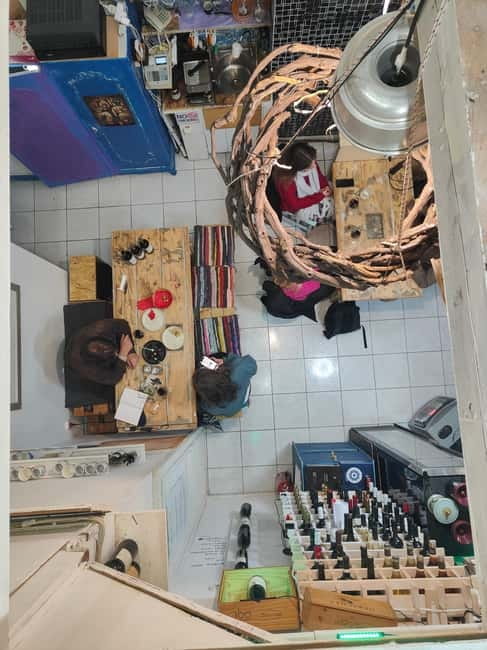
At $44 per person for 80 minutes, you’re paying for a compact, structured experience with multiple pours and guided storytelling. The included items list seven wines, plus nibbles and filtered water. The tasting overview focuses on five signature styles across modern and ancient, so the total experience may include additional small pours to round out the set.
Either way, the value comes from two places:
- You get enough tasting volume to compare styles across eras, not just a couple of sips.
- You get an instructor-led explanation that ties the experience to a broader idea: wine as a changing tradition rather than a fixed product.
If you’re trying to build a well-rounded Athens or Central Greece itinerary, this is a smart slot. It doesn’t require a full day, and it offers a cultural angle you can talk about later—especially if you care about how food and drink reflect a place over time.
Who This Tour Fits Best (And Who Might Skip It)
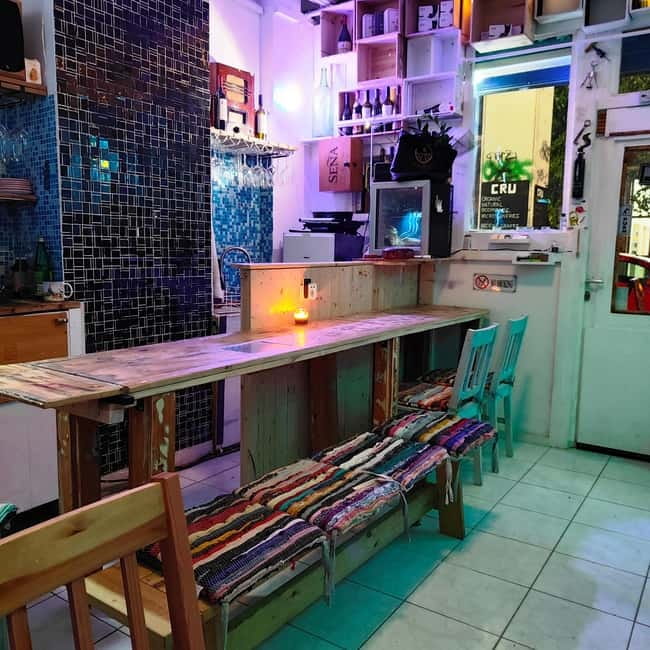
This tasting is best for you if you enjoy history with flavor—the kind that you can literally taste. It’s also a good fit if you like structured learning that doesn’t feel stiff. The small group size makes it easier to ask questions, and the reverse timeline keeps it interesting even if you’ve done other wine tastings before.
You might consider skipping it if you want something more outdoorsy or more hands-on than a seated tasting room experience. From the description, this is about the flight, the nibbles, and the guided storytelling, not about walking through vineyards or touring facilities.
It’s also not suitable for people under 19.
Practical Tips Before You Go to CRU
- Arrive with a curious mindset. You’ll get the most out of this if you’re willing to compare and ask simple questions about what changed from wine to wine.
- Pace yourself with the nibbles. The food isn’t a side detail here; it’s part of how you track flavor development across the lineup.
- Wear comfortable clothes. You’ll be spending most of the 80 minutes seated, focused on tasting and conversation.
- Go in expecting multiple pours. Even though the overview talks about five styles, the package lists seven wines, so expect a fuller flight than a basic two- or three-wine tasting.
The meeting point is straightforward: find the CRU Tasting Room Wine & Olive Oil Bar and show your booking number.
Should You Book This Wine-Through-Time Tasting?
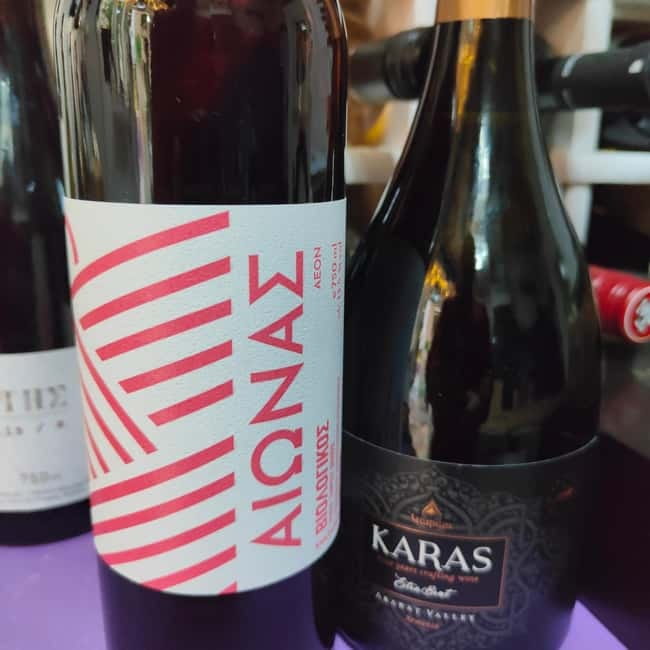
Yes—if you want a Greek wine experience that feels like more than just tasting. The reverse timeline, the on-site ancient-style pours, and the nibble pairings give you something you can remember: a sense of how wine tradition evolves. The small group format also helps the instructor actually connect the dots for you, and that’s the difference between a fun sip session and a genuinely useful experience.
Skip it if you’d rather spend your limited time on vineyard scenery or a longer, walking-heavy excursion. But if you want a compact, high-impact tasting that connects ancient Greece to what’s in your glass today, this is a solid pick.
FAQ
How long is the tasting?
The duration is 80 minutes.
How many people are in the group?
It’s limited to 10 participants.
What languages are available?
The tasting is in English.
What wines and food are included?
The experience includes seven wines, nibbles to pair, and filtered water.
Where do I meet for the tour?
Meet at the CRU Tasting Room Wine & Olive Oil Bar and present your booking number.
Is there an age limit?
Yes. It is not suitable for people under 19.
Who runs the experience?
CRU BEE-HAVING Wine & Olive Oil Tastings provides the experience, with an English instructor.
Is it possible to get a refund if plans change?
Yes. You can cancel up to 24 hours in advance for a full refund.
More Greek Wine to Taste
- Athens: Classic Cooking Class with Market Visit and Wine★ 5.0 · 1,101 reviews
- Athens: Food Market Visit and Cooking Class with Wine★ 4.9 · 1,087 reviews
- Best rated Acropolis Wine Tasting★ 5.0 · 568 reviews
- PREMIUM Semi-Private Athens Afternoon Food Tour & Wine Tasting★ 5.0 · 363 reviews
- Athens: Acropolis Wine Tasting with Cheese and Olives★ 4.9 · 337 reviews
- Athens: Wine Tasting with a Sommelier under the Acropolis★ 4.7 · 311 reviews
More Tour Reviews in Athens
- Athens: Acropolis & up to 5 Archaeological Sites Combo Pass★ 4.2 · 13,904 reviews
- Athens: Acropolis, Parthenon & Acropolis Museum Guided Tour★ 4.8 · 9,316 reviews
- The Acropolis, Parthenon & Acropolis Museum Guided Tour★ 4.7 · 8,493 reviews
- Athens: Cape Sounion & Poseidon Temple Sunset Half-Day Trip★ 4.8 · 8,241 reviews
- Acropolis: Premium Acropolis and Parthenon Guided Tour★ 4.8 · 5,208 reviews
- Athens: Mythology of Delphi, Museum and Arachova Guided Tour★ 4.7 · 5,102 reviews
Fresh Off the Boat: New Athens Reviews




Wine Tours, compared.
 ★ 5.0Classic Cooking Class with Market Visit and WineFrom $831,101 reviews
 ★ 4.9Food Market Visit and Cooking Class with WineFrom $811,087 reviews
 ★ 5.0Best rated Acropolis Wine TastingFrom $59568 reviews
 ★ 5.0PREMIUM Semi-Private Athens Afternoon Food Tour & Wine TastingFrom $211363 reviews
 ★ 4.9Acropolis Wine Tasting with Cheese and OlivesFrom $44337 reviews
 ★ 4.7Wine Tasting with a Sommelier under the AcropolisFrom $68311 reviews
 ★ 4.9Wine O’Clock Tasting!From $41311 reviews
 ★ 4.9Premium Food and Wine Tasting Tour in the eveningFrom $170212 reviews
Browse the lists this tour appears in