
Reviewed · CORINTH DAY TRIPS
Athens & Corinth Full Day Private Sightseeing Tour
Two ancient worlds, one packed day. I like how this Acropolis-focused tour pairs big monument time with a calm, efficient plan, and I also love the skip-the-line ticket handling so you spend less time queuing and more time looking at stones that shaped Western culture.
One catch: it’s a long day (about 8 hours) with extra admission fees on the spot and no lunch included. That means you’ll want comfortable shoes and a simple food plan, especially with several active stops like the Acropolis area and Mount Lycabettus.
In This Review
- Key reasons this Athens + Corinth tour works
- Pickup, timing, and what that $213.03 really buys
- Acropolis time: Parthenon, Propylaia, and the theater vibe
- One practical consideration at the Acropolis
- Panathenaic Stadium and Syntagma Square: the Athens you see daily
- Panathenaic Stadium (Kallimarmaro)
- Syntagma Square changing of the guard
- Monument to the Unknown Soldier and the national dates
- Mount Lycabettus and the views that connect myth to geography
- The realism note
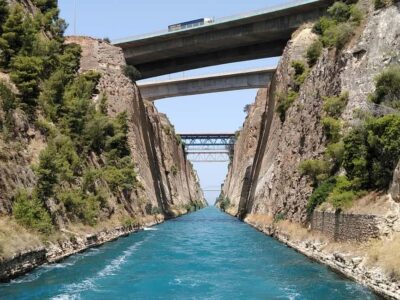
- Corinth Canal: a modern cut with ancient roots
- Ancient Corinth (Archaia Korinthos): St. Paul, ports, and layered ruins
- Where you can get the most from your time
- Acrocorinth (Akrokorinthos): fortress views and a medieval feel
- Why this stop is worth the time
- Apostolos Pavlos Church: a St. Paul finale with a tall bell tower
- What you’ll pay for: entrance fees, lunch, and the value math
- Who should book this private Athens + Corinth tour
- Should you book it?
- FAQ
- How long is the Athens and Corinth private sightseeing tour?
- Is hotel pickup and drop-off included?
- Are entrance fees included in the price?
- Do I need to pre-purchase tickets?
- Is lunch included?
- What is included in the vehicle during the tour?
- Is the tour private?
- Is the changing of the guard ceremony included?
- What happens if weather is bad or I need to cancel?
Key reasons this Athens + Corinth tour works
- Skip-the-line ticket handling so you can get moving at the major sites
- Private format with pickup and drop-off in Athens (and nearby), plus Wi‑Fi and USB charging in the vehicle
- Athens highlights in real time: the Syntagma Square changing of the guard ceremony runs every hour
- Corinth Canal photo stop built into the drive, with the engineering story tied to ancient plans
- Ancient Corinth with St. Paul context, plus Acrocorinth’s fortress views over the Isthmus
The canal and old Corinth, a few more days
- From Athens: Ancient Corinth Day Trip with Canal & VR Guide
★ 4.6 · 1,073 reviews - Biblical Tour Letters ToThe Corinthians St Paul’s Footsteps 6Hour
★ 5.0 · 1,065 reviews - Private Biblical Tour Ancient Corinth & Isthmus Canal from Athens
★ 5.0 · 762 reviews - Athens: Ancient Corinth & Nafplio Full Day Trip with Swim
★ 4.8 · 531 reviews
Pickup, timing, and what that $213.03 really buys
This tour is built for people who want two big locations—Athens and Corinth—without having to coordinate buses, ticket booths, or “where do we meet again” stress. It runs about 8 hours and is private, so it’s just your group in the luxury air-conditioned vehicle.
You’re picked up from places like your hotel, port, airport, or apartment, then dropped back at the end. Inside the car you get Wi‑Fi, USB chargers, bottled water, and soft drinks, plus alcoholic beverages if you want them. That sounds like a small thing, but on a day that’s mostly travel plus sights, comfort helps. The route is one continuous day plan, so you’ll be glad you’re not also fighting transport logistics.
The guide setup matters too. You’ll have an English-speaking driver with deep historical knowledge. One note: they’re not certified to accompany you at every site, so you’ll still rely on the site’s own interpretation where needed. In practice, that means you should expect the guide to steer the day with meaning—where to look, what connects to what—rather than running a formal lecture in every ticketed room.
Acropolis time: Parthenon, Propylaia, and the theater vibe
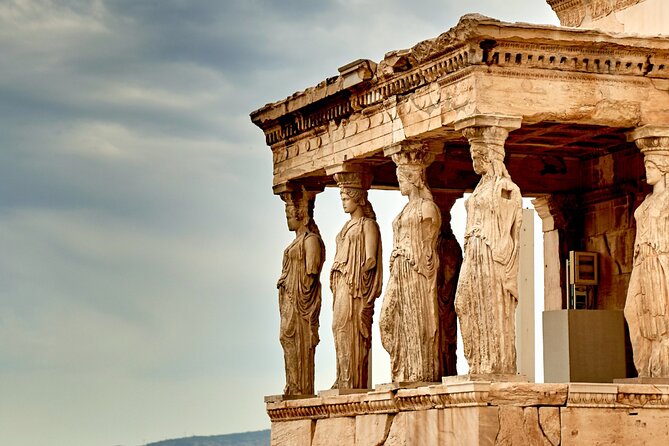
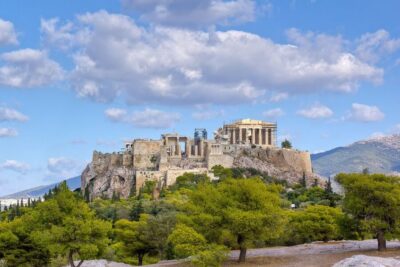
Your biggest concentration point is the Acropolis with about 1 hour 30 minutes on-site, admission paid separately. The Acropolis isn’t just ruins on a hill. It was the ancient city’s major sanctuary, tied to Athena, and today it still feels like the city’s “main stage.”
What I like about this portion is the way it’s structured around the big visual anchors:
- You’ll see the Parthenon and the program of buildings that made the Acropolis a statement of power and belief.
- You’ll also get time with the entrance complex called the Propylaia. It’s more than a doorway. The idea is that it works like a grand civic monument—part architectural gate, part ceremonial welcome to the sacred zone.
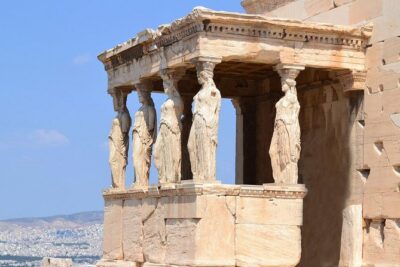
- On the north side, you’ll encounter the temple area associated with the legendary contest between Poseidon and Athena for the city’s name. That story is one reason Greek mythology still feels local, not abstract.
If you’re the type who likes context, the Acropolis stop is where it clicks. You’re not only staring at carvings; you’re seeing how the pieces were designed to choreograph movement and attention.
A bonus for people who care about performance and early theater: the day includes Dionysus’ Theater. This is described as the most important known open-air theater in ancient Athens and regarded as the world’s first theater. The staging logic matters here—Dionysus’ venue linked directly to the Great Dionysia festival for Attic drama.
And right nearby in the Acropolis area is the Odeon of Herodes Atticus, a Roman-era amphitheater with a capacity of at least 5,000. It was renovated in the 1950s and has hosted cultural events—so even if you’re just watching a concert you hear about, the structure is still doing its original job: making an audience feel like part of something larger.
One practical consideration at the Acropolis
This stop is time-boxed. That’s great for energy management, but it also means you’ll want to go in with a quick game plan: decide what you want to prioritize before you arrive (Parthenon views, the temple program, or theater ruins). Otherwise you can feel rushed even when the day is well paced.
The big Athens hits in one go

Panathenaic Stadium and Syntagma Square: the Athens you see daily
After the Acropolis, you shift from ancient sacred ground to modern Athens center stage.
Panathenaic Stadium (Kallimarmaro)
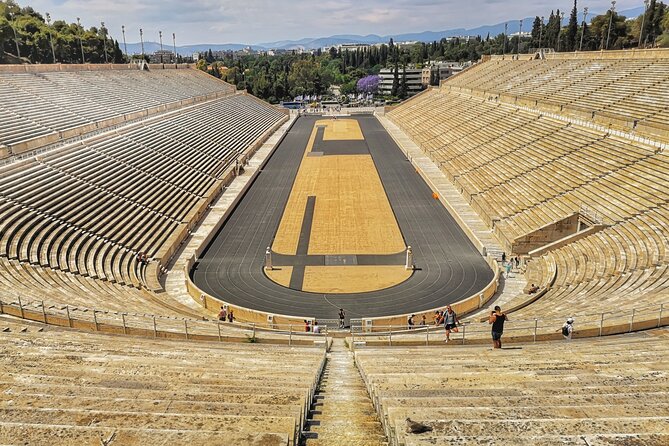
You get a short visit—about 15 minutes—at the Panathenaic Stadium, also known as Kallimarmaro. It’s in very good condition, and it ties directly to competitions held in honor of Athena. The key detail here is the timing: the project began before the 6th century BC, and the final form used precious marble after a long process.
Even in a short stop, it’s a useful contrast to the Acropolis. You’re seeing a different kind of civic identity—Athens not only worshipped there, it also competed there.
Syntagma Square changing of the guard
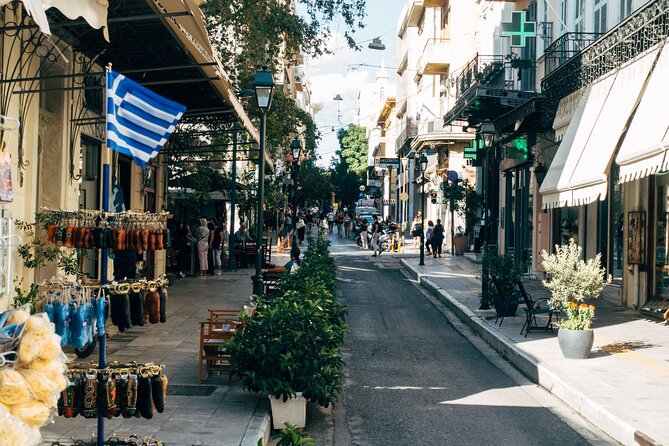
Then it’s Syntagma Square, with multiple stops in the same area. The changing of the guard ceremony happens every hour in front of the Monument to the Unknown Soldier, and the show lasts about 15 minutes. Two Evzones come forward to take the place of their colleagues. The moving routine starts after the moment of stillness, with stretching limbs and a distinct gait that makes it feel almost choreographed.
This is one of the best “easy wins” on the schedule because it gives you a living cultural rhythm, not just a photo backdrop. You can watch it without needing museum tickets, and it’s easy to appreciate even if you only understand the basics.
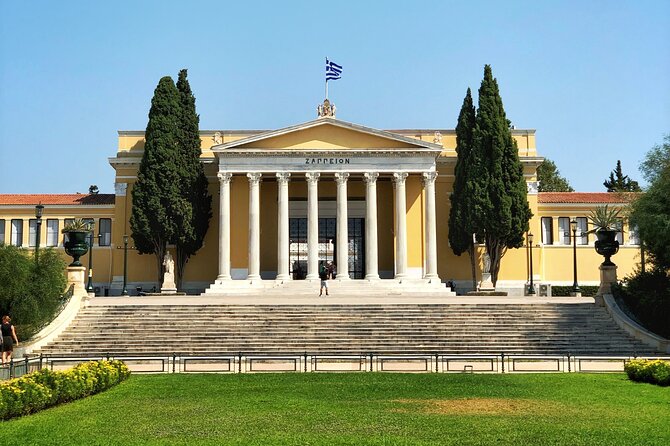
Nearby, you’ll also see why Syntagma is named what it is. The square’s name connects to the Constitution forced from Otto after the popular and military insurrection on September 3, 1843. In front of you is the Old Royal Palace from the 19th century, now the Greek Parliament building since 1934.
Monument to the Unknown Soldier and the national dates
The Unknown Soldier monument also acts as a reference point for the two national celebrations of Greece on 25/3/1821 and 28/8/1940. That small piece of context helps the ceremony feel less like a street performance and more like a national ritual with a clear timeline.
Mount Lycabettus and the views that connect myth to geography
Next up is Mount Lycabettus, with about 20 minutes and no ticket fee. This hill is tied to myth: it’s described as a rock Athena carried in her hands, then dropped in Athens after hearing bad news delivered by a crow.
At the top you’ll find the church of Agios Georgios. Even if you’re not a big church visitor, the main payoff here is the viewpoint: you can see Athens and the Saronic Gulf. That panorama is a good reset after concentrated archaeology.
The realism note
With only 20 minutes, treat it like a viewpoint stop, not a hiking expedition. Wear shoes that handle uneven ground, and don’t expect a long break. The value is the quick “look at the whole city” moment that makes the earlier monuments feel tied to real geography.
Corinth Canal: a modern cut with ancient roots
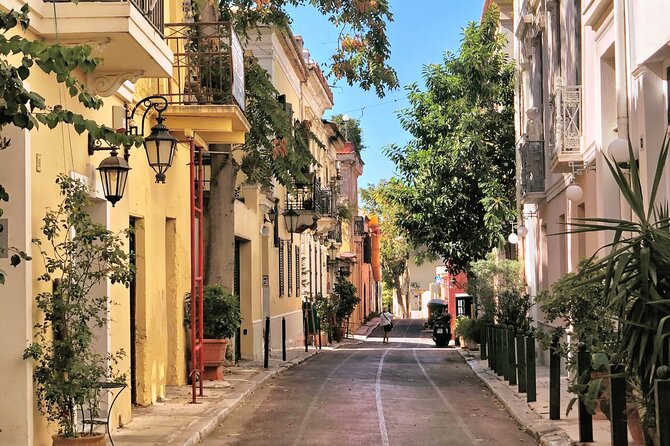
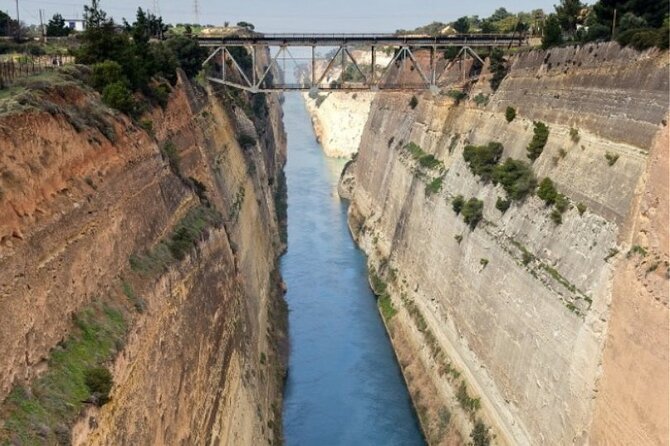
Driving out from Athens toward Corinth includes a key stop: the Corinth Canal.
You’ll pause for about 1 hour to see the canal and get the engineering story. The concept goes back to at least 602 BC, but the canal wasn’t completed until 1893. That gap matters because it shows how long humans tried to solve the same problem: the canal opened a route between the Gulf of Corinth and the Saronic Gulf, cutting down what would otherwise be a longer journey.
This is a great moment to stretch your legs, take photos, and get a breath before you step into ancient Corinth proper.
Ancient Corinth (Archaia Korinthos): St. Paul, ports, and layered ruins
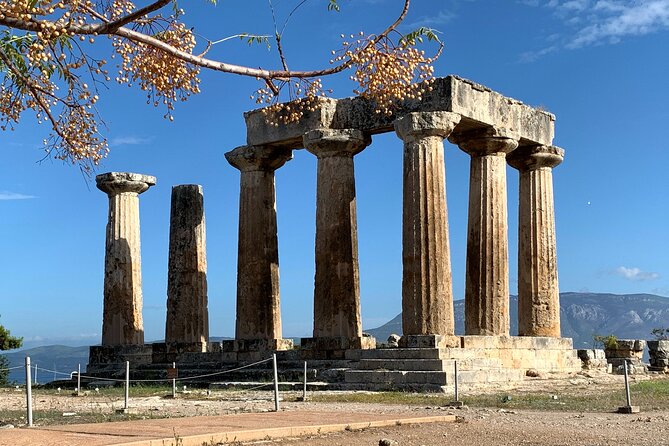
After crossing the Isthmus, you head to Archaia Korinthos with about 3 hours on-site. Admission is free for you on this stop according to the tour data, but do confirm what’s covered on the day since the tour’s overall paid entrance budget is still listed separately.
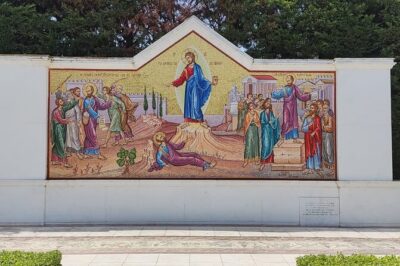
This is where the day shifts from Athens’ civic mythology into Corinth’s cultural and religious importance. The itinerary frames Corinth through St. Paul, noting he lived there for almost two years and carried out major missionary work. There’s also a church connection: the church includes the first letter to the Corinthians written in four languages: Greek, Arabic, French, and English. That detail is one reason this stop feels practical, not just scenic.
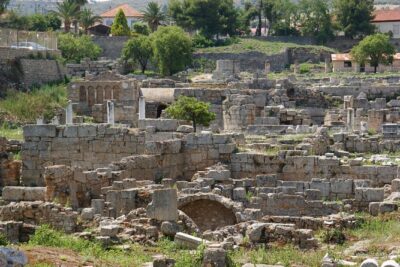
You’ll also get time to explore the archaeological side of Corinth, including Greek and Roman architecture at the archaeological site and the museum. Ancient Corinth is described as a state city that was among the richest and most famous ports of ancient Greece. If you like imagining a place as a trading hub, this is your chance. Ports create a mix of ideas, people, and styles—and Corinth’s layers reflect that.
Where you can get the most from your time
Use your guide’s context to pick what to focus on: the Paul connections, the port-and-power story, or the way Greek and Roman structures sit next to each other. With 3 hours, you can do more than “hit the highlights,” but you still have to steer.
Acrocorinth (Akrokorinthos): fortress views and a medieval feel
From Ancient Corinth you move to Akrokorinthos, also known as Acrocorinth. This is the acropolis of ancient Corinth, described as a monolithic rock overlooking the city.
You get about 30 minutes. The tour framing is that Acrocorinth’s fortress position mattered militarily: it commanded the Isthmus of Corinth and worked as a last line of defense by land. Today, it’s also highlighted as one of Greece’s important medieval castle sites.
Why this stop is worth the time
It’s not the kind of site where everything is “pretty.” It’s dramatic because it’s strategic. When you look across, you start to understand why the ancients and medieval builders cared so much about controlling height.
Apostolos Pavlos Church: a St. Paul finale with a tall bell tower
The final major stop is Apostolos Pavlos Church (Holy Metropolitan Church of Corinth). You’ll spend about 30 minutes here.
The focus is St. Paul’s patronage and the church’s dedication to him. A specific detail included on the tour is the bell tower: it’s listed as 33 meters high, tied to the same number of years referenced for Jesus’ earthly life, and it’s described as the tallest building in the city even today.
This stop makes a clean finish because it connects the day’s earlier religious context (Paul in Corinth) to a modern place of worship you can actually stand inside and feel.
What you’ll pay for: entrance fees, lunch, and the value math
The price is $213.03 per person and the tour includes a lot that matters on a long day: pickup/drop-off, a luxury air-conditioned vehicle, on-board Wi‑Fi and USB charging, drinks, and skip-the-line ticket handling.
Then there’s the part you should plan for:
- Entrance fees are not included and are listed as €45.00 per person, paid on the spot.
- Lunch is not included.
So is it good value? For me, the value depends on how you handle big-city logistics. If you plan to buy tickets yourself, navigate between Athens sites, then take a day trip to Corinth, it’s easy to burn time and energy. Paying for a private guide-driven day helps you get the main monuments and ruins without losing half your day to transit decisions and ticket lines.
Also, a private day tends to feel better than crowded group tours when you want to ask questions or adjust your pacing slightly. On this tour, the guide approach can also be flexible. Past experiences shared with this company mention guides like Nasos (kind and informative), Alexander (helpful and upbeat), and Aristotle (passionate, with an archaeology background in one story), including one day where the guide adapted the focus around the Apostle Paul interest and even added a special stop.
You don’t need to bet your day on a specific guide. But it’s a good sign that the team understands how to tailor the story, not just follow a checklist.
Who should book this private Athens + Corinth tour
This tour is a strong fit if you:
- Want two major destinations in one day and hate splitting plans into separate trips
- Care about context, not just photos—Athens monuments plus St. Paul’s Corinth
- Like the idea of a private vehicle with pickup, water, and Wi‑Fi
- Prefer skip-the-line help, especially at the busiest places
It might be less ideal if you:
- Get tired fast with long sightseeing days and paid add-ons
- Need a full, sit-down lunch included in the price
- Want lots of free time at each site with no schedule pressure
If the weather is poor, the tour can be rescheduled or refunded, because this experience requires good weather. That’s a normal reality for open-air sites and viewpoints.
Should you book it?
If you’re doing Athens and you also want Corinth, this is one of the cleanest ways to do it without turning your trip into a logistics project. I’d book it when you want a guided day that connects the dots—Acropolis to Syntagma, then across to Corinth’s Paul story and fortress views from Acrocorinth.
I wouldn’t book it if you’re hoping for a relaxed day with lunch included and lots of unscheduled time. This tour is designed to move.
If you go, plan for the €45 entrance fees, bring a water-friendly mindset, and wear shoes you trust on uneven ground. You’ll come away with the feeling that you saw Athens and Corinth as connected worlds, not separate stops on a map.
FAQ
How long is the Athens and Corinth private sightseeing tour?
It runs about 8 hours.
Is hotel pickup and drop-off included?
Yes. Pickup and drop-off are offered from hotels, ports, airports, and apartments (including Airbnb).
Are entrance fees included in the price?
No. Entrance fees are listed as €45.00 per person and you pay on the spot.
Do I need to pre-purchase tickets?
No. The tour says site tickets are handled for you, and you pay entrance fees on the spot without pre-purchase required.
Is lunch included?
No. Lunch is not included.
What is included in the vehicle during the tour?
You get transport by luxury air-conditioned vehicle, Wi‑Fi, USB charger access, soft drinks, bottled water, and alcoholic beverages.
Is the tour private?
Yes. It is a private tour/activity, and only your group will participate.
Is the changing of the guard ceremony included?
Yes. You stop for the changing of the guard ceremony in front of the Unknown Soldier monument, which happens every hour and lasts about 15 minutes.
What happens if weather is bad or I need to cancel?
The tour requires good weather. If it’s canceled due to poor weather, you’ll be offered a different date or a full refund. Free cancellation is allowed up to 24 hours in advance for a full refund.
More Tour Reviews in Athens
- Athens: Acropolis & up to 5 Archaeological Sites Combo Pass★ 4.2 · 13,904 reviews
- Athens: Acropolis, Parthenon & Acropolis Museum Guided Tour★ 4.8 · 9,316 reviews
- The Acropolis, Parthenon & Acropolis Museum Guided Tour★ 4.7 · 8,493 reviews
- Athens: Cape Sounion & Poseidon Temple Sunset Half-Day Trip★ 4.8 · 8,241 reviews
- Acropolis: Premium Acropolis and Parthenon Guided Tour★ 4.8 · 5,208 reviews
- Athens: Mythology of Delphi, Museum and Arachova Guided Tour★ 4.7 · 5,102 reviews
All of Athens in a Day
- Athens: City Sightseeing Hop-On Hop-Off Bus Tour★ 4.3 · 4,520 reviews
- Best of Athens Half Day Private Tour★ 5.0 · 3,714 reviews
- Athens & Acropolis Highlights: Greek Mythology Small-Group Tour★ 5.0 · 2,370 reviews
- Athens: Acropolis and Mythology Highlights Small Group Tour★ 4.8 · 2,275 reviews
- City Sightseeing Athens, Piraeus & Beach Riviera Hop-On Hop-Off Bus Tours★ 4.0 · 1,887 reviews
- Athens Half-Day Sightseeing Tour with Tickets of Acropolis★ 4.0 · 1,402 reviews
Corinth and the Canal
- From Athens: Ancient Corinth Day Trip with Canal & VR Guide★ 4.6 · 1,073 reviews
- Biblical Tour Letters ToThe Corinthians St Paul’s Footsteps 6Hour★ 5.0 · 1,065 reviews
- Private Biblical Tour Ancient Corinth & Isthmus Canal from Athens★ 5.0 · 762 reviews
- Athens: Ancient Corinth & Nafplio Full Day Trip with Swim★ 4.8 · 531 reviews
- Athens: Corinth Canal, Mycenae & Nafplio Premium Guided Tour★ 4.7 · 322 reviews
- Private Tour of Apostle Paul’s Footsteps in Ancient Corinth★ 5.0 · 275 reviews
Fresh Off the Boat: New Athens Reviews





Corinth Day Trips, compared.
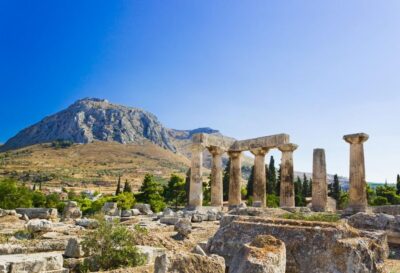 ★ 4.6From Athens: Ancient Corinth Day Trip with Canal & VR GuideFrom $411,073 reviews
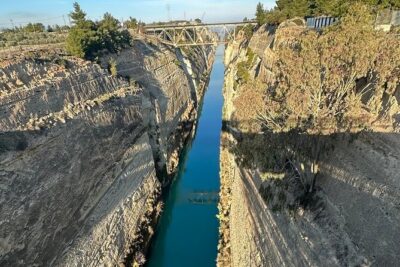 ★ 5.0Biblical Tour Letters ToThe Corinthians St Paul’s Footsteps 6HourFrom $1701,065 reviews
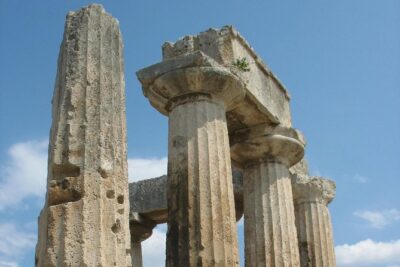 ★ 5.0Private Biblical Tour Ancient Corinth & Isthmus Canal from AthensFrom $301762 reviews
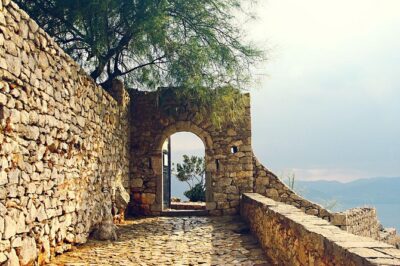 ★ 4.8Ancient Corinth & Nafplio Full Day Trip with Swim531 reviews
 ★ 4.7Corinth Canal, Mycenae & Nafplio Premium Guided TourFrom $32322 reviews
 ★ 5.0Private Tour of Apostle Paul’s Footsteps in Ancient CorinthFrom $169275 reviews
 ★ 4.3Corinth Canal, Mycenae and Nafplio Day TourFrom $129252 reviews
 ★ 4.5Corinth Half-Day Trip from Athens with Entrance TicketsFrom $91242 reviews
Browse the lists this tour appears in