
Reviewed · METEORA DAY TRIPS
From Athens: Meteora Caves & Monasteries Day Trip by Train
Meteora feels unreal before you even arrive. I love the train ride through Thessaly because it turns the long trip into part of the experience, not just transit. I also like how this day trip packs in all six monasteries (with interiors for three) plus the St. Nicholas Badovas hermit caves.
One catch: it’s a 14-hour day with multiple transport legs, so you need patience for clocks, stations, and stairs.
In This Review
- Key things that make this Meteora day trip work
- Athens to Kalambaka by train: why the ride is half the point
- Kalambaka meet-up, then straight to Kastraki
- Meteora’s core idea: huge rocks + very specific human choices
- Seeing all six monasteries (but entering only three): how to make it feel balanced
- Inside the monasteries: what to watch for beyond the postcard shots
- The Hermit Caves of St. Nicholas Badovas: a different tempo
- Photo stops and viewpoints: when your camera actually gets to work
- Price and value: $123 isn’t the whole cost
- The long-day logistics: what to expect on the return to Athens
- Who should book this tour, and who should skip it
- Should you book Meteora Caves & Monasteries by train from Athens?
- FAQ
- What time does the train leave Athens?
- How does the trip continue after Paleofarsalos?
- Where do I meet the guide in Kalambaka?
- How many monasteries can I enter on this tour?
- Are monastery entrance fees included?
- Do you visit the Hermit Caves of St. Nicholas Badovas?
- Is there time for lunch or food in Kastraki?
- What should I bring for the day trip?
- Is the tour wheelchair accessible?
- How long is the whole experience?
Key things that make this Meteora day trip work
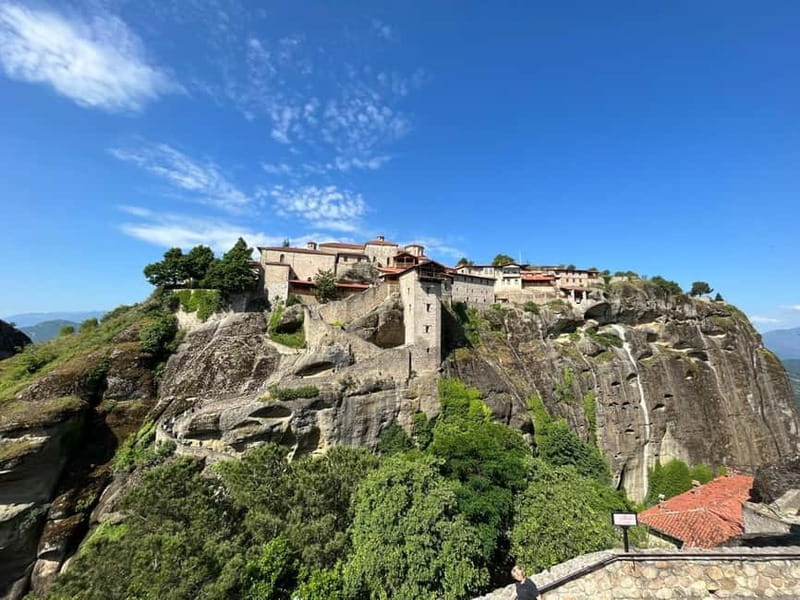
- A full Meteora sweep in one day: see all six monasteries, with interior time for three
- Train-first routing from Athens: the morning ride helps break up a long day
- St. Nicholas Badovas hermit caves: a quieter, more human side of Meteora
- Photo stops that matter: viewpoints are built into the schedule, not random pull-offs
- A small-group feel on many departures: pacing stays comfortable
- You’ll pay monastery fees on-site: bring cash for the three interiors
Monasteries in the sky, more Meteora trips
- Athens: Meteora Monasteries Day Trip with Caves and Lunch
★ 4.7 · 4,670 reviews - Athens to Meteora: Monasteries, Caves & Seaside Stopovers
★ 4.7 · 2,958 reviews - Athens: Full-Day Meteora Tour with Local Guide & Greek Lunch
★ 4.8 · 2,101 reviews - Athens: Meteora Monasteries, Caves & Coastal Stopovers with Lunch
★ 4.5 · 1,432 reviews
Athens to Kalambaka by train: why the ride is half the point
The day starts early, and that’s not a sales trick. Your train from Stathmos Larissis leaves at 06:58 AM for Kalambaka. Travel time is listed at about 2.75 hours, and the vibe is exactly what you’d hope for: morning light, countryside rolling by, and fewer stop-starts than a full bus day.
Here’s the part you should understand up front: due to the temporary rail situation in Thessaly (flood-related disruption), the route includes a change. Around 09:45 AM, the train stops at Paleofarsalos. That’s when you switch to a connecting bus. You’ll see a front-window sign that reads HELLENIC TRAIN, and from there the trip continues to Kalambaka on an air-conditioned bus.
This matters because it sets expectations. You are still getting a rail experience for the first chunk of the journey, and you’re not stuck in a hot bus for the whole stretch. If you’re the type who hates feeling trapped, this split routing is a big plus.
Practical tip: bring a charger and download offline maps. The operator lists Wi-Fi and USB chargers on board, but one traveler also noted outlets on the train with no USB. So don’t count on either; bring your own cable and charge setup.
Kalambaka meet-up, then straight to Kastraki
When you arrive in Kalambaka, you’ll meet your guide. The guide holds a sign with your name at the main entrance of Kalambaka Train Station. That’s a simple system, but still worth doing carefully. Arrive with a few minutes to spare so you’re not sprinting with a backpack and a head full of schedule anxiety.
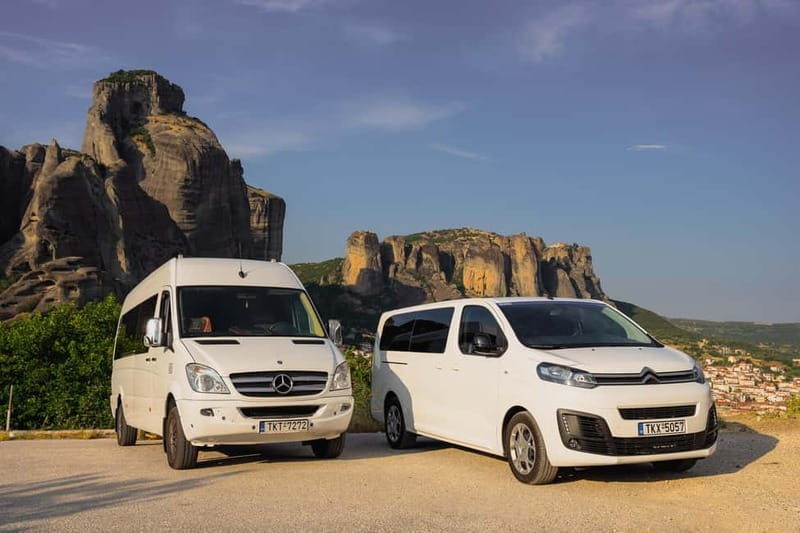
Next comes the short transfer over to the Meteora rock area. The tour includes transportation from Kalambaka train station to Meteora by Mercedes minibus.
Before you start climbing around Meteora, you’ll also get a break in Kastraki. This is where the tour becomes more than sightseeing math. You get coffee/lunch time and a food market visit, with about 30 minutes for eating. If you want a practical Greek lunch before monastery hours, this is your moment. The listed structure is light on meal promises, but people have described the lunch stop as a buffet-style cafe where you can try local food.
If you’re picky about food timing, plan like this: you’ll have your main chance to eat before the Meteora visits, and you may not want to gamble on finding snacks later while you’re bouncing between viewpoints, stairs, and church interiors.
Meteora’s core idea: huge rocks + very specific human choices
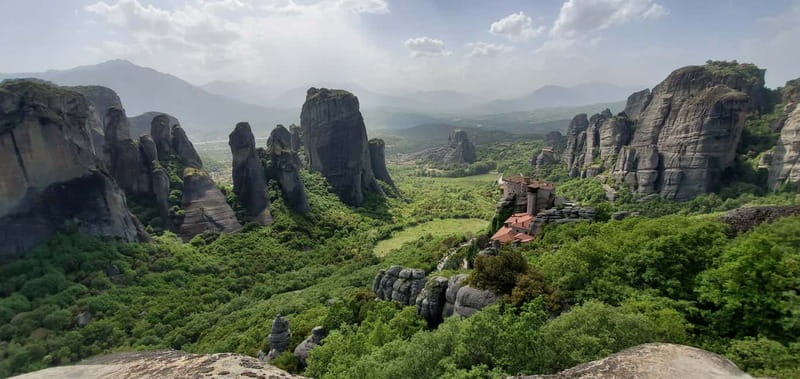
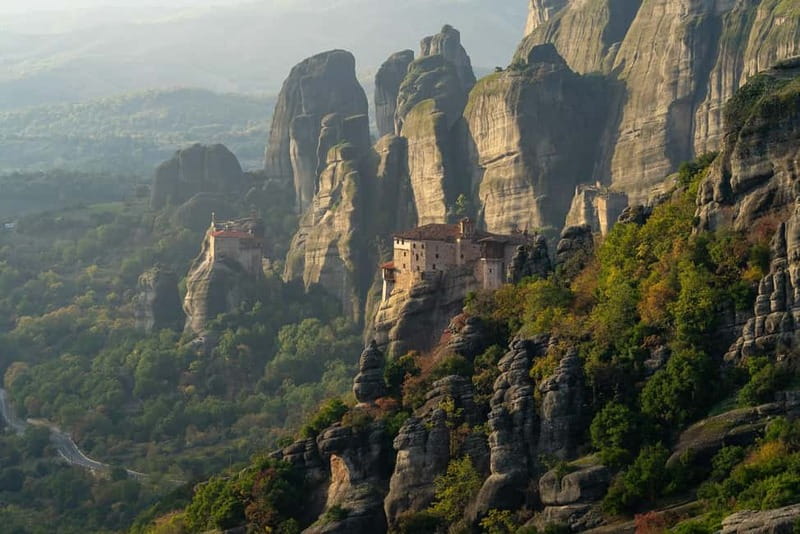
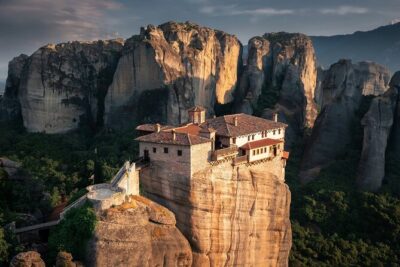
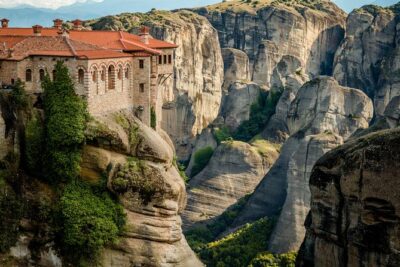
Meteora isn’t just a collection of old buildings. The whole place is an engineering decision. The monasteries cling to rock columns for a reason: isolation, defense, and a kind of spiritual focus. You’ll see that logic play out as you move between viewpoints and access points.
The tour’s Meteora block is about 4.25 hours of guided time, with built-in photo stops and sightseeing. During this portion, you’ll:
- See all six monasteries
- Enter three monasteries (including the interiors with frescoes and church architecture)
- Visit the Hermit Caves of St. Nicholas Badovas
This is a smart way to handle Meteora in a single day. If you tried to do all six interiors yourself, you’d spend more time in transit between sites and less time actually looking. Here, the schedule chooses depth over a checklist.
One more note: the tour includes panoramic photo stops and the timing suggests they want you looking up, not just walking through. If you love photography, this is where the day pays back the early start.
Worth comparing before you book this Athens tour:
Seeing all six monasteries (but entering only three): how to make it feel balanced
Your Meteora time is arranged so you get the big picture without turning it into an endurance trial. You’ll see all six monasteries from key positions, including the three you don’t enter. That outside-view time is not filler. It’s how you understand the layout: each monastery hugs a different rock face, and the spacing makes the whole “stone forest” idea make sense.
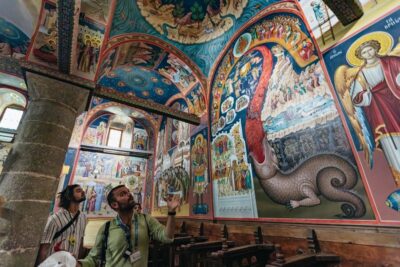
Then you get interior visits in three. That’s the heart of the cultural experience: you’ll see the frescoes and the Christian architecture up close, not just from a distance.
A fair warning: even when you choose the interior sites, Meteora still involves stairs and walking over uneven ground. The tour isn’t positioned as mobility-friendly, and many people do find it physically demanding. If you’re traveling with knee issues, don’t pretend it’s an easy stroll.
What I’d do to make it feel balanced:
- Focus on one interior as your art stop (fresco details, icon layout, church space).
- Treat the other two interiors as “architecture and story” stops.
- Use the outside views to connect the dots between where those buildings sit and what the rock setting forced monks to do.
Inside the monasteries: what to watch for beyond the postcard shots
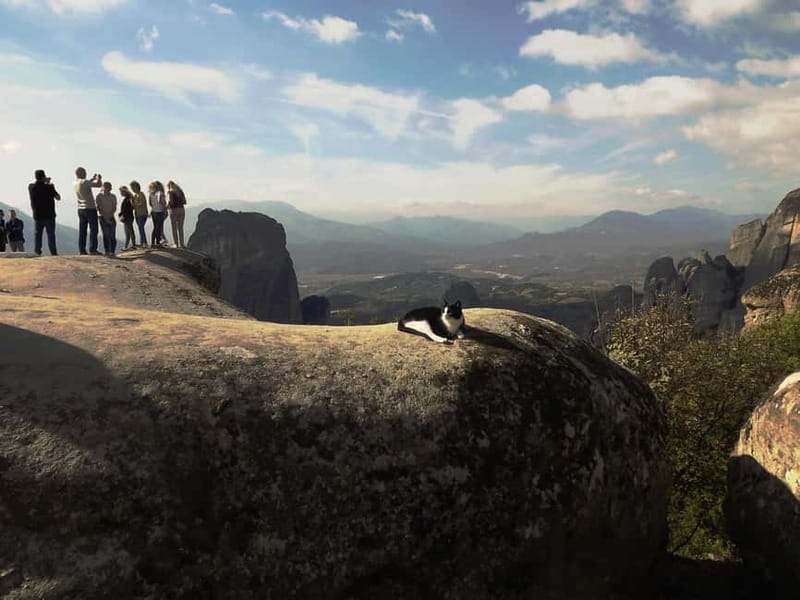
When you step into the monasteries, the experience shifts from scenery to meaning. You’re looking at layered religious art and building choices designed around stone access.
The tour includes the interiors of three monasteries, but it does not include guided explanations inside the buildings. That doesn’t mean you’ll be left alone; it means you’ll likely get the main guidance from the tour guide during the overall visit and time outside, then use your own eyes inside.
Here’s what to pay attention to:
- Fresco condition and style: it helps you understand the time depth of the churches.
- How the space feels: narrow entries, stone walls, and lighting create a very different mood than outside viewpoints.
- Patterns of movement: you’ll be guided to key points, but you’ll still want to slow down for 30 seconds when you spot an interesting corner.
Dress matters here. The tour rules are strict: no shorts, no short skirts, no sleeveless shirts, no ripped clothing. You’re also told to bring long pants, closed-toe shoes, and cash for fees. If you forget the clothing requirements, don’t panic: one set of reviews mentioned that long skirts or wraps are provided at each location for people who need them.
Also, it’s worth having your camera ready but not constantly filming. Monasteries are quiet places. Take a few good shots, then put the phone away for a minute and actually look.
The Hermit Caves of St. Nicholas Badovas: a different tempo
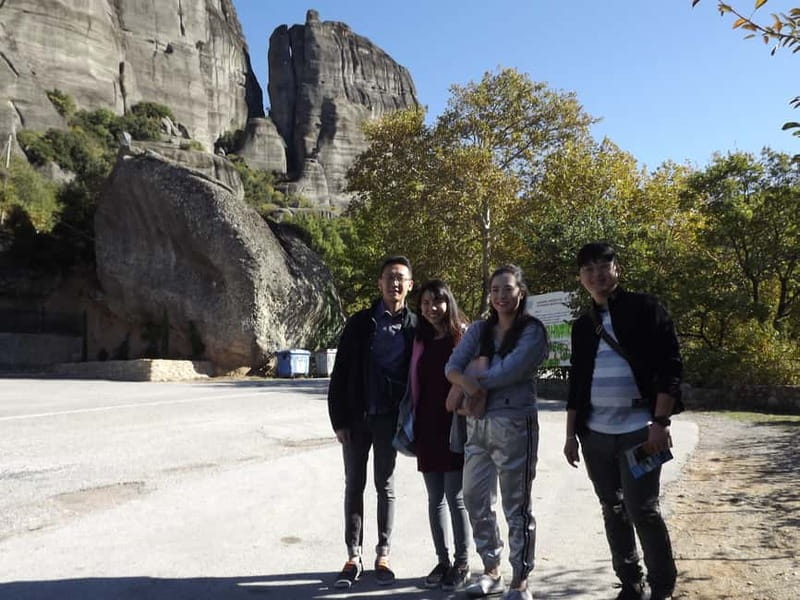
Not every Meteora tour gives you the hermit caves. Here, it’s included: you’ll visit the Hermit Caves of St. Nicholas Badovas.
This stop changes the pace. Monasteries are communal spaces. The hermit caves are about solitude and survival in a harsh setting. In practice, that means the caves help you connect the “why” behind the dramatic rocks. It’s easier to understand why people would choose a life shaped by isolation when you stand near spaces that were built for that purpose.
This also tends to be a good photo break if the monasteries feel too similar. You’ll likely have fewer “church interior” rules here and more time to look at how the caves fit into the rock setting.
Photo stops and viewpoints: when your camera actually gets to work
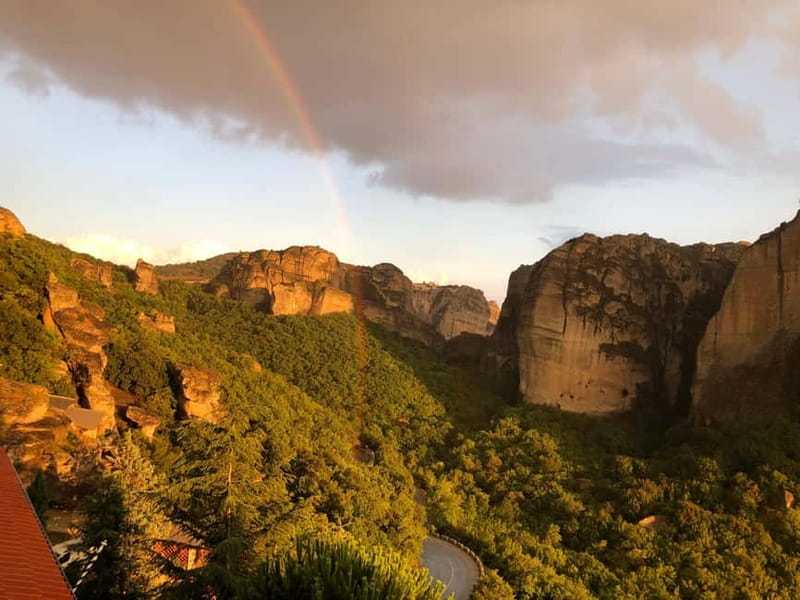
This tour explicitly builds in panoramic photo stops, and that’s one reason it scores well with people who care about pictures. Meteora is famous, but it’s not just about being famous. It’s about the way different angles reveal different rock pillars and the placement of each monastery.
My advice: don’t aim to shoot nonstop. Instead:
- Choose one viewpoint for wide shots of the rock pillars.
- Choose one viewpoint for the monastery structure details.
- Save your “close-up” camera time for the interiors.
If you’re traveling solo, you’ll likely appreciate that a guide can help with photos. Several reviews mention that guides actively helped take pictures, and at least one solo traveler described the guide as a pro-photographer. Even if your guide doesn’t take photos for you, the small group setup usually makes it easier to get a quick shot without hunting strangers.
Price and value: $123 isn’t the whole cost
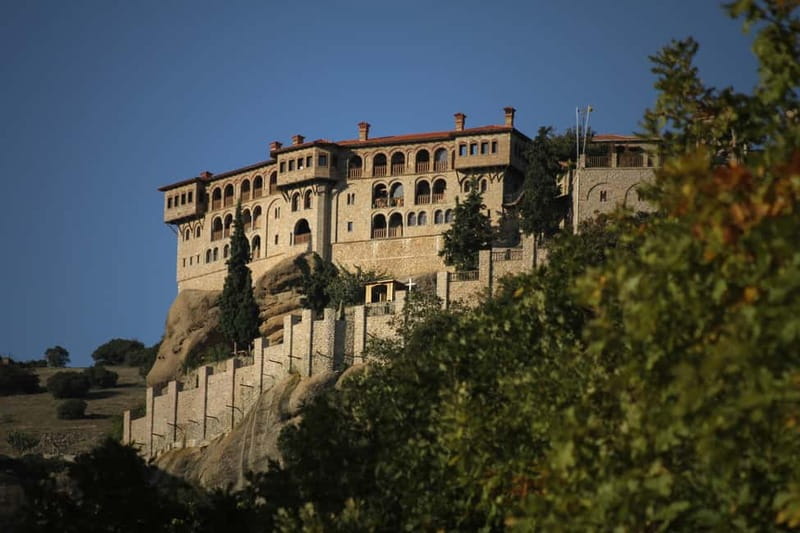
The listed price is $123 per person, and it includes a lot of moving parts:
- Roundtrip ticket from Athens to Kalambaka
- Transfer from Kalambaka to Meteora (minibus)
- Visit the interiors of three monasteries
- See all six monasteries
- Hermit Caves of St. Nicholas Badovas
- Bottled water
- Wi-Fi and USB chargers on board (per operator notes)
- Panoramic photo stops
- Local guide on the minibus
But here’s the cost reality you should plan for: monastery entrance fees are not included. The tour notes €5 per person to be paid in cash only. Since you enter three monasteries, you should plan on €15 total cash for the interiors.
That’s the main extra expense, but there’s also food:
- Food and drinks are not included.
- You do get an optional food break of about 30 minutes during the Kastraki stop, and people have described lunch stops as buffet-style options.
So is it good value? For many people, yes. You’re buying convenience (train access, a guided plan, and timed viewpoints) and reducing the hassle of coordinating buses and monastery circuits on your own. If you’d otherwise do Meteora with a private driver or multiple independent tickets, the package often looks even better.
The long-day logistics: what to expect on the return to Athens
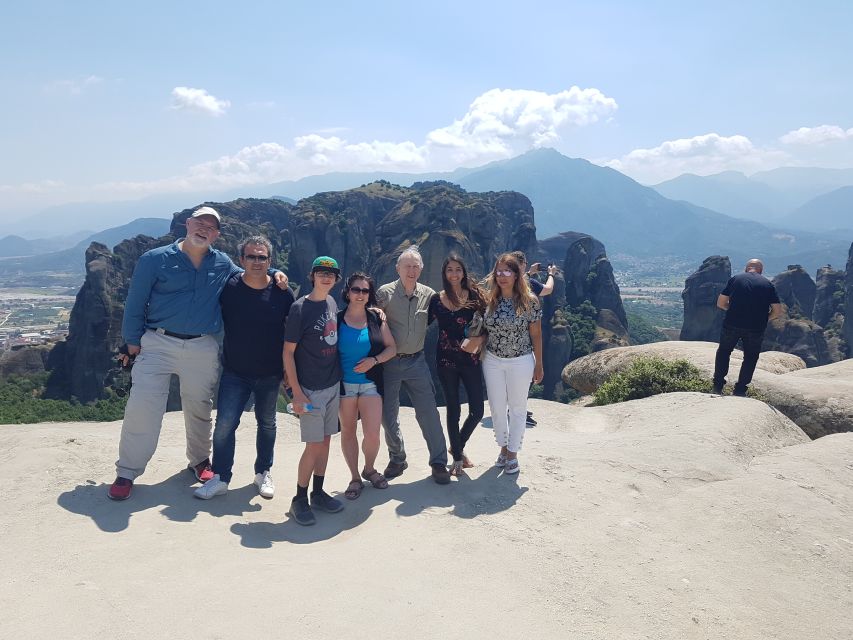
The return is part of the story. The tour ends around 4:45, then you get a 10-minute break before the bus arrives. After that, you go back with:
- Bus/coach about 1.5 hours
- Train about 2.75 hours back to Athens
- Arrival back at Stathmos Larissis around 22:00
Two practical cautions from the real-world setup:
- You’re relying on a chain (train → bus → mini bus → bus → train). If one leg changes, the rest can feel tight.
- Reviews include reports of trains being late on the way back. It may not happen every time, but you should treat the last hour as flexible rather than guaranteed to the minute.
If Meteora is a “must do” and you want zero stress, a common alternative is staying in the Meteora/Kastraki area and doing a shorter day. But if Athens is your base and you only have one day, this tour is still a solid choice.
Who should book this tour, and who should skip it
This trip fits you best if you:
- Want Meteora in one day without messing with complicated transport planning
- Like guided structure (especially when you’re seeing multiple monasteries)
- Care about photography and want built-in viewpoint time
- Don’t mind an early start and lots of stairs
Skip it if you:
- Need wheelchair access or have mobility impairments. The tour explicitly says it’s not suitable for wheelchair users and people with mobility impairments.
- Want a relaxed, late-morning sightseeing day. This one starts early and runs long.
Also, pack for reality. Bring comfortable shoes and closed-toe shoes, plus long pants. Bring cash for entrance fees. And bring at least one small snack if you’re the type who gets hungry when schedules run long.
Should you book Meteora Caves & Monasteries by train from Athens?
Yes—if you accept the big trade-off (a long, full day) and you’re excited by the big payoff (seeing all six monasteries, with interior time for three, plus the hermit caves).
I’d book it if:
- You’re staying in Athens and you don’t want to plan transportation between monastery sites.
- You want the train ride to be part of the experience, not just transit.
- You’re happy to pay the €5 cash entrance fees on-site for the three monasteries you enter.
I wouldn’t book it if you:
- Can’t handle stairs or uneven walking.
- Want a lighter schedule that leaves you fresh for the evening.
If you do book, my best advice is simple: wear the right shoes, carry the cash, and don’t rush the interiors. Meteora rewards slow looking. The views are hard to describe because they’re not just pretty—they’re dramatic in a way that makes the whole story feel physical.
FAQ
What time does the train leave Athens?
The train from Stathmos Larissis leaves at 06:58 AM.
How does the trip continue after Paleofarsalos?
Around 09:45 AM the train stops at Paleofarsalos, and you switch to a connecting air-conditioned bus that continues to Kalambaka.
Where do I meet the guide in Kalambaka?
Your guide meets you at Kalambaka Train Station, holding a sign with your name at the main entrance.
How many monasteries can I enter on this tour?
You can enter the interiors of 3 monasteries, and you will see all 6 monasteries during the visit.
Are monastery entrance fees included?
No. Entrance fees are €5 per person and must be paid in cash only.
Do you visit the Hermit Caves of St. Nicholas Badovas?
Yes, the tour includes a visit to the Hermit Caves of St. Nicholas Badovas.
Is there time for lunch or food in Kastraki?
Yes. There is an optional food break of about 30 minutes in Kastraki for coffee and food.
What should I bring for the day trip?
Bring comfortable, closed-toe shoes, a camera, snacks if you want, long pants, cash for entrance fees, and any personal medication.
Is the tour wheelchair accessible?
No. The tour is not suitable for wheelchair users or people with mobility impairments.
How long is the whole experience?
The tour duration is listed as 14 hours, including the travel time to and from Athens.
More 1-Day Tours in Athens
- Athens: Cape Sounion & Poseidon Temple Sunset Half-Day Trip★ 4.8 · 8,241 reviews
- Athens: Meteora Monasteries Day Trip with Caves and Lunch★ 4.7 · 4,670 reviews
- From Athens: Small-Group Delphi, Museum & Arachova Day Trip★ 4.8 · 2,476 reviews
- Delphi English Day Trip from Athens with Official Guide★ 4.5 · 2,199 reviews
- Historical Delphi One Day Tour with Arachova Stop & Expert Guide★ 4.5 · 1,247 reviews
- Premium Delphi Day Trip with an Expert Guide, Museum & Lunch★ 4.5 · 1,100 reviews
More Tour Reviews in Athens
- Athens: Acropolis & up to 5 Archaeological Sites Combo Pass★ 4.2 · 13,904 reviews
- Athens: Acropolis, Parthenon & Acropolis Museum Guided Tour★ 4.8 · 9,316 reviews
- The Acropolis, Parthenon & Acropolis Museum Guided Tour★ 4.7 · 8,493 reviews
- Athens: Cape Sounion & Poseidon Temple Sunset Half-Day Trip★ 4.8 · 8,241 reviews
- Acropolis: Premium Acropolis and Parthenon Guided Tour★ 4.8 · 5,208 reviews
- Athens: Mythology of Delphi, Museum and Arachova Guided Tour★ 4.7 · 5,102 reviews
The Monasteries of Meteora
- Athens: Meteora Monasteries Day Trip with Caves and Lunch★ 4.7 · 4,670 reviews
- Athens to Meteora: Monasteries, Caves & Seaside Stopovers★ 4.7 · 2,958 reviews
- Athens: Full-Day Meteora Tour with Local Guide & Greek Lunch★ 4.8 · 2,101 reviews
- Athens: Meteora Monasteries, Caves & Coastal Stopovers with Lunch★ 4.5 · 1,432 reviews
- Meteora Monasteries & Caves DayTrip from Athens with Greek Lunch★ 4.5 · 879 reviews
- From Athens: Delphi and Meteora 2-Day Guided Tour★ 4.5 · 825 reviews
Fresh Off the Boat: New Athens Reviews

Meteora Day Trips, compared.
 ★ 4.7Meteora Monasteries Day Trip with Caves and LunchFrom $874,670 reviews
 ★ 4.7Athens to Meteora: Monasteries, Caves & Seaside StopoversFrom $832,958 reviews
 ★ 4.8Full-Day Meteora Tour with Local Guide & Greek LunchFrom $822,101 reviews
 ★ 4.5Meteora Monasteries, Caves & Coastal Stopovers with LunchFrom $881,432 reviews
 ★ 4.5Meteora Monasteries & Caves DayTrip from Athens with Greek LunchFrom $87879 reviews
 ★ 4.5From Athens: Delphi and Meteora 2-Day Guided TourFrom $271825 reviews
 ★ 4.54-Day Classical Greece Tour: Epidaurus, Mycenae, Olympia, Delphi, MeteoraFrom $766732 reviews
 ★ 4.5Meteora Monasteries, Hermit Caves Tour with PickupFrom $87724 reviews
Browse the lists this tour appears in