
Reviewed · ATHENS WALKING TOURS
Athens Highlights: Myths & Philosophers Private Walking Tour
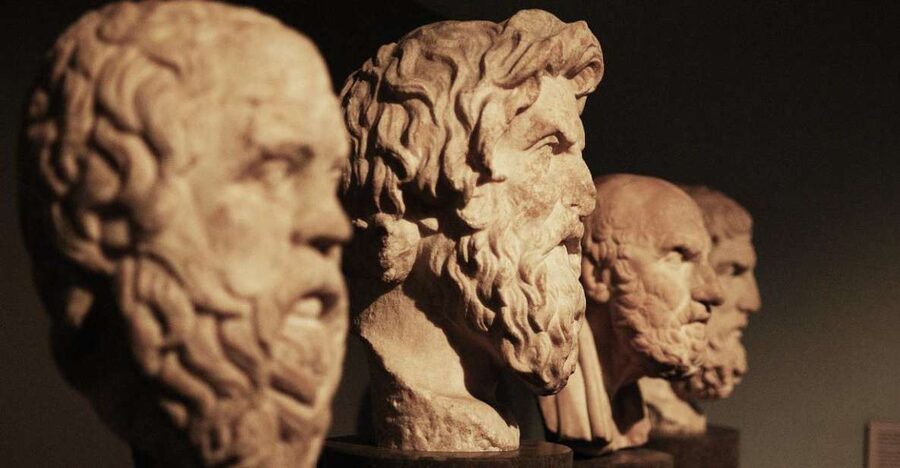
Athens can feel like a museum. This tour makes it feel like a living debate. You connect Greek mythology with the big thinkers as you walk between real neighborhoods and landmarks.
I love how the route turns famous sites into prompts for conversation, not just photos. I also like that you get a built-in Greek coffee stop so you can talk without rushing. One thing to consider: it’s a steady walking tour, and it’s not suitable for people with mobility impairments.
Key things I’d highlight before you go
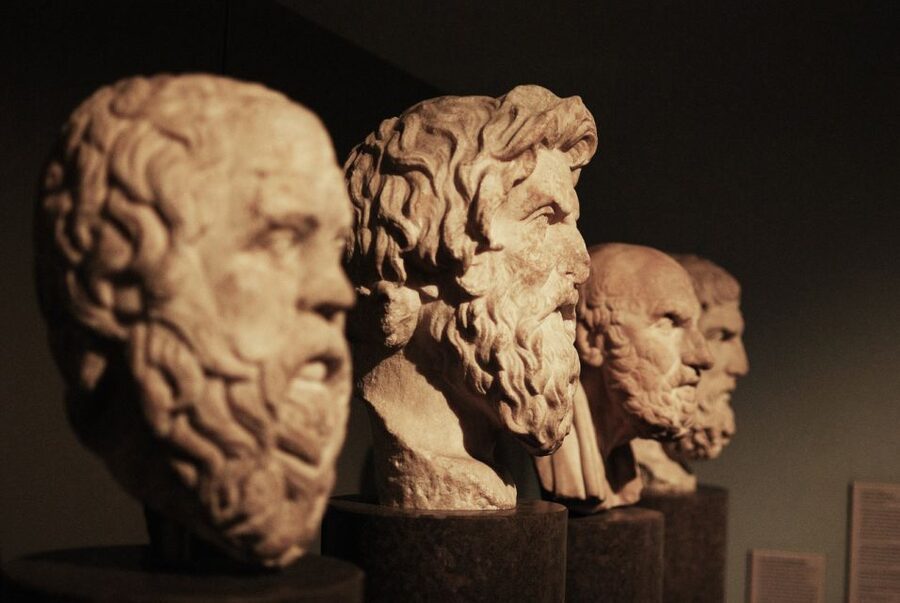
- Philosophy in context: Socrates, Plato, Epicurus, Aristotle, Stoics, and Cynics get explained through the Athens you’re standing in.
- Myths that actually connect: Apollo and Athena aren’t just names on a wall; they’re used as a way to think.
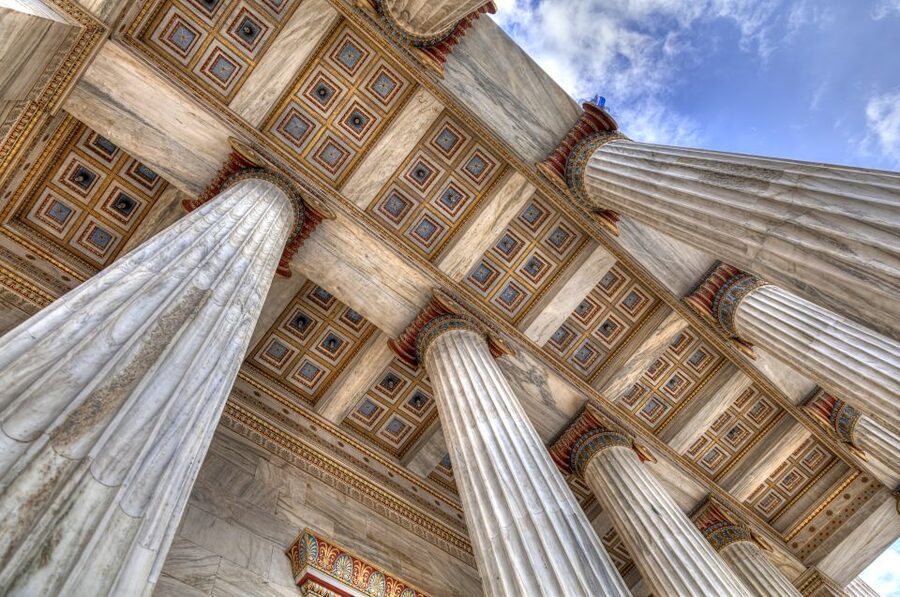
- Architecture has a starring role: the Trilogy of Athens by Theofilus Hansen sets a tone before the philosophy gets heavy.
- Local-feeling pacing: you walk through commercial streets and quiet corners, with built-in breaks.
- A guide can tailor the talk: English-speaking guides (including Bianca, John, and Effie, from past experiences) can adjust to what you’re curious about.
- No entrance-fee surprise: included support and coffee are solid, but specific entrances are not covered.
In This Review
- Why this myths-and-philosophy tour works in Athens
- Starting at Panepistimio: getting your bearings fast
- The Trilogy of Athens and Theofilus Hansen’s statues-and-ideas vibe
- Greek Parliament and the National Gardens: where Epicurus gets real
- Ermou Street and Monastiraki: Hermes, commerce, and real Athens life
- Kapnikarea and Aristotle’s Lyceum: history you can see, not just read
- Thissio coffee with Pre-Socratics, plus the art of asking questions
- Stoics at the Ancient Agora: Poikile Stoa and the mindset shift
- Plaka and Anafiotika: Cynics, myths, and the Tower of Winds
- Areopagus Hill finish: views, myths, and one last big idea
- Price and value: what $100 per person actually buys
- What to bring and how to plan your day
- Who should book this Athens philosophy walk
- Should you book this tour
- FAQ
- How long is the Athens Highlights: Myths & Philosophers Private Walking Tour?
- Where does the tour start?
- Is this a private tour or a group tour?
- What language is the tour guide?
- What’s included in the price?
- Are entrance fees included?
- Is the tour suitable for people with mobility impairments?
Why this myths-and-philosophy tour works in Athens
This is the kind of tour where Athens feels like it’s thinking with you. You’re not just learning dates. You’re getting the “why” behind ideas by linking them to gods, schools, and places.
The private format matters. It keeps the pace human and the conversation flexible, so your questions don’t get lost. At $100 per person for a 4-hour walk, you’re paying for a guide who can connect dots fast and keep you moving without turning it into a lecture.
It also helps that the tour is built around walking the city core. That means you see how ancient ideas fit next to modern streets, cafés, and daily life. If you like your travel with brain snacks, this is a good match.
On foot through Plaka and beyond
- Acropolis and Parthenon Guided Walking Tour
★ 5.0 · 4,755 reviews - Greek Food Walking Tour in Athens
★ 5.0 · 4,740 reviews - Athens: Guided Greek Food Walking Tour with Tastings
★ 4.9 · 2,859 reviews - Acropolis monuments & Parthenon Walking Tour with Optional Acropolis Museum
★ 5.0 · 2,678 reviews
Starting at Panepistimio: getting your bearings fast

The tour meets outside Panepistimio Metro Station, at the University area. From the start, the route is designed to pull you toward major landmark zones without making you navigate alone.
A smart early move is the Academy of Athens area. Even if you don’t go inside, it helps you understand why 19th-century Athens mattered. Think of it as the city reminding you that philosophy and learning never fully left.
Then you move through the city’s institutional belt, including the Numismatic Museum area before you reach the Parliament zone. This part works because it gives you architectural and cultural context first. You’ll be better ready when the conversation starts naming philosophers and linking them to specific spaces.
The Trilogy of Athens and Theofilus Hansen’s statues-and-ideas vibe
One of the tour’s strongest openings is the Trilogy of Athens. You’ll admire the work connected to Theofilus Hansen, plus statues by prominent 19th-century sculptors.
This is more than pretty stone. Your guide uses the architecture as a way to talk about how Athens presents itself as a center of learning and public life. It’s a good setup for Socrates and Plato, because their ideas were public-facing things—debates, arguments, and schools.
As you look around, you’ll talk about two big names right away: Socrates and Plato. The tour approach makes sense. If you start with the philosophers, you might still miss why Athens felt like the right stage for them.
You’ll also bring in two gods early: Apollo and Athena. They’re different in personality, but the conversation points out that they share more common ground than you’d expect at first glance. That’s a useful trick for anyone who thinks mythology is just story time.
Greek Parliament and the National Gardens: where Epicurus gets real
After the big architecture and statues, the tour shifts to the Hellenic Parliament and the National Gardens. The stop choice is intentional: you’re moving from public power to a more reflective space.
This is where Epicurus comes in, along with his school called the Garden. Epicurus gets a better feel when you’re surrounded by greenery rather than only stone monuments. Your guide uses that contrast to explain how ideas about life, pleasure, and friendship can be tied to a setting.
Here’s the practical value for you: when you hear Epicurus as a living worldview rather than a textbook label, you remember him. And you get a clearer sense of why “philosophy” wasn’t just about arguments. It was also about how to live day to day.
The big Athens hits in one go


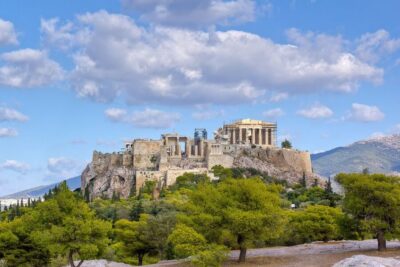
Ermou Street and Monastiraki: Hermes, commerce, and real Athens life
Then comes a walk along Ermou Street, one of Athens’s most commercial streets. It’s named after Hermes, the god tied to merchants and travelers.
This stop is useful because it keeps the tour grounded. Philosophy can sound far away until you’re standing in a place where people actually buy things, meet up, and walk around. Hermes becomes a natural bridge between myth and everyday movement.
You’ll also pass through Monastiraki, a popular area that can feel busy depending on the day. That’s not a flaw in the tour, but it’s a consideration. The idea is to show you how ancient Athens sits next to a living neighborhood.
If you want a break from crowds, use the coffee stop later. For now, accept that this stretch is Athens with its elbows out. It helps the mythology feel less like decoration and more like a story people used to explain their world.
Kapnikarea and Aristotle’s Lyceum: history you can see, not just read
A key mid-tour moment is spotting an 11th-century temple known as Kapnikarea. This is a good pause point because it reminds you that Athens didn’t stop evolving after antiquity.
Then the conversation moves to Aristotle and his Lyceum school. You’ll hear how Aristotle fits into the broader map of Greek thought, not as one isolated thinker, but as part of an ecosystem of ideas.
This section also helps you understand that Athens isn’t just Acropolis-and-ruins. The city center has layers, and the tour uses those layers to keep the philosophy grounded. If you only picture ancient sites, you might miss how ideas traveled through time.
One drawback to be aware of: because you’re walking and watching your surroundings closely, you’ll want comfortable shoes and a little patience for uneven sidewalks. This is not a sit-and-stare experience.
Thissio coffee with Pre-Socratics, plus the art of asking questions
At the Thissio area, you’ll take a pitstop for Greek coffee at a cozy café. The coffee break isn’t filler. It’s a chance to connect what you’ve heard to the next layer: the Pre-Socratic philosophers.
This matters for your learning. When ideas come back-to-back, it’s hard to keep them straight. A short pause gives you room to process. Plus, the tour’s style encourages questions, so the café chat can turn into an informal mini-seminar.
If you like interaction, this is one of the best parts. People have specifically appreciated that the guide can tailor the conversation to what they care about. In some cases, guides have adjusted the tour around school prep or personal interest, rather than sticking rigidly to a script.
And yes, you’ll likely end up talking about how these ideas still show up in modern life. That’s the tour’s sweet spot: not ancient history cosplay, but actual comparison.
Stoics at the Ancient Agora: Poikile Stoa and the mindset shift
Next you reach the Ancient Agora area, where your guide highlights the place where Stoic philosophy was born: the Poikile Stoa.
This stop is powerful because Stoicism feels practical. It’s about how you handle life, not just how you explain it. When you’re standing near a historic public walkway, that practicality clicks.
Pay attention to how your guide connects Stoic thinking to daily behavior. The goal isn’t to memorize sayings. It’s to understand the mental training behind the school.
If you’re someone who likes philosophy for self-improvement rather than pure theory, this is the point where you’ll probably feel the most “use it tomorrow” energy.
Plaka and Anafiotika: Cynics, myths, and the Tower of Winds
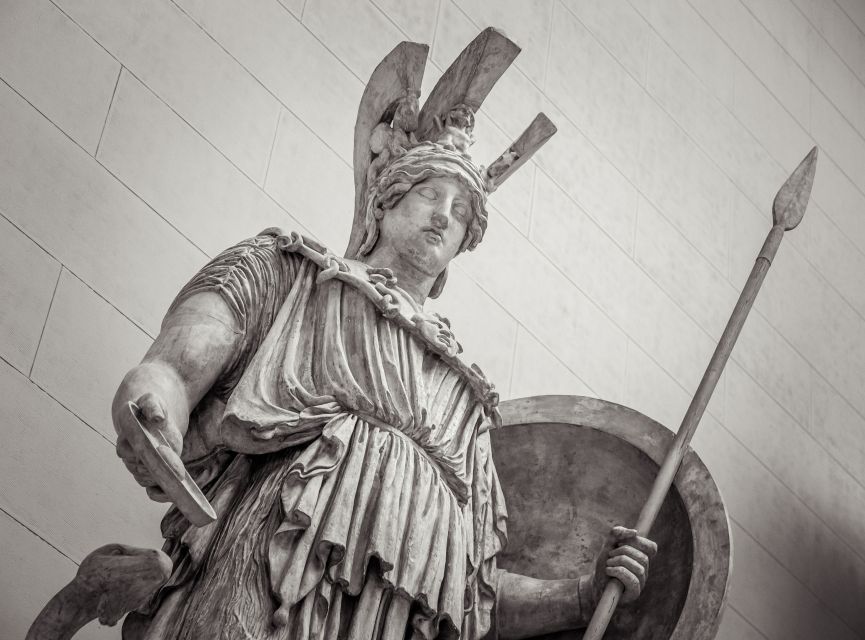
As the route moves into Plaka and Anafiotika, the vibe shifts to the base of the Acropolis area. This is where you’ll hear about Cynic philosophers and how their stance contrasted with more academic approaches.
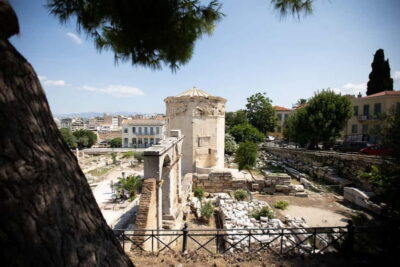
Then you get a special landmark: the Tower of the Winds. Your guide ties it to Aiolos, the keeper of the winds.
This part works well because it blends storytelling with physical details. You’re not just told that winds mattered. You see a structure built to measure or mark them, and then the myth gives it human meaning.
If the Athens heat is strong that day, this is a good reminder to use your sunscreen and sunglasses. The tour includes sun-safe advice for a reason. You’re out in the open more than you might expect for a “city walk.”
Areopagus Hill finish: views, myths, and one last big idea
The tour ends on Areopagus Hill. From here, you get a breathtaking view of the Acropolis, plus a final round of myths about the Olympian gods.
This ending choice is smart. You finish high, with a wide perspective, so it feels like you’ve reached a point of overview. It’s also a great place to reflect because you can finally see Athens as a connected whole rather than a list of stops.
If your feet are tired (they will be, gently but truthfully), the view gives you a payoff that feels worth it. And since you’re still in conversation mode, the last myths tend to land as meaning, not just story.
Price and value: what $100 per person actually buys
At $100 per person for 4 hours, you’re paying for an expert guide, a Greek coffee or traditional refreshment included per person, and all taxes and fees. That’s a clean package, and it helps you budget without guessing what will be extra.
What isn’t included: entrance fees to points of interest. That means if you want to go inside specific sites, you may pay separately. Your guide can still give the context and stories without needing to ticket you into every place.
For value, the private format is the real lever. If you’re traveling with a small group, you get conversation that can stay focused on your interests. People have also talked about guides who can tailor the experience, which is exactly how the $100 turns into real value instead of generic “tour facts.”
If you hate walking, this might be too active. If you’re okay with a steady city pace and you want your travel to stimulate your brain, it’s a good deal.
What to bring and how to plan your day
This is a walking tour, so comfortable shoes are non-negotiable. You’ll also want sunscreen and sunglasses since you’re out for hours.
Plan for the fact that you’ll be outdoors and moving between different kinds of spaces: grand architecture, museum-adjacent zones, parks, busy streets, and viewpoints. The pacing includes a café break, but it’s not a “rest every 20 minutes” kind of schedule.
Also note the fit. It’s not suitable for people with mobility impairments due to the walking and the nature of the streets.
If you’re the type who likes to start your trip with a big orientation, do this early. It helps you recognize themes when you revisit neighborhoods later on your own.
Who should book this Athens philosophy walk
Book it if you want Athens to feel like more than ruins. You’ll enjoy it if you like explanations that connect Socrates, Plato, Epicurus, Aristotle, Stoics, and Cynics to places you can actually point to.
It’s also a great choice if you’re visiting with a mix of interests. Myth lovers get stories tied to real gods like Apollo and Athena and Aiolos. Philosophy folks get schools placed in context, like the Garden and the Poikile Stoa.
It may be less ideal if you only want ticketed museum time or if you require lots of step-free access. The tour is built around walking and open-air discussion.
Should you book this tour
Yes, if you want a guided walk that treats philosophy as lived culture, not a dusty topic. The structure is built for conversation: architecture first, then gods, then thinkers, then practical schools like Epicurus and Stoicism.
It’s also worth booking if you like the idea of getting a local vibe in the middle of big landmarks, like walking Ermou Street and taking a proper coffee break in Thissio. That blend of public Athens and reflective Athens is the tour’s real strength.
If your day is short or your walking tolerance is limited, you might choose a more sit-down option instead. But if you’re game for a smart, story-driven 4-hour walk, this one earns its spot.
FAQ
How long is the Athens Highlights: Myths & Philosophers Private Walking Tour?
The tour lasts 4 hours.
Where does the tour start?
You meet outside Panepistimio Metro Station, with starting options around the University area. The exact meeting point may vary depending on the option booked.
Is this a private tour or a group tour?
It’s a private group tour.
What language is the tour guide?
The live tour guide speaks English.
What’s included in the price?
The price includes an expert tour guide, 1 Greek coffee or other traditional refreshment per person, and all taxes and fees.
Are entrance fees included?
No. Entrance fees to any point of interest are not included.
Is the tour suitable for people with mobility impairments?
No, it’s not suitable for people with mobility impairments.
More Tour Reviews in Athens
- Athens: Acropolis & up to 5 Archaeological Sites Combo Pass★ 4.2 · 13,904 reviews
- Athens: Acropolis, Parthenon & Acropolis Museum Guided Tour★ 4.8 · 9,316 reviews
- The Acropolis, Parthenon & Acropolis Museum Guided Tour★ 4.7 · 8,493 reviews
- Athens: Cape Sounion & Poseidon Temple Sunset Half-Day Trip★ 4.8 · 8,241 reviews
- Acropolis: Premium Acropolis and Parthenon Guided Tour★ 4.8 · 5,208 reviews
- Athens: Mythology of Delphi, Museum and Arachova Guided Tour★ 4.7 · 5,102 reviews
All of Athens in a Day
- Athens: City Sightseeing Hop-On Hop-Off Bus Tour★ 4.3 · 4,520 reviews
- Best of Athens Half Day Private Tour★ 5.0 · 3,714 reviews
- Athens & Acropolis Highlights: Greek Mythology Small-Group Tour★ 5.0 · 2,370 reviews
- Athens: Acropolis and Mythology Highlights Small Group Tour★ 4.8 · 2,275 reviews
- City Sightseeing Athens, Piraeus & Beach Riviera Hop-On Hop-Off Bus Tours★ 4.0 · 1,887 reviews
- Athens Half-Day Sightseeing Tour with Tickets of Acropolis★ 4.0 · 1,402 reviews
Athens on Foot, Continued
- Acropolis and Parthenon Guided Walking Tour★ 5.0 · 4,755 reviews
- Greek Food Walking Tour in Athens★ 5.0 · 4,740 reviews
- Athens: Guided Greek Food Walking Tour with Tastings★ 4.9 · 2,859 reviews
- Acropolis monuments & Parthenon Walking Tour with Optional Acropolis Museum★ 5.0 · 2,678 reviews
- Athens Acropolis and Parthenon Walking Tour★ 4.5 · 1,355 reviews
- Acropolis, Parthenon & Athens Old City Heritage Walking Tour★ 4.5 · 876 reviews
Fresh Off the Boat: New Athens Reviews





Athens Walking Tours, compared.
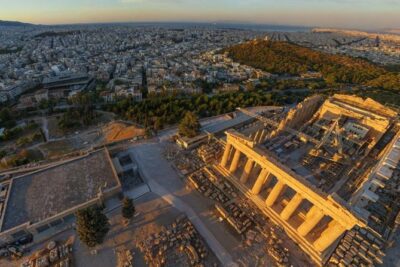 ★ 5.0Acropolis and Parthenon Guided Walking TourFrom $414,755 reviews
 ★ 5.0Greek Food Walking Tour in AthensFrom $874,740 reviews
 ★ 4.9Guided Greek Food Walking Tour with TastingsFrom $812,859 reviews
 ★ 5.0Acropolis monuments & Parthenon Walking Tour with Optional Acropolis MuseumFrom $422,678 reviews
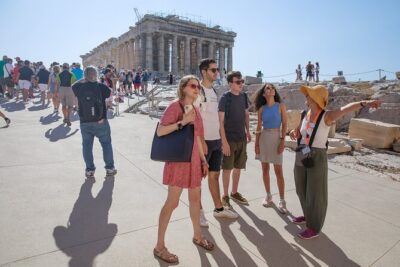 ★ 4.5Athens Acropolis and Parthenon Walking TourFrom $411,355 reviews
 ★ 4.5Acropolis, Parthenon & Athens Old City Heritage Walking TourFrom $34876 reviews
 ★ 5.0Athens Authentic Greek Food Walking Tour (Small Group)From $83809 reviews
 ★ 4.9Ultimate Food Walking Tour with 15 TastingsFrom $93567 reviews
Browse the lists this tour appears in