
Reviewed · METEORA DAY TRIPS
“Meteora Highlights: A Journey Among the Sky-High Monasteries”
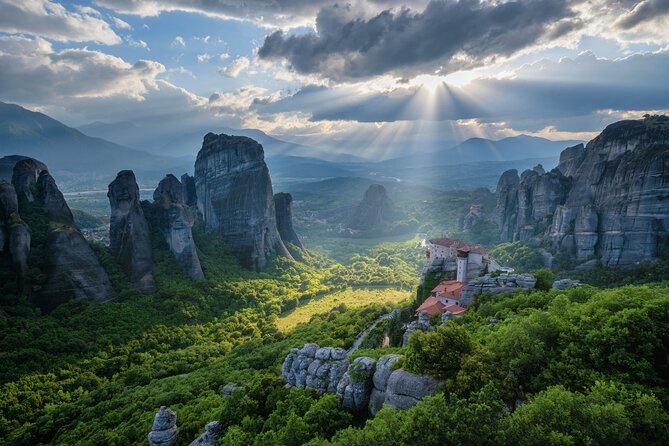
Meteora feels unreal the moment you see it. This is a private trip from Athens focused on UNESCO monasteries, timed for great views, plus a road journey that matters as much as the destination. I like that you get a guide who shares stories beyond the basics, and I also like the photo help—your guide picks viewpoint angles so you’re not just snapping blind.
One thing to consider: this is private transportation with an English-speaking driver who isn’t a licensed site guide (a licensed guide can be requested if available). You’ll still learn a lot, but if you want deep museum-style commentary inside every church, you may need to plan that ahead.
In This Review
- Key things that make this tour work
- Athens to Meteora: the ride sets the mood
- What you really get from the guide: history, photos, and honest limits
- Meteora basics: why these rocks hold monasteries
- Stop 2: Great Meteoron Monastery and the big “wow” factor
- Stop 3: Varlaam, plus Dragon Cave and the Paul connection
- Stop 4: Agios Stefanos—short, accessible, and efficient
- Stop 5: Kalambaka break for views and traditional food
- Price and value: what $353.86 covers in the real world
- Logistics that make the day smoother (and one thing to watch)
- Who should book this Meteora private tour?
- FAQ
- FAQ
- How long is the Meteora day trip?
- Is pickup from Athens included?
- Do I need a licensed tour guide for the monasteries?
- Is the tour private?
- Which monasteries are included in the plan?
- Are monastery entrance fees included?
- What transportation is provided?
- Is there Wi‑Fi in the vehicle?
- What if my pickup location changes or I’m hard to find?
- Can I extend the tour or adjust pickup times?
- Should you book this Meteora tour?
Key things that make this tour work
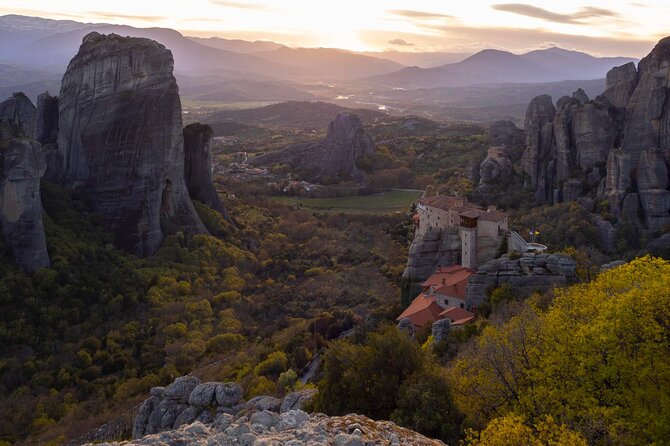
- Private, just-for-your-group timing so you can slow down or push for photos without wrestling crowds
- Driver with history background to add meaning to the monasteries, not just timestamps and doorways
- Scenic drive from Athens—the route helps set the mood before you even reach the rocks
- Monastery viewpoint planning so you get angles chosen for what you’re photographing
- Meteora stops shaped by opening days so the exact monasteries may vary depending on what’s open
- Comfort upgrades included: A/C, Wi‑Fi, bottled water, mobile chargers, and child seats
Monasteries in the sky, more Meteora trips
- Athens: Meteora Monasteries Day Trip with Caves and Lunch
★ 4.7 · 4,670 reviews - Athens to Meteora: Monasteries, Caves & Seaside Stopovers
★ 4.7 · 2,958 reviews - Athens: Full-Day Meteora Tour with Local Guide & Greek Lunch
★ 4.8 · 2,101 reviews - Athens: Meteora Monasteries, Caves & Coastal Stopovers with Lunch
★ 4.5 · 1,432 reviews
Athens to Meteora: the ride sets the mood
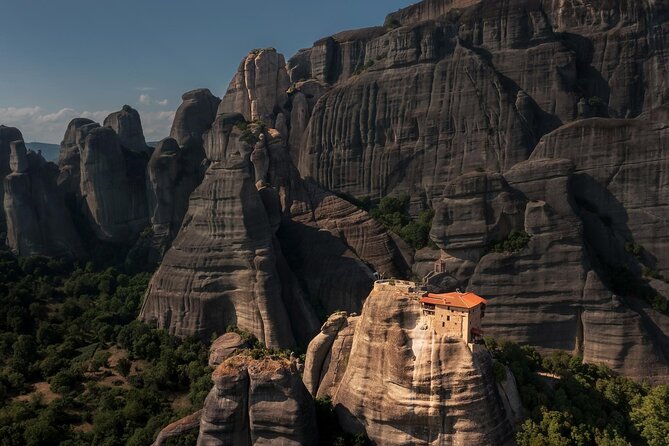
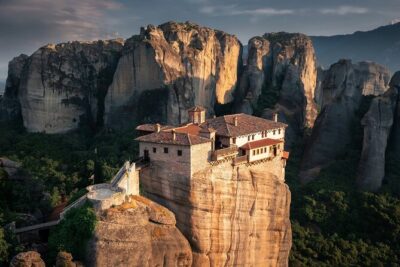
If you’re doing Meteora as a day trip, the drive is more than transit. This route is part of the experience. The monasteries sit on top of huge dark sandstone rock pillars rising above the area around Kalampaka, and seeing those shapes getting closer makes the arrival hit harder.
The tour runs about 10–12 hours in total, with hotel/Airbnb/Port of Piraeus pickup and drop-off included at no extra charge. That long day is one reason I like the private setup: your schedule stays yours. You’re not stuck waiting for a bus full of strangers to return from a photo moment you’d already nailed.
You’ll also appreciate the practical extras on the road. The vehicle is air-conditioned, has Wi‑Fi, and includes bottled water plus mobile chargers. In Greece, that small comfort difference matters more than you’d think once you’re in the sun and you’re trying to keep your phone battery alive for shots.
What you really get from the guide: history, photos, and honest limits
Here’s the deal you should know up front. The included guide is an English-speaking driver with knowledge of the history, but they’re not licensed to accompany you inside sites. That’s common with private transfers that bundle in light interpretation.
What you gain is still solid:
- Context that helps you read Meteora as more than postcard rocks
- Help with timing and the best spots for UNESCO-listed views
- A plan for your photo stops so you don’t waste time searching for an angle
If you want a licensed tour guide at monasteries, it’s offered on request depending on availability. That means the best strategy is to decide what you want most: flexible touring with strong storytelling from your driver, or deeper, licensed commentary inside each church.
From the feedback I’d lean toward this: if you care about meaning and good pacing, this setup is a strong value. If you’re the type who wants every fresco explained at length, ask about licensed guide availability before the day.
Meteora basics: why these rocks hold monasteries
Your first stop is Meteora itself, where the scale hits. The rocks are described as massive dark sandstone formations rising above Kalampaka. One detail I like from the provided background: the average height mentioned is about 313 meters (and at points, even higher depending on the monastery rock).
There’s also a neat origin story. The area was considered wild and inaccessible, and it became a space for Christian eremites (hermits/ascetics) who settled there, according to Byzantinology references to the 11th century. Add to that the fact that the monastery presence is historically tied to this geography—not just random devotion—and you start to understand why this place looks engineered for spiritual isolation.
And yes, there are fascinating side notes too—like the comment that Meteora hasn’t been clearly mentioned in Greek mythology in the way you might expect. Even if you take that as a question rather than a settled fact, it’s the kind of detail that makes your guide’s explanation feel less like a script and more like a conversation.
The big Athens hits in one go
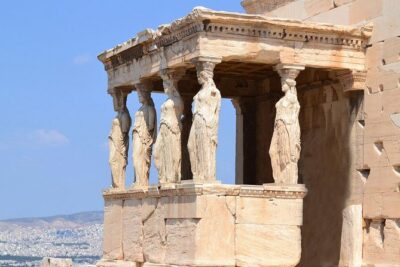
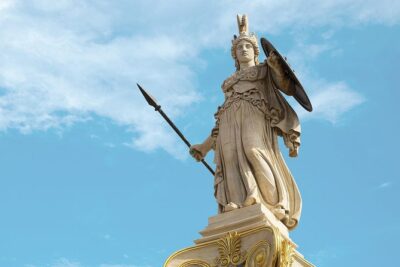
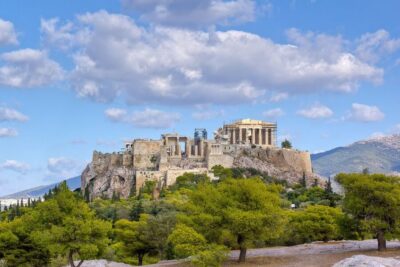
Stop 2: Great Meteoron Monastery and the big “wow” factor
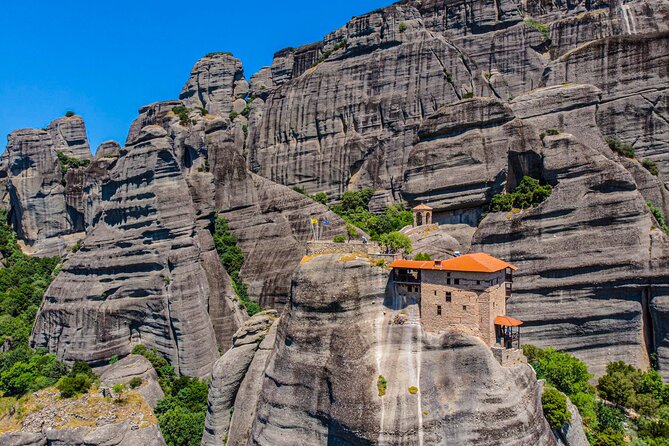
Great Meteoron is the kind of place where you instantly get why Meteora became famous. You’ll visit the Monastery of Great Meteoron, an Eastern Orthodox monastery part of the Meteora complex in Thessaly.
Timing here is about 1 hour, and the site is listed as admission ticket free in the itinerary. That doesn’t remove the possibility of fees at other monasteries, but it does mean you should expect at least one major stop without extra entry pressure during your visit plan.
A specific historical note included in the tour details: Great Meteoron was founded in the 14th century by Athanasius the Meteorite. I like this kind of anchor because it gives you a name to attach to the place you’re standing on. When your guide points out where you are on the rock, you can connect it back to the timeline instead of just watching architecture float in the air.
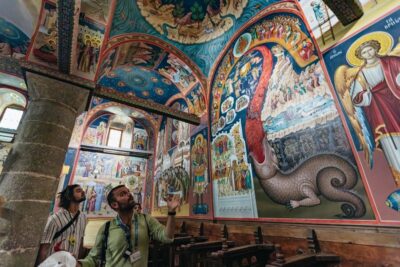
Practical note: monasteries tend to have rules about dress and behavior. The tour description doesn’t list them, so I won’t guess—but it’s smart to bring clothing that covers shoulders and knees just in case. You’ll also likely want shoes that handle stone steps comfortably.
Stop 3: Varlaam, plus Dragon Cave and the Paul connection
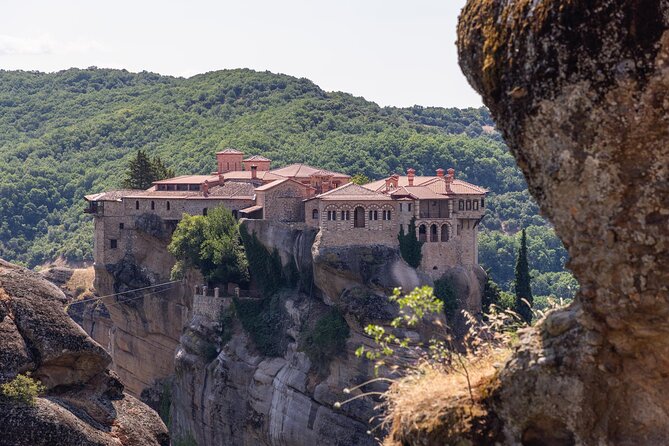
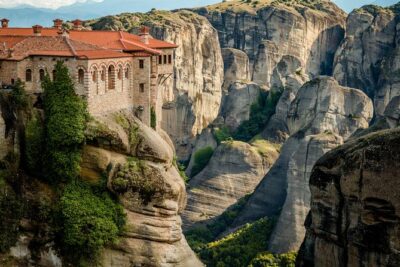
Next is the Monastery of St. Varlaam, also part of the Meteora complex. Like the others, it sits on top of a high rock—here described as 373 meters above the valley floor.
This stop is about 1 hour, and its admission is listed as not included in the itinerary. In practice, this is where you’ll want to be ready for monastery fees. The overall experience lists a monastery entrance fee around €5.00 per person (not included), so budgeting for that helps you avoid last-minute confusion.
What makes Varlaam interesting is the extra “place clues” your guide can point out in the surroundings. The tour notes mention:
- Dragon Cave located to the south below the monastery
- Kelarakia Rock ruins visible to the east
- The Cell of St. Paul the Apostle can probably be identified with Kelarakia
Even if you don’t see every ruin clearly from every angle, those references shape how you look at the site. Instead of just admiring walls, you’re scanning for the stories attached to the rock.
If you love photo sessions, this is also where viewpoint selection matters. Meteora is about sightlines. A guide who chooses angles—rather than just dropping you at the nearest gate—can save you time and help you get pictures that actually look like Meteora, not just another hilltop church.
Stop 4: Agios Stefanos—short, accessible, and efficient
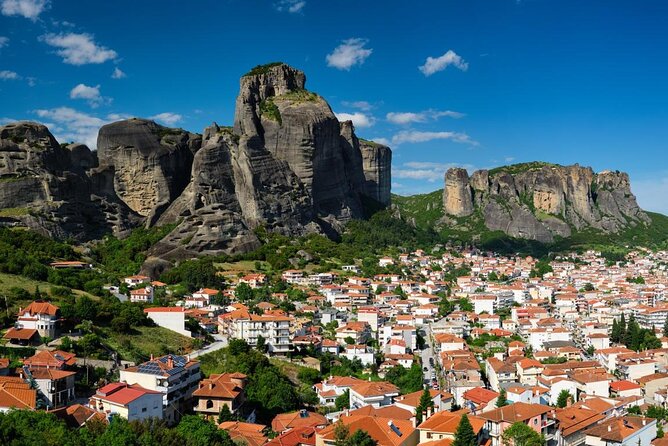
Then you’ll reach Agios Stefanos (St. Stephen). This is the most accessible of the Meteora monasteries, and that’s not a small detail if you’re dealing with mobility issues or just want a lighter walk day.
The tour notes call out that visitors can reach the entrance by crossing a small bridge, and the stop is about 30 minutes. Admission is listed as not included here, so again, keep the monastery fee in mind.
Why I like this stop in a day itinerary: it gives you a breather. After a couple of higher-effort sites, a short stop that’s easier to access lets you keep the day enjoyable. It’s also a good photo moment if your time is tight, because you can focus on capturing the setting without feeling like you need to hike for hours.
Stop 5: Kalambaka break for views and traditional food
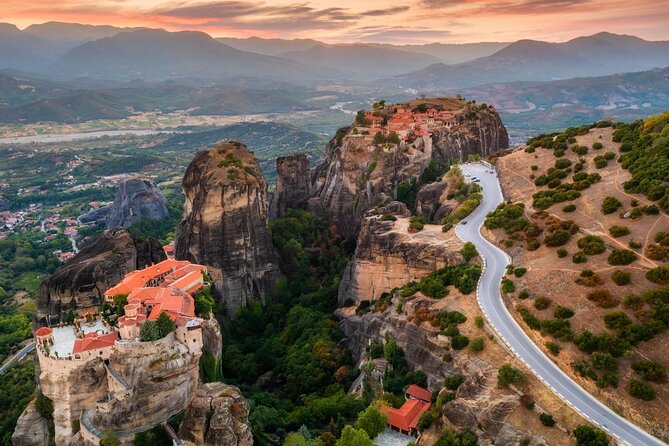
Your last major stop is Kalambaka, a town known for the monasteries above the rocks on the north-eastern side. The itinerary sets aside about 1 hour here, and this part is where the day becomes less about climbing and more about living like a local for a short stretch.
Kalambaka is described as having rich history and important monuments, and the practical upside is simple: you can eat traditional food and take in the view back toward the monasteries. This matters because most of the day you’re looking up at Meteora. Kalambaka flips that for you and gives you a different set of photo angles—plus a chance to settle your pacing.
If you like keeping your day smooth, use this hour for:
- A meal or snack (something easy and local)
- Buying water if you need it (even though bottled water is included in the vehicle)
- A final round of photos without rushing
Price and value: what $353.86 covers in the real world
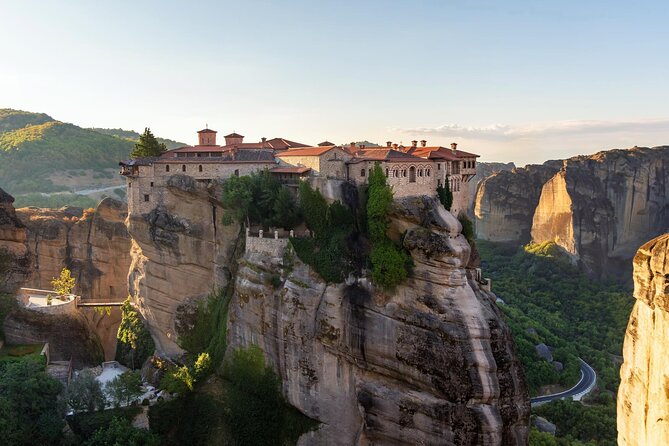
At $353.86 per person, this isn’t the cheapest way to see Meteora. But it’s also not just a generic shuttle. You’re paying for private transportation, convenience, and comfort—plus the history context provided by your driver.
Here’s what you get that you’d otherwise pay for or fight for on your own:
- Hotel/Airbnb pickup and drop-off (no extra charge for Athens main meeting setup; ports are extra only in specific cases)
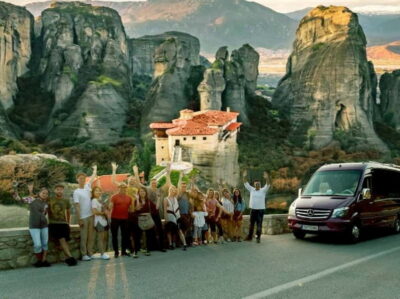
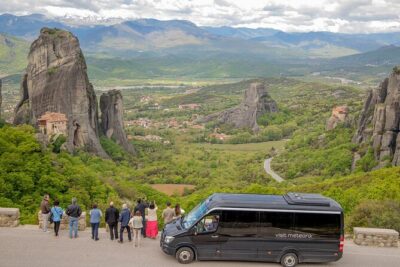
- Private transportation in Mercedes-Benz vehicles with A/C and child seats
- On-board Wi‑Fi, mobile chargers, and bottled water
- A mobile ticket and a day built around monastery opening schedules
- Flexibility: flexible pickup times and hourly extensions for a fee
The biggest value piece, in my view, is that you’re not doing the hard part—navigation, timing, and logistics—while you’re also trying to absorb the scenery. Meteora is a place that rewards patience and looking carefully. This format helps you do that.
What costs extra (so you can plan): monastery entrance fees around €5.00 per person, plus any optional licensed guide request and certain port pickup situations.
Logistics that make the day smoother (and one thing to watch)
This is a private tour/activity, meaning only your group participates. That affects everything: you can keep a steady pace, and your guide can work with your interests (within the time window and the opening hours for each monastery).
Also, you’ll have a clear pickup approach. The guide driver can pick you up from most locations you choose—hotel reception, Airbnb address, and even outside your cruise ship at Port of Piraeus with a name sign. The day before, you should get full contact details for direct reach if you can’t locate the driver.
One watch-out: the itinerary depends on which monasteries are open. That’s not a downside so much as a reality. Meteora’s schedule can change, and your tour plan adjusts accordingly. If you have a must-see monastery, you’ll want to communicate that clearly when booking.
Finally, note the driver is not licensed to accompany you inside sites. You may still get plenty of explanation outdoors and at photo stops, but if you expect a full licensed museum-style experience inside every church, plan for the licensed guide option.
Who should book this Meteora private tour?
This tour fits best if you want:
- UNESCO views without turning your day into a self-made logistics project
- A private group pace with comfort upgrades for a long day
- History stories tied to what you’re seeing, plus viewpoint planning for photos
It also makes sense if you’re visiting Athens and want one major day trip where the timing is handled. It’s not ideal if you want a fully licensed guide in every interior space and have zero flexibility for opening-day changes.
If you’re coming with kids, the included child seats are a plus. Service animals are allowed too.
FAQ
FAQ
How long is the Meteora day trip?
It runs about 10 to 12 hours total.
Is pickup from Athens included?
Yes. Pickup and drop-off are included for hotels/Airbnb/Port of Piraeus without extra charge.
Do I need a licensed tour guide for the monasteries?
The included English-speaking driver has history knowledge but is not licensed to accompany you inside sites. A licensed tour guide may be available on request depending on availability.
Is the tour private?
Yes. It is a private tour/activity, meaning only your group participates.
Which monasteries are included in the plan?
The itinerary lists stops at Meteora, Great Meteoron, Monastery of Varlaam, Agios Stefanos, and Kalambaka. The exact monasteries visited can depend on what is open.
Are monastery entrance fees included?
No. Entrance fees are not included, and the monasteries fee is listed at €5.00 per person.
What transportation is provided?
You’ll travel in a private Mercedes-Benz vehicle with A/C, Wi‑Fi on board, bottled water, and mobile chargers. Child seats are available.
Is there Wi‑Fi in the vehicle?
Yes, Wi‑Fi on board is included.
What if my pickup location changes or I’m hard to find?
The driver can pick you up from the location you specify. If you can’t locate them, you’ll be given an emergency number shown on your voucher. Full contact details are sent one day before the tour.
Can I extend the tour or adjust pickup times?
Yes. Pickup times are flexible, and the tour can be extended by hourly additions for a fee.
Should you book this Meteora tour?
If you want Meteora with less stress and more story, I’d book it. The private setup plus A/C comfort, Wi‑Fi, and viewpoint planning saves energy on a long day. You also get a driver who can add meaning to the monasteries, not just drive you between stops.
I’d think twice only if you’re aiming for a fully licensed, deep interior guide in every monastery and you don’t want to request that option. If you’re okay with a history-focused driver and you’re flexible around opening schedules, this is a strong way to see the sky-high monasteries without making Meteora your full-time project.
More Tour Reviews in Athens
- Athens: Acropolis & up to 5 Archaeological Sites Combo Pass★ 4.2 · 13,904 reviews
- Athens: Acropolis, Parthenon & Acropolis Museum Guided Tour★ 4.8 · 9,316 reviews
- The Acropolis, Parthenon & Acropolis Museum Guided Tour★ 4.7 · 8,493 reviews
- Athens: Cape Sounion & Poseidon Temple Sunset Half-Day Trip★ 4.8 · 8,241 reviews
- Acropolis: Premium Acropolis and Parthenon Guided Tour★ 4.8 · 5,208 reviews
- Athens: Mythology of Delphi, Museum and Arachova Guided Tour★ 4.7 · 5,102 reviews
All of Athens in a Day
- Athens: City Sightseeing Hop-On Hop-Off Bus Tour★ 4.3 · 4,520 reviews
- Best of Athens Half Day Private Tour★ 5.0 · 3,714 reviews
- Athens & Acropolis Highlights: Greek Mythology Small-Group Tour★ 5.0 · 2,370 reviews
- Athens: Acropolis and Mythology Highlights Small Group Tour★ 4.8 · 2,275 reviews
- City Sightseeing Athens, Piraeus & Beach Riviera Hop-On Hop-Off Bus Tours★ 4.0 · 1,887 reviews
- Athens Half-Day Sightseeing Tour with Tickets of Acropolis★ 4.0 · 1,402 reviews
The Monasteries of Meteora
- Athens: Meteora Monasteries Day Trip with Caves and Lunch★ 4.7 · 4,670 reviews
- Athens to Meteora: Monasteries, Caves & Seaside Stopovers★ 4.7 · 2,958 reviews
- Athens: Full-Day Meteora Tour with Local Guide & Greek Lunch★ 4.8 · 2,101 reviews
- Athens: Meteora Monasteries, Caves & Coastal Stopovers with Lunch★ 4.5 · 1,432 reviews
- Meteora Monasteries & Caves DayTrip from Athens with Greek Lunch★ 4.5 · 879 reviews
- From Athens: Delphi and Meteora 2-Day Guided Tour★ 4.5 · 825 reviews
Fresh Off the Boat: New Athens Reviews



Meteora Day Trips, compared.
 ★ 4.7Meteora Monasteries Day Trip with Caves and LunchFrom $874,670 reviews
 ★ 4.7Athens to Meteora: Monasteries, Caves & Seaside StopoversFrom $832,958 reviews
 ★ 4.8Full-Day Meteora Tour with Local Guide & Greek LunchFrom $822,101 reviews
 ★ 4.5Meteora Monasteries, Caves & Coastal Stopovers with LunchFrom $881,432 reviews
 ★ 4.5Meteora Monasteries & Caves DayTrip from Athens with Greek LunchFrom $87879 reviews
 ★ 4.5From Athens: Delphi and Meteora 2-Day Guided TourFrom $271825 reviews
 ★ 4.54-Day Classical Greece Tour: Epidaurus, Mycenae, Olympia, Delphi, MeteoraFrom $766732 reviews
 ★ 4.5Meteora Monasteries, Hermit Caves Tour with PickupFrom $87724 reviews
Browse the lists this tour appears in