

Reviewed · ATHENS WALKING TOURS
Unexpected Athens Orientation Tour
Athens clicks when you walk it. This 4-hour orientation tour gives you a practical route through central neighborhoods, built around the city’s back-and-forth between East and West, and the layers you can still see in everyday streets. You’ll hit major landmarks and smaller, weirder corners that make the whole place feel less like random sightseeing and more like one connected story.
I especially like how it ties famous buildings to why Athens became a modern European capital. I also like the Ottoman footprint you walk through in Psiri and Monastiraki, where older street patterns and neighborhood character still show up like they never got the memo that centuries passed.
One thing to plan for: it is a walking-heavy 4 hours, so comfortable shoes matter. And if you’re there on a Monday or Tuesday, the WWII prison stop can be closed, so you may miss that darker chapter.
In This Review
- Key things I’d prioritize on this Athens orientation walk
- Entering Athens on Foot: How This Tour Makes the City Feel Logical
- Where the Tour Starts: Syntagma Square or Kolonaki
- Kolonaki: Royal Palaces, 19th-Century Ambition, and Athens Styling Itself for Europe
- Exarcheia: Learning the City Through Its Contrast Zones
- Psyri: Where Athens Starts to Feel Like a Timeline You Can Walk
- Monastiraki: Ottoman Streets, International Landmarks, and the Old-New Match
- The WWII Prison Stop: A Hard Detour That Changes the Mood
- Ancient Water Still Flowing: Why Those Small Moments Matter
- What You Learn from the Squares and Markets (and Why You Should Care)
- Guides and Real-World Experience: Who Makes This Tour Work
- Price and Value: Is $62 Worth 4 Hours of Walking?
- Practical Stuff That Actually Helps: Shoes, Pace, and Timing
- Who This Tour Fits Best
- Should You Book This Athens Orientation Walk?
- FAQ
- FAQ
- How long is the Unexpected Athens Orientation Tour?
- How much does the tour cost?
- Where does the tour start?
- What neighborhoods and areas does the route cover?
- What languages are offered?
- Is food included in the tour price?
- Is there a stop at a World War II prison?
- What should I bring?
- Can I book without paying right away?
- What is the cancellation policy?
Key things I’d prioritize on this Athens orientation walk
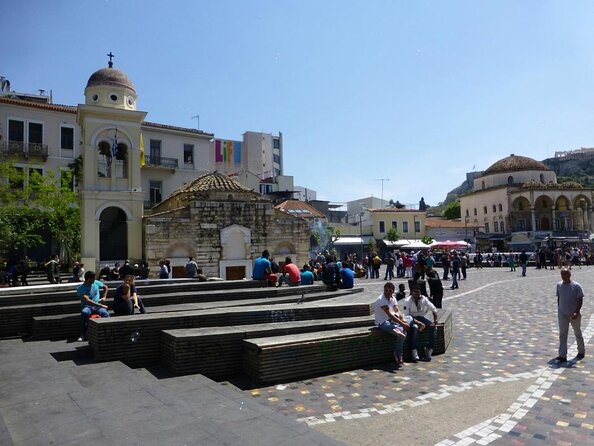
- Royal palaces and 19th-century industrial landmarks for a quick look at power shifting into the modern era
- Parliament, the Academy, the University, and the National Library so you see how Athens styled itself for Europe
- Ottoman-era neighborhoods in Psiri and Monastiraki where street life and architecture carry older influences
- Ancient water and tombs of a foregone era for the feeling that time overlaps here, not just repeats
- WWII prison access (when open) for a hard contrast to the marble-and-postcards vibe
On foot through Plaka and beyond
- Acropolis and Parthenon Guided Walking Tour
★ 5.0 · 4,755 reviews - Greek Food Walking Tour in Athens
★ 5.0 · 4,740 reviews - Athens: Guided Greek Food Walking Tour with Tastings
★ 4.9 · 2,859 reviews - Acropolis monuments & Parthenon Walking Tour with Optional Acropolis Museum
★ 5.0 · 2,678 reviews
Entering Athens on Foot: How This Tour Makes the City Feel Logical
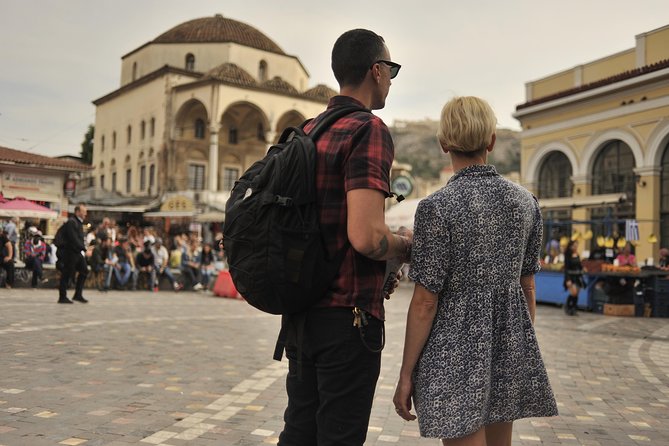
Athens has two speeds: the one you see from photos, and the one you feel when you’re walking street to street. This tour leans into the second speed. Instead of starting with one ancient ruin and stopping there, it moves through neighborhoods so you understand how the city became what it is today.
You begin with big landmarks—places tied to European politics and education—then you switch gears into Ottoman-shaped streets and market-adjacent energy. That shift is the point. Athens isn’t only ancient. It’s also modern, and it’s also the place where different empires left visible handwriting behind.
The tour also comes with a city map designed to show transformations over about 2,500 years, which is useful because Athens can feel like it’s made of disconnected eras. With the map, you can keep the timeline straight after the walk.
Where the Tour Starts: Syntagma Square or Kolonaki
This is one of those small details that can make a big difference in real life. You can start at either Syntagma (Constitution) Square or Kolonaki. The meeting point can vary depending on what you book, so confirm the exact spot when you reserve.
If you’re basing yourself near Syntagma, starting there can save you pre-tour transit time. If you’re staying closer to Kolonaki, starting there keeps your first hour from turning into an accidental city hike with no payoff.
Either start works because the walk quickly settles into a clear route through central Athens, finishing in Monastiraki Square.
Kolonaki: Royal Palaces, 19th-Century Ambition, and Athens Styling Itself for Europe
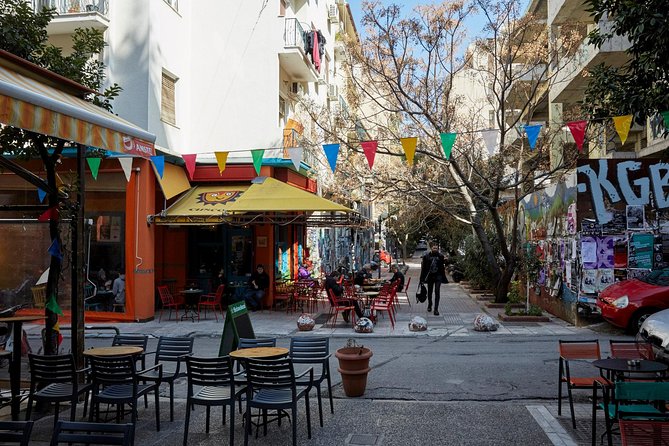
Kolonaki gets your first hour because it sits at the meeting point of Athens ambition and European influence. Here you’ll see the city’s 19th-century story, including industrial revolution-era landmarks and royal palaces.
What I like about starting here is that it frames Athens the way modern visitors often overlook. Before you even reach the Ottoman neighborhoods, you get the sense that Athens was actively reinventing itself—politically and architecturally—so it could function as a capital for its new era.
You also get the “why” behind some of the famous buildings later in the route. The tour doesn’t treat architecture like decoration. It treats it like a public statement. You’ll connect that statement to how Athens became an internationally recognized city instead of staying only a patchwork of ancient sites.
The big Athens hits in one go
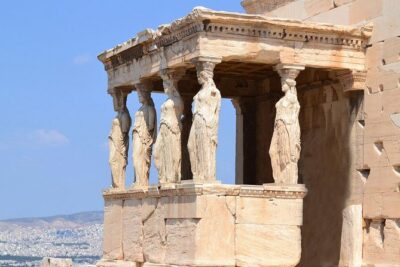


Exarcheia: Learning the City Through Its Contrast Zones
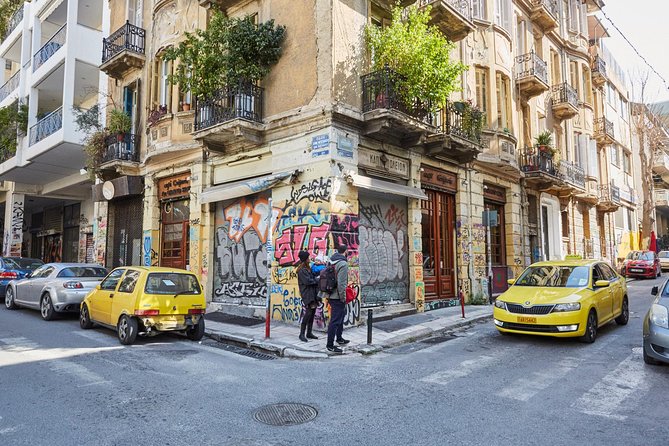
After Kolonaki, the walk shifts into Exarcheia for another guided hour. This is where Athens starts to feel more lived-in and less staged. Even without a single headline monument, Exarcheia helps you understand the city’s social geography—how neighborhoods carry different rhythms.
The guide’s job here is to connect the dots: how those changes link back to political power, population shifts, and the layering of cultural influences over time. If you’ve been to Athens before and felt like you only visited the highlight reel, this part is where you start noticing streets and building edges you would’ve skipped.
From what guides have done on this experience, the pacing matters too. People have praised guides for keeping the walk moving at a comfortable speed, with explanations that land without dragging. That’s the difference between orientation and a long loop.
Psyri: Where Athens Starts to Feel Like a Timeline You Can Walk
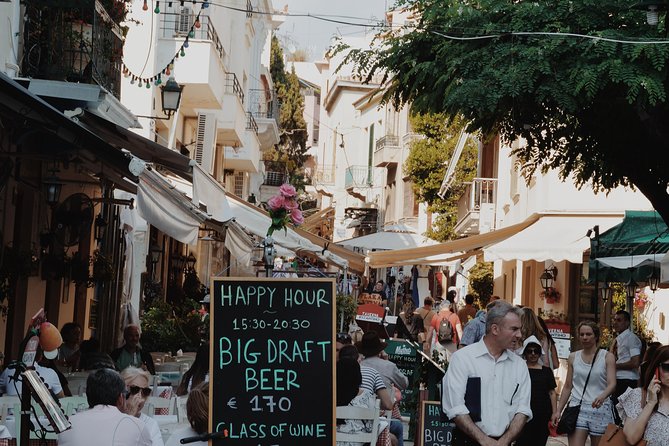
Next is Psyri for a guided hour. This is where the tour leans hard into the city’s “missing link” between the ancient past and the frantic modern present.
Psyri also sets up the Ottoman-era portion that comes after. You’ll see neighborhood character and architecture that still carries older influence, which makes the later Psiri–Monastiraki section feel grounded instead of random.
As you move, you’ll pass through major squares and street sections, including Omonia Square and Kotzia Square, plus the central markets area. These stops matter because they show Athens as a functioning city, not a museum hallway.
One practical note: market-adjacent streets can be busy, and you’ll still be walking continuously. If you’re prone to fatigue on city tours, keep water and breaks in mind even though food and drinks aren’t included.
Monastiraki: Ottoman Streets, International Landmarks, and the Old-New Match
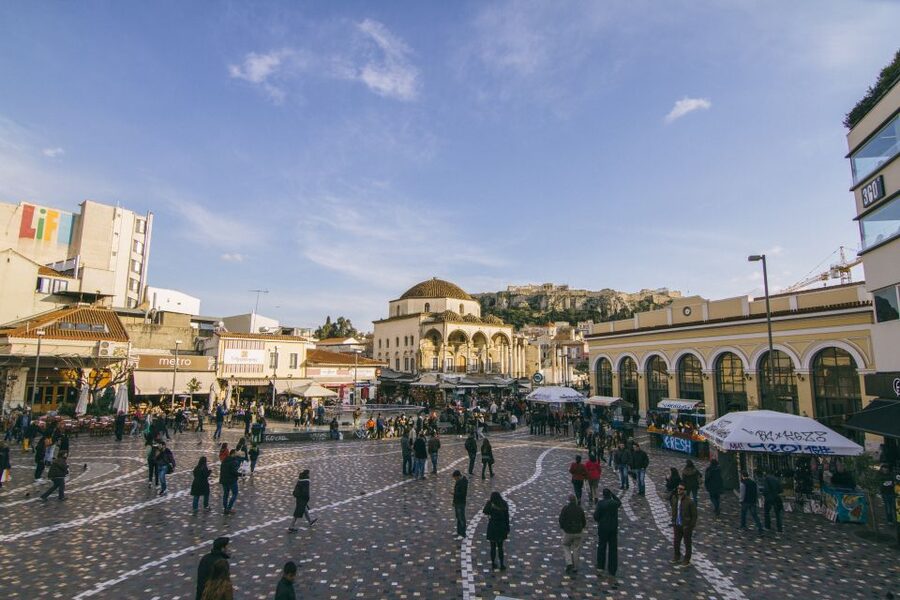
You spend the final leg in Monastiraki with about 30 minutes of guided time, then you finish at Monastiraki Square. This is where the “East meets West” idea becomes visible in walking form.
You’ll specifically walk through preserved Ottoman neighborhoods. That means you’re not only looking at Ottoman history in theory—you’re seeing how it shaped streets and neighborhood structure. It’s the kind of detail that makes Athens feel personal. You start recognizing patterns rather than just collecting coordinates.
This is also where the tour’s architectural stops earn their keep. You’ll meet landmark buildings tied to education and governance, including the Parliament, plus the Academy, University, and National Library. The guide explains how these institutions helped shape the contemporary image of Athens as a capital.
If you like your tours to connect street-level walking to real-world meaning, this is a strong moment to pay attention. The building facades are impressive, but the value is in understanding why they were built and what message they sent.
The WWII Prison Stop: A Hard Detour That Changes the Mood

One of the more unforgettable elements is the descent to a WWII prison. This is not an optional “photo stop.” It’s a mood shift. The contrast between everyday Athens and a notorious wartime site makes the city feel bigger than your itinerary.
There’s also a practical catch: the prison is closed on Mondays and Tuesdays. So if you’re traveling those days and you booked mainly for that stop, set your expectations accordingly. If it’s closed, the rest of the route still offers plenty, but the tonal contrast won’t hit the same.
This kind of stop is also why an orientation walk can be more than getting your bearings. It gives you context you’ll carry when you later visit museums or ancient sites. You’ll understand that Athens has always been used as a stage for history—sometimes for art and learning, sometimes for survival and control.
Ancient Water Still Flowing: Why Those Small Moments Matter

Some tours rush from “big ancient thing” to “next big ancient thing.” This one slows down for smaller reminders that Athens time didn’t end in the past.
You’ll watch ancient rivers still flowing and you’ll visit tombs from a foregone era. The names of the specific sites aren’t part of your planning details here, but the takeaway is clear: the city’s older layers are not locked behind barriers. Water and burial places help show continuity in a way that ruins alone can’t.
That’s a huge value for first-timers. But it’s also useful for repeat visitors. Even if you know the major ruins, you may not have spent time thinking about the city’s natural systems and long-term settlement patterns.
What You Learn from the Squares and Markets (and Why You Should Care)

You pass through key squares like Omonia and Kotzia, along with the central markets zone. Those sound like filler until you realize they’re the glue of daily Athens.
Here’s what these stops help you do:
- Get a feel for how people move and gather in modern Athens
- Notice how civic spaces sit right next to older neighborhood patterns
- Understand the city as a living place, not only a lineup of monuments
If your next plan is to navigate Athens on your own—finding a neighborhood vibe, choosing where to wander, avoiding the easiest tourist traps—this part is the groundwork.
Guides and Real-World Experience: Who Makes This Tour Work
The tour lives or dies by the guide. And in the experiences tied to this walk, the guides earn real praise for attention, pacing, and clarity.
For example, Simos has been described as attentive, knowledgeable, and great with pacing. Andreas has been praised for showing even repeat visitors parts of Athens they hadn’t seen. Antigoni is noted for explaining culture and challenges, and for giving useful food and coffee recommendations that aren’t just the first thing on a list. Christina has been credited with taking people to places they wouldn’t have found alone.
If you care about the difference between facts and understanding, pick the language you’re most comfortable with and then let the guide’s explanation do the heavy lifting. Your job is simple: wear good shoes and keep your curiosity switched on.
Price and Value: Is $62 Worth 4 Hours of Walking?
At $62 per person for about 4 hours, you’re paying for more than route planning. You’re paying for:
- An English or French-speaking guide
- A city map that links eras across centuries
- A guided route that connects neighborhoods and landmarks into one logical experience
If you were to piece together a similar day yourself, you’d likely spend money on transit, waste time figuring out where to go next, and miss the context that turns buildings and streets into meaning. This tour aims to compress orientation into a single afternoon.
The value is strongest when you want a structure for the rest of your trip. You’ll finish back in Monastiraki with a clearer map in your head, and a better sense of where East-West influence shows up in real space.
Practical Stuff That Actually Helps: Shoes, Pace, and Timing
This is a walking tour, so plan for long pavement time. Comfortable shoes are non-negotiable. Athens sidewalks can be uneven, and you don’t want foot pain to turn history into an endurance test.
Pacing is part of the quality here. Multiple people have praised guides for keeping the walk at a steady speed with explanations at the right moments, so it doesn’t feel like you’re constantly stopping or constantly rushing.
Duration is 4 hours, which is long enough to feel like you did something meaningful, but not so long that you’ll be wiped out for the evening. Still, schedule a lighter plan afterward if you can.
Who This Tour Fits Best
This walking orientation is a great fit if:
- You want a first or second-day Athens backbone to navigate the rest of the city
- You like context that connects architecture, neighborhoods, and political eras
- You want less of the typical “ancient highlights only” approach
It may be less ideal if you hate walking or you’re only interested in a single famous ancient site. This route is about connections—between royal palaces, education buildings, Ottoman neighborhoods, and wartime memory.
Should You Book This Athens Orientation Walk?
Yes, if you want to understand Athens fast and walk away with a mental map that feels real. The combination of major architectural stops, Ottoman neighborhood streets, and a WWII prison detour (when open) gives you multiple angles on the same city in one clean day.
Book it particularly if you’re the type who likes to wander, but you want to wander with a plan. You’ll get oriented, you’ll learn why buildings and neighborhoods look the way they do, and you’ll finish in Monastiraki with momentum for the rest of your trip.
FAQ
FAQ
How long is the Unexpected Athens Orientation Tour?
It lasts about 4 hours.
How much does the tour cost?
The price is $62 per person.
Where does the tour start?
You can start at Syntagma (Constitution) Square or at Kolonaki, depending on the option you book. The exact meeting point may vary.
What neighborhoods and areas does the route cover?
The walk includes guided time in Kolonaki (1 hour), Exarcheia (1 hour), Psiri (1 hour), and Monastiraki (about 30 minutes), finishing at Monastiraki Square. The route also passes places like Omonia Square, Kotzia Square, and the central markets area.
What languages are offered?
Guides speak English or French.
Is food included in the tour price?
No. Food and drinks are not included.
Is there a stop at a World War II prison?
Yes, the tour includes a descent to a World War II prison, but it is closed on Mondays and Tuesdays.
What should I bring?
Wear comfortable shoes.
Can I book without paying right away?
Yes. You can reserve now and pay later.
What is the cancellation policy?
Free cancellation is available up to 24 hours in advance for a full refund.
More Tour Reviews in Athens
- Athens: Acropolis & up to 5 Archaeological Sites Combo Pass★ 4.2 · 13,904 reviews
- Athens: Acropolis, Parthenon & Acropolis Museum Guided Tour★ 4.8 · 9,316 reviews
- The Acropolis, Parthenon & Acropolis Museum Guided Tour★ 4.7 · 8,493 reviews
- Athens: Cape Sounion & Poseidon Temple Sunset Half-Day Trip★ 4.8 · 8,241 reviews
- Acropolis: Premium Acropolis and Parthenon Guided Tour★ 4.8 · 5,208 reviews
- Athens: Mythology of Delphi, Museum and Arachova Guided Tour★ 4.7 · 5,102 reviews
All of Athens in a Day
- Athens: City Sightseeing Hop-On Hop-Off Bus Tour★ 4.3 · 4,520 reviews
- Best of Athens Half Day Private Tour★ 5.0 · 3,714 reviews
- Athens & Acropolis Highlights: Greek Mythology Small-Group Tour★ 5.0 · 2,370 reviews
- Athens: Acropolis and Mythology Highlights Small Group Tour★ 4.8 · 2,275 reviews
- City Sightseeing Athens, Piraeus & Beach Riviera Hop-On Hop-Off Bus Tours★ 4.0 · 1,887 reviews
- Athens Half-Day Sightseeing Tour with Tickets of Acropolis★ 4.0 · 1,402 reviews
Athens on Foot, Continued
- Acropolis and Parthenon Guided Walking Tour★ 5.0 · 4,755 reviews
- Greek Food Walking Tour in Athens★ 5.0 · 4,740 reviews
- Athens: Guided Greek Food Walking Tour with Tastings★ 4.9 · 2,859 reviews
- Acropolis monuments & Parthenon Walking Tour with Optional Acropolis Museum★ 5.0 · 2,678 reviews
- Athens Acropolis and Parthenon Walking Tour★ 4.5 · 1,355 reviews
- Acropolis, Parthenon & Athens Old City Heritage Walking Tour★ 4.5 · 876 reviews
Fresh Off the Boat: New Athens Reviews





Athens Walking Tours, compared.
 ★ 5.0Acropolis and Parthenon Guided Walking TourFrom $414,755 reviews
 ★ 5.0Greek Food Walking Tour in AthensFrom $874,740 reviews
 ★ 4.9Guided Greek Food Walking Tour with TastingsFrom $812,859 reviews
 ★ 5.0Acropolis monuments & Parthenon Walking Tour with Optional Acropolis MuseumFrom $422,678 reviews
 ★ 4.5Athens Acropolis and Parthenon Walking TourFrom $411,355 reviews
 ★ 4.5Acropolis, Parthenon & Athens Old City Heritage Walking TourFrom $34876 reviews
 ★ 5.0Athens Authentic Greek Food Walking Tour (Small Group)From $83809 reviews
 ★ 4.9Ultimate Food Walking Tour with 15 TastingsFrom $93567 reviews
Browse the lists this tour appears in