
Reviewed · ATHENS MYTHOLOGY TOURS
Percy & Medusa: Family Mythology Treasure Hunt & Tour
Athens can feel like a maze. This tour turns it into a story game across the most famous ruins and streets. You follow myth-themed clues at your own pace, using the Narratologies app and a facilitator to keep the plot moving. The result is a hands-on walk that feels made for families, not lecture hall history.
Two things I like a lot: the interactive riddle format that pushes you to look closely at landmarks, and the fact that the stops are picked to connect big sights with real street-level Athens. You also get a food stop with traditional Greek sweets, which matters when you are walking for about two hours. One thing to consider is that you’ll be doing a fair bit of wandering and clue-solving, so it helps to have moderate physical fitness for the pace and walking.
In This Review
- Key points before you go
- Turning Athens into a Myth Mission
- Price and time: $75.06 for about two hours
- Where it starts, where it ends, and why that matters
- How the Narratologies app turns stops into clues
- Small group energy: max 15 travelers
- Temple of Olympian Zeus: divine assistance and first riddles
- Acropolis Museum: riddles that point you the right way
- Dionysiou Areopagitou: a beautiful pedestrian stretch with myth clues
- Lukumades stop: Greek donuts with honey and cinnamon
- Theatre of Dionysus: ancient performances and a mission
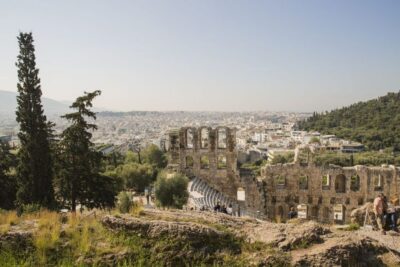
- Herod Atticus Odeon: Roman drama at the cradle of civilization
- Areopago: views, clues, and the Parthenon in sight
- Ancient Agora of Athens: from above and into the story
- Plaka: the oldest district as your final approach
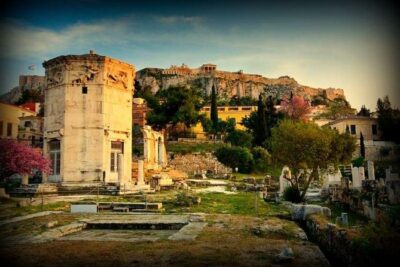
- Tower of the Winds: a weather station riddle
- Choragic Monument of Lysicrates: coronation and the mission’s end
- Guides matter: when Maria and Konstas keep the clues moving
- What to know before you book
- Should you book Percy & Medusa in Athens?
- FAQ
- What’s the duration of the Percy & Medusa treasure hunt tour?
- Where do you meet, and where does the tour end?
- Is the tour in English?
- What’s included in the price?
- Do I need to buy tickets for the stops?
- Is there a food break?
- How physically demanding is it?
Key points before you go
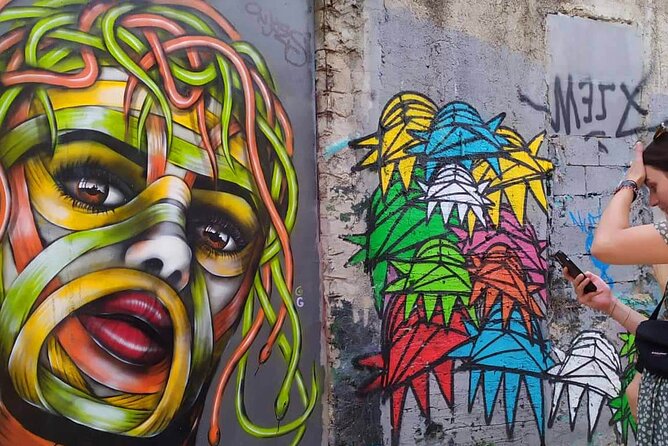
- Mythology treasure hunt format at major Athens landmarks, with location-based riddles
- Narratologies app for navigation, stories, and “gems” tied to your progress
- Family-friendly timing across short stops, with a real break for lukumades
- Small group size (max 15), which helps the facilitator keep things on track
- Ends in Plaka at a well-preserved ancient monument near Acropolis Metro Station
- Value add-ons like discount vouchers from local souvenir and museum gift shops
The old gods retold, a few more walks
- Athens: Mythology of Delphi, Museum and Arachova Guided Tour
★ 4.7 · 5,102 reviews - Athens & Acropolis Highlights: Greek Mythology Small-Group Tour
★ 5.0 · 2,370 reviews - Athens: Acropolis and Mythology Highlights Small Group Tour
★ 4.8 · 2,275 reviews - Philosophy and Democracy tour of Athens
★ 5.0 · 285 reviews
Turning Athens into a Myth Mission
This isn’t a sit-and-listen tour. It is built like a scavenger hunt with myth characters, short story beats, and quick challenges at each location. If you’ve ever taken kids (or just yourself when you want to move) through ruins, you know how often the landmarks blur together. Here, the clues give you a reason to stop, look, and read what you might otherwise skip.
The fantasy side is fun, but the practical side is what makes it work. Each stop is short, and each one has a purpose: answer a riddle, move to the next place, and keep going until your mission is complete. That rhythm is also great for adults, because you get to see more than the usual checklist route.
Price and time: $75.06 for about two hours
At $75.06 per person for roughly two hours, this price makes sense when you look at what is included. You get a guided experience (one facilitator), an app-based navigation and storytelling system, and an included food stop with water. You also get free admission tickets listed for each stop, so you aren’t paying separate entrance costs for the places on this route.
This is not a half-day “see everything” plan. Think of it as a concentrated Athens sampler with a mission attached. If your goal is to cover key sights near the Acropolis area while keeping kids engaged, the value tends to be strong.
Where it starts, where it ends, and why that matters
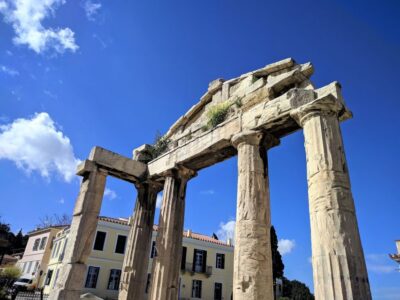
The tour starts at the Arch of Hadrian, on Leof. Vasilisis Amalias 50. That start point is handy because it puts you close to major transit lines and right on the way toward the Acropolis zone.
It ends at the Choragic Monument of Lysicrates on Epimenidou 3, in Plaka. That finish location is a smart way to end, because Plaka is where you can keep walking, grab something else to eat, or connect to the Metro near Acropolis Station. Ending at a historic monument also feels like a clean narrative wrap-up: you finish the hunt where the stonework still does the talking.


How the Narratologies app turns stops into clues
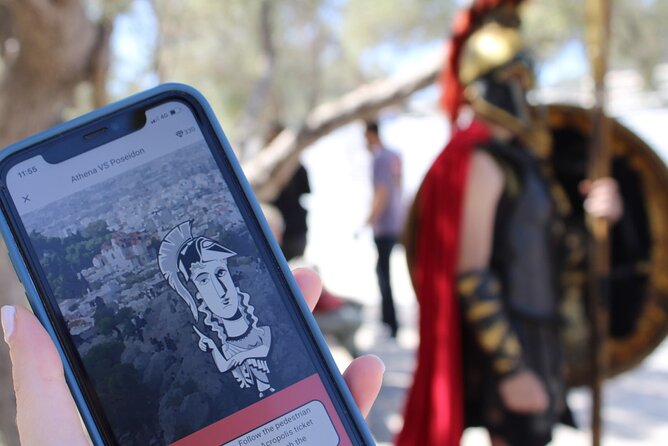
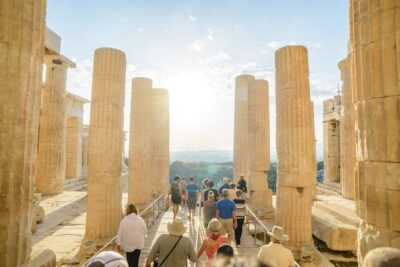
You’ll use the Narratologies app for navigation and stories. It provides location-based content, riddles, and a collection of gems tied to your progress. The app is also part of the experience when the facilitator isn’t right at your elbow, so you aren’t stuck waiting for someone to explain every step.
There’s a key detail: the facilitator has the magic code that unlocks the game. So while you should download the app in advance for smoother flow, you won’t be left guessing what to do at the first landmark. This setup keeps families from getting lost, especially if you have multiple ages in the group.
The tour is offered in English, and it uses mobile tickets, so bring your phone and keep it charged.
Small group energy: max 15 travelers
With a maximum of 15 people, you should expect a more controlled, family-friendly pace. That small size matters in a hunt tour. Riddles work better when people can hear instructions, group momentum stays steady, and the facilitator can help without herding everyone down a narrow street.
If you want a tour that feels closer to a guided walk than a crowded bus stop situation, this one fits that goal.
Temple of Olympian Zeus: divine assistance and first riddles
You begin at the Temple of Olympian Zeus, where the theme is gods meeting and taking action on your behalf. The stop is short, and that’s by design. You pause, read a story in the Narratologies app about the monument, solve a riddle, and then get your direction for the next stop.
Why this works: Olympian Zeus is huge and impressive, but it can also be a place people only photograph. The story-and-riddle format gives you a reason to look at the monument’s scale and symbolism instead of just snapping pictures and moving on.
This stop also lists an admission ticket as free, so you are not forced into extra payments just to play the first stage.
Acropolis Museum: riddles that point you the right way
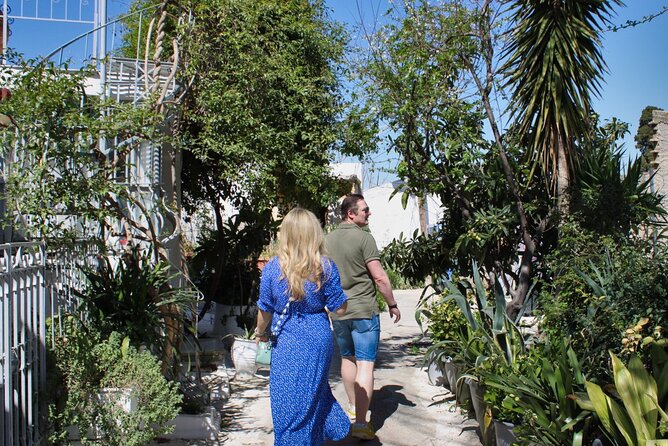
Next up is the Acropolis Museum. You get a quick introduction to what to notice and why the collection matters. Then you solve another riddle and receive direction toward your next monument.
Even in a short stop, this helps because it orients you. Museums can feel overwhelming, but a riddle-based guide pushes you to hunt for specific details. If your family likes hands-on tasks more than reading a wall of text, this is a good fit.
Dionysiou Areopagitou: a beautiful pedestrian stretch with myth clues
Then you walk onto Dionysiou Areopagitou, one of Athens’ best-known pedestrian streets. This is where the tour starts to feel less like ruins and more like real city life: ancient monuments in view, and streets lined with designed houses that show Athens at street level.
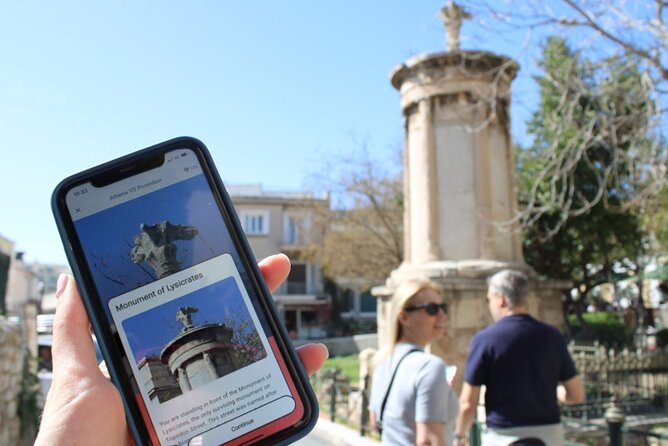
Here you read stories about what you are seeing and solve challenging riddles. You are also encouraged to watch for Olympian Gods that might seem to appear during the hunt. That kind of playful prompt matters for families, because it turns the walk into an activity instead of “just getting from point A to B.”
Lukumades stop: Greek donuts with honey and cinnamon
Yes, this hunt understands hunger. There’s a dedicated food stop for Lukumades, Greek donut bites served with honey and cinnamon, plus water. It’s scheduled for about 15 minutes, which is long enough to reset without derailing the timeline.
This is more than a snack. For kids, a food break can be the difference between still caring about riddles and suddenly asking to stop. For adults, it’s a quick chance to taste something local and sweet without having to find a place on your own while managing a busy walking route.
Theatre of Dionysus: ancient performances and a mission
At the Theatre of Dionysus, you get another short story-and-riddle beat. The tour calls it a surviving ancient theatre at the foot of the Acropolis hill, and it frames the stop as part of a mission you have to complete.
What’s valuable here is the mental bridge. The theatre isn’t just an artifact; it’s tied to performances and public life. Even with just a few minutes, the focus on a mission helps you treat it as a living idea instead of a static ruin.
Herod Atticus Odeon: Roman drama at the cradle of civilization
Next is the Herod Atticus Odeon, described as a Roman odeon of great importance, and you read a story, solve a riddle, and get ready for the “cradle of civilization” context the tour brings into the theme.
This stop is only a few minutes, so don’t expect a full architectural lecture. Instead, expect orientation: what this building is for, why it matters, and how it connects into the broader myth-and-history thread of Athens.
Areopago: views, clues, and the Parthenon in sight
You head to Areopago, a small hill with views toward Athens and the Parthenon. You’re given clues here and warned to beware, which is tour-speak for pay attention because the views change how you interpret the landmarks.
This stop is one of those “yes, this is worth it” moments. When you can see the Parthenon from a hill like this, the city’s layout becomes clearer. The riddle helps you look deliberately, not just gaze.
Ancient Agora of Athens: from above and into the story
The Ancient Agora of Athens stop focuses on the vibrant center of ancient Athens, with a view-from-above angle mentioned in the tour flow. You read a story, solve a riddle, and continue your journey.
Even if you’ve seen Agora photos before, a puzzle prompt makes a difference. It helps you identify how public spaces were used and why people gathered here. For families, it’s a way to talk about civic life without turning it into homework.
Plaka: the oldest district as your final approach
As you reach Plaka, the oldest district of Athens, the tour ramps up the “finish the mission” feeling. You’ll read multiple stories and solve many riddles, each one bringing you closer to completion.
Plaka is also where your route becomes more flexible in a good way. You’re not trudging through only ruins. You are walking through a lived-in neighborhood vibe that makes the end of the hunt feel like an achievement you earned, not just another stop.
Tower of the Winds: a weather station riddle
Then you reach the Tower of the Winds, described as the first recorded weather station of humankind. Here you get to savor the beauty and crack the riddle about it.
This is a great stop for curious kids and adults alike, because it mixes daily-life science (weather) with ancient precision. It’s also an easy “wow” moment because you get a clear fact to anchor your attention.
Choragic Monument of Lysicrates: coronation and the mission’s end
The hunt finishes at the Choragic Monument of Lysicrates, and the experience wraps with a coronation ceremony with the facilitator.
That ending works because it is celebratory without being corny. You’ve worked through the app stories, answered riddles, and made it to the final ancient monument in Plaka. For families, that “you did it” moment can be more memorable than another photo at a famous site.
Guides matter: when Maria and Konstas keep the clues moving
One detail worth highlighting is the human touch. The guide experiences in English include real myth-and-Athens knowledge, with names like Maria and Konstas showing up in feedback. What stands out is their ability to bounce between different ages and keep the tone upbeat and understandable.
Even in a structured app-and-riddle tour, the facilitator’s job is to keep the group together, clear up confusion, and adapt when questions come up. That kind of responsive guiding is what turns the hunt from a gimmick into a true Athens experience.
What to know before you book
This tour is best if you want:
- A family-friendly mythology angle that keeps kids engaged
- A walk through key Athens sights without a long, passive lecture
- A plan that uses an app for direction and storytelling
- A included taste of traditional sweets in the middle of sightseeing
This tour might be less ideal if you want:
- A slow museum-style experience with lots of time to linger
- A fully wheelchair-friendly or low-walking outing (it’s listed for moderate physical fitness)
Should you book Percy & Medusa in Athens?
If your priority is to see more of central Athens around the Acropolis area while keeping everyone (kids and adults) actively involved, I think this is a strong choice. The combination of short stops, app-based riddles, and an included food break makes the whole experience easier to manage than many standard tours.
Book it if you like problem-solving and want your sightseeing to feel like an adventure. Pass if you’re only interested in deep, unhurried museum time. For most people doing Athens for the first time, this is a fun, practical way to turn “I should see that” into a mission you actually complete.
FAQ
What’s the duration of the Percy & Medusa treasure hunt tour?
It runs for about 2 hours.
Where do you meet, and where does the tour end?
You start at the Arch of Hadrian on Leof. Vasilisis Amalias 50, Athens, and the tour ends at the Choragic Monument of Lysicrates on Epimenidou 3 in Athens (near Acropolis Metro Station).
Is the tour in English?
Yes, it is offered in English.
What’s included in the price?
You get the Narratologies app for navigation, location-based stories and riddles, 1 facilitator, a food stop with Lukumades (honey and cinnamon) plus water, and discount vouchers from local souvenir and museum gift shops.
Do I need to buy tickets for the stops?
The stops are listed with admission ticket free, so the experience does not require extra admission tickets for those listed stops.
Is there a food break?
Yes. There is a dedicated food stop for Greek donuts called Lukumades, with honey and cinnamon and water.
How physically demanding is it?
The tour is listed as requiring moderate physical fitness, so expect walking and time spent on outdoor streets and hill areas.
More Tours in Athens
- Athens: Acropolis, Parthenon & Acropolis Museum Guided Tour★ 4.8 · 9,316 reviews
- The Acropolis, Parthenon & Acropolis Museum Guided Tour★ 4.7 · 8,493 reviews
- Acropolis: Premium Acropolis and Parthenon Guided Tour★ 4.8 · 5,208 reviews
- Athens: Mythology of Delphi, Museum and Arachova Guided Tour★ 4.7 · 5,102 reviews
- Acropolis and Parthenon Guided Walking Tour★ 5.0 · 4,755 reviews
- Greek Food Walking Tour in Athens★ 5.0 · 4,740 reviews
More Tour Reviews in Athens
- Athens: Acropolis & up to 5 Archaeological Sites Combo Pass★ 4.2 · 13,904 reviews
- Athens: Acropolis, Parthenon & Acropolis Museum Guided Tour★ 4.8 · 9,316 reviews
- The Acropolis, Parthenon & Acropolis Museum Guided Tour★ 4.7 · 8,493 reviews
- Athens: Cape Sounion & Poseidon Temple Sunset Half-Day Trip★ 4.8 · 8,241 reviews
- Acropolis: Premium Acropolis and Parthenon Guided Tour★ 4.8 · 5,208 reviews
- Athens: Mythology of Delphi, Museum and Arachova Guided Tour★ 4.7 · 5,102 reviews
Myth and Legend, Retold
- Athens: Mythology of Delphi, Museum and Arachova Guided Tour★ 4.7 · 5,102 reviews
- Athens & Acropolis Highlights: Greek Mythology Small-Group Tour★ 5.0 · 2,370 reviews
- Athens: Acropolis and Mythology Highlights Small Group Tour★ 4.8 · 2,275 reviews
- Philosophy and Democracy tour of Athens★ 5.0 · 285 reviews
- Athens: Mythology Tour for Families★ 4.8 · 173 reviews
- The History of Athens: Greek Mythology Private Tour★ 5.0 · 138 reviews
Fresh Off the Boat: New Athens Reviews





Athens Mythology Tours, compared.
 ★ 4.7Mythology of Delphi, Museum and Arachova Guided TourFrom $305,102 reviews
 ★ 5.0Athens & Acropolis Highlights: Greek Mythology Small-Group TourFrom $542,370 reviews
 ★ 4.8Acropolis and Mythology Highlights Small Group TourFrom $532,275 reviews
 ★ 5.0Philosophy and Democracy tour of AthensFrom $50285 reviews
 ★ 4.8Mythology Tour for FamiliesFrom $79173 reviews
 ★ 5.0The History of Athens: Greek Mythology Private TourFrom $199138 reviews
 ★ 4.9Guided Mythological Walking TourFrom $47125 reviews
Philosophy and Democracy Walking TourFrom $4991 reviews
★ 4.9Guided Mythological Walking TourFrom $47125 reviews
Philosophy and Democracy Walking TourFrom $4991 reviews
Browse the lists this tour appears in