
Reviewed · ATHENS MYTHOLOGY TOURS
Greek Mythology Storytelling Walk
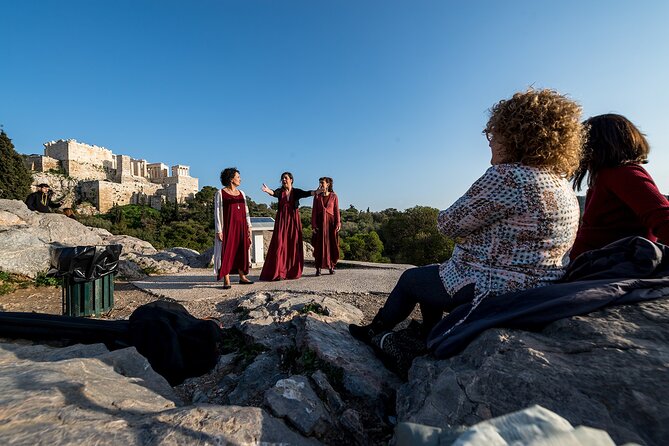
Myths come alive on these Athens streets. This Greek Mythology Storytelling Walk turns Plaka and the Acropolis area into a live stage, with professional storytellers linking famous gods and heroes to the places you’re walking past. I love the way the performances make the stories easy to follow, and I also like that the route keeps you moving through real neighborhoods instead of sitting in one spot.
The main thing to think about is timing and weather. It runs for about 2 hours in good conditions, so plan for steady walking and expect it to be a smaller-group street experience, not a museum-style stop-and-start.
In This Review
- Key highlights you’ll care about
- A 2-hour myth walk that feels like Athens, not a worksheet
- Getting your bearings: Plaka starting point and the route vibe
- Plaka storytelling: myths tied to the places you can actually see
- Passing outside the Acropolis Museum: a smart walking link
- The theater stop near the Acropolis base
- Pnyx: where the story ends and the ancient city’s purpose shows
- Zeus, Athena, Dionysus: what you’re really learning
- Price and value: $53.52 for a pro-performed 2-hour walk
- What to expect on the ground: timing, walking level, and comfort
- Practical tips that make the tour more enjoyable
- Who this tour fits best
- Should you book the Greek Mythology Storytelling Walk?
- FAQ
- Where does the tour start and end?
- What time does the tour begin?
- How long is the experience?
- How much does it cost?
- What’s included in the ticket price?
- What isn’t included?
- Is it a mobile ticket?
- What should I do if the weather is poor?
- How big are the groups?
- Can I cancel for a full refund?
Key highlights you’ll care about
- Plaka-to-Pnyx route: you start in Plaka and finish at the Athenian assembly site at Pnyx
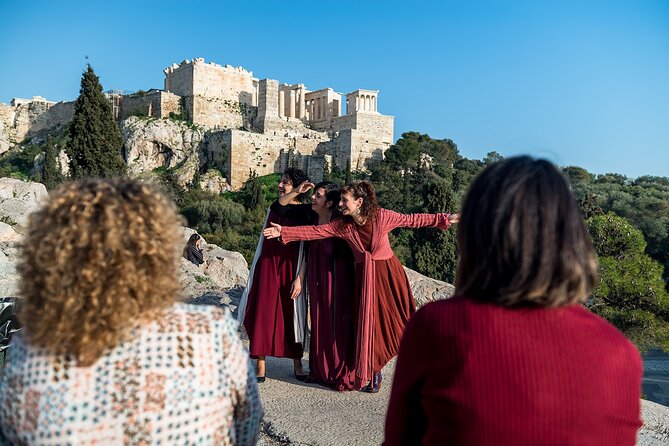
- Live storytelling by professionals: myths are delivered as performance, not a lecture
- Acropolis-area sights along the way: you’ll pass outside the Acropolis Museum and a theater at the Acropolis base
- Small group size (max 20): more chances to stay engaged and hear clearly
- Free, walk-based stops: the Plaka and Pnyx segments are marked as free admission
The old gods retold, a few more walks
- Athens: Mythology of Delphi, Museum and Arachova Guided Tour
★ 4.7 · 5,102 reviews - Athens & Acropolis Highlights: Greek Mythology Small-Group Tour
★ 5.0 · 2,370 reviews - Athens: Acropolis and Mythology Highlights Small Group Tour
★ 4.8 · 2,275 reviews - Philosophy and Democracy tour of Athens
★ 5.0 · 285 reviews
A 2-hour myth walk that feels like Athens, not a worksheet
This tour is built for people who learn best by seeing, hearing, and moving. Instead of treating Greek mythology as something sealed in a book, you get the stories placed onto the street grid of Athens—starting in the oldest-feeling parts near the Acropolis and ending at Pnyx, a place tied to public life in the ancient city.
I also like that it’s structured enough to guide you, but light enough to feel spontaneous. You’re not stuck in a long line for a single attraction. You’re walking through Plaka and the surrounding area while the myths keep flowing.
One more plus: the vibe is performance-focused. With pro storytellers and a tour leader, you’re not just getting facts—you’re getting pacing, voice, and theatrical energy that helps the big names stick in your mind.
Getting your bearings: Plaka starting point and the route vibe
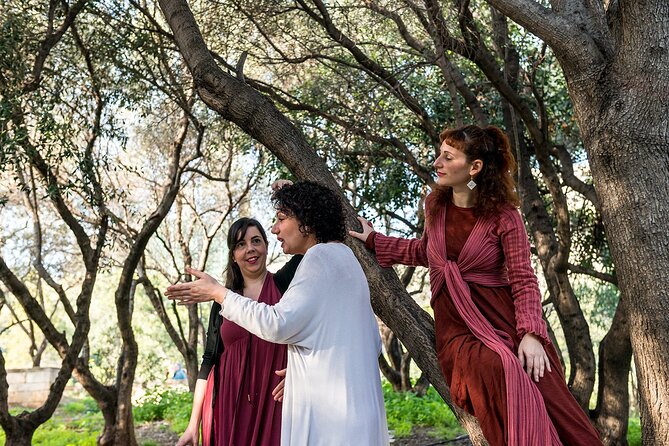
You meet near Nikis & Kidathineon in Athens, then the walk begins right inside the Plaka area. This matters because Plaka is where Athens visitors naturally slow down—narrow lanes, souvenir shops, and ancient remnants clustered close together. That kind of setting makes storytelling work well. The streets already feel like they’re holding a thousand small tales.
The tour’s first main segment runs for about an hour in Plaka. It’s also described as a walk through the oldest part of the city with lots of foot traffic around you, so expect a lively atmosphere. If you’re the type who likes a little motion and people-watching along with your culture, this is a good match.
From a review detail, I’d also note that there can be cooler, shady stretches on parts of the route. You won’t have total control over sun exposure in Athens, but the pacing and route choices seem to take comfort into account.
Plaka storytelling: myths tied to the places you can actually see
This is where the experience becomes more than background entertainment. As you walk through Plaka, the myths connect to the sights you pass—so Zeus, Athena, and Dionysus don’t feel like random names. They become characters in a story that’s being told while you’re physically near the landscapes that shaped Athens.
The tour is specifically set up around the idea of the gods being part of daily life. The premise is part humor, part wonder: Zeus is in love, Athena is bearing gifts, and Dionysus is, well, doing his own thing again. That tone keeps the walk light, even when the myths themselves are dramatic.
You’ll also get the benefit of learning myths in the context of “why Athens cares.” The focus is on foundational stories that are important not just to the city, but to the broader world’s storytelling traditions. If you’ve ever thought Greek mythology felt too big to organize, this “walk and listen” format helps you sort characters and themes quickly.
Athens at walking pace, more routes
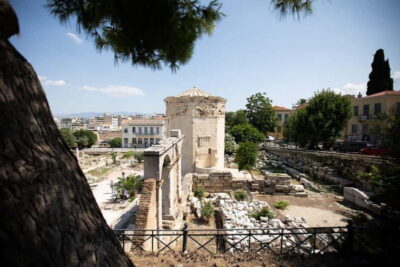


Passing outside the Acropolis Museum: a smart walking link
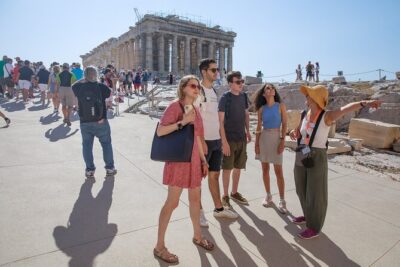
After Plaka, you continue along the route and pass outside the Acropolis Museum on your way to the next storytelling segment. You’re not paying for museum time here, but you are using the museum location as a geography anchor.
That’s a subtle but helpful design choice. Even if you’re not going inside, you start building a mental map: museum area, Acropolis base, major ancient sightlines, and then onward to the public-meeting zone at Pnyx. It turns the walk into a “connect the dots” experience without the pressure of formal entry tickets.
The theater stop near the Acropolis base
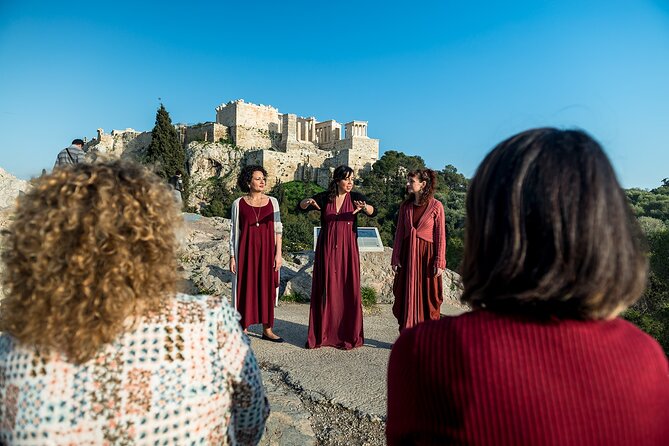
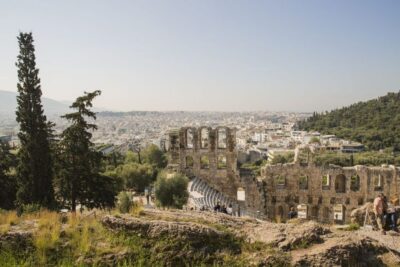
At some point on the route, you’ll pass by an ancient Greek theater located at the base of the Acropolis. That matters because Greek tragedy and storytelling aren’t separate ideas from mythology—they’re tied together. Even from the sidewalk, seeing where theatrical tradition happened adds weight to the performance aspect of the tour.
For people who care about atmosphere, this is one of the most satisfying transitions on the itinerary. One minute you’re in Plaka lanes, and the next you’re near a space that was made for drama and voice carrying across an audience.
A practical note: since this is a walking experience, you’ll get the sight as you move past it rather than standing for a long photo session. If you want a ton of still images, you might want to save your deeper photo time for later, after the tour.
Pnyx: where the story ends and the ancient city’s purpose shows
The tour concludes at Pnyx, the ancient Athenian gathering site for the democratic assembly. That ending shift is smart. It stops the walk from feeling purely myth-themed and instead ties the myths back to civic Athens—people meeting, speaking, deciding.
You finish around the second hour mark, with the Pnyx segment running about an hour. This gives you time to absorb the significance of the place rather than treating it like a quick drop-off. It’s also the kind of location where you can look around and picture how public life worked in the ancient city.
If you like the idea that myths were part of a society’s imagination, Pnyx is a strong finishing note. It helps you feel the contrast between divine drama and human decision-making, without the tour ever becoming too academic.
Zeus, Athena, Dionysus: what you’re really learning
On paper, this sounds like a basic mythology walk. In practice, it’s more about structure: you hear foundational Greek myths and you connect them to famous gods and heroes through performance.
You’ll likely remember more than just the names because the stories are delivered in a way that’s meant to be followed. There’s a tour leader and professional storytellers, so the experience should feel organized while still playful.
This matters if you’re someone who has visited Athens before but left with fragments—maybe you saw the Acropolis, maybe you walked through Plaka, but the myths felt disconnected. Here, the myths become the glue between the neighborhoods, ancient spaces, and your own understanding.
Also, the tone is intentionally upbeat. The premise includes Dionysus doing his thing again, and that kind of humor keeps the walk from becoming heavy. You leave with a “story memory” rather than a “facts list,” which is exactly what most first-timers want.
Price and value: $53.52 for a pro-performed 2-hour walk
At $53.52 per person, this isn’t the cheapest thing in Athens, but it also isn’t priced like a major attraction ticket. You’re paying for live performance by professional storytellers plus a tour leader, in a small group capped at 20 travelers.
That group size is a value factor you should actually care about. In a max-20 setting, it’s usually easier to hear the narration and stay part of the moment. If the performance relies on voice and timing, smaller groups protect the experience quality.
The price also makes sense if you want your Athens day to include story-led context. You’re not buying one museum ticket and calling it done. You’re getting a guided, two-hour route that connects multiple ancient touchpoints—Plaka, the Acropolis Museum area, the theater area, and the end at Pnyx.
Booking demand is a sign too. It’s described as being booked about 75 days in advance on average, so if you have fixed dates, reserve early.
What to expect on the ground: timing, walking level, and comfort
The tour runs for about 2 hours and starts at 9:30 am. Plan to arrive early enough to find the meeting spot comfortably. You’ll start near Nikis & Kidathineon, then work your way through the Plaka area and up toward the Pnyx finish.
Food and drinks aren’t included, so don’t count on a snack stop as part of the plan. If you’re prone to getting hungry on long walks, eat beforehand and consider carrying basic water. You’ll thank yourself later.
Also, it’s a good-weather experience. If conditions are poor, you’ll be offered a different date or a full refund. That means you should check the forecast the day before and have flexibility if your trip is weather-dependent.
Practical tips that make the tour more enjoyable
A few details can make or break a two-hour walking storytelling tour in Athens.
- Wear comfortable walking shoes. The route moves through streets and ancient-adjacent areas, so you want solid footing.
- Bring sun protection. Athens mornings can be bright, and even if parts are shady, you’ll still be outdoors.
- Keep your phone handy for the mobile ticket. It’s listed as a mobile ticket experience, so you won’t need printed paperwork.
- Don’t over-plan right before or right after. You’ll want an easy buffer for photos, rest, and hydration afterward.
One more thing: service animals are allowed, and most travelers can participate. If you have mobility constraints, I’d still treat this as a walking tour through city streets. It’s not described as fully vehicle-based at any point.
Who this tour fits best
This is a great choice if you want mythology but hate the feeling of being lectured at. It’s also ideal if you like getting your bearings early in a trip—Plaka sets the stage, and ending at Pnyx gives you a satisfying “oh, that’s how Athens worked” finish.
You’ll probably enjoy it most if:
- you want a guided explanation but in a fun, performance-driven style
- you’re curious about Zeus, Athena, Dionysus, and the bigger cast of gods and heroes
- you’re visiting Athens for the first time and want a route that connects multiple ancient areas
If you’re the kind of traveler who wants long museum time, you might find this too short to scratch that itch. But as a mythology-focused Athens intro, it’s a strong use of your day.
Should you book the Greek Mythology Storytelling Walk?
Yes—if your goal is to understand Greek mythology in a way that sticks. The combination of professional storytelling, a small group (max 20), and a route that links Plaka to the Acropolis area and then to Pnyx makes it feel like Athens is talking back.
I’d book it especially if you’re visiting during good weather and you want to spend your morning outdoors without committing to an all-day museum circuit. It’s also a good “first mythology fix” if you haven’t memorized the stories yet. You don’t need background knowledge to enjoy it.
If you’re sensitive to walking or you want quiet, low-stimulation sightseeing, this might not be your ideal format. But for most people, this is a smart, memorable way to see Athens while hearing the gods explain themselves.
FAQ
Where does the tour start and end?
The tour starts at Nikis & Kidathineon, Athina 105 57, Greece and ends at Pnyx, Athens 117 41, Greece.
What time does the tour begin?
The start time is 9:30 am.
How long is the experience?
It lasts about 2 hours.
How much does it cost?
The price is $53.52 per person.
What’s included in the ticket price?
It includes the storytelling performance, professional storytellers, and a professional tour leader.
What isn’t included?
Food or drinks are not included.
Is it a mobile ticket?
Yes, the tour uses a mobile ticket.
What should I do if the weather is poor?
The experience requires good weather. If it’s canceled due to poor weather, you’ll be offered a different date or a full refund.
How big are the groups?
The tour has a maximum of 20 travelers.
Can I cancel for a full refund?
Yes. You can cancel up to 24 hours in advance for a full refund. If you cancel less than 24 hours before the start time, the amount paid won’t be refunded.
Athens on Foot: More Walks
- Acropolis and Parthenon Guided Walking Tour★ 5.0 · 4,755 reviews
- Greek Food Walking Tour in Athens★ 5.0 · 4,740 reviews
- Athens: Guided Greek Food Walking Tour with Tastings★ 4.9 · 2,859 reviews
- Acropolis monuments & Parthenon Walking Tour with Optional Acropolis Museum★ 5.0 · 2,678 reviews
- Athens Acropolis and Parthenon Walking Tour★ 4.5 · 1,355 reviews
- Acropolis, Parthenon & Athens Old City Heritage Walking Tour★ 4.5 · 876 reviews
More Tour Reviews in Athens
- Athens: Acropolis & up to 5 Archaeological Sites Combo Pass★ 4.2 · 13,904 reviews
- Athens: Acropolis, Parthenon & Acropolis Museum Guided Tour★ 4.8 · 9,316 reviews
- The Acropolis, Parthenon & Acropolis Museum Guided Tour★ 4.7 · 8,493 reviews
- Athens: Cape Sounion & Poseidon Temple Sunset Half-Day Trip★ 4.8 · 8,241 reviews
- Acropolis: Premium Acropolis and Parthenon Guided Tour★ 4.8 · 5,208 reviews
- Athens: Mythology of Delphi, Museum and Arachova Guided Tour★ 4.7 · 5,102 reviews
Myth and Legend, Retold
- Athens: Mythology of Delphi, Museum and Arachova Guided Tour★ 4.7 · 5,102 reviews
- Athens & Acropolis Highlights: Greek Mythology Small-Group Tour★ 5.0 · 2,370 reviews
- Athens: Acropolis and Mythology Highlights Small Group Tour★ 4.8 · 2,275 reviews
- Philosophy and Democracy tour of Athens★ 5.0 · 285 reviews
- Athens: Mythology Tour for Families★ 4.8 · 173 reviews
- The History of Athens: Greek Mythology Private Tour★ 5.0 · 138 reviews
Fresh Off the Boat: New Athens Reviews





Athens Mythology Tours, compared.
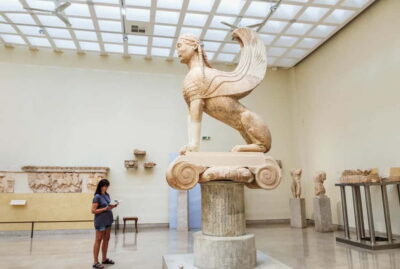 ★ 4.7Mythology of Delphi, Museum and Arachova Guided TourFrom $305,102 reviews
 ★ 5.0Athens & Acropolis Highlights: Greek Mythology Small-Group TourFrom $542,370 reviews
 ★ 4.8Acropolis and Mythology Highlights Small Group TourFrom $532,275 reviews
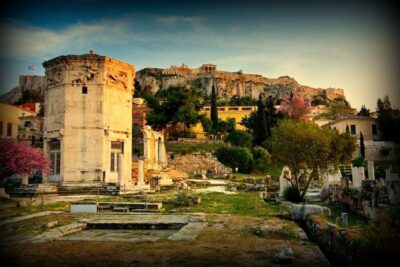 ★ 5.0Philosophy and Democracy tour of AthensFrom $50285 reviews
 ★ 4.8Mythology Tour for FamiliesFrom $79173 reviews
 ★ 5.0The History of Athens: Greek Mythology Private TourFrom $199138 reviews
 ★ 4.9Guided Mythological Walking TourFrom $47125 reviews
Philosophy and Democracy Walking TourFrom $4991 reviews
Browse the lists this tour appears in