
Reviewed · ATHENS MYTHOLOGY TOURS
Greek Mythology Walk in Athens: Stories for All Ages
Greek myths feel different when you’re on the street. This mythology walk in Athens turns famous landmarks into story clues, with gods and heroes explained where people say they happened. I especially like that it’s built for all ages, so the tone stays fun without turning shallow, and I also like that the route connects myth with big-city touchstones you can actually see (not just name-dropping).
One thing to keep in mind: it’s a 2-hour walk with multiple short stops—great for context, but not the kind of pacing where you linger forever at every site.
In This Review
- Key things to know before you go
- Why this Athens mythology walk clicks fast
- Where the walk starts (and how to avoid stress)
- Route in plain English: from the Academy to the Acropolis Museum area
- The Academy of Athens stop: where ideas were treated like destiny
- A short detour for a quieter Athens feel
- Hellenic Parliament and the Changing of the Guard
- National Garden: myth’s calmer side
- Arch of Hadrian and the Temple of Olympian Zeus area
- Acropolis viewpoints without the full Acropolis ticket marathon
- Makrygianni: guided context in a smaller zone
- The myth stories you’ll actually connect to places
- Guides and languages: storytelling is the product
- Price and value: $53 for a two-hour Athens story walk
- What you should bring (because food and drinks aren’t included)
- Who this tour is best for
- Final verdict: should you book this Greek mythology walk?
- FAQ
- Where is the meeting point for the Greek Mythology Walk in Athens?
- How long is the tour?
- How much does it cost?
- What languages are available?
- Is food or transportation included?
- Where does the tour finish?
- What’s the cancellation policy and can I pay later?
Key things to know before you go
- Myths you can point at: Zeus, Athena, Theseus, Prometheus, and more are tied to specific city spots.
- Designed for families: the storytelling approach works well for kids and adults at the same time.
- Tight city-center route: you cover a lot—Academy area, Parliament, National Gardens, Hadrian’s Arch, and more.
- Time for photos, not long museum hours: expect quick looks and a few guided moments, not deep stays.
- Guides matter: Chloé and Francisca have both been singled out for captivating storytelling.
The old gods retold, a few more walks
- Athens: Mythology of Delphi, Museum and Arachova Guided Tour
★ 4.7 · 5,102 reviews - Athens & Acropolis Highlights: Greek Mythology Small-Group Tour
★ 5.0 · 2,370 reviews - Athens: Acropolis and Mythology Highlights Small Group Tour
★ 4.8 · 2,275 reviews - Philosophy and Democracy tour of Athens
★ 5.0 · 285 reviews
Why this Athens mythology walk clicks fast
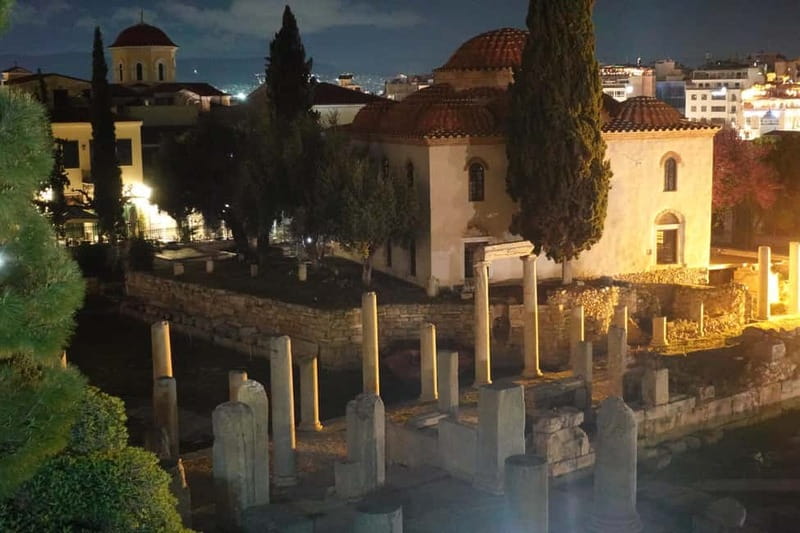
Athens can feel like a parade of famous stones. But mythology is the secret glue that explains why those stones mattered in the first place. On this walk, you’re not asked to memorize a lecture. You’re guided through the city so the stories feel attached to real corners, real views, and real civic landmarks.
I like that the tour frames myth as something lived—stories tied to identity, debate, and education. You’ll hear how the ancient Athenians connected their culture to gods and heroes, and then you’ll see the modern city built around the same ideas. That makes the experience feel practical. It helps you read Athens instead of just photographing it.
And yes, it’s pitched as a family-friendly experience. That matters in Athens, where a lot of history tours can be either too academic or too “showy.” Here, you get a story-first walk where kids can follow along, and adults still get the bigger-picture meaning.
Where the walk starts (and how to avoid stress)
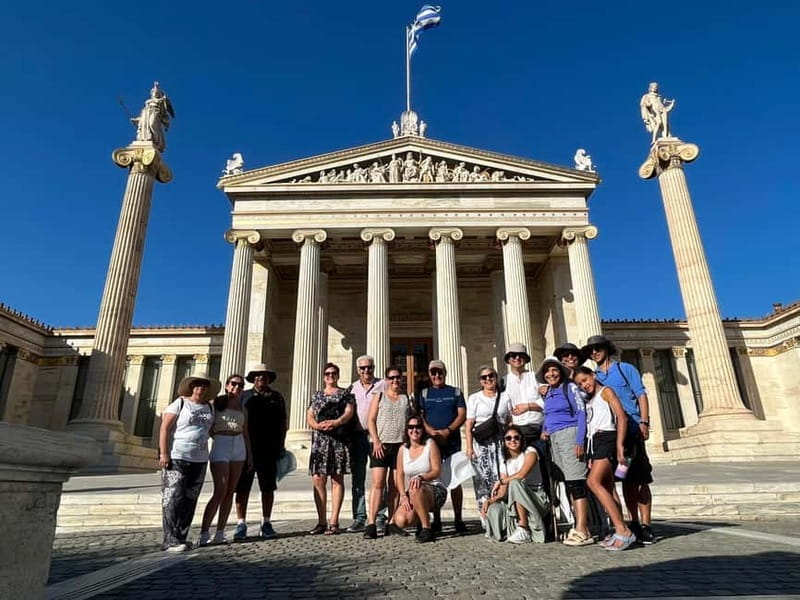
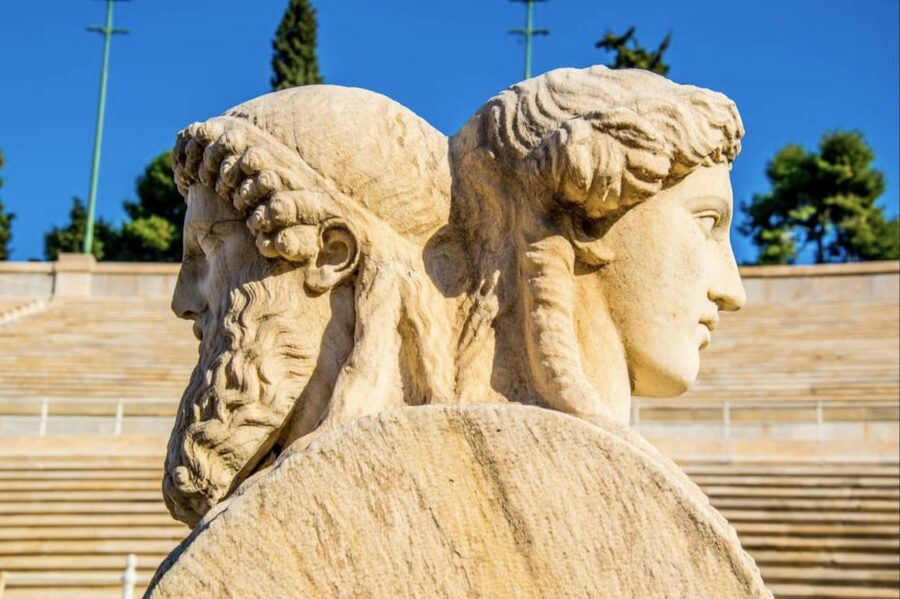
You’ll meet at the National Library of Greece – Main Steps. The meeting point is in the middle of the steps at the monument shown in the photo, and you’ll want to arrive 20 minutes early so you’re not rushed.
This is the kind of tour where being early pays off. Athens streets are busy, and finding the exact spot is easier when you’re calm. Also, you’ll start with a strong anchor right away—so the myths land faster once the walk begins.
The tour begins in the city center and runs on foot, with no transportation included. That means your plan should assume walking time, especially if you’re combining this with other sights later.
Route in plain English: from the Academy to the Acropolis Museum area
The walk is a loop-style experience through central Athens, ending near the Acropolis Museum. Along the way, you hit a mix of classic monuments, recognizable civic buildings, and quieter stops that help you feel the layers of the city.
What makes the route smart is the way it balances “wow” landmarks with meaning. Some stops are quick photo moments. Others come with guided explanation. And the ending near the Acropolis Museum is timed so you get unforgettable views of the Acropolis while the stories are still fresh in your head.
You won’t spend a full day on any one site. That’s the point. You get the big connections—then you can decide what deserves your extra time afterward.
Athens at walking pace, more routes
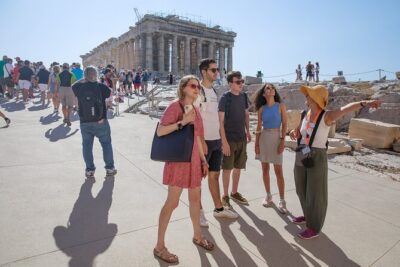
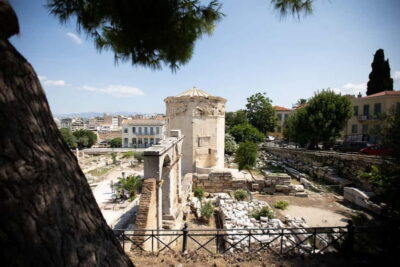


The Academy of Athens stop: where ideas were treated like destiny
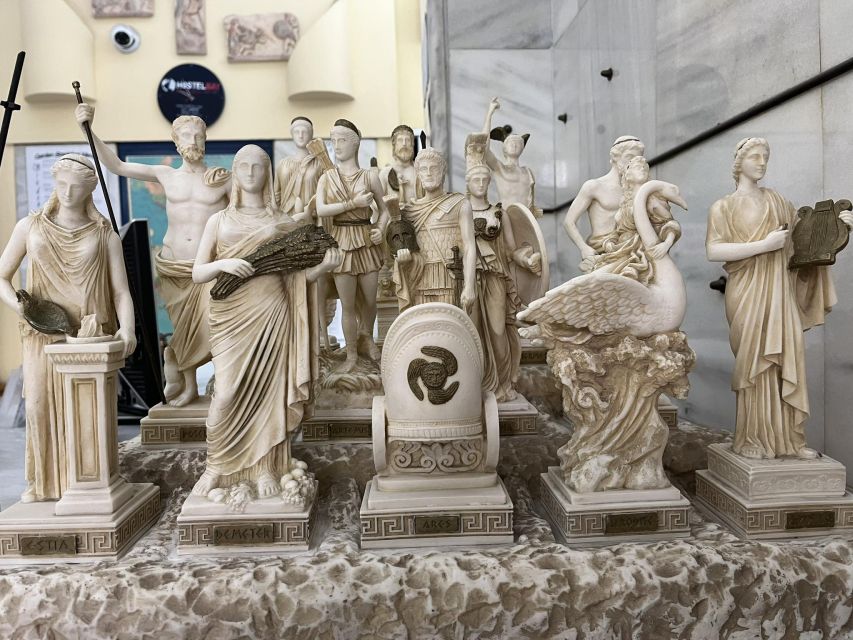
The tour starts with a stop at the Academy of Athens for photos. Even if you’re not a scholar, this is a solid early move. It signals that Athens wasn’t only about marble and temples—it was also about thinking. Greek mythology and philosophy are tightly linked in the city’s story, and this stop sets that tone immediately.
When the guide connects myths to ideas, it stops feeling like fantasy. You start seeing how legends shaped the way Athenians talked about reason, courage, justice, and leadership—then you look up at a landmark that represents that intellectual tradition.
Practical tip: bring your camera, but also pause for a second without it. When a story ties to a place, you’ll remember the view more if you actually watch it.
A short detour for a quieter Athens feel
After the Academy, there’s a small detour photo stop described as a hidden corner of the route. This kind of break is useful, because it gives you contrast. Athens can be loud and crowded. A quieter moment helps you hear the story clearly and get your bearings.
This is also where the tour’s “living story” approach shines. You’re walking, so the myth feels like it’s traveling with you—not trapped in a guide’s voice.
Hellenic Parliament and the Changing of the Guard
Next comes the Hellenic Parliament area, including a photo stop and time connected to the Changing of the Guard. This is one of those stops where you get the present-day Athens rhythm alongside ancient storytelling.
Why it works in a mythology walk: civic identity in modern Athens still mirrors the ancient theme. The guide uses these places to show how public life and national myths share the same roots of pride, symbolism, and shared meaning.
If you’re trying to time this well, wear comfortable shoes and plan to stand for short periods. The tour is only 2 hours, so you’ll want to stay light on your feet.
National Garden: myth’s calmer side
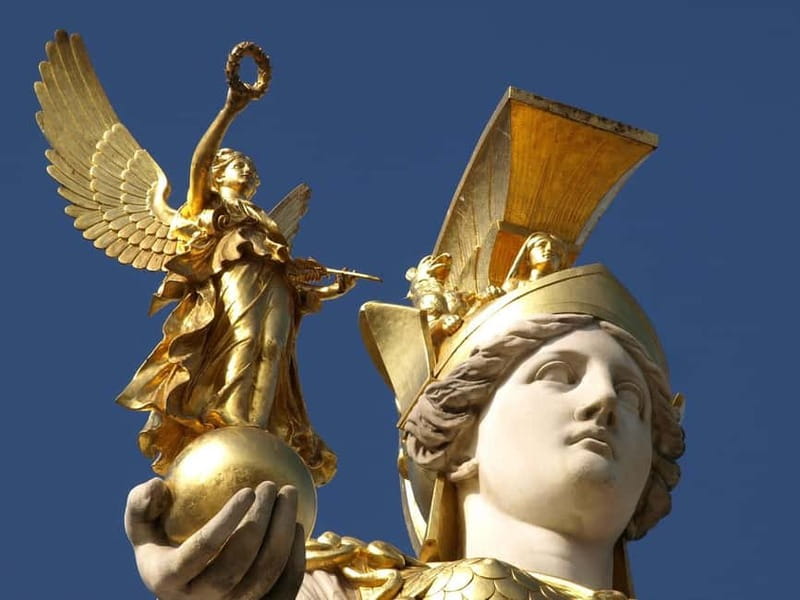
You’ll have time at the National Garden for a photo moment and a short walk. This stop is brief, but it’s a smart palate cleanser between bigger landmarks.
Here the guide can connect the emotional tone of myth—fear, awe, wisdom, defiance—to a place that feels more relaxed than the main monument corridors. It’s a small reset that helps the story stay understandable, especially if you’re traveling with kids.
If you like being outside but want breaks, this portion is a good spot to breathe and refill your energy mentally.
Arch of Hadrian and the Temple of Olympian Zeus area
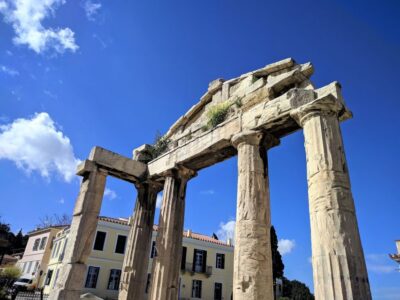
The tour includes time at the Arch of Hadrian (photo stop) and the route also brings you to the area associated with the Temple of Olympian Zeus. These stops help you understand how Athens kept layering new meanings over older ones.
This is also where the myth narration can get extra satisfying. The guide has a way of using these landmarks like plot points—so you’re not just seeing architecture. You’re learning why ancient Athenians would have treated certain places like symbols with power.
Practical note: don’t expect long stays here. Time is budgeted across the route, so take your photos, then listen. The value is in how the stories link the monuments.
Acropolis viewpoints without the full Acropolis ticket marathon
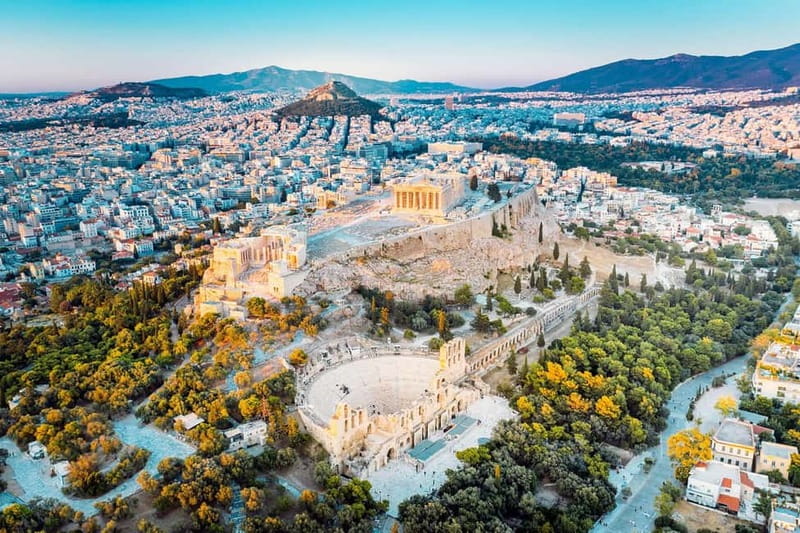
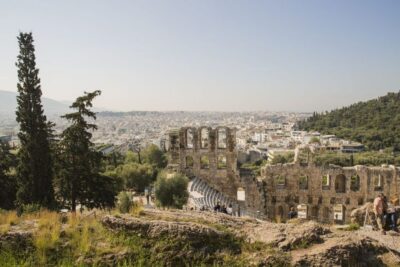
You’ll make a photo and sightseeing stop near the Acropolis of Athens. The tour keeps it efficient, and that’s helpful if you want a myth context before you head deeper later.
This part matters because the Acropolis is where everything starts to feel large. Even a quick look, when paired with myths like Athena’s birth and the Athena-versus-Poseidon contest, makes the city feel like a single story. The guide helps you see the stones as symbols—memories you can connect to characters.
If you’ve got limited time in Athens, this is one of the best ways to get myth context without committing to a full, separate Acropolis deep-dive right away.
Makrygianni: guided context in a smaller zone
The route continues to Makrygianni, where you get a short guided moment. This is where the tour becomes more than a sequence of photo stops. You’ll get explanation that helps tie the myths together—especially the parts that relate to “identity” and “what Athens believed about itself.”
Makrygianni is also a practical choice near the Acropolis area. You finish with momentum instead of feeling like the walk ends abruptly.
The myth stories you’ll actually connect to places
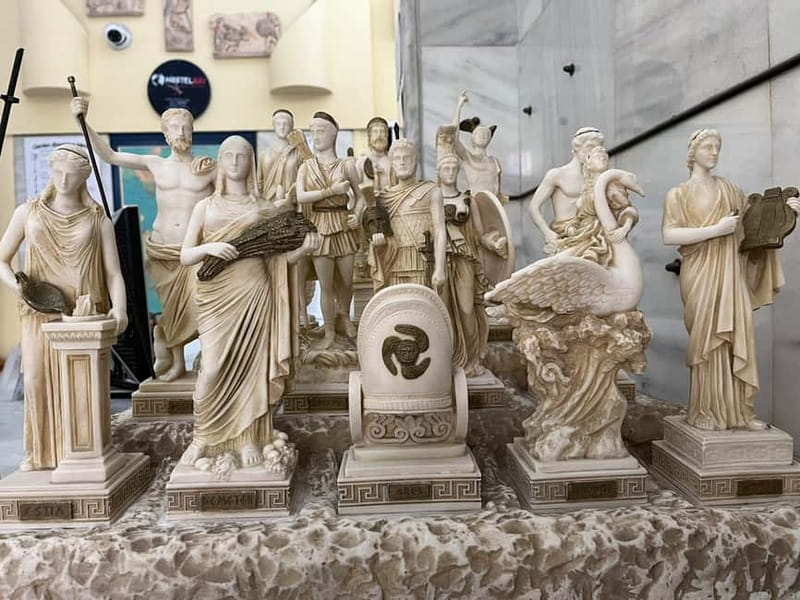
This walk doesn’t just sprinkle random myths. It focuses on the ones that connect to Athens’ identity and its intellectual culture.
Here are the big myth threads you can expect to hear woven into the route:
- Athena’s birth and her claim on the city: You’ll hear how Athena’s story becomes part of Athens’ self-image.
- Athena vs. Poseidon: that famous contest becomes a lens for understanding why the city celebrated certain values and symbols.
- Theseus and the Minotaur: linked to the idea of the labyrinth—courage, intelligence, and survival through a maze.
- Prometheus and the fire of knowledge: the defiance of Zeus becomes a story about giving humanity tools for progress.
- Amazons: warrior women who challenge the ancient world, used as a discussion point for strength and nontraditional roles.
- Centaurs: a symbol of the eternal struggle between reason and instinct.
What I like about how these are presented is the balance. You’re not only getting adventure. You’re getting meaning. That’s what turns a “walk with stories” into a walk that helps you understand why mythology showed up in education, debate, and culture.
And then you get the bonus layer: the overlap of mythology and philosophy. Figures like Socrates and Plato appear as human beings shaped by the same stories surrounding them—so you feel the continuity between myth, ethics, and ideas.
Guides and languages: storytelling is the product
The experience is led by an expert guide, and the tour runs in Spanish, English, Italian, French, Portuguese, Romanian, and Russian.
In terms of storytelling quality, two names from past experiences have come up strongly: Chloé is praised for captivating storytelling, and Francisca is also called out for a great experience. That’s a big clue about what matters most on this tour: the guide’s voice and pacing.
If you care about “learning,” you should care about the guide. This tour earns its value by turning myths into living narrative, not by dumping dates.
Price and value: $53 for a two-hour Athens story walk
At $53 per person for a 2-hour guided walk, the price can feel high or reasonable depending on your style.
Here’s how I’d judge value:
- You’re paying for an expert guide who ties together multiple major Athens landmarks.
- You’re also paying for efficiency. In two hours, you get myth context plus city orientation.
- What you don’t get is long, slow time at each stop, and you don’t get included food or drinks.
So if you’re the type who likes to “get the background fast,” this price makes sense. If you want hours inside each monument, you’ll probably feel like you’re rushing.
What you should bring (because food and drinks aren’t included)
Food and drinks aren’t included, so don’t count on buying nothing. Plan on carrying water, especially in warm months.
Also wear shoes that can handle Athens walking. This is a downtown walking route. Even if the stops are short, you’ll still rack up steps in two hours.
Bring a camera, but also keep space in your brain for listening. The tour is story-driven, and the payoff is when you connect what you hear to what you see.
Who this tour is best for
This is a good fit if:
- You want Athens context fast without committing to a full-day ticket plan.
- You enjoy mythology as narrative, not just facts.
- You’re traveling with kids or mixed-age groups and want one tour everyone can follow.
- You like seeing how culture and ideas connect across time.
It may not fit you as well if:
- You need deep, long explanations at a single site.
- You prefer museum-style time over walking and photo stops.
- You expect a slow pace with long viewpoints and extended guided time at each monument.
Final verdict: should you book this Greek mythology walk?
If you want your Athens to feel like a story you can walk through, I think this one is a smart booking. The big advantage is how it links myth to place, so the city stops being a list of monuments and starts being a connected set of meanings. The pacing is quick, but that’s exactly what makes it useful for first-time visitors and anyone short on time.
Book it if you want your myths to come alive on the streets—then follow up later with the sites that call you back for a longer look. Skip it only if you’re aiming for a slow, site-by-site deep dive. For a two-hour orientation to Athens’ myth-and-meaning layer, this is a strong choice.
FAQ
Where is the meeting point for the Greek Mythology Walk in Athens?
You’ll meet at the National Library of Greece – Main Steps, at the monument in the middle of the steps shown in the meeting photo.
How long is the tour?
The duration is 2 hours.
How much does it cost?
The price is $53 per person.
What languages are available?
The live tour guide is available in Spanish, English, Italian, French, Portuguese, Romanian, and Russian.
Is food or transportation included?
No. Food and drinks are not included, and transportation to or from the meeting point is not included.
Where does the tour finish?
It finishes near the Acropolis Museum, with views of the Acropolis.
What’s the cancellation policy and can I pay later?
Free cancellation is available up to 24 hours in advance for a full refund. You can also reserve now and pay later.
Athens on Foot: More Walks
- Acropolis and Parthenon Guided Walking Tour★ 5.0 · 4,755 reviews
- Greek Food Walking Tour in Athens★ 5.0 · 4,740 reviews
- Athens: Guided Greek Food Walking Tour with Tastings★ 4.9 · 2,859 reviews
- Acropolis monuments & Parthenon Walking Tour with Optional Acropolis Museum★ 5.0 · 2,678 reviews
- Athens Acropolis and Parthenon Walking Tour★ 4.5 · 1,355 reviews
- Acropolis, Parthenon & Athens Old City Heritage Walking Tour★ 4.5 · 876 reviews
More Tour Reviews in Athens
- Athens: Acropolis & up to 5 Archaeological Sites Combo Pass★ 4.2 · 13,904 reviews
- Athens: Acropolis, Parthenon & Acropolis Museum Guided Tour★ 4.8 · 9,316 reviews
- The Acropolis, Parthenon & Acropolis Museum Guided Tour★ 4.7 · 8,493 reviews
- Athens: Cape Sounion & Poseidon Temple Sunset Half-Day Trip★ 4.8 · 8,241 reviews
- Acropolis: Premium Acropolis and Parthenon Guided Tour★ 4.8 · 5,208 reviews
- Athens: Mythology of Delphi, Museum and Arachova Guided Tour★ 4.7 · 5,102 reviews
Myth and Legend, Retold
- Athens: Mythology of Delphi, Museum and Arachova Guided Tour★ 4.7 · 5,102 reviews
- Athens & Acropolis Highlights: Greek Mythology Small-Group Tour★ 5.0 · 2,370 reviews
- Athens: Acropolis and Mythology Highlights Small Group Tour★ 4.8 · 2,275 reviews
- Philosophy and Democracy tour of Athens★ 5.0 · 285 reviews
- Athens: Mythology Tour for Families★ 4.8 · 173 reviews
- The History of Athens: Greek Mythology Private Tour★ 5.0 · 138 reviews
Fresh Off the Boat: New Athens Reviews





Athens Mythology Tours, compared.
 ★ 4.7Mythology of Delphi, Museum and Arachova Guided TourFrom $305,102 reviews
 ★ 5.0Athens & Acropolis Highlights: Greek Mythology Small-Group TourFrom $542,370 reviews
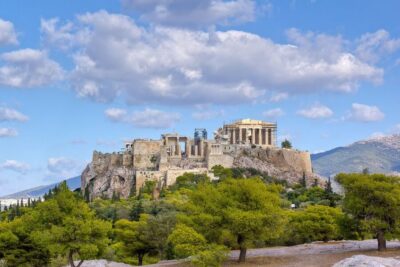 ★ 4.8Acropolis and Mythology Highlights Small Group TourFrom $532,275 reviews
 ★ 5.0Philosophy and Democracy tour of AthensFrom $50285 reviews
 ★ 4.8Mythology Tour for FamiliesFrom $79173 reviews
 ★ 5.0The History of Athens: Greek Mythology Private TourFrom $199138 reviews
 ★ 4.9Guided Mythological Walking TourFrom $47125 reviews
Philosophy and Democracy Walking TourFrom $4991 reviews
★ 4.9Guided Mythological Walking TourFrom $47125 reviews
Philosophy and Democracy Walking TourFrom $4991 reviews
Browse the lists this tour appears in